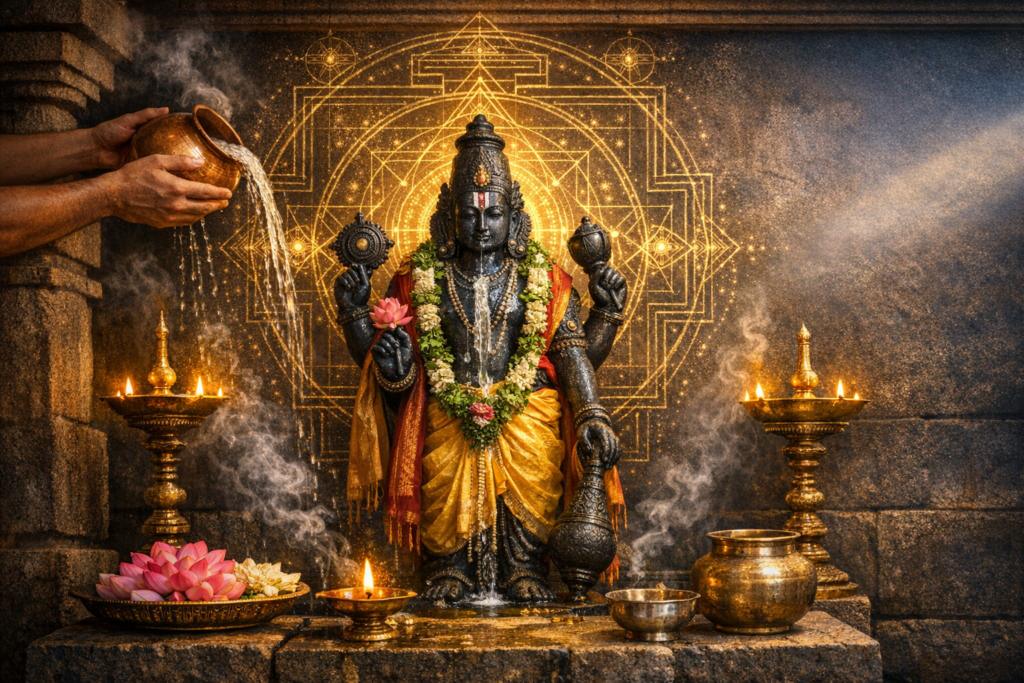
Bhagavatha Anugraha Moorthy refers to Lord Vishnu as the embodiment of unconditional grace showered upon Bhagavathas—devotees who live by bhakti, remembrance, and service. Within Hinduism and the Bhakti Tradition, this epithet underscores a central insight: divine compassion is limitless, impartial, and responsive to sincere devotion. The phrase thus encapsulates a devotional philosophy in which grace (anugraha) is both the cause and culmination of spiritual progress in Sanatana Dharma.
Classical narratives from the Puranas, especially the Bhagavata Purana, illustrate this principle through exemplars such as Dhruva, Prahalada, and Narada. Dhruva, steadfast in tapas and remembrance, receives Vishnu’s darshan and an eternal position as Dhruva-loka, symbolizing the stabilization of a wavering heart in the pole-star of divine grace. Prahalada, protected by Narasimha amidst persecution, embodies the assurance that unshaken devotion transcends fear and hostility. Narada, the devarshi, represents ceaseless devotion and compassionate guidance, blessed with the freedom to traverse realms and inspire spiritual inquiry wherever he goes.
Taken together, these episodes offer a consistent theological arc: Vishnu’s anugraha is neither transactional nor exclusive; it flows toward sincerity, humility, and steadfast remembrance (smaranam), expressed through hearing (sravanam), chanting (kirtanam), and service (seva). The grace extended to these renowned Bhagavathas affirms a wider, inclusive promise—divine compassion remains accessible to all who cultivate devotion and ethical living.
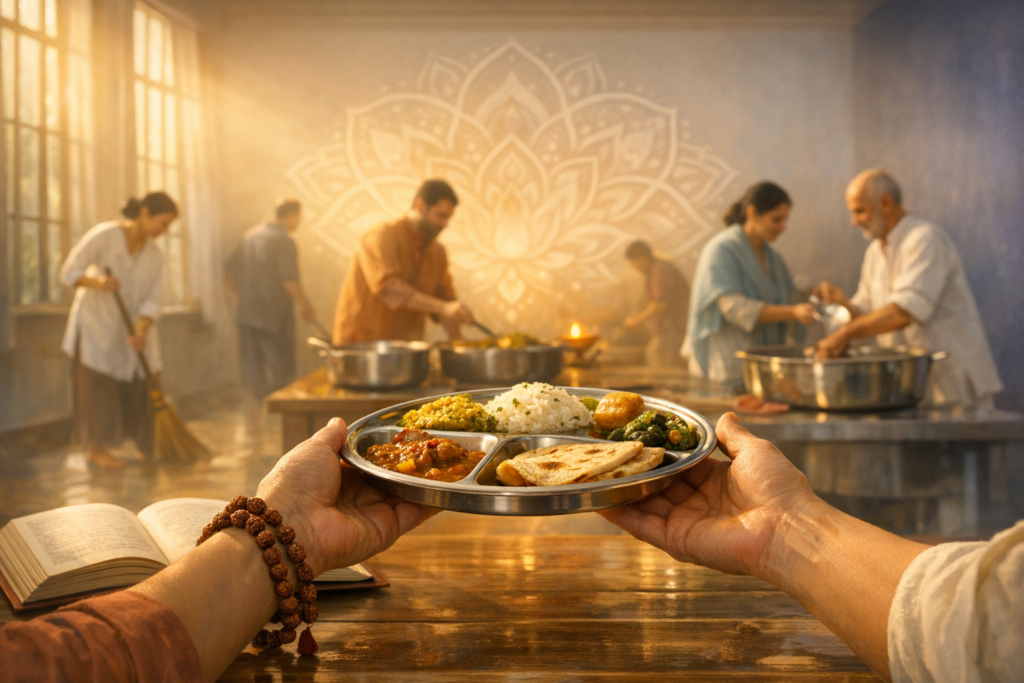
In contemporary devotional life, many find this vision deeply relatable. Simple practices—daily japa, temple darshan, mindful recitation of Vishnu-namas, or quiet moments of gratitude—are experienced as sources of solace, protection, and moral clarity. Such practices nurture resilience during personal trials, foster harmony within families and communities, and encourage compassionate action grounded in Dharma.
Importantly, the ethos conveyed by Bhagavatha Anugraha Moorthy resonates across the wider dharmic family. The ideal of transformative compassion echoes the karuna of Buddhist traditions, the anukampa and ahimsa-centered ethics in Jainism, and the Sikh understanding of nadar (divine grace). Recognizing these shared values strengthens interrelated pathways to ethical living, mutual respect, and communal well-being, reinforcing unity in spiritual diversity without diluting the distinctiveness of each tradition.
Thus, the epithet serves as both spiritual teaching and lived guidance: cultivate devotion, embody compassion, and trust in the constancy of Vishnu’s grace. By aligning inner intention with daily practice, devotees—renowned and ordinary alike—participate in a timeless current of anugraha that uplifts individuals and nourishes collective harmony within and across dharmic traditions.
Inspired by this post on Hindu Pad.