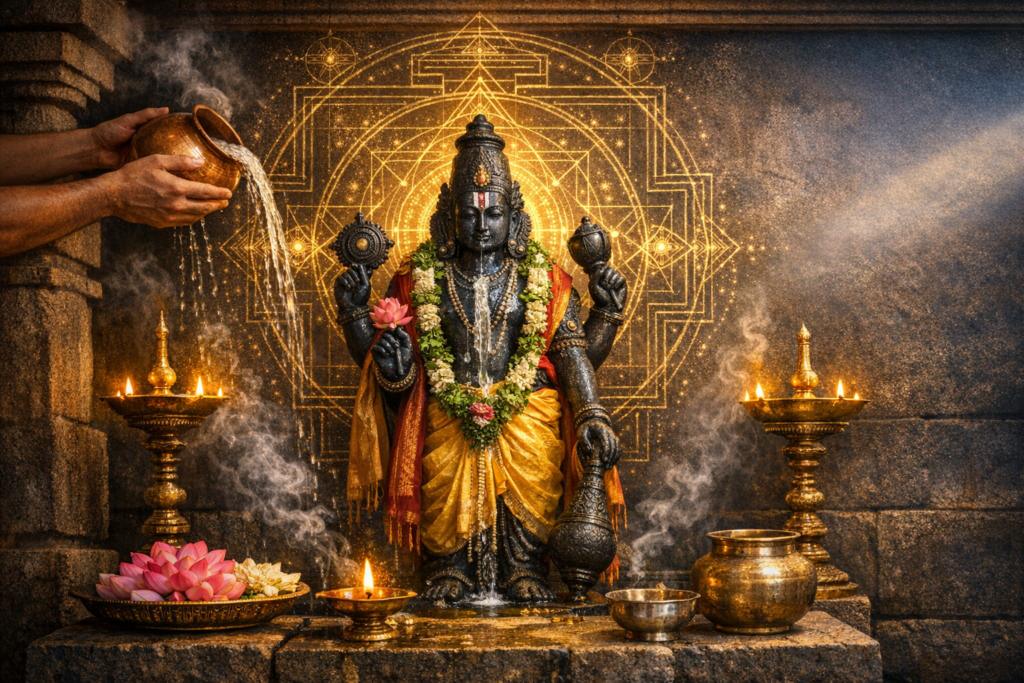
Skanda Purana, Kedara Khanda (3.45), preserves a sobering principle of Hindu philosophy: when honor is diverted from the worthy to the unworthy, the fabric of dharma frays and collective suffering rises. Voiced in the text through Lord Vishnu, the warning is concise and memorable, mapping moral disorder to social consequences symbolized as bhaya (fear), durbhiksha (famine), and mrityu (death). This insight, rooted in Hindu scriptures, continues to speak to contemporary life where recognition, respect, and authority often drift away from merit.
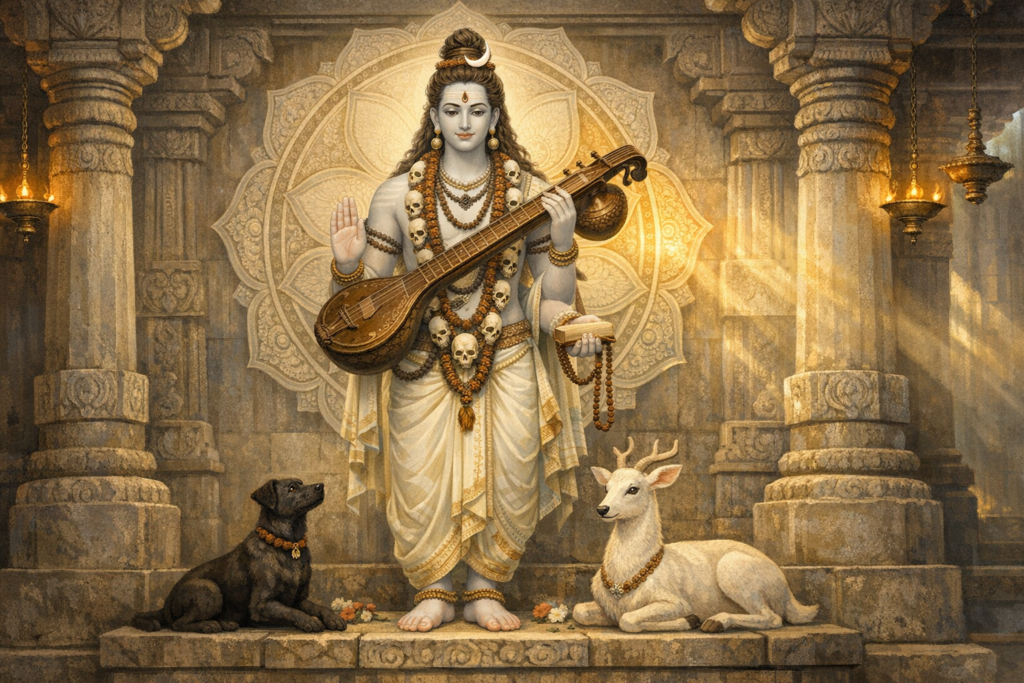
The sacred context often associated with this principle is Daksha’s transgression. In the narrative of Daksha’s yajna, disrespect toward Shiva and the misalignment of rightful honor unleash disharmony, culminating in disruption until cosmic order is reasserted. The episode illustrates a core lesson of Sanatana Dharma: social and spiritual stability depends upon aligning reverence with virtue, knowledge, and rightful conduct rather than with status, vanity, or factional power.
Philosophically, the verse functions as a compact taxonomy of adharma’s consequences. Fear emerges when institutions lose moral authority; famine follows when greed, favoritism, and short-sighted policy corrode stewardship; death, literal or symbolic, marks the collapse of trust, community, and meaning. Read this way, Skanda Purana offers more than a warning; it constitutes a diagnostic framework for evaluating the health of society under the lens of dharma and adharma.
This teaching also resonates across the dharmic family. In Buddhism, right view and right conduct advance communal harmony by honoring sila and wisdom. Jainism’s emphasis on ahimsa and aparigraha elevates character over acquisition, challenging the culture of adulation without substance. Sikh teachings on sat (truth), nimrata (humility), and seva (service) center respect on ethical action. Together, these perspectives reinforce a unifying principle: esteem must follow virtue for society to flourish in unity in spiritual diversity.
The relevance to modern life is immediate. In workplaces where noise prevails over knowledge, in public discourse where spectacle outruns sincerity, and in community life where flattery eclipses integrity, people intuitively sense a rise in anxiety and scarcity. The language of bhaya, durbhiksha, and mrityu captures these dynamics with precision, whether they appear as security concerns, resource mismanagement, or the withering of civic trust. The teaching from Hinduism thus supplies a vocabulary and a verifiable pattern that readers can observe around them.
Practical restoration begins with viveka (discernment) and shraddha (reverent commitment to truth). Communities strengthen institutions by honoring ethical leadership, transparent decision-making, and knowledge grounded in responsibility. Families and schools cultivate resilience by celebrating character, learning, and service. Public culture heals when recognition is tied to integrity and the common good. Such measures align with dharma and help prevent the cyclical descent into fear, famine, and death described by Skanda Purana.
Relatable moments abound: many have witnessed gatherings where those embodying wisdom remain unheard while the untested command attention. The discomfort felt in such moments is not merely emotional; it is diagnostic. The verse validates that unease and provides direction: re-order respect, re-anchor praise in virtue, and re-center authority in responsibility. This shift restores confidence, nourishes collective welfare, and sustains the moral ecology of society.
Seen through a holistic lens, the message encourages unity among Hinduism, Buddhism, Jainism, and Sikhism by reaffirming a shared ethic: respect belongs to those whose conduct serves truth, compassion, and the larger good. By upholding respect for different paths and harmonizing honor with merit, communities protect themselves against the very conditions Skanda Purana warns about and advance a culture where diverse spiritual journeys thrive together under Sanatana Dharma.
Inspired by this post on Hindu Blog.