
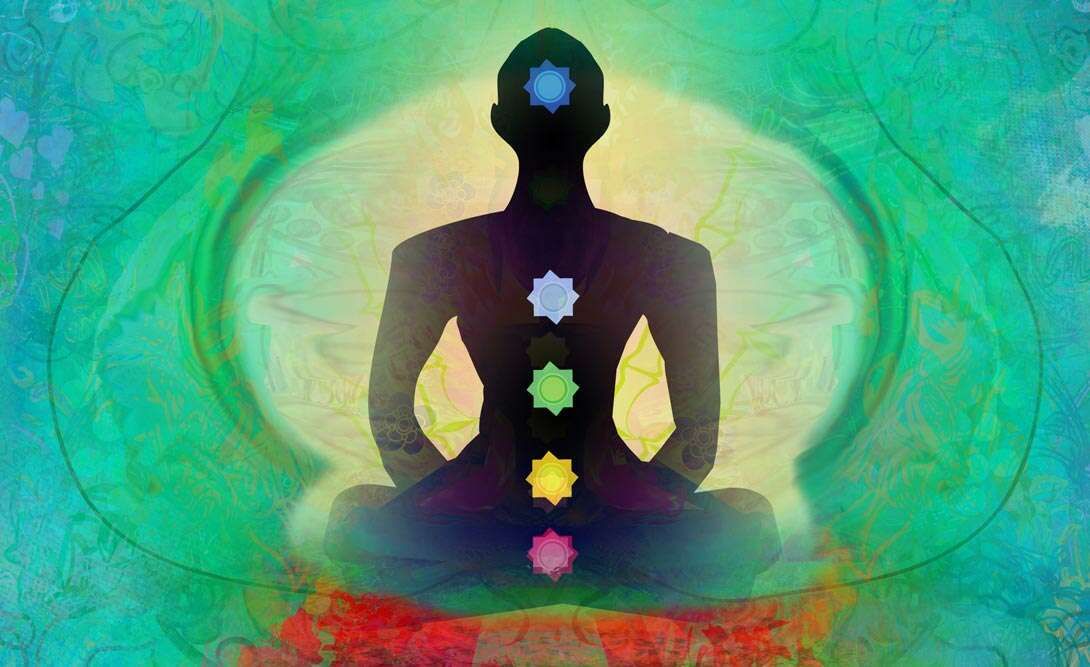
Sanatana Dharma – Hinduism & its various sects, Buddhism, Jainism, and Sikhism, is a vast and ancient spiritual tradition that has its roots in the Indian subcontinent. Despite their differences in rituals, practices, and beliefs, all of these religions share some commonalities, one of which is the emphasis on meditation and self-realization. In this blog post, we will explore the role of meditation in Sanatana Dharma and how it is a core philosophy in all branches of this tradition.
The Origins of Meditation in Sanatan Dharma

Meditation has been a central practice in Sanatana Dharma for thousands of years. The earliest recorded evidence of meditation in India can be traced back to the Indus Valley Civilization, which existed around 3000 BCE. The Rigveda, the oldest of the four Vedas, also mentions the practice of meditation.
In the Hindu tradition, meditation is referred to as dhyana, and it is one of the eight limbs of Yoga, as outlined in the Yoga Sutras of Patanjali.
Similarly, in Buddhism, meditation is an essential practice that is known as bhavana. It is considered one of the three pillars of Buddhism, along with ethical conduct and wisdom. The Buddha himself spent many years meditating and taught his disciples various techniques to cultivate mindfulness and insight.
In Jainism, meditation is called samayika, and it is considered an essential practice for achieving spiritual liberation. The goal of Jain meditation is to purify the mind and cultivate equanimity.
In Sikhism, meditation is known as simran, and it involves the repetition of the Name of God or recitation of holy hymns. Sikh meditation is considered a way to connect with the Divine and achieve inner peace.
Archeology
It is difficult to pinpoint the exact oldest archaeological artifact related to meditation, as the practice of meditation has been a part of human culture for thousands of years, and the artifacts related to it may not always be clearly identified as such. However, there are a few ancient artifacts that have been linked to meditation or contemplative practices.
One such artifact is the Indus Valley seal, which dates back to the 3rd millennium BCE and was discovered in the ancient city of Mohenjo-daro in present-day Pakistan. This seal depicts a figure seated in what is believed to be a meditative posture, with legs crossed and hands resting on the knees. The figure also has a horned headdress, which is believed to be a symbol of divinity or spiritual power. While the exact purpose of the seal is unknown, it is often interpreted as evidence of the practice of meditation or contemplation in ancient Indus Valley civilization.

Another ancient artifact that has been linked to meditation is the Gandhara Buddha, a sculpture from the 1st century CE that was created in present-day Pakistan or Afghanistan. This sculpture depicts the Buddha seated in a meditative posture with a serene expression on his face, and is believed to represent the importance of meditation in Buddhist practice. The Gandhara Buddha is considered to be one of the earliest representations of the Buddha in art and is an important symbol of the spread of Buddhism throughout Asia.

While these artifacts are not direct evidence of meditation practice, they provide important clues about the ancient roots of contemplative practices and the importance of meditation in human culture.
Literature
The oldest literary reference to meditation can be found in the Hindu scriptures known as the Vedas, which are believed to have been composed at least by 1500 BCE (3500 years before present). The Vedas are a collection of ancient texts that were passed down orally for centuries before being written down in Sanskrit.
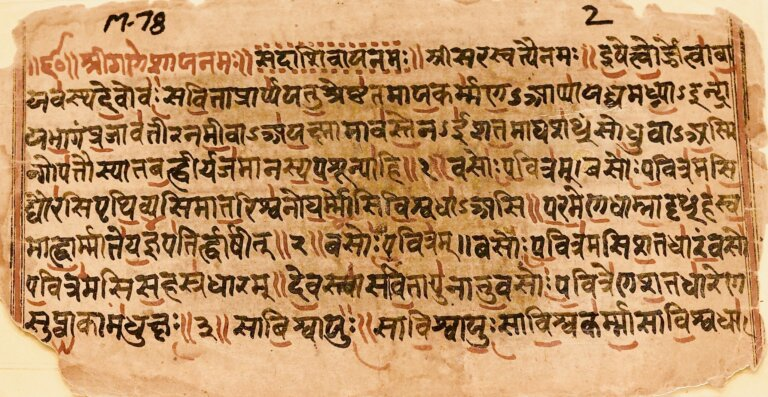
One of the earliest references to meditation in the Vedas can be found in the Rigveda, the oldest and most important of the Vedic texts. The Rigveda contains a hymn known as the Nasadiya Sukta, which describes the creation of the universe and the nature of ultimate reality. In this hymn, the sages ask:
नासदासीन्नो सदासीत्तदानीं नासीद्रजो नो व्योमा परो यत् ।
किमावरीवः कुह कस्य शर्मन्नम्भः किमासीद्गहनं गभीरम् ॥na asad asin no sad asit tadanim nasid rajo no vyoma paro yat |
kim avareevaḥ kuh kasya sharma nambhaḥ kim asit gahanam gabhiram ||Then was not non-existent nor existent:
~ Nasadiya Sukta in the Rigveda
there was no realm of air, no sky beyond it.
What covered in, and where? and what gave shelter?
Was water there, unfathomed depth of water?
The hymn then goes on to describe the search for ultimate truth and the role of meditation in this quest:
तम आसीत्तमसा गूळ्हमग्रे प्रकेतं सलिलं सर्वमाइदम् ।
तुच्छ्येनाभ्वपिहितं यदासीत् तपसस्तन्महिनाजायतैकम् ॥tama āsīt tamasā ghūḷham agre praketam salilam sarvam āidam |
tuchchhena bhvapihitaṃ yad āsīt tapasas tan mahinā jāyataikam ||Then there was neither existence nor non-existence,
~ Nasadiya Sukta in the Rigveda
there was no realm of air, no sky beyond it.
What covered it? Where was it? In whose keeping?
Was there cosmic water, in depths unfathomed?
Then there were neither death nor immortality,
nor was there any sign then of night or day.
The One breathed without breath, by Its own impulse.
Other than that, there was nothing else at all.
This passage suggests that the search for ultimate truth and requires a deep contemplation and reflection that can be achieved only through meditation. It also suggests that the ultimate reality cannot be known through the senses or through intellect alone, but can be realized through direct experience and inner awareness.
This hymn is just one example of how the ancient Hindu scriptures contain references to meditation and contemplation as a means of connecting with the Divine and realizing ultimate truth.
Types of Meditation in Sanatan Dharma
There are several types of meditation practiced in Sanatana Dharma. Each of these types has its unique purpose, technique, and benefits.
Mantra Meditation
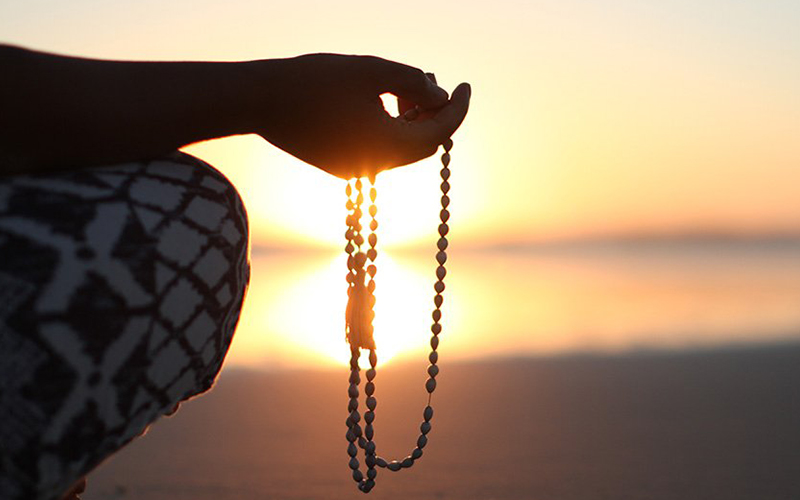
Mantra meditation is a popular form of meditation in Hinduism, Buddhism, and Sikhism. It involves the repetition of a specific sound, word, or phrase (known as a mantra) to focus the mind and induce a state of relaxation. Mantra meditation is considered a powerful tool for calming the mind, reducing stress, and improving concentration.
Breath Meditation

Breath meditation is another popular form of meditation in Sanatana Dharma. It involves focusing on the breath to quiet the mind and develop mindfulness. In this practice, the meditator observes the natural rhythm of the breath, and when the mind wanders, they gently bring their attention back to the breath. Breath meditation is believed to improve mental clarity, reduce anxiety, and increase overall well-being.
Visualization Meditation

Visualization meditation is a practice that involves creating mental images to evoke specific feelings or experiences. In this practice, the meditator imagines a particular scene, object, or experience and focuses on it. Visualization meditation is believed to be an effective tool for cultivating positive emotions, reducing stress, and enhancing creativity.
Body Scan Meditation

Body scan meditation is a practice that involves systematically scanning the body from head to toe and focusing on each part. In this practice, the meditator brings their attention to each part of the body and observes any sensations or feelings that arise. Body scan meditation is believed to increase body awareness, reduce tension, and promote relaxation.
The Benefits of Meditation in Sanatan Dharma

Meditation has been scientifically proven to offer numerous health benefits, including reducing stress, improving mental clarity, and enhancing overall well-being. In Sanatana Dharma, however, meditation is considered more than just a tool for relaxation. It is seen as a means to achieve spiritual growth and self-realization.
In Hinduism

In Hinduism, meditation is seen as a way to achieve union with the Divine. The practice of dhyana is believed to quiet the mind and allow the meditator to connect with the inner self. This connection with the inner self is believed to bring about a deeper understanding of the self and the world around us, leading to spiritual enlightenment.
युञ्जन्नेवं सदात्मानं योगी विगतकल्मषः।
सुखेन ब्रह्मसंस्पर्शमत्यन्तं सुखमश्नुते॥Yuñjannevaṃ sadātmānaṃ yogī vigatakalmṣaḥ |
sukhena brahmasaṃsparśam atyantam sukham aśnute ||Thus, constantly keeping the mind absorbed in God, the yogi of controlled mind, free from sins, easily enjoys infinite happiness through contact with Brahman (the ultimate reality).
~ Bhagavad Gita, Chapter 6, Verse 15
This verse highlights the importance of keeping the mind focused on God through the practice of yoga. The yogi, who has control over their mind and has freed themselves from sins, is able to experience the ultimate happiness through union with Brahman. This idea of self-realization and union with the Divine is a core philosophy of Hinduism and is emphasized throughout the Bhagavad Gita.
In Buddhism
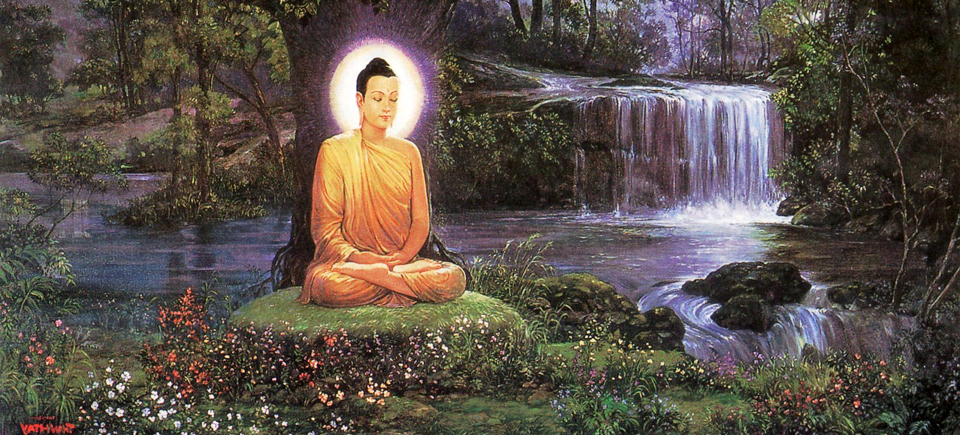
Similarly, in Buddhism, meditation is seen as a way to achieve liberation from suffering. Through the practice of bhavana, one can develop mindfulness and insight into the true nature of reality, leading to the cessation of suffering.
Bhāvanā vata bālassa, samatikkamanaṃ sukhaṃ |
Paññā pūrāya saṅkappā, na hi jātu gabbhaseyyaṃ ||Meditation brings wisdom; lack of meditation leaves ignorance. Know well what leads you forward and what holds you back, and choose the path that leads to wisdom.
~ Dhammapada, Verse 372
This verse highlights the importance of meditation in Buddhism as a means to cultivate wisdom and overcome ignorance. The wise person understands the importance of meditation and the benefits it brings, while the foolish person ignores it and remains in a state of ignorance. The verse encourages individuals to reflect on their actions and choices, and to choose the path that leads to wisdom and liberation.
In Jainism

In Jainism, meditation is seen as a way to purify the mind and attain spiritual liberation. The practice of samayika is believed to help the meditator cultivate equanimity and develop detachment from material possessions and desires.
तपसानगतिः स्वभावः। तपःस्वाध्यायेश्चैव संयमे चैकव्रतम्॥
Tapasānagatiḥ svabhāvaḥ. Tapassvādhyāyeścaiva saṃyame caikavrataṃ.
The inherent nature of asceticism (tapasya) is the attainment of higher spiritual states. Asceticism is accomplished through austerity, self-study and self-control.
~ Tattvartha Sutra, Chapter 7, Verse 11
This verse highlights the importance of tapasya, or asceticism, as a means of attaining higher spiritual states in Jainism. This includes practices such as austerity, self-study and self-control, which are all forms of meditation. By engaging in these practices, one is able to overcome worldly desires and attachments, and cultivate a deeper connection with the Divine. The verse emphasizes that tapasya is an inherent aspect of Jainism and is necessary for spiritual growth and liberation.
In Sikhism

In Sikhism, meditation is seen as a way to connect with the Divine and achieve inner peace. The practice of simran is believed to help the meditator focus their mind on the Name of God, leading to spiritual enlightenment and liberation.
ਸਿਮਰਿ ਸਿਮਰਿ ਸਿਮਰਿ ਸੁਖੁ ਪਾਵਉ ॥
ਪਾਪ ਬਿਨਾਸਹਿ ਦੁਖੁ ਸਹਜਿ ਸਮਾਵਉ ॥੧॥Simar simar simar sukh pāva-u.
Pāp bināsahi dukh sahaj samāva-u. ||1||Remember, remember, remember God, and find peace. Sins are destroyed and pain is eliminated; you merge into the natural state of peace.
~ Sri Guru Granth Sahib Ji, Ang 81
This verse highlights the importance of simran, or remembrance of God, as a means of finding peace and overcoming suffering in Sikhism. By engaging in regular meditation and focusing the mind on God, one is able to destroy their sins and eliminate pain, merging into a natural state of peace. This verse emphasizes the importance of constantly remembering God in all aspects of life and finding peace through meditation and connection with the Divine.
Unifying thread
The practice of meditation is a common thread that unites all of Sanatana Dharma, including Hinduism and its various sects, Buddhism, Jainism, and Sikhism. While each of these traditions has its unique beliefs and practices, they all recognize the transformative power of meditation in cultivating inner peace, spiritual growth, and connection with the Divine.
One of the key ways in which meditation unites these traditions is through the emphasis on mindfulness and present-moment awareness. In all of these traditions, meditation involves training the mind to focus on the present moment, whether through breath awareness, mantra repetition, or visualization. By cultivating this present-moment awareness, one is able to let go of distractions and connect more deeply with the Divine within.
Another way in which meditation unites these traditions is through the emphasis on self-transformation and inner growth. In all of these traditions, meditation is seen as a means of cultivating virtues such as compassion, wisdom, and detachment from worldly desires. Through regular practice, one is able to let go of negative emotions and cultivate positive qualities, ultimately leading to a more peaceful and fulfilling life.
Furthermore, meditation is often seen as a means of transcending the limitations of the ego and connecting with a greater sense of universality or Oneness or Bhraman. This is seen in Hinduism’s concept of Atman-Brahman unity, Buddhism’s concept of non-dual awareness, Jainism’s concept of the soul’s inherent purity, and Sikhism’s emphasis on merging with the Divine through simran or remembrance. By transcending the limitations of the ego and connecting with this universal essence, one is able to experience a greater sense of interconnectedness with all beings and the Divine.
Conclusion

In conclusion, the practice of meditation is a central part of Sanatana Dharma. It has been practiced for thousands of years and is considered a powerful tool for achieving spiritual growth and self-realization. Despite the differences in beliefs, rituals, and practices, all branches of Sanatana Dharma share a common emphasis on meditation and its benefits. Through various forms of meditation, practitioners can quiet the mind, cultivate mindfulness, and achieve a deeper understanding of the self and the world around them. By incorporating meditation into our daily lives, we can experience a greater sense of well-being and spiritual fulfillment.
References
- Bhattacharya, N. N. (2006). History of Indian meditation: A brief survey. Indian Journal of Psychiatry, 48(3), 170–176. https://doi.org/10.4103/0019-5545.31591
- Feuerstein, G. (1996). The Yoga Tradition: Its History, Literature, Philosophy and Practice. Hohm Press.
- Gombrich, R. F. (2012). What the Buddha thought. Equinox Publishing.
- Jain, S. (2016). An Introduction to Jainism. Cambridge University Press.
- Singh, G. (2016). Sikhism: An Introduction. I.B.Tauris.