
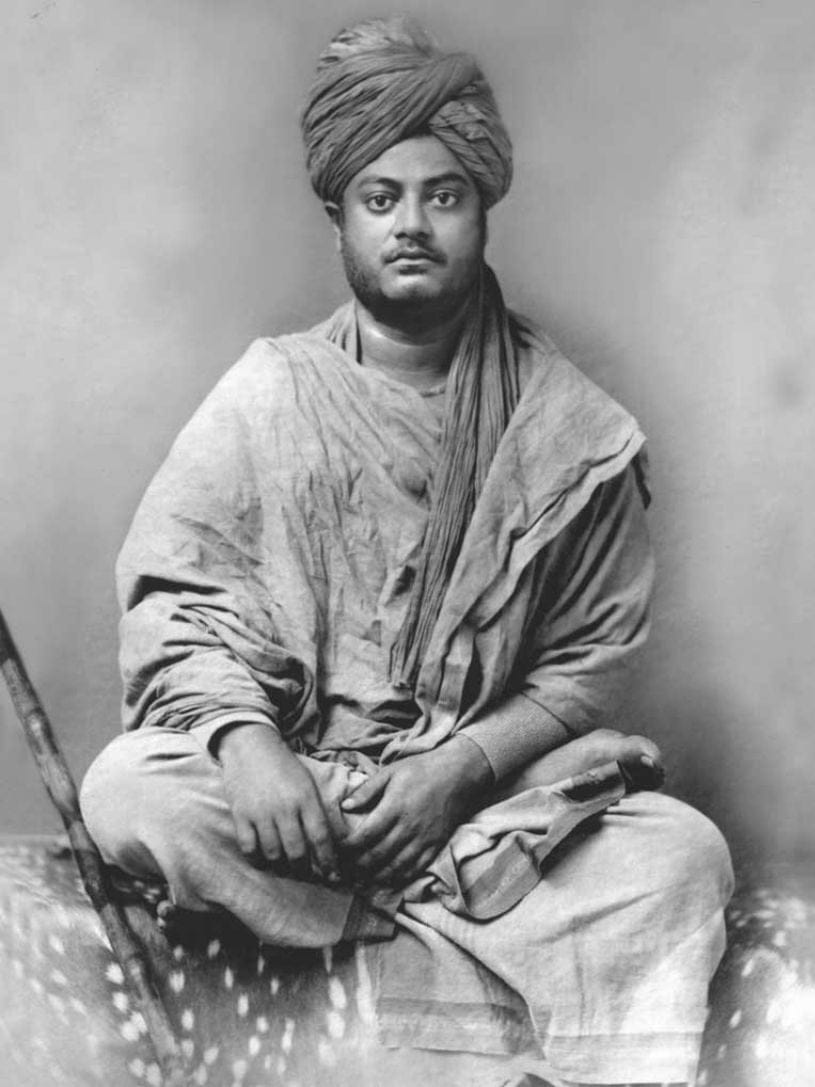
Vedanta as a search for the truth of human existence
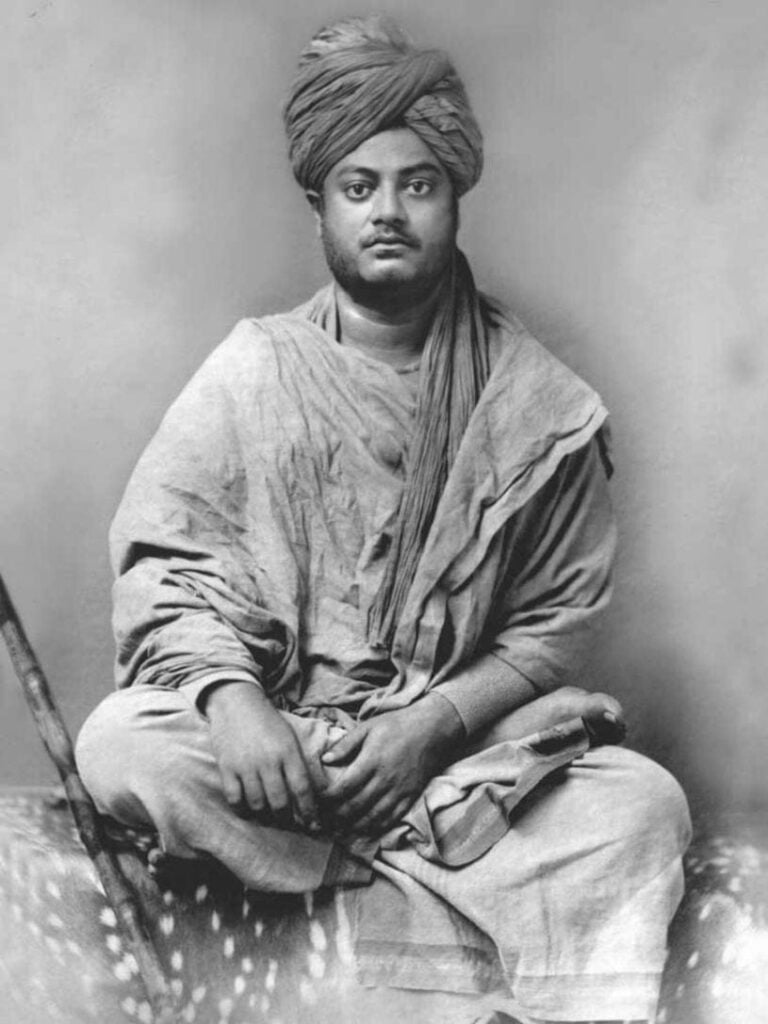
Swami Vivekananda presented Hinduism not as a closed system built around one founder, one historical revelation, or one compulsory creed, but as a many-sided spiritual civilization organized around the search for truth. Its accumulated teachings emerged through the reflections, disciplines, debates, and realizations of generations of Rishis, philosophers, devotees, householders, renunciants, and teachers. This history explains why Hindu Dharma can contain rigorous metaphysics, devotional worship, ritual practice, ethical duty, meditation, sacred images, and apparently contrasting philosophical schools without requiring every practitioner to follow an identical path.
His most influential public account appeared in the “Paper on Hinduism” delivered at the World’s Parliament of Religions in Chicago on 19 September 1893. That address combined scriptural interpretation with an argument about human dignity: religion should ultimately transform consciousness, not remain a collection of inherited assertions. Belief, study, ritual, and philosophical reasoning possess value, but they become spiritually complete only when their truths are realized in experience and expressed through character.
This distinction between belief and realization is essential to understanding Vivekananda’s Vedanta. He did not suggest that every religious claim should be accepted uncritically or that intellectual inquiry was unnecessary. He maintained that doctrines and symbols serve as instruments of growth. Their purpose is to direct the mind toward a truth that must eventually become lived knowledge. The decisive question is therefore not merely what a person professes, but what that person has become through knowledge, devotion, meditation, self-mastery, and service.
What it means to call the Vedas eternal
Vivekananda’s explanation of the Vedas begins with a careful distinction between a physical book and the truths communicated through it. Printed pages, manuscripts, sounds, and linguistic forms arise in history. The spiritual principles to which the Vedas point are described as beginningless because they are not believed to depend upon the invention of a particular human personality. In this account, “Veda” signifies an accumulated treasury of knowledge concerning consciousness, moral causation, the soul, ultimate reality, and liberation.
He clarified the idea through an analogy with natural law. Gravitation did not begin when it was formulated by a scientist; the formulation made an already operative principle intelligible. In the same manner, spiritual laws are said to exist before any sage expresses them and would continue to exist even if their verbal formulations were forgotten. The analogy does not make spiritual realization identical to laboratory science. Its narrower purpose is to explain why discovery need not mean invention.
The Rishis are consequently remembered as seers rather than proprietary authors of revelation. Their authority rests on direct insight, disciplined perception, and the capacity to communicate what was realized. Vivekananda repeatedly treated this possibility of spiritual perception as open in principle: the age of the Rishis was not a sealed period after which humanity could only repeat inherited conclusions. If spiritual truth is universal, fresh realization must remain possible.
His observation that some of the great Vedic seers were women carries substantial philosophical importance. It locates spiritual authority in realization rather than in gender. This principle should not be confused with a claim that every Indian institution in every historical period was socially equal. It instead establishes a normative standard by which exclusion can be criticized: bodily identity and social rank cannot determine the intrinsic capacity of the Atman.
Vivekananda’s interpretation also prevents the eternity of the Vedas from being reduced to rigid literalism. In his recorded discussions, he explained that what is permanent is the spiritual truth disclosed through the Vedas, not necessarily every historical utterance understood apart from context. This position allows reverence, interpretation, reason, and experience to interact. Scripture becomes a map of realization, while realization remains the destination.
Cyclical manifestation and the order of the cosmos
Within Vivekananda’s exposition of Vedanta, the universe is not explained as a single manifestation preceded by absolute nothingness. Manifestation and dissolution form an immeasurable rhythm: worlds and systems emerge, remain for a period, change, and return to subtler conditions. Another cycle then unfolds. The philosophical emphasis falls on continuity of cosmic order rather than on a uniquely dated beginning of all being.
He cited a Vedic expression that evokes this recurring order:
“Suryachandramasau Dhata Yathapurvam Akalpayat.”
Meaning: “The Creator created the sun and the moon as before.”
The line appears in Rig Veda 10.190.3 and describes the ordering of the sun and moon “as before.” In Vedantic interpretation, that phrase supports the idea that cosmic manifestation follows an antecedent pattern or law. Creation is therefore better understood here as manifestation, ordering, or projection than as the production of being from absolute nonbeing.
This cosmology should not be presented as though it were a modern astrophysical model stated in ancient terminology. Vedanta asks metaphysical questions about causation, continuity, being, and consciousness, whereas physical cosmology develops mathematical models from observable evidence. The two inquiries may enter a philosophical dialogue, but fidelity to Vivekananda requires preserving the difference between an illuminating comparison and a claim of scientific equivalence.
The body, mind, and witnessing Atman
Vedanta’s analysis of the person begins by distinguishing the body from the deeper principle of awareness. The body is indispensable to embodied life, yet it is continuously changing. Sensations arise and pass, thoughts move, emotions fluctuate, and personal roles develop over time. Despite these changes, experience appears to contain a persistent witnessing standpoint—the subject to whom bodily states, perceptions, memories, and thoughts are presented.
Vivekananda identifies this witnessing principle as the Atman, the real Self. The Atman is not the ego, personality, biography, or stream of self-description. Those belong to the changing mind and can themselves be observed. The Atman is described as the condition that makes experience and knowledge possible, although it cannot be turned into an ordinary external object without ceasing to be the knowing subject.
The Bhagavad Gita expresses the indestructibility of this Self through a sequence of elemental images:
“Nainam Chhindanti Shastrani
Nainam Dahati Pavakah।
Na Chainam Kledayantyapo
Na Shoshayati Marutah॥”
Meaning: “The soul cannot be cut by weapons, burned by fire, moistened by water, or dried by the wind.”
This passage, Bhagavad Gita 2.23, does not claim that the physical body is invulnerable. Bodies can clearly be injured and destroyed. Its argument is that the Self is not a material compound and therefore cannot undergo the forms of division, combustion, saturation, or desiccation applicable to material objects. What has parts can be separated; what is produced can perish. The Atman, in this philosophical account, is neither composite nor produced.
Hindu philosophical teaching summarizes this nature in a compact formula:
“Nitya-Shuddha-Buddha-Mukta.”
Meaning: The true nature of the soul is eternal, pure, full of knowledge, and free.
Each term corrects a different form of mistaken identity. “Eternal” denies that the Self begins with the body. “Pure” denies that its essence is permanently stained by mental or moral conditions. “Full of knowledge” points to consciousness as fundamental rather than accidental. “Free” declares that bondage belongs to ignorance and misidentification, not to the ultimate nature of the Self.
This teaching can be emotionally powerful during illness, aging, or bereavement, but it should not be used to dismiss physical pain or grief. Vedanta does not require indifference to human vulnerability. It places vulnerability within a wider account of identity. Compassion for suffering remains necessary precisely because every embodied being possesses spiritual dignity.
Karma as moral causation rather than fatalism
The unequal conditions of human life raise one of the most difficult questions in religious philosophy. Some people encounter security and opportunity, while others face disease, deprivation, violence, or loss. Vivekananda introduced Karma and reincarnation as part of Vedanta’s response to this problem. If divine reality is just, he argued, arbitrary inequality cannot be attributed to an unjust act of creation.
Karma means that intentional action has consequences. Thoughts, choices, and conduct shape habits; habits shape character; character influences future action and experience. The present is conditioned by preceding causes, while present conduct participates in forming the future. Karma therefore joins continuity with responsibility.
It is important to distinguish Karma from crude reward-and-punishment imagery. It is not necessarily the intervention of a divine judge assigning a separate penalty after every act. It is more closely understood as an order of moral causation in which action leaves tendencies and consequences. The doctrine also does not imply that every event has one simple cause or that an observer can confidently reconstruct another person’s past from present suffering.
For that reason, Karma must never become a pretext for blaming victims, defending social inequality, or withholding assistance. No ordinary person possesses complete knowledge of the network of causes behind another life. Vivekananda’s practical Vedanta moves in the opposite ethical direction: the presence of the divine in every being creates an obligation to serve, educate, strengthen, and relieve suffering.
Nor is Karma fatalism. A fatalistic doctrine would make effort meaningless because an unalterable destiny had already determined every event. Vivekananda emphasized that present action matters. Past causes may define the field in which a person acts, but they do not cancel agency. Discipline, knowledge, devotion, moral courage, and service can redirect the movement of life.
This produces a demanding balance. A person is encouraged to accept responsibility without becoming trapped in shame, and to acknowledge conditioning without surrendering to helplessness. Such a balance is recognizable in ordinary experience: no one chooses every circumstance, yet choices made within those circumstances can gradually transform attention, relationships, habits, and character.
Reincarnation and the continuity of embodied experience
Reincarnation extends the law of Karma beyond a single lifetime. The body changes, but the embodied Self continues through successive conditions until liberation. The Bhagavad Gita conveys this teaching through the familiar image of changing garments:
“Vasamsi Jirnani Yatha Vihaya
Navani Grihnati Naroparani।
Tatha Sharirani Vihaya Jirnani
Nyanyani Samyati Navani Dehi॥”
Meaning: “Just as a person gives up old clothes and puts on new ones, the soul gives up old bodies and accepts new ones.”
This is Bhagavad Gita 2.22. Its analogy separates the wearer from the garment without denying their temporary association. Similarly, the Self is not identical with the body, although bodily life provides a field for experience and action. Death ends a particular bodily organization; it does not, within this doctrine, annihilate the continuing subject.
A natural objection asks why previous lives are not ordinarily remembered. Vivekananda distinguished the total contents of mind from the narrow range available to surface awareness. Everyday life already demonstrates that forgotten impressions may continue to influence conduct. Vedanta accordingly interprets continuity through latent tendencies and character rather than requiring a complete autobiographical memory of every prior embodiment.
Reincarnation is not the final goal. Endless continuation would remain bondage if ignorance, craving, fear, and suffering persisted through every life. The purpose of spiritual practice is to transcend compulsory rebirth by realizing the Self that was never confined to any one body. Continuity explains the journey; Moksha completes it.
God, love, and the dignity of the “children of immortality”
Vivekananda recognized both personal and impersonal approaches to the divine. God may be approached as creator, mother, father, friend, beloved, ruler, or indwelling presence. At the philosophical summit of Advaita, Brahman is the infinite reality beyond every limiting attribute. These modes are not merely competing definitions. They correspond to different temperaments and stages of spiritual understanding.
The Upanishadic summons that Vivekananda made famous at Chicago expresses his affirmative view of humanity:
“Shrinvantu Vishwe Amritasya Putrah.”
Meaning: “O children of immortality, listen.”
The spiritual force of this declaration lies in its reversal of habitual self-contempt. Human beings are not defined solely by weakness, error, or guilt. They remain capable of knowledge and transformation because the immortal Self is their deepest nature. Vivekananda’s language of strength is therefore not flattery; it is a method intended to awaken responsibility. A person who recognizes inherent dignity must also recognize it in others.
Love is the natural religious expression of this dignity. Vivekananda contrasted selfless devotion with a commercial relationship in which worship is exchanged for prosperity, pleasure, status, or entry into heaven. Desire-based prayer can represent an intelligible stage of growth, but mature Bhakti loves the divine because the divine is worthy of love.
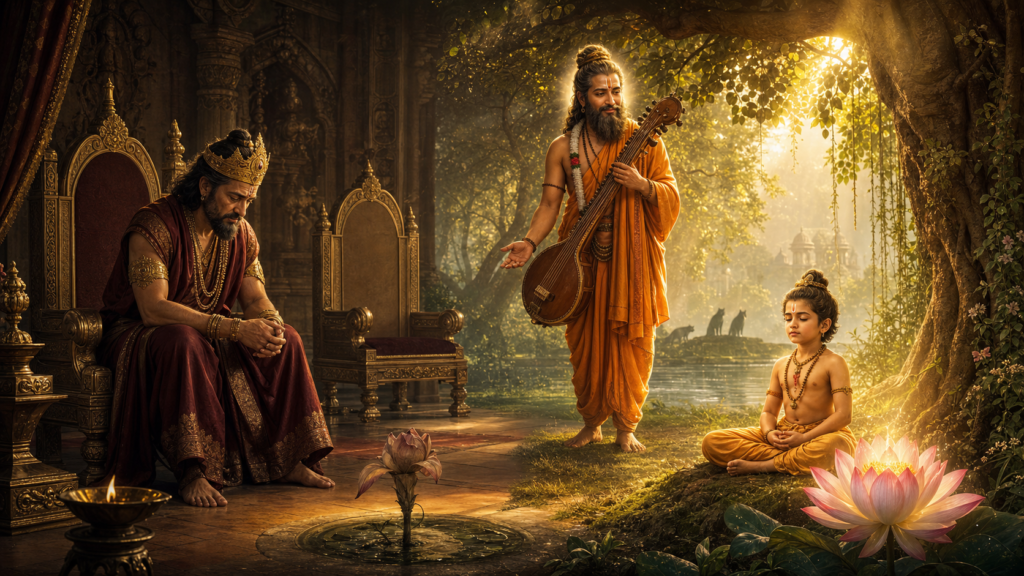
He illustrated this principle with King Yudhishthira, who continued to love God despite exile and suffering. The Himalayas were loved for their grandeur and beauty, not because they provided a personal reward. In the same manner, Yudhishthira’s devotion did not depend upon favorable circumstances. The example addresses a deeply relatable crisis: whether faith can survive when virtue does not immediately produce comfort.
Such love does not demand withdrawal from responsibility. Vivekananda’s ideal resembles the lotus leaf that remains in water without being saturated by it: the heart is centered on the divine while the hands remain engaged in work. Devotion is tested through integrity, endurance, compassion, and conduct, not only through emotional intensity.
Moksha and the great declarations of the Upanishads
Moksha is freedom from ignorance, fear, compulsory becoming, and mistaken identification. It is not simply relocation to a more pleasant world. Any condition dependent upon time, place, or acquired merit remains subject to change. Liberation is the realization of what the Self eternally is, not the manufacture of a new Self that did not previously exist.
The Upanishadic teaching traditionally addressed to the student is:
“Tat Tvam Asi.”
Meaning: “You are That (the Supreme Truth).”
Another great declaration presents the same realization in the first person:
“Aham Brahmasmi.”
Meaning: “I am Brahman.”
“Tat Tvam Asi.” is associated with the Chandogya Upanishad, while “Aham Brahmasmi.” occurs in the Brihadaranyaka Upanishad. Advaita interprets these declarations as revealing the identity of Atman and Brahman when limiting identifications are removed. The individual is not being told that the social ego has become the omnipotent ruler of the universe. The claim concerns the ground of consciousness, not the inflation of personality.
This distinction is ethically decisive. If Advaita were interpreted as personal grandiosity, it would strengthen the very ego whose limitations it seeks to expose. Properly understood, non-duality weakens selfishness because the same reality is present through the diversity of beings. Injury to another can no longer be treated as spiritually irrelevant, and service ceases to be condescension from a superior person to an inferior one.
Vedanta is broader than Advaita alone. Its influential schools include dualistic, qualified non-dualistic, and non-dualistic interpretations of the relationship among the individual soul, the universe, and God. Vivekananda often described these as stages or complementary viewpoints suited to different standpoints. Academic accuracy requires acknowledging their genuine doctrinal differences even while recognizing his effort to place them within a shared spiritual movement.
In devotional experience, God and devotee may be loved as distinct. In qualified non-dualism, souls and nature may be understood as inseparable from God while retaining meaningful distinction. In Advaita, distinction is ultimately overcome in the realization of Brahman. Vivekananda’s synthetic approach does not require beginners to imitate the language of the highest abstraction. It asks each person to practice sincerely and advance from understood truth toward deeper truth.
Why sacred images and symbols matter
Vivekananda’s defense of image worship rests on a psychological observation: human thought ordinarily depends upon associations, forms, memories, sounds, and mental pictures. Even apparently abstract ideas are often represented through spatial images. Infinity may evoke the sky or ocean; holiness may evoke a temple, scripture, flame, cross, or sacred landscape. External symbols make this associative process visible.
A Murti is therefore not adequately understood as a rival material deity enclosed in stone or metal. For the worshipper, a consecrated form can focus attention upon the divine presence it signifies and mediates. The material form supports concentration, emotion, memory, reverence, and relationship. Its function is comparable to the way written letters assist a child before reading becomes effortless, although the sacred symbol carries a far deeper ritual and theological significance than a mere educational aid.
Vivekananda described a progression from external worship to mental prayer and finally to direct realization. The stages are not grounds for contempt. Childhood is not sinful because adulthood follows it, and a support is not false merely because a practitioner may eventually outgrow dependence upon it. The appropriate test is whether a practice strengthens concentration, purity, compassion, freedom, and awareness of the divine.
The Upanishadic verse used to indicate the transcendence of all finite light states:
“Na Tatra Suryo Bhati Na Chandra Tarakam
Nema Vidyuto Bhanti Kuto’yam Agnih.”
Meaning: “There the sun, moon, stars, or lightning cannot shine; everything is illuminated by His light.”
The verse teaches that Brahman cannot be reduced to an object illuminated by another source. Consciousness is symbolized as the light through which all experiences become known. A lamp can illuminate a room, but no physical lamp explains the awareness in which the room, the lamp, and the act of seeing are disclosed.
Symbolic worship is not compulsory for every Hindu, nor is abstraction compulsory for everyone. Vivekananda’s larger principle is freedom of spiritual temperament. A symbol should not be confused with the limitless reality, but neither should it be mocked when it helps a sincere practitioner approach that reality. This balance supports pluralism without abandoning philosophical discrimination.
The four yogas as a practical architecture of transformation
Vivekananda condensed the practical scope of religion into four major disciplines: work, worship, psychic control, and philosophy. These correspond to Karma Yoga, Bhakti Yoga, Raja Yoga, and Jnana Yoga. Each addresses a major dimension of human personality, and no single temperament is treated as the universal template for spiritual life.
Karma Yoga disciplines the will through selfless action. Its central problem is not action itself but attachment to possession, recognition, and reward. Work becomes yoga when it is performed skillfully as duty and service without allowing the ego to claim absolute ownership of the result. This discipline can operate in a household, classroom, hospital, field, office, workshop, or monastery.
Bhakti Yoga transforms emotion through devotion. Affection that ordinarily narrows itself around possession is widened and purified through love of God. Prayer, remembrance, chanting, ritual, and the chosen form of the divine can cultivate this relationship. Mature Bhakti is neither sentimental weakness nor a bargain for favors; it is steadiness of love under both pleasure and adversity.
Raja Yoga addresses attention and the movements of mind. Ethical preparation, bodily steadiness, regulation of breath, withdrawal from distraction, concentration, meditation, and absorption form a disciplined approach to interior experience. Vivekananda warned that advanced practice requires competence and guidance. The goal is mastery of attention, not fascination with extraordinary powers.
Jnana Yoga employs discrimination and inquiry. It asks what changes, what knows change, and whether the witness can be reduced to the objects witnessed. Through disciplined reasoning and contemplation, the practitioner loosens identification with body, emotion, thought, and ego. Its declarations of non-duality are conclusions to be realized, not slogans to be repeated while ordinary selfishness remains untouched.
Vivekananda allowed these paths to be followed separately or in combination. Their integration can correct imbalance: knowledge guards devotion against credulity, devotion guards knowledge against aridity, meditation steadies both, and service tests whether insight has entered conduct. A harmoniously developed person can think clearly, love deeply, act unselfishly, and govern attention.
Practical Vedanta: divinity expressed through service
For Vivekananda, Vedanta could not remain confined to forest retreats, lecture halls, or metaphysical argument. If the same spiritual reality is present in every being, daily life becomes a field of worship. Education, care for the poor, relief of suffering, cultivation of strength, and respect for human dignity follow from metaphysics rather than being optional additions to it.
This is the practical consequence of inner divinity. It does not mean that every impulse is divine or that harmful behavior should escape judgment. Vivekananda distinguishes the underlying Self from the ignorance that obscures it. Conduct can require correction, restraint, or resistance while the intrinsic dignity of the person remains intact.
His message of strength is similarly different from domination. Spiritual strength means freedom from paralyzing fear, self-hatred, inertia, and dependence upon external approval. It includes the courage to accept responsibility, to resist injustice without hatred, to recover from failure, and to serve without demanding superiority over those being served.
A person who has experienced professional failure, social rejection, illness, or grief can recognize the practical force of this teaching. Circumstances may wound confidence and alter a biography, but they do not exhaust identity. Vedanta asks the person to work honestly with the present condition while refusing to treat a temporary condition as the final definition of the Self.
Vedanta and unity among Dharmic traditions
Vivekananda’s commitment to unity is especially relevant to relations among Hindu, Buddhist, Jain, and Sikh traditions. These traditions share historical vocabularies, ethical concerns, contemplative disciplines, and civilizational contexts, yet they do not teach identical metaphysics. Durable unity requires neither erasing these differences nor turning them into permanent hostility.
Hindu Vedanta speaks of Atman and Brahman; many Buddhist schools analyze experience without affirming an eternal individual self; Jain philosophy teaches a plurality of living souls and gives exceptional prominence to nonviolence; Sikh teaching centers upon the one divine reality, remembrance, truthful living, equality, and service. Each tradition contains further internal diversity. An academic account should recognize these positions on their own terms.
The common ground lies in disciplined transformation rather than forced doctrinal sameness. All four traditions ask human beings to examine ignorance, attachment, egoism, harmful action, and the consequences of conduct. They cultivate compassion, restraint, wisdom, meditation, service, or liberation through distinctive frameworks. Dialogue becomes stronger when shared ethical aspirations are honored alongside philosophical precision.
Vivekananda’s image of truth adapted to different temperaments offers a framework for such coexistence. It encourages firm commitment without contempt for another path. Unity then means mutual security, honest study, reverence for sacred communities, and cooperation in preserving Dharmic knowledge. It does not mean appropriating another tradition or speaking over its practitioners.
Contemporary significance and necessary cautions
Vivekananda’s Vedanta remains compelling because it addresses several modern anxieties at once: fragmented identity, fear of death, loss of meaning, religious conflict, and the feeling of powerlessness before impersonal systems. Its response begins with a radical claim about identity. A human being is more than a body, social label, economic function, or passing psychological state.
That claim can support equality because the Atman has no caste, gender, wealth, or inherited rank. Spiritual language, however, must be joined to institutional action. Declaring metaphysical equality while tolerating humiliation or deprivation would contradict practical Vedanta. Education, opportunity, safety, and respect are among the social forms through which recognition of dignity becomes credible.
The doctrine also supplies an alternative to both passive resignation and relentless self-optimization. It asks for disciplined growth, yet it does not teach that human worth must be earned through productivity. The Self is already whole; practice removes ignorance and develops the capacity to express that truth. Effort therefore proceeds from dignity rather than from self-rejection.
Its dialogue with science should remain careful. Vivekananda welcomed scientific inquiry and admired the search for unity, but metaphysical propositions about consciousness cannot be treated as experimentally established simply because they resemble concepts in physics. The strongest contemporary presentation distinguishes scriptural testimony, philosophical argument, contemplative experience, and empirical evidence while allowing respectful conversation among them.
Religious pluralism also requires more than the assertion that all paths are identical. Traditions make different claims, and some disagreements cannot be dissolved through generous language alone. Vivekananda’s more durable contribution is the proposition that difference need not produce hatred. A person can pursue a chosen ideal intensely while extending broad sympathy and freedom to others.
The enduring promise of Vivekananda’s Vedanta
Swami Vivekananda interpreted Hinduism as a living movement from inherited belief toward direct realization, from weakness toward strength, from selfish attachment toward service, and from apparent separation toward spiritual unity. The Vedas preserve discoveries rather than the private invention of one founder; the Rishis demonstrate the possibility of realization; Karma gives moral significance to action; reincarnation explains continuity; and Moksha names freedom from ignorance.
Advaita gives this vision its most uncompromising philosophical form by declaring that Atman and Brahman are not ultimately separate. Bhakti makes the same journey through love, Karma Yoga through selfless action, Raja Yoga through mastery of mind, and Jnana Yoga through discrimination. Sacred images, prayers, texts, and temples support the journey, but no support should be mistaken for the final realization to which it points.
The central message is consequently neither escapism nor abstract speculation. Human beings possess an immortal spiritual depth, and awareness of that depth must become courage, compassion, disciplined freedom, and service. To know the Self is to revise the meaning of life, death, responsibility, and relationship. In Vivekananda’s Vedanta, that realization is the highest freedom, the experiential heart of religion, and the supreme possibility of human life.
Textual basis: This account draws principally upon Swami Vivekananda’s “Paper on Hinduism”, “Vedantism”, “Practical Vedanta, Part I”, “Practical Vedanta, Part II”, and the preface to Raja Yoga. Scriptural locations were checked against Rig Veda 10.190.3 and Bhagavad Gita 2.22–2.23.
Inspired by this post on Hindu Post.



Leave a Reply
You must be logged in to post a comment.