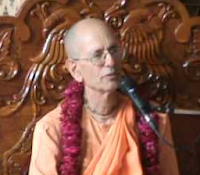
On November 26, 2025, at the Hare Krishna temple in Alachua, Florida, HH Bhakti Prabhupada Vrata Damodara Mhj delivered a class on Srimad-Bhagavatam (Bhagavata Purana), Canto 3, Chapter 20, verses 30–31, within the celebrated “Conversation Between Maitreya and Vidura.” The session situated these verses in their broader thematic arcVedic cosmology, the principles of creation (sarga), and the alignment of material causality with transcendental purposeoffering an academically grounded yet devotional lens.
Drawing on the Maitreya–Vidura dialogue, the class emphasized how attentive hearing (śravaṇam) and incisive questioning cultivate clarity and humility. Vidura’s inquiries, marked by reverence and sincerity, model the dharmic method of learning in which reason and devotion reinforce one another. This framing allowed the verses to serve as a bridge between philosophical abstraction and lived practice.
The exposition highlighted how verses 30–31 illuminate the relationship between primordial elements, conscious agency, and the Supreme’s oversightunderscoring that cosmic order is neither accidental nor purely mechanistic. Within a Vaishnava perspective, remembrance of Krishna, ethical self-discipline, and gratitude for guidance received through guru-śiṣya paramparā become practical corollaries of the metaphysical insights presented.
In keeping with the unifying spirit of Sanatana Dharma, the reflections resonated with shared values across Hinduism, Buddhism, Jainism, and Sikhism: inner discipline, compassion (dayā/karuṇā), truth-seeking, and continual self-refinement. The class presented these Bhagavata teachings as complementary to a wider dharmic commitmentaffirming plural paths that honor inquiry, non-harm, service, and remembrance of the Divine without sectarian superiority.
Participants noted a felt sense of calm and purpose as complex cosmological ideas were rendered accessible through relatable analogieslinking macrocosm to microcosm, and universal process to personal conscience. The atmosphere of shared listening fostered a community of practice, where philosophical nuance naturally translated into ethical intention.
The key takeaways were clear: study of Srimad-Bhagavatam benefits from steady contemplation, disciplined hearing, and reflective application; devotion deepens when aligned with reasoned understanding; and dialogueas modeled by Maitreya and Viduraremains central to spiritual maturation. These insights were presented not merely as doctrine, but as a reproducible method for daily sādhanā.
By situating SB 3.20.30–31 within Vedic philosophy and lived devotion, the class affirmed that cosmology, ethics, and bhakti are mutually reinforcing. Such alignment nurtures unity in spiritual diversity, strengthens inter-dharmic respect, and supports a shared pursuit of truth with humility and hope.
Inspired by this post on Dandavats.