

On Friday, July 17, 2026, the Tamil month of Aadi begins under the calendar framework followed for this guide. Four days later, on Tuesday, July 21, the first Aadi Chevvai observance brings heightened devotional activity to Avvaiyar Amman Temple at Thazhakudy near Nagercoil. The remaining Aadi Tuesdays fall on July 28, August 4 and August 11. Together, these four dates form the principal festival cycle associated with the temple in 2026.
The event is often described as a month-long Aadi festival, but that description benefits from clarification. Aadi is the sacred month within which worship continues, while Tuesdays are the temple’s most distinctive festival days. The atmosphere on those days is shaped by special pujas, women-centred vows, food offerings and the arrival of devotees from across Tamil Nadu and neighbouring Kerala.
The shrine is commonly called Nagercoil Avvayar Amman Temple in online calendars, although it is situated at Thazhakudy, also written as Thalakudy, in Kanniyakumari district. “Avvaiyar” and “Avvayar” are both encountered in English-language references. Recognising these spelling and location variations is important when searching for directions, transport information or local announcements.
Aadi Festival 2026 dates at a glance
Aadi Pirappu: Friday, July 17, 2026. First Aadi Chevvai: Tuesday, July 21. Second Aadi Chevvai: Tuesday, July 28. Third Aadi Chevvai: Tuesday, August 4. Fourth and final Aadi Chevvai: Tuesday, August 11. The first Tuesday is treated as the ceremonial beginning of the temple’s major Aadi observances in the supplied source.
For wider calendar context, the five Aadi Fridays, or Aadi Velli dates, are July 17, July 24, July 31, August 7 and August 14. Fridays are important for Goddess worship throughout Tamil Nadu, but they should not be confused with the Tuesday-centred Avvaiyar Amman tradition at Thazhakudy. A confirmed temple notice should always take precedence over a general festival calendar when planning a special puja or group visit.
Why Aadi is calculated differently from many Hindu festivals
Aadi is the fourth month of the Tamil solar calendar. Its beginning is associated with the Sun’s transition from Mithuna Rashi to Karkataka Rashi, an ingress commonly called Karka Sankramana or Karkataka Sankranti. This solar basis distinguishes Aadi from festivals fixed primarily by a lunar tithi. Once the local beginning of Aadi has been established, Aadi Chevvai simply denotes each Tuesday falling within that solar month.
Published almanacs can occasionally assign a solar month boundary to different civil dates because they apply different computational conventions, traditional systems or rules concerning the time of solar ingress. The working 2026 calendar used here places Aadi Pirappu on July 17 and the month’s conclusion in mid-August. Devotees arranging vows, offerings or travel should nevertheless follow the dates announced by the temple or a locally accepted Tamil panchangam.
The religious and seasonal meaning of Aadi
Aadi falls broadly between mid-July and mid-August, when seasonal rain, water, cultivation and household rhythms are prominent concerns in Tamil life. Festivals such as Aadi Perukku express gratitude for life-sustaining water, while Aadi Chevvai and Aadi Velli concentrate attention on manifestations of the Divine Mother. The month therefore joins environmental awareness, agricultural memory, family practice and temple devotion rather than functioning as a single uniform festival.
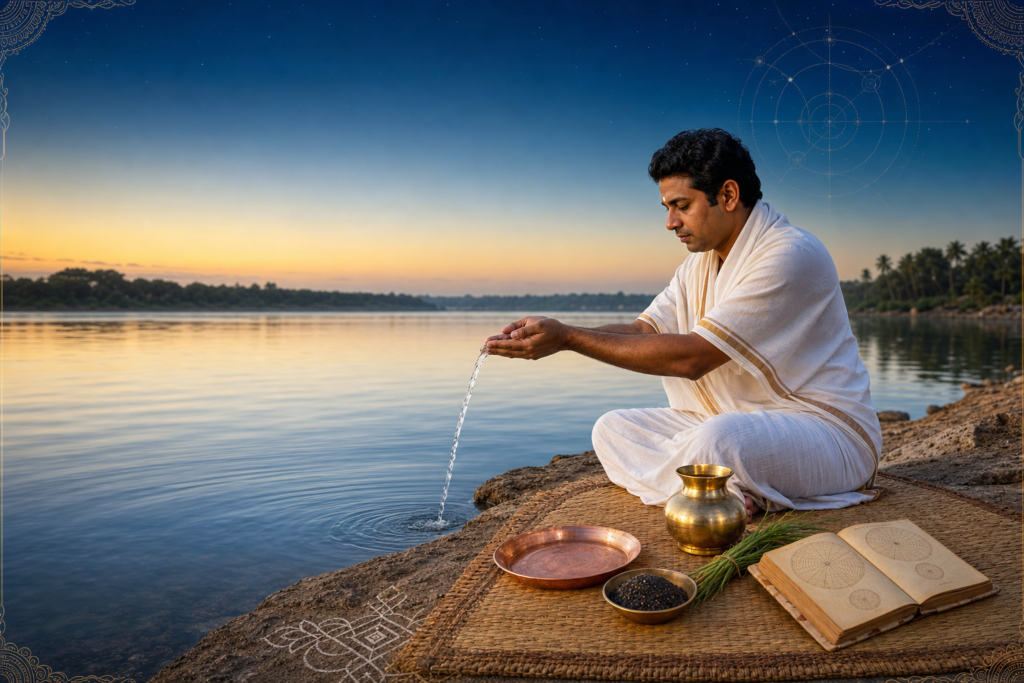
Many Tamil families traditionally avoid scheduling weddings, house-warming ceremonies and certain other major domestic events during Aadi. This custom does not make the month spiritually empty or inherently unfortunate. On the contrary, religious energy is redirected toward Amman worship, vows, pilgrimage, charity, community food and reflection. Aadi can consequently be understood as a period of devotional concentration rather than merely a list of prohibited activities.
Chevvai means Tuesday in Tamil and is also the Tamil name associated with Mars in astrological usage. Popular religious interpretation connects the day with disciplined energy, protection and the resolution of obstacles. At Amman temples, these themes are placed within Shakti worship. Such explanations belong to living devotional traditions and should be presented as religious interpretations, not as scientifically demonstrated causal claims.
Which Avvaiyar Amman Temple does the festival refer to?
Kanniyakumari district contains more than one sacred site associated with Avvaiyar. Muppandal has an Avvaiyar-linked shrine near Aralvaimozhi, and the Kurathiyarai cave sanctuary is also locally connected with Avvaiyar worship. The Aadi Chevvai festival discussed here refers specifically to the Avvaiyar Amman Temple at Thazhakudy near Nagercoil, the shrine repeatedly identified in local reporting about large Tuesday gatherings and kozhukattai offerings.
Published descriptions place Thazhakudy approximately 14 kilometres from Nagercoil, around 8 kilometres from Aralvaimozhi and roughly 27 kilometres from Kanniyakumari town. These measurements are approximate and can vary with the selected road. Visitors using navigation applications should search for “Arulmigu Avvaiyar Amman Temple, Thalakudy” and confirm the destination before beginning the final part of the journey.
Temple history and architecture
The temple’s precise construction history has not been established through a widely available, comprehensive inscriptional study. One published local guide describes it as approximately 300 years old, while a 2025 heritage-walk account tentatively associates its fabric with the sixteenth- or seventeenth-century Vijayanagara-Nayaka period. These estimates should remain provisional rather than being presented as an exact foundation date.
A recent architectural description records a south-facing temple composed of a sanctum, an ardha mandapam and a mukha mandapam, with a small vimana above the sanctum. It also notes Dwarapalakis near the sanctum entrance, Naga images and Vinayagar close to Avvaiyar Amman, and a Murugan shrine in the prakara. Renovation work was visible during the documented 2025 visit, so architectural photographs and surface details may not represent an unchanging condition.
This arrangement is religiously significant. Avvaiyar is not isolated as a literary memorial but placed within a living sacred landscape that includes Amman worship, Vinayagar, Murugan and Naga traditions. The temple consequently demonstrates how Tamil religious memory can unite poetry, local history, family vows and several interconnected forms of Hindu devotion.
Avvaiyar as poet, cultural memory and Amman
Avvaiyar is among the most respected names in Tamil literary culture, but academic discussion requires an important distinction: the name is an honorific associated with more than one woman poet from different periods. The Avvaiyar represented in Sangam literature and the later Avvaiyar associated with concise ethical works should not automatically be compressed into one securely dated biography. Temple tradition, however, often gathers these layered memories into a single revered figure.
The word Amman conveys the devotional idea of mother or goddess. Venerating Avvaiyar as Amman elevates wisdom, elderhood, ethical instruction and feminine authority into sacred qualities. This makes the Thazhakudy shrine particularly distinctive: it is not simply dedicated to a conventional divine form, but to the devotional memory of a Tamil woman whose name represents poetry, moral intelligence and public counsel.
Local sacred geography also associates the site with the well-known sutta pazham and sudatha pazham episode involving Avvaiyar and Murugan. In the story, Murugan appears as a young herdsman and gently exposes the limits of intellectual pride through a playful question about fruit. Other retellings locate this episode elsewhere, so its connection with Thazhakudy is best understood as a local temple tradition rather than a historically verified incident.
Another local account connects the place with the story of the rare gooseberry associated with Avvaiyar and the chieftain Athiyaman. Such narratives do not operate like modern archival evidence. Their importance lies in the way communities map literary memory onto physical landscapes, allowing devotees to encounter ethical stories through pilgrimage, ritual and repeated family visits.
How Aadi Chevvai worship unfolds
Aadi Tuesdays attract devotees seeking special darshan and puja at Avvaiyar Amman Temple. Older local reports describe morning worship, daytime alankara deeparadhana and evening deeparadhana on the first Tuesday. Exact 2026 timings have not been treated as confirmed in this guide because daily opening hours, crowd-control arrangements and special puja schedules can change.
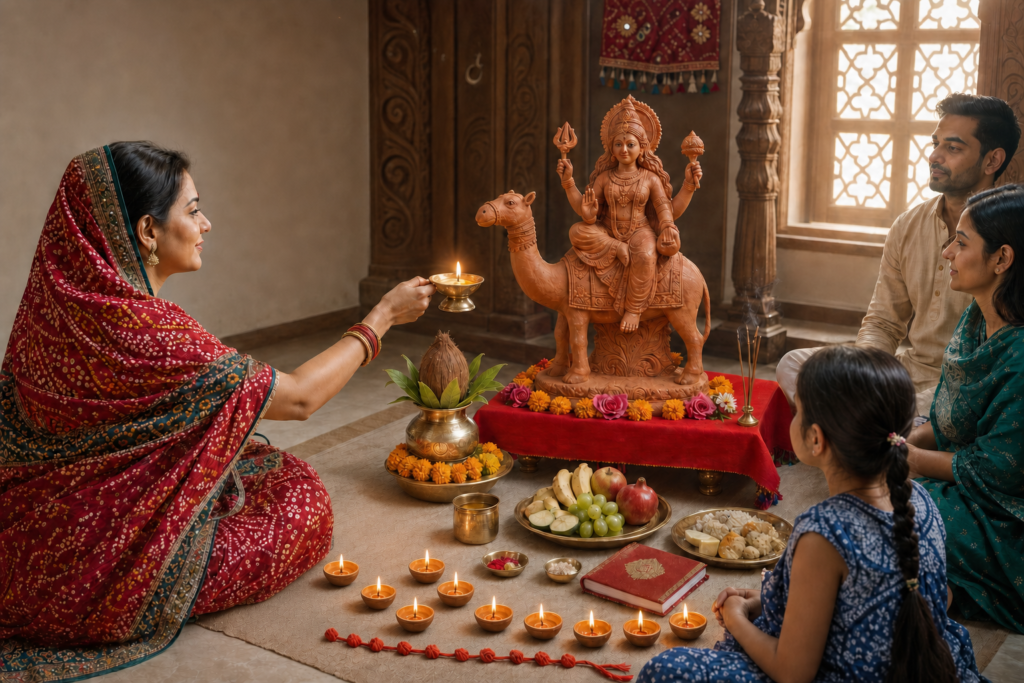
The observance is closely associated with Avvaiyar Nonbu, a women-centred vow found in the southern districts of Tamil Nadu. Women and girls traditionally gather, prepare offerings, listen to ritual narratives and pray together. The practice transfers knowledge through participation: recipes, stories, gestures and the meaning of the vow are learned from relatives and senior members of the community rather than from a single standardised manual.
Kozhukattai is the offering most strongly associated with the Thazhakudy festival. Local accounts describe preparations using raw rice flour, sugar or jaggery, coconut, dry ginger and cardamom. Both sweet and salt-free or savoury variations have been reported, and koozh is also offered. Recipes may differ by family lineage, vow and local instruction; variation should therefore be recognised as part of the tradition rather than treated as an error.
The kozhukattai is steamed, placed before Avvaiyar Amman and later shared as prasadam. In this sequence, ordinary household ingredients acquire ritual meaning through intention, labour and offering. The transformation is especially relatable because it does not depend on rare materials. Rice, coconut, heat and collective effort become a language through which gratitude, hope and family memory are expressed.
Historical reports describe women cooking near the temple, worshipping from the preparation area and taking portions home. They also record a formerly stricter women-only character for certain forms of the vow and prasadam sharing. These accounts should not be converted into an unsupported rule about present-day temple entry. Current instructions from temple personnel and the privacy of women performing a vow should both be respected.
Prayers for marriage, children and family welfare
Unmarried women traditionally worship Avvaiyar Amman while seeking a suitable marriage, and married women pray for family harmony, children and the long life of a spouse. Couples experiencing childlessness also visit the shrine with prayers for fertility. These are devotional aspirations reported by worshippers; they should not be represented as guaranteed outcomes or as substitutes for medical, psychological or social support.
The emotional importance of these prayers is nevertheless substantial. Questions of marriage, fertility and family continuity can carry intense private expectations. A collective ritual can provide belonging, reassurance and a recognised way to express uncertainty. Respectful coverage should therefore avoid judging childless couples, unmarried adults or families whose circumstances differ from older social expectations.
The festival also reveals women’s role as custodians of ritual memory. Food preparation, oral narration and collective worship are not peripheral activities; they are central mechanisms through which the observance survives. What may appear to be a simple offering is simultaneously a form of religious knowledge, intergenerational education and community organisation.
Practical guidance for visiting in 2026
Tuesday, July 21 is expected to be the first major Aadi Chevvai gathering, followed by July 28, August 4 and August 11. A visitor seeking the fullest festival atmosphere may choose one of these Tuesdays, while anyone who needs a quieter darshan should ask locally about an ordinary day in Aadi. Arrival early in the day is prudent, but no unverified opening time should be treated as authoritative.
Thazhakudy is reached by road from Nagercoil, and Aralvaimozhi is another nearby transport point. Nagercoil Junction provides wider rail connectivity, while older visitor guides identify Aralvaimozhi as the closest railway station to the shrine. Travellers arriving from outside the district should allow additional time for local traffic and the slower movement expected near the temple on festival Tuesdays.
Local news reports from previous years describe special bus services from Nagercoil through routes such as Erachakulam, Chenbagaramanputhur and Thazhakudy during Aadi Tuesdays. That historical practice does not by itself confirm a 2026 timetable. Bus availability, departure points and return services should be checked with the transport operator or local authorities shortly before travel.
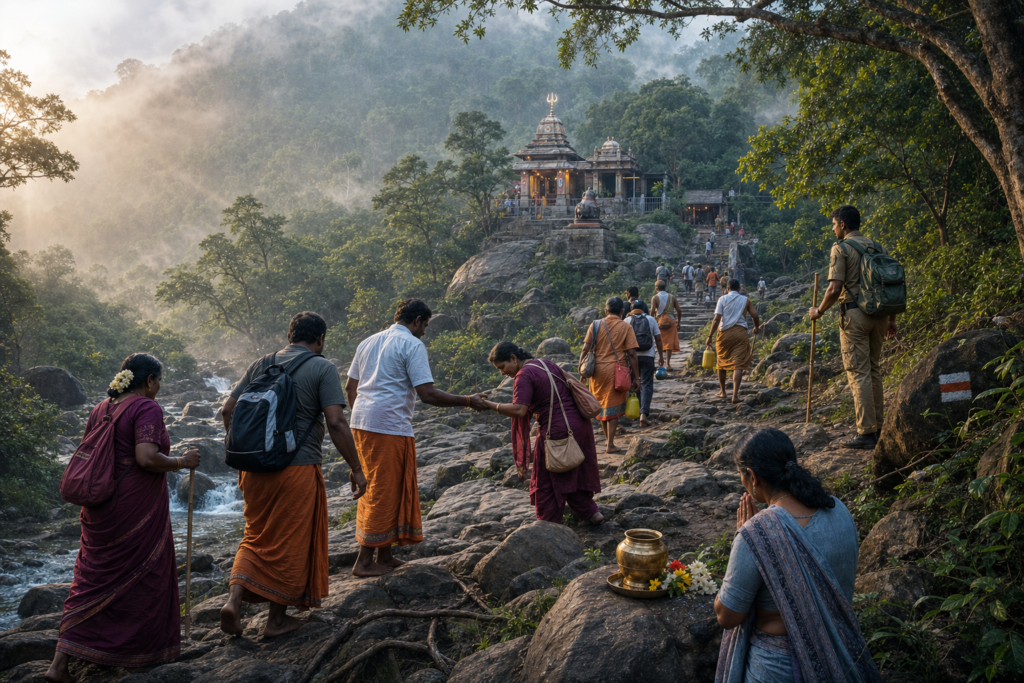
Visitors should wear modest, comfortable clothing, remove footwear where directed and carry only what can be managed in a dense queue. July and August can bring rain, humidity and slippery surfaces in Kanniyakumari district, making a compact umbrella, drinking water and secure footwear useful for the journey. Plastic waste should be minimised, and all disposal instructions around cooking and worship areas should be followed.
People bringing ingredients or prepared food should first determine whether the temple permits outside offerings and where they may be handled. Open flames, steam, crowded cooking areas and hot vessels require particular care around children and older visitors. Prasadam may contain rice, coconut, sugar or jaggery, dry ginger and cardamom, with possible cross-contact from other ingredients; anyone with an allergy should ask before consuming it.
Photography should never interrupt puja, food preparation or a private vow. Images of devotees, especially women engaged in Avvaiyar Nonbu, should be taken only with clear permission. A festival is not merely a public spectacle because it occurs in a crowded place; it can contain deeply personal prayers that deserve discretion.
Visitors accompanying an older person, a child or someone with limited mobility should enquire about vehicle access, walking distance, seating and queue support before arrival. No comprehensive accessibility statement for the 2026 festival was located in the reviewed material. Planning conservatively is therefore more responsible than assuming that every facility will be available during the busiest hours.
How to approach the festival respectfully
A respectful visit begins with observation. Local queue systems, instructions from temple staff, spaces reserved for ritual cooking and customary sequences of darshan should be followed without demanding special access. Devotees performing a vow should not be pressed to explain private circumstances, and prasadam should be accepted or declined courteously.
Those unfamiliar with the tradition should avoid treating every reported practice as mandatory. Avvaiyar Nonbu can vary between households and districts, and temple worship may differ from a private observance. Guidance from a trusted family elder or the temple is more reliable than copying an elaborate internet ritual whose origin and local relevance are unclear.
The festival’s most compelling quality is not scale alone. Its emotional power comes from familiar ingredients becoming sacred food, literary memory becoming living worship and private hopes being carried into a communal space. For returning families, the repeated journey can function as a living archive in which elders, younger generations and neighbours renew a shared relationship with place.
Aadi as a framework for dharmic unity
The Thazhakudy observance is specifically a Tamil Hindu tradition and should be identified accurately as such. Its underlying values—reverence for wisdom, disciplined practice, shared food, care for community and respect for teachers—can also support constructive understanding among Hindu, Buddhist, Jain and Sikh communities. Unity is strengthened by respecting the distinct history of each tradition rather than inventing identical rites for all of them.
Within Hindu practice itself, the shrine creates a natural meeting point for Amman devotion, Murugan narratives, Vinayagar worship, Naga symbolism and the cultural authority of Tamil literature. This layered character shows that religious unity need not erase local identity. A small regional temple can preserve a highly specific women-centred observance while remaining meaningful within the broader dharmic landscape.
Research and verification note
The 2026 dates were cross-checked against HinduPad’s Aadi Chevvai calendar. Temple customs were compared with Dinamalar’s local reporting on the Thazhakudy festival, while location, architecture and provisional dating were checked against a 2025 Nanjil Nadu heritage-walk record and a published temple guide. Information was reviewed on July 15, 2026. A verified temple-specific notice containing 2026 opening hours, special puja times or bus schedules was not located, so those administrative details should be confirmed locally.
Aadi Festival 2026 at Avvaiyar Amman Temple is therefore best understood as more than a date on the Tamil calendar. It is a concentrated expression of Goddess worship, women’s ritual agency, Tamil literary memory and community continuity. The four Aadi Tuesdays—July 21, July 28, August 4 and August 11—offer the clearest opportunity to encounter this distinctive tradition, provided that the visit is planned carefully and approached with humility.
Inspired by this post on Hindu Pad.



Leave a Reply
You must be logged in to post a comment.