The Mudgala Purana is a Sanskrit Upapurana centered on Lord Ganesha and widely regarded as an authoritative source for Ganesha’s theology, sacred history, and forms. Classified as a distinct text from the Skanda Purana, it builds a focused theological framework for Ganapati while remaining consonant with the broader Purana tradition of Hindu scriptures.
Scholarly consensus places the composition and redaction of the Mudgala Purana in the late medieval period, with layers likely compiled between the 13th and 16th centuries CE. Within the Ganapatya tradition, it serves as a primary reference for doctrine, ritual, and symbolism, presenting a systematic account of Ganesha’s nature and the spiritual aims of his worship.
A hallmark of the Mudgala Purana is the exposition of eight incarnations of GaneshaVakratunda, Ekadanta, Mahodara, Gajavaktra, Lambodara, Vikata, Vighnaraja, and Dhumravarna. Each incarnation overcomes a corresponding asura that embodies a human vice, such as jealousy, arrogance, delusion, greed, anger, desire, possessiveness, and pride. Interpreted together, these narratives offer a practical ethical map: devotees are guided to recognize inner obstacles and cultivate wisdom, discipline, and compassionate action.
Ritual instruction in the text addresses core practices of Ganapati worship, including puja sequences, vrata observances, homa guidelines, and the recitation of mantras and stotras. These prescriptions support both household devotion and temple liturgy, aligning personal sadhana with community rites such as Ganesh Chaturthi. By uniting theology with daily practice, the Mudgala Purana shapes a living tradition that is accessible, repeatable, and spiritually robust.
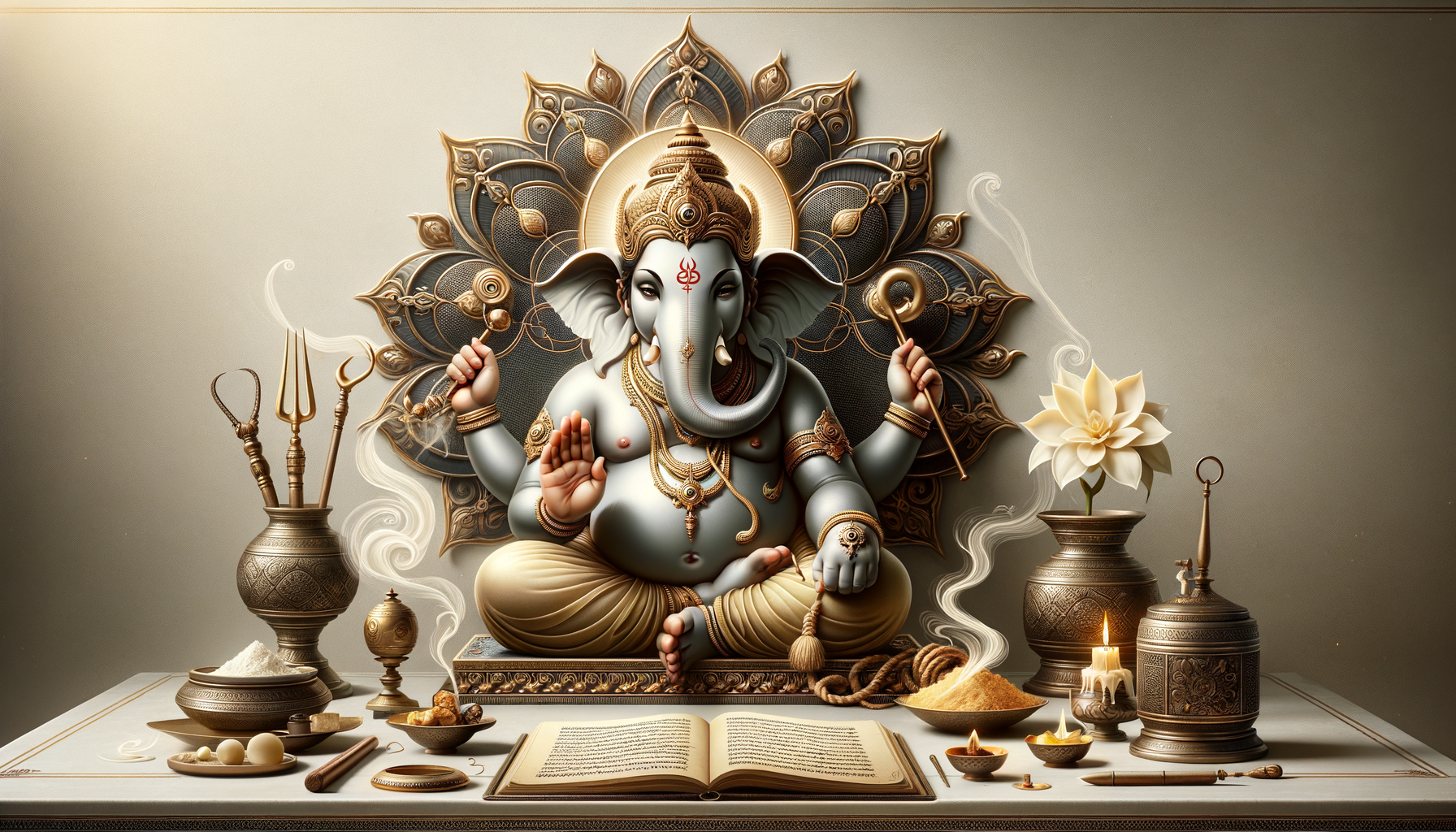
Doctrinally, the Mudgala Purana integrates bhakti with a clear philosophical vision: Ganesha is not only Vighneshvarathe remover of obstaclesbut also a conduit for knowledge (jnana) and righteous action (dharma) that lead toward moksha. Iconographic featuresthe elephant head symbolizing wisdom and attentive listening, the large belly denoting forbearance, and the broken tusk emblematic of sacrifice for knowledgeare tied to ethical cultivation and spiritual maturation.
Intertextually, the Mudgala Purana remains distinct from the Skanda Purana’s focus on Skanda/Kartikeya and episodes such as Skanda Sashti, yet it harmonizes with the Purana corpus by honoring the plurality of deities and paths. This complementarity underscores a hallmark of Hindu traditions: multiple scriptures, deities, and lineages cooperate to illuminate a shared quest for truth and well-being.
In a wider Dharmic context, the virtues elevated by the Mudgala Purana resonate with the ethical cores of Buddhism, Jainism, and Sikhismself-mastery, humility, right conduct, and service. By framing the defeat of inner vices as the heart of spiritual advancement, the text offers a unifying vocabulary for seekers across Dharmic traditions and strengthens the spirit of unity in diversity.
The text’s contemporary relevance is twofold. For devotees, it provides clear ritual pathways and meditative touchstones to navigate life’s uncertainties with steadiness and devotion. For students and researchers, it offers an indispensable window into late medieval Hindu theology, regional devotional practice, and the evolution of Ganapati’s worship across India.
A practical reading approach begins with the avatara narratives to grasp the ethical arc, followed by engagement with ritual sections for embodied practice. Reflecting on each asura as a personal obstacle can transform the stories into a sustained sadhana: attentive listening (sravana), thoughtful reflection (manana), and disciplined application (abhyasa) aligned with the Purana’s guidance.
Inspired by this post on Hindu Pad.