Mahabahu, derived from the Sanskrit roots “maha” (great) and “bahu” (arms), functions in Hinduism as far more than a description of physical prowess; it is a concise emblem of ethical strength, disciplined action, and responsibility. Within Hindu scriptures—especially the Ramayana, Mahabharata, and Bhagavad Gita—the epithet signifies the capacity to protect, to serve, and to uphold dharma with unwavering steadiness. As a concept, Mahabahu bridges Vedic literature, epic narrative, and lived spiritual practice, making it a resonant touchstone for readers seeking clarity at the intersection of philosophy, ethics, and devotion.
In the epic tradition, Mahabahu appears as a revered honorific for exemplars of duty and courage. Sri Rama in the Ramayana and Arjuna in the Mahabharata are frequently associated with this ideal, embodying the union of martial capability and moral restraint. The Bhagavad Gita repeatedly employs the vocative form—mahabaho—when Sri Krishna addresses Arjuna, underscoring that true readiness for action rests on self-mastery, clarity of purpose, and compassionate intent. Thus, the mighty arms signify not conquest, but consecrated action aligned with dharma.
Philosophically, the imagery of the “mighty arms” points to the human capacity to act skillfully in a world that often demands both courage and care. In this reading, arms are instruments of karma—means through which vows, responsibilities, and service manifest. The Mahabahu ideal fuses external strength with inner steadiness cultivated by sadhana, wisdom, and ethical discernment. It speaks to the kshatra ethos—strength consecrated by restraint—where protection of the vulnerable, fidelity to truth, and the refusal to act out of anger or pride mark the highest form of power.
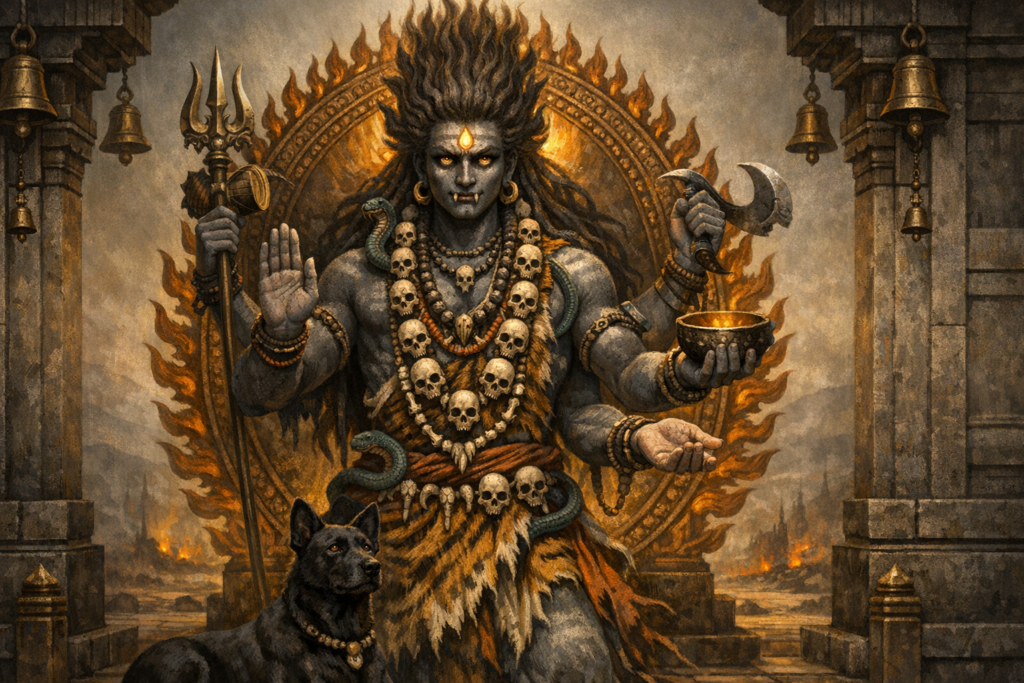
Vedic and Puranic symbolism brings further depth: “maha” suggests expansiveness—greatness of consciousness and intention—while “bahu” evokes both capability and multiplicity. In Hindu iconography, multiple arms often symbolize a deity’s manifold capacities to sustain, protect, and guide. Read in this light, Mahabahu becomes a compressed theological statement: power is sacred only when guided by wisdom, non-harm (ahimsa) where possible, and responsibility where necessary. The term thereby integrates shakti (power) with dharma (ethical law), framing strength as service rather than domination.
Across the broader dharmic family—Hinduism, Buddhism, Jainism, and Sikhism—the Mahabahu insight resonates as a shared ethic of courageous compassion. In Buddhism, fearless compassion and skillful means (upaya) guide action; in Jainism, vīrya (energy) aligns with non-violence and steadfastness; in Sikh teachings, the sant-sipahi (saint-soldier) ideal blends devotion with just action. While terminology differs, all prioritize strength anchored in ethical clarity, self-restraint, and service to the common good. This shared horizon fosters unity: diverse paths converge on the principle that power attains its highest meaning when it protects life and upholds truth.
For many practitioners, the Mahabahu ideal becomes palpable in everyday life: showing resilience in adversity, standing firm for justice without rancor, and offering protection without seeking recognition. Whether in leadership, community service, or family responsibilities, one encounters moments where decisiveness must be tempered by empathy. Here, Mahabahu functions as a practical guide: act with strength, speak with clarity, and remember that the measure of power is the good it enables.
Ethically, Mahabahu reframes conflicts and challenges through the lens of dharma-yuddha—acting justly with minimal harm and with the welfare of all in view. It rejects both passivity in the face of injustice and aggression untempered by conscience. The ideal calls for training the “arms” of action through disciplined study, meditation, and Karma Yoga, ensuring that courage is continuous with compassion and that protection never divorces itself from humility.
In the study of Sanskrit and Hindu scriptures, Mahabahu thus becomes a key to understanding how the epics encode philosophy within narrative. It illuminates why terms of address in the Bhagavad Gita carry ethical weight, how the Ramayana models leadership as service, and how the Mahabharata interrogates the limits of power without principle. As a unifying motif, it affirms a central insight shared across dharmic traditions: the strongest arms are those guided by wisdom, devoted to service, and restrained by love for all beings.
Ultimately, Mahabahu is an invitation to embody strength that heals, protects, and uplifts. By aligning capability with conscience and courage with compassion, it offers a timeless path for individuals and communities to build ethical resilience. In this way, the mighty-armed ideal sustains unity in diversity—honoring multiple spiritual lineages while converging on a common commitment to truth, responsibility, and the welfare of all.
Inspired by this post on Hindu Blog.