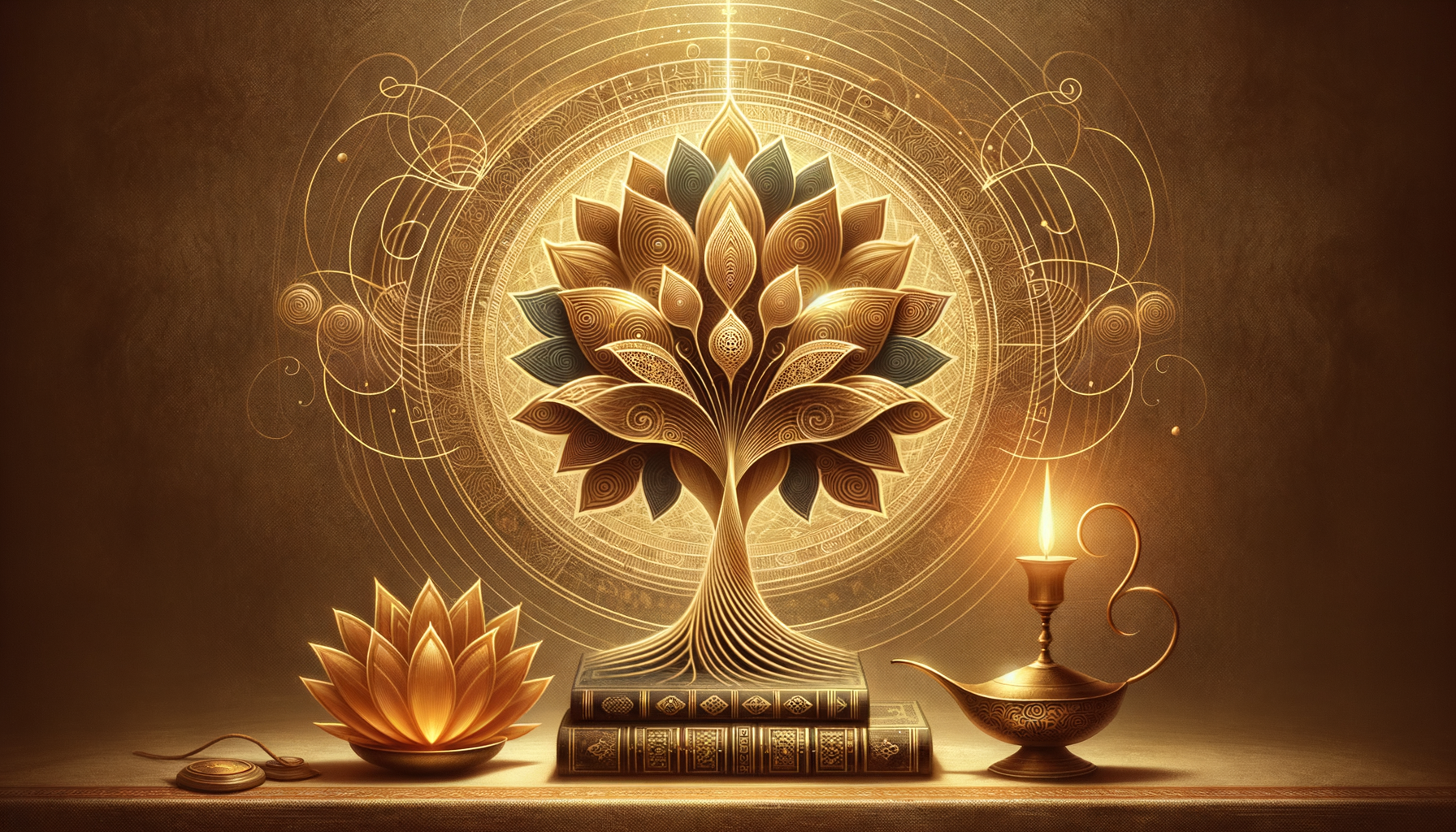
Kalpataru, a Sanskrit term meaning “wish-fulfilling tree,” also names a seminal 13th-century commentary in Advaita Vedanta authored by Amalananda. In the intellectual lineage of Indian philosophy, this Kalpataru serves as an extended exposition on Bhamati, the influential sub-commentary by Vacaspati Mishra on Śaṅkara’s Brahma-sutra-bhashya. The title aptly signals both abundance and depth: a textual tree whose branches offer insight, coherence, and a rich harvest of interpretive clarity.
Within the Advaita Vedanta tradition, Bhamati is renowned for its rigorous engagement with the Upanishads and Brahma Sutra through careful analysis of pramana (means of knowledge), avidya (ignorance), and the non-dual identity of Atman and Brahman. Amalananda’s Kalpataru advances this conversation by refining arguments, stabilizing definitions, and responding to objections drawn from contemporaneous schools such as Nyaya, Mimamsa, and Dvaita. The result is a lucid consolidation of Bhamati’s core positions that rewards close, sustained reading.
Methodologically, Kalpataru exemplifies classical Sanskrit scholarship. It employs exacting hermeneutics, a dialectical structure that stages objections and resolutions, and an unwavering attention to textual nuance. Concepts are unfolded step by step, moving from grammatical precision to metaphysical import, so that the reader comes to see how Advaita Vedanta reasons from scriptural sentences to philosophical conclusions without sacrificing either logic or reverence for the śruti.
The commentary’s influence radiates forward in the history of Indian philosophy. Appaya Dikshita’s Kalpataru Parimala, for example, further illuminates Amalananda’s work, creating a multi-layered tradition of explanation that sustained teaching lineages, manuscript study, and scholastic debate for centuries. This chain—Śaṅkara, Vacaspati Mishra, Amalananda, and later Appaya Dikshita—offers a living map of how Sanskrit literature and philosophical reasoning reinforced one another within a vibrant commentarial culture.
Although firmly situated in Advaita, the intellectual ethos of Kalpataru resonates across dharmic traditions. Its disciplined inquiry and respect for multiple viewpoints echo the analytic rigor of Buddhist pramana discussions and the Jain emphasis on anekantavada, while its contemplative orientation toward inner realization harmonizes with Sikh reflections on the unity of the Divine. Read in this spirit, Kalpataru not only deepens understanding of Advaita Vedanta but also nurtures empathy and unity among Hinduism, Buddhism, Jainism, and Sikhism—distinct paths converging on shared quests for truth, wisdom, and ethical living.
For contemporary readers—students of Indian Philosophy, seekers exploring the Upanishads, or those drawn to the logic of Vedanta—Kalpataru functions as a reliable guide. A practical pathway might begin with Śaṅkara’s Brahma-sutra-bhashya, proceed to Vacaspati Mishra’s Bhamati, and then turn to Amalananda’s Kalpataru before consulting Appaya Dikshita’s Kalpataru Parimala. Each layer clarifies the previous one, transforming complex doctrines into intelligible insights that inform study, contemplation, and responsible dialogue.
Ultimately, the symbolic and scholastic senses of Kalpataru converge. As a “wish-fulfilling” resource, it offers the intellectual abundance of Advaita Vedanta—careful reasoning, scriptural fidelity, and a contemplative aim—while encouraging a broader dharmic harmony. Readers encounter not only the fine-grained arguments of Amalananda but also a tradition-wide invitation to cultivate clarity, compassion, and unity in philosophical and spiritual pursuits.
Inspired by this post on Hindu Blog.