The fall of the Yadava dynasty, often recalled as a solemn episode in Hindu scriptures, stands as a compelling study in how internal discord can undo even the most powerful communities. Not conquered by external enemies, the Yadavas met their end through fratricidal conflict, underscoring a timeless lesson for all dharmic traditionsunity, self-restraint, and collective responsibility are indispensable for social cohesion.
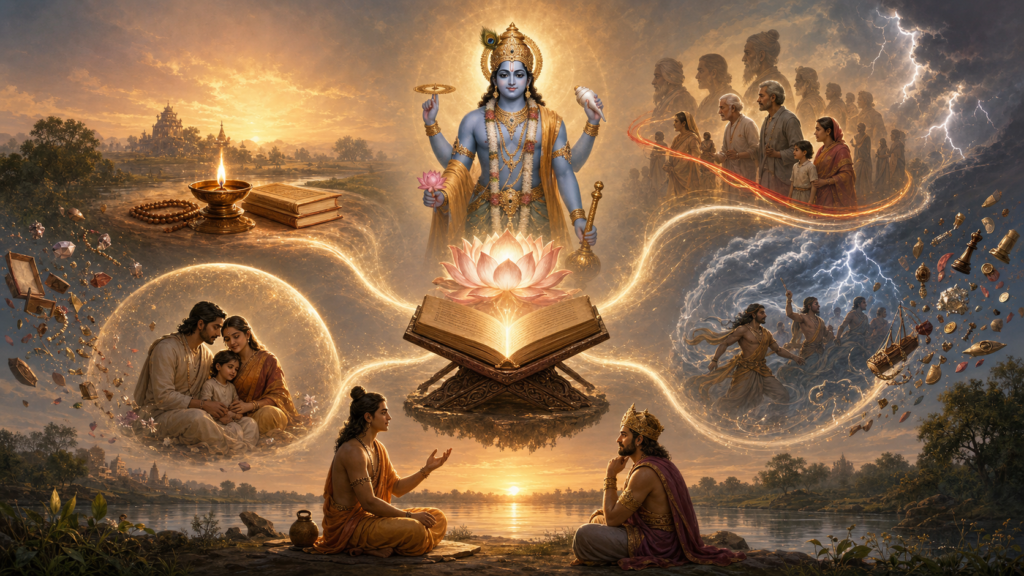
In the Mahabharata’s Mausala Parva, the narrative situates the Yadavas at Prabhāsa years after the Kurukshetra War. Despite the presence of Sri Krishna and Balarama, a series of events unfolds with symbolic inevitability. A rash prank by youthful Yadavas toward venerable rishis invites a curse. From this curse emerges an iron club; though ground into powder and cast into the sea, its fragments return as reeds along the shore. During a bout of intoxication, those reeds become lethal weapons, and the Yadavas turn upon one another, ending their lineage in tragic fratricide.
The symbolism is striking. The iron club functions as a metaphor for hardened pride and unexamined hubris. Grinding it to dust but failing to cleanse the underlying tendencies speaks to superficial remedies that ignore root causes. Reedsordinary, harmless growthtransform into instruments of destruction, suggesting how everyday words, tools, or habits can, in moments of anger, become vehicles of harm. Intoxication denotes not only literal inebriation but a broader moral clouding: arrogance, factionalism, and loss of dharmic restraint.
Krishna and Balarama’s presence emphasizes another profound insight: enlightened leadership cannot substitute for the community’s inner discipline. Where collective ethics erode, even great leadership allows consequences to unfold in accordance with dharma and karma. The lesson is not fatalistic; rather, it highlights the responsibility of each member to safeguard unity through self-mastery, mindful speech, and service.
Read as cultural and ethical instruction, the Yadavas’ annihilation conveys a “symbolism of infighting” that resonates beyond any single sect. Hindu teachings on satya (truth), ahiṁsā (non-violence), and dama (self-control) align with parallel values across Buddhism, Jainism, and Sikhism. Right Speech and Sīla in Buddhism, ahiṁsā and aprigraha in Jainism, and sangat, seva, and sarbat da bhala in Sikhism collectively affirm that inner discipline and communal care preserve unity amid diversity.
Practically, this dharmic consensus advises contemporary families, sanghas, and community institutions to cultivate restraint and dialogue. In an age of polarization and rapid communication, small slights can escalate quicklyjust as the reeds became weapons in the Yadava narrative. Codes of conduct, structured mediation, and shared seva anchor communities in a common purpose, making disagreements manageable rather than existential.
Several grounded practices emerge from this scriptural reflection: honor diversity in Ishta and practice without denigrating another’s path; adopt shared ethical norms for speech and conduct; engage elders and respected mediators early; avoid substances and settings that inflame conflict; institutionalize seva projects that strengthen bonds; and build rituals of reconciliationfestivals, collective prayers, and dialogue circlesto regularly renew trust.
The narrative’s closing scenes also hold meaning. Balarama’s yogic withdrawal and Krishna’s departure, followed by the submergence of Dvārakā, remind communities that worldly power and prosperity are transient. What endures is the quality of collective characterintegrity, compassion, and mutual accountabilitywhich determines whether a lineage flourishes or fades.
For readers seeking actionable wisdom, the Yadavas’ story is not an elegy to despair but an invitation to renewal. When understood as a moral map rather than mere history, the Mahabharata points to proven methods for safeguarding unity: disciplined speech, humble leadership, and a shared dharmic ethic. In this sense, the fall of the Yadavas becomes a living guideencouraging Hindus and all dharmic communities to transform potential fractures into opportunities for deeper solidarity.
By decoding the symbolism of infighting among the Yadavas, this teaching becomes a practical framework for today’s households, institutions, and interfaith dharmic collaborations. It affirms a complete and enduring insight: communities thrive when unity is consciously cultivated through restraint, empathy, and service grounded in dharma.
Inspired by this post on Hindu Blog.