In the sacred narratives of Hindu tradition, the emergence of Goddess Bala stands as a profound example of divine intervention in the struggle between dharma and adharma. According to Shaiva and Shakta recensions that interpret the Andhakasura episode, Bala arises as an emanation of Shiva’s supreme consciousness, embodying youthful radiance, protective compassion, and decisive spiritual power. This portrayal aligns with a broader theological motif in which deities manifest specific shaktis during cosmic crises to restore order.
Multiple Puranic and regional traditions present complementary details of the Andhakasura battle, where each drop of the demon’s blood was said to generate new adversaries. In these accounts, Shiva invokes powerful feminine emanations to contain the proliferating forces of chaos. Within this interpretive landscape, Goddess Bala appears as a focused, childlike yet formidable shakti whose purity of intent neutralizes illusion and steadies the field of conflict—an image that has inspired devotees seeking clarity amidst turmoil.
The figure of Bala harmonizes gracefully with the well-known Shakta understanding of Bala Tripurasundari—the youthful form of Tripurasundari—who represents an ideal of innocence merged with wisdom. Theologically, the Bala archetype suggests that clarity and truth, when unburdened by ego, can act swiftly and effectively against confusion and fear. The child-goddess symbolism thus communicates that spiritual strength is not only ferocity in battle but also lucidity, integrity, and compassion in action.
Within Shaiva scriptures and Shakta traditions, divine intervention often unfolds through the appearance of specific goddesses whose functions are both spiritual and protective. Just as the Saptamatrikas are depicted assisting in blood containment during the Andhakasura myth, Bala’s emergence in certain tellings contributes a complementary dimension: the arresting of delusion through pure awareness. This interpretive synthesis preserves doctrinal coherence while allowing for regional and sectarian diversity in storytelling.
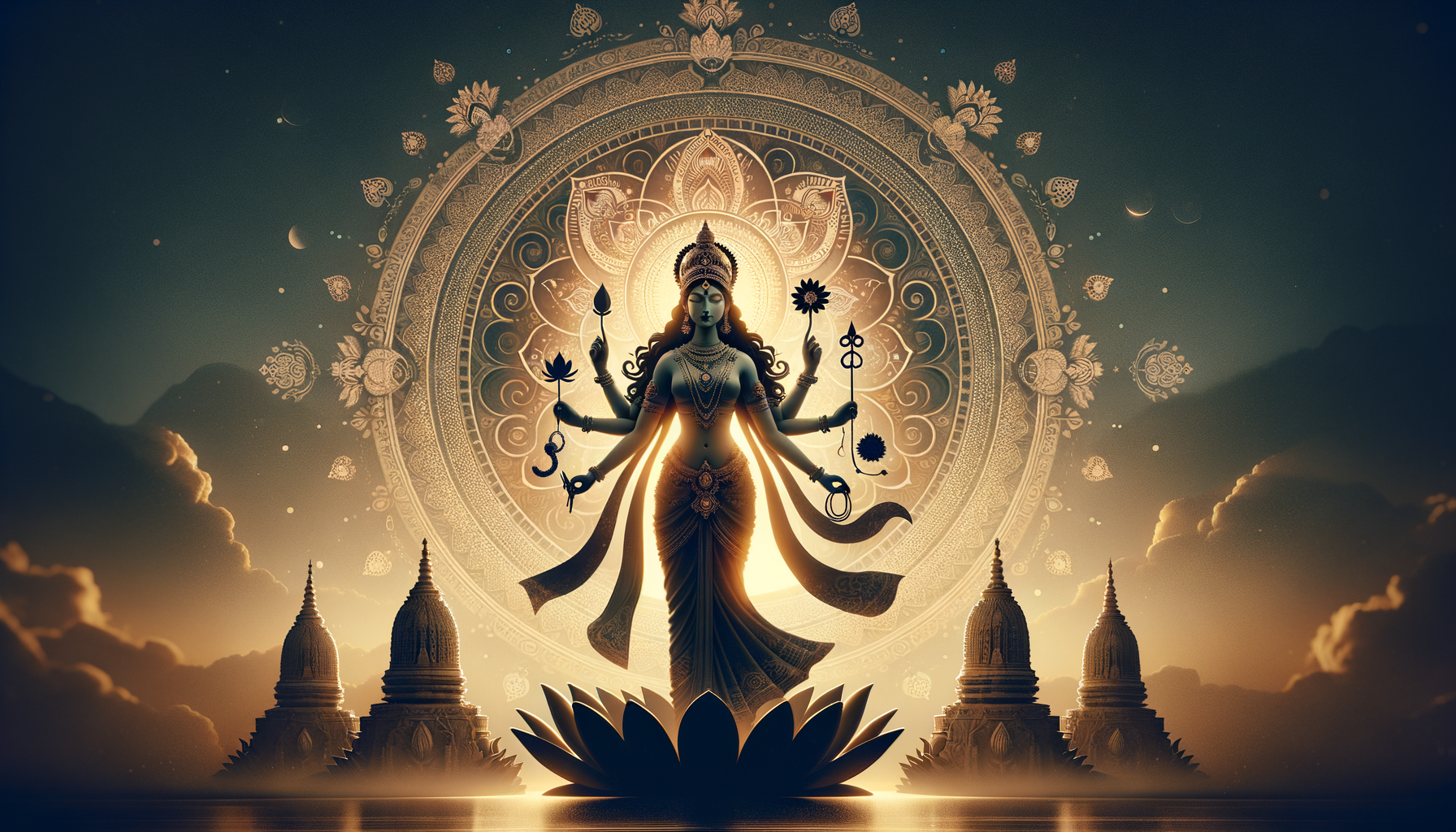
Iconographically, Bala is venerated in forms that emphasize both innocence and mastery. Depending on the regional tradition, she may be shown with attributes such as the pāśa (noose) and aṅkuśa (goad), or the sugarcane bow and flower-arrows associated with Tripurasundari, signifying gentle control of the mind and the flowering of refined desire aligned with dharma. Such imagery reinforces the message that spiritual discipline, guided by compassionate intelligence, can transmute raw force into enlightened action.
For contemporary practitioners, the Bala narrative offers relatable guidance. Devotees often describe a felt sense of steadiness when contemplating Bala before challenging tasks, as if the mind were gently led from scattered impulses to one-pointed discernment. This experiential dimension encourages practices that cultivate inner clarity—study of Hindu scriptures, japa, mindful breathing, and reflection—so that engagement with the world proceeds from calm strength rather than reactive intensity.
Viewed through a dharmic lens that values unity across traditions, Bala’s symbolism resonates beyond sectarian boundaries. The Buddhist ideal of vigilant awareness, the Jain emphasis on non-harm paired with self-mastery, and the Sikh stress on courageous service all echo the same ethical horizon embodied by Bala’s poised power. Such correspondences affirm the shared civilizational ethos: the disciplined, compassionate transformation of self for the protection and upliftment of society.
The Andhakasura episode therefore becomes more than mythic battle; it functions as a contemplative template for confronting inner and outer adversity. Whether interpreted as historical allegory or spiritual metaphor, the episode teaches that unclouded vision—Bala’s hallmark—prevents the multiplication of conflict. By meeting agitation with lucid courage, individuals and communities reinforce dharma without diminishing empathy.
In devotional settings, observances dedicated to Bala often emphasize purity, study, and gentle steadiness. Practitioners report that even brief, consistent contemplation of Bala’s form and attributes can recalibrate daily life: speech grows measured, decisions become clear, and emotional resilience deepens. These tangible outcomes illustrate how sacred narrative, iconography, and practice interweave to produce ethical transformation.
Ultimately, Goddess Bala’s emergence during Shiva’s struggle with Andhakasura communicates a timeless lesson: youthful clarity is not naivety but refined power. By integrating Bala’s qualities—innocence fused with insight, softness aligned with strength—seekers cultivate a form of valor appropriate to our era: principled, inclusive, and oriented toward the common good. In this way, the tradition honors plurality within Hinduism while affirming shared dharmic values across Buddhism, Jainism, and Sikhism.
Inspired by this post on Hindu Blog.