
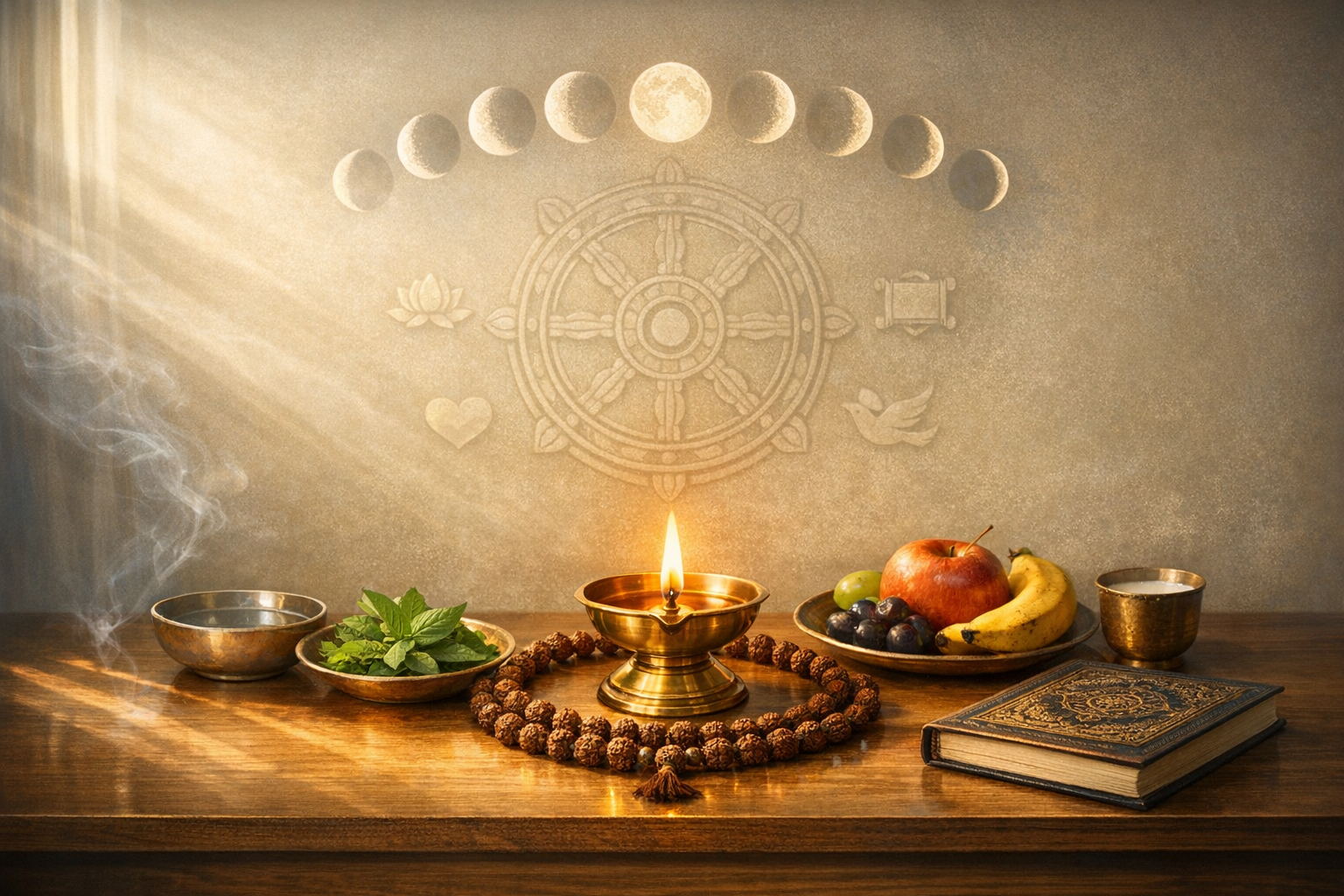
Dharmaprapti Vrat, also known as Dharmavapti Vrat, is described in Hindu scriptures as a month-long vrata undertaken to cultivate Dharma—righteous conduct, spiritual merit, and ethical clarity—while aligning one’s aspirations with a higher purpose. As a māsa‑vrata (month-long vow), it emphasizes sustained discipline, devotional focus, and compassionate action as the means to attain dharma-artha-kāma-mokṣa in a balanced manner.
The very name of the observance conveys its aim: dharma (righteousness) + prāpti (attainment). Rooted in the broader Dharmaśāstra and Purāṇic framework that extols vrata, tapas, and dāna, this observance channels daily intention and conduct toward sattva (purity), anchoring householders and monastics alike in principles of ahiṃsā, satya, self-restraint, and devotion. It is practiced across diverse Hindu traditions and, in spirit, resonates with allied dharmic paths.
Scriptural tradition recognizes month-long vows as powerful vehicles of inner transformation, especially when undertaken with śraddhā (faith) and niyama (regularity). While texts vary across regions, the shared logic is consistent: a clearly stated sankalpa, consistent sādhana, and generosity toward all beings form the spine of a fruitful vrata. Each practitioner tailors specifics according to family paramparā, local panchāṅga guidance, and health considerations.
The duration spans a complete lunar month, customarily counted from an auspicious tithi chosen in consultation with the panchāṅga and family ācārya. Many households prefer to begin in the śukla pakṣa (waxing fortnight), though regional practice may favor a particular weekday (e.g., Monday, Thursday) or a spiritually potent month such as Magha, Śrāvaṇa, or Kārttika. The key is steadiness of observance across the chosen thirty days.
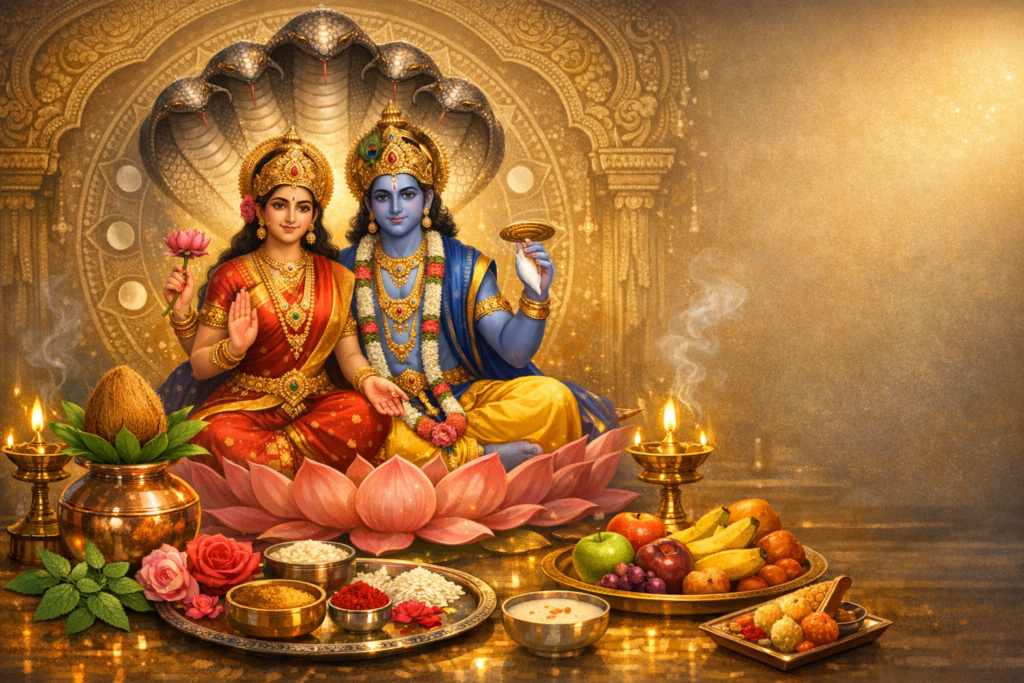
Presiding deity traditions vary. Some lineages dedicate Dharmaprapti Vrat to Lord Viṣṇu, others to Lord Śiva, and many to one’s iṣṭa-devatā or the principle of Dharma (Dharma‑devatā) itself. Alignment with the kula‑devatā and guidance from elders or gurus ensures fidelity to living tradition while allowing for meaningful personal connection.
A concise sankalpa articulates intention and scope, for example: “Om Dharmāya Namaḥ. Dharmaprapti‑vrata‑siddhyartham, dharma‑prāpti kāmaye.” The vow explicitly states the period (one lunar month), the mode of fasting, key observances (japa, svādhyāya, dāna), and the aspiration to deepen Dharma in thought, speech, and action.
Preparation includes snāna (purificatory bath), light ācamanam, and arranging a clean, serene place for worship. A lamp (deepa), water for arghya, simple flowers or leaves (such as tulasī for Viṣṇu or bilva for Śiva, as tradition permits), and a sattvic naivedya are generally offered. The physical setting reinforces mental clarity and calm.
Daily practice centers on morning worship, japa, and contemplation. Many recite Viṣṇu Sahasranāma, Bhagavad‑Gītā passages, or hymns to the chosen deity. Soft kīrtana, brief dhyāna on the meaning of Dharma, and surya‑arghya at sunrise can be integrated as per capacity. The cadence of the day is steady rather than strenuous, emphasizing constancy over intensity.
Modes of fasting are selected responsibly: nirjala (waterless) is exceptional and not advised for most; jala‑upavāsa (water only), phalāhāra (fruits/milk), ekabhukta (one meal), or laghu-sāttvika āhāra (light sattvic preparations) are common. The choice should reflect health, age, climate, and work conditions. The vrata’s essence is mindful self-discipline, not self-harm.
Sattvic dietary guidelines typically avoid tamasic items and stimulants. Regionally appropriate vrat foods—such as milk, fruit, nuts, sabudāna, sama rice (barnyard millet), or kuttu-based preparations—are adopted where customary. Hydration, adequate electrolytes, and medical prudence are essential for safety and continuity.
Conduct guidelines (yama‑niyama) form the ethical core: non-injury, truthful speech, restraint in consumption and entertainment, and careful stewardship of time and attention. Many practitioners limit social media and reactive conversation, noticing a measurable rise in calm, attention, and goodwill toward others as the month unfolds.
Scriptural study (svādhyāya) deepens the vrata. Selected verses on Dharma from the Bhagavad‑Gītā, Itihāsa‑Purāṇa narratives that illuminate right conduct, and passages from Dharmaśāstra (as guided by teachers) are commonly studied. The emphasis is on internalization—bridging text and life through reflection and application.
Dāna (charity) and sevā (service) are integral. Feeding people respectfully, extending annadāna, supporting education or healthcare, caring for animals, or contributing to environmental cleanliness—all are consistent with the dharmic thrust of the vow. The etiquette is quiet dignity and inclusivity, honoring the one family of humanity—Vasudhaiva Kutumbakam.
Evening worship often includes lighting a lamp, brief japa, and reflective journaling on the day’s ethical victories and lapses. Many close with a simple ārati and sharing of prasad within the household, fortifying the family’s shared commitment to Dharma.
Where feasible, practitioners may align their month with anchor days such as Ekādaśī, Pradosha, or other tradition-specific markers. This is optional and guided by one’s paramparā; the Dharmaprapti Vrat is not contingent on any single auxiliary observance.
On completion (udyāpana), households typically perform a concluding pūjā, offer naivedya appropriate to the deity, and share prasad with family, neighbors, or a wider community. Acts of gratitude—including dāna and community feeding—mark the culmination, with a renewed personal commitment to sustain dharmic habits formed during the month.
Regional and lineage variations are respected. Some communities emphasize Viṣṇu worship with tulasī and sattvic sweets; others honor Śiva with bilva and rudrābhiṣeka. Householders may incorporate Guru‑vandanā or Gaṇeśa‑pūjā at the outset. The guiding principle is fidelity to one’s living tradition while nurturing universals of Dharma.
Reported outcomes include steadier attention, more measured speech, and a tangible lift in sattva—traits that benefit family life, professional responsibility, and social engagement. In the idiom of Sanatan Dharma, the vrata channels tapas into practical ethics, transforming intention into habit and habit into character.
The spirit of Dharmaprapti Vrat harmonizes with allied dharmic traditions. Buddhist Uposatha emphasizes mindful conduct and periodic fasting; Jain posadha and Paryuṣaṇa foreground ahiṃsā, atonement, and charity; Sikh practice centers on honest living (kirat karo), remembrance (simran), and seva. Shared values—discipline, compassion, truthfulness—affirm a civilizational unity-in-diversity across Hinduism, Buddhism, Jainism, and Sikhism.
Eligibility is broad. Householders, students, and working professionals adapt the vrata to daily duties. Those with health constraints may choose a milder dietary discipline, a manovrata (vow of mindful speech and reduced reactivity), or focused svādhyāya and sevā; pregnant individuals, the elderly, and those on medication should seek medical advice and observe a gentle form aligned with well-being.
If a lapse occurs, the mature response is honesty and restoration—acknowledging the breach, performing a modest prāyaścitta (extra japa, a small act of charity), and resuming the observance without guilt. In dharmic practice, resilience and sincerity weigh more than perfectionism.
For practical continuity, many find it helpful to set a simple daily cadence: early waking, snāna, sankalpa recollection, brief japa or recitation, measured work hours with mindful intervals, evening lamp lighting and reflection, and an act of kindness or charity each day. The month then becomes a laboratory for turning scriptural ideals into lived Dharma.
Dharmaprapti Vrat stands as a holistic sādhanā: a structured month of upavāsa, pūjā, svādhyāya, dāna, and ethical refinement that helps align personal goals with a larger moral universe. With guidance from family tradition and careful attention to health, it offers a time-tested path to cultivate clarity, compassion, and courage—hallmarks of Dharma that benefit both the practitioner and the wider community.
Inspired by this post on Hindu Pad.









Leave a Reply
You must be logged in to post a comment.