The term khila occupies a fascinating and technical place within Vedic literature and the wider ecosystem of Hindu scriptures. Literally evoking an “empty ground,” an interstice left open for later use, khila denotes supplementary verses, sections, or even sūtra-fascicles appended outside the pradhāna (principal) body of a text. Far from being mere add-ons, these materials often complete, clarify, or extend the ritual, theological, and linguistic horizons of the Vedas and the sūtra traditions that flow from them. Read within the architecture of the Vedas, Brahmanas, Āraṇyakas, Upanishads, and Kalpa-sūtras (Śrauta, Gṛhya, Dharmasutra, and Śulba), khila reveals how ancient Indian literature preserved continuity while allowing for careful growth.
Philologically, khila signals a supplementary unit whose relationship to its host corpus is acknowledged yet deliberately distinguished. Sanskrit manuscripts and scholastic parlance frequently use designations such as khila, khilabhāga, khilādhikāra, pariśiṣṭa, or anubandha to mark such layers. The semantic image of a reserved plotneither wasteland nor fully cultivatedcaptures the Vedic habit of safeguarding spaces in which usage-driven additions, alternative procedures, and evolving ritual needs could reside without disturbing the integrity of the received śākhā (recensional) text.
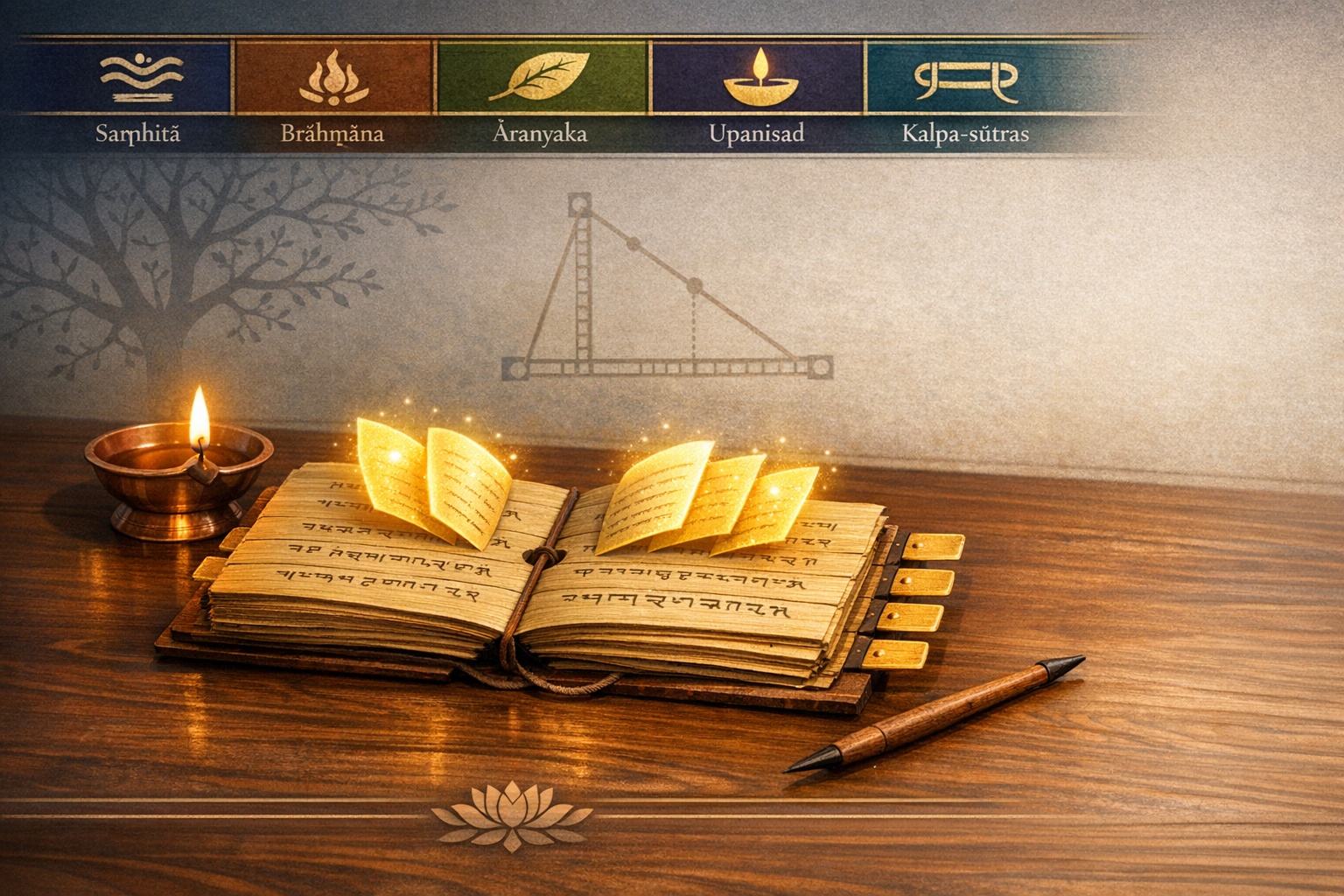
Understanding khila benefits from a clear map of Vedic literature. The Saṃhitā hymns anchor the canon; the Brahmanas and Āraṇyakas elaborate ritual theology and meditative reflection; the Upanishads distill philosophical insight; and the sūtra corporaŚrauta-sūtras for great fires, Gṛhya-sutras for domestic rites, Dharmasutra for normative order, and Śulba-sūtras for altar geometrycodify precise procedures. Across this layered world, khila indicates recognized supplements that meet practical or interpretive needs: additional mantras required in prayer (prayoga), clarificatory rulings for rare contingencies, and localized variants that a living tradition could not afford to ignore.
Because the Vedas were transmitted through distinct śākhās, the boundary between canonical and supplementary material is a function of lineage. Anukramaṇī catalogues and medieval commentaries attest to the fact that what one recension claims as integral another may preserve as khila. This variability is not a defect but evidence of the Vedic method: the canon remains stable within each school while the tradition remains serviceable across regions and centuries.
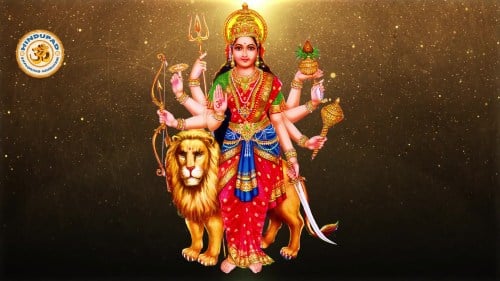
Prominent illustrations appear with the Rigveda Khilāni (supplementary hymns of the Rigveda). Among the best-known is the Śrīsūkta, widely revered and commonly transmitted in manuscripts and recitation lineages as a Rigvedic khila. Its devotional and prosperity-invoking vision of Lakṣmī has made it a pan-Indian stotra, integral to Smārta, Vaiṣṇava, and Śākta practice alike. Other ancillary hymns, such as the Nīla Sūkta in some traditions, exhibit the same pattern: a supplement in the technical sense, yet spiritually and ritually central in the lived religion of many communities.
In practical worship, such supplements are anything but peripheral. Household and temple liturgies commonly incorporate khila hymns for specific vows (vrata), seasonal observances, and festival homas. During Lakṣmī Pūjā, for instance, many families first encounter the power of the tradition’s interstitial texts through the Śrīsūktaan encounter that often fosters lifelong attachment to Vedic mantras and illuminates how the Vedas, beyond their canonical architecture, continue to breathe within ordinary life.
Khila also has a precise footprint in the sūtra domains. Manuscripts of several Śrauta- and Gṛhya-sutras preserve supplementary fascicles designated as khilāni or pariśiṣṭas. These units typically address topics that are rare, regionally specialized, or ancillary to the main procedure: expiatory rites (prāyaścitta) after ritual mishaps, alternate mantric sequences for unusual calendrical alignments, clarifications for royal or large-scale sacrifices, and instructions for rites that developed on the margins of a given śākhā but proved pastorally indispensable.
From a pedagogical standpoint, khila-sūtras allowed teachers to keep the core text concise while ensuring that complex or exceptional cases were not lost. Where the principal sūtra outlines the pradhāna (primary) sacrifice or samskāra, its khila may preserve variants, local usages (deśācāra), or application notes that prevent ritual paralysis in the face of diversity. In this way, khila becomes the tradition’s safety netnever overruling the canon, yet enabling Gṛhya Sutras, Dharmasutra norms, and Śrauta procedures to function smoothly in lived contexts.
Textual critics and Vedic philologists identify khila strata by several converging signals: metrical habits with a somewhat later Vedic flavor, vocabulary reflecting emergent theological emphases, and intertextual borrowing patterns visible across śākhās. These indices do not reduce supplements to “late” in any simplistic sense; rather, they help establish relative chronology and map the pathways by which mantras and sūtras circulated, settled, and were sanctioned by practice (ācāra) and teacherly authority (ācārya-pramāṇa).
Manuscript culture corroborates the supplementary status of such materials with notable care. Palm-leaf and paper codices from regions as diverse as Gujarat, Rajasthan, Maharashtra, Andhra, and Nepal frequently segregate khila with clear colophons, altered foliation, or distinct rubrics. Commentators, including Sāyaṇa in some lines, occasionally pass over khilas when their brief was tied to a specific recensional Saṃhitā, while ritual handbooks (prayoga-granthas) foreground them precisely because those texts serve priests and householders navigating real ceremonies.
Hermeneutically, Mīmāṃsā offers a rigorous way to think about authority. The primary canon (śruti) is inviolable within its śākhā; supplements are read so as to support, not supplant, primary injunctions (vidhi). When a khila supplies an aṅga (subsidiary limb) or a clarifying arthavāda (explanatory passage), it is welcomed in practice provided it harmonizes with established procedure and intention (saṅkalpa). This is why Śrīsūkta, while technically a supplement in many Rigvedic lines, enjoys sanctity akin to mainstream hymns in domestic ritual and temple worship.
The social life of khila underscores a vital fact about Vedic literature: what the tradition maintained as textually ancillary could be religiously central. In weddings, prosperity rites, and seasonal fasts, khila hymns and sūtra-pariśiṣṭas often deliver the mantras and directions people actually need. This interplay between canonical core and functional periphery deepens, rather than dilutes, the authority of the Vedas by ensuring that the Vedic tradition serves householders, renunciants, and temple communities without forcing uniformity where context calls for nuance.
Seen more broadly, khila illuminates a shared civilizational habit across the dhārmic family. Buddhism’s layered Nikāyas and Abhidharma with local commentarial traditions, Jainism’s niryuktis and bhāṣyas accompanying the āgamas, and Sikhism’s Rehatnāmas explicating the lived discipline of the Panth all witness to the same intuition: core revelation remains intact, yet responsible supplements and commentaries ensure relevance across space and time. This underlying unity in diversity is a hallmark of Sanātana Dharma and its sister traditions, sustaining harmony without erasing distinctive identities.
Modern scholarship, aided by searchable corpora and new critical editions, continues to refine the mapping of Rigveda Khilāni and sūtra supplements. Digital cataloguing of Sanskrit manuscripts and more systematic comparisons of anukramaṇī listings have brought greater clarity to how khilas were transmitted and deployed. Such work does not unsettle ritual life; rather, it illuminates the pathways by which revered texts traveled, thereby strengthening the bond between historical understanding and living faith.
For readers and practitioners, a few principles make engagement with khila both faithful and fruitful. First, locate a khila in its śākhā-specific context; second, read it in conversation with relevant Brahmanas, Gṛhya Sutras, and Dharmashastras; and third, consult trusted prayoga-granthas and community elders for how a supplement is used today. This triangulationcanon, commentary, and living practicereflects how the Vedic tradition itself validated textual layers long before modern academia supplied names for them.
Ultimately, khila is less an afterthought than a window into the Vedic genius for continuity through accommodation. By designating an “open ground” for necessary additions, guardians of the Vedas and sūtra traditions preserved both exactness and adaptability. In doing so, they safeguarded a scriptural ecology in which the Vedas, Brahmanas, Upanishads, and Kalpa-sūtras remain luminous, while carefully curated supplements help the tradition address changing ritual landscapes and nurture unity across Hindu, Buddhist, Jain, and Sikh communities aligned with dharmic values.
Inspired by this post on Hindu Blog.