Bhurishaya Bhairava is a revered epithet within the Bhairava-sahasranāma that crystallizes a central intuition of Śaiva philosophy: existence as plenitude, inexhaustible and all-supporting. Counted among the sacred 1008 names of Bhairavaa fierce yet compassionate manifestation of Shivathe name encodes a doctrinal statement as much as a devotional one: the manifold world both rests in and overflows from a limitless ground of being.
Etymologically, Bhurishaya can be parsed from Sanskrit as bhūri (abundant, manifold, extensive) and śaya (resting, abiding, seat), with cognates well attested in classical lexica. The composite suggests “abiding as abundance,” “the seat of the manifold,” or “the refuge in which the many come to rest.” Whether treated as a tatpuruṣa compound (resting-place of abundance) or a bahuvrīhi (one whose nature is abundant abiding), the semantic field converges on fullness and support.
Within Śaivism, Bhairava names are both descriptors and mantras; each condenses a precise theological nuance and a contemplative cue. The epithet Bhurishaya portrays Bhairava not as a remote deity but as the inexhaustible substratum (ādhāra) that sustains, pervades, and exceeds all formsa metaphysical reading that harmonizes with the non-dual currents of Kashmir Shaivism and the contemplative tenor of the Śaiva Āgamas.
The name “Bhairava” itself has been interpreted through the triadic Bha–Ra–Va schema in Kashmir Shaiva exegesis: bha (bharaṇa, emanation or shining forth), ra (ravaṇa, re-absorption or withdrawal), and va (dhāraṇa, sustaining). Read in this light, Bhurishaya emphasizes the “va”the sustaining restin which emergence and withdrawal occur without exhausting the plenitude of the ground.
Sahasranāma recitation functions as both liturgy and philosophy. By enumerating 1008 names, the tradition gestures to an ontology where the infinite is intuited through the many. Bhurishaya thus operates as a key among these names, pointing to an all-abundant essence that is never diminished by multiplicitya theme resonant with the Upaniṣadic pūrṇam adaḥ pūrṇam idam vision of fullness.
Abundance (bhūri) in Śaiva and Vedāntic thought does not signify material excess; it denotes ontological completeness (pūrṇatā). The world’s dynamism appears as the play (līlā) of consciousness whose fullness neither fragments nor depletes. In this philosophical frame, Bhurishaya Bhairava names the very condition by which anything can appear, endure, and subside while remaining suffused by consciousness.
The second member of the compound, śaya (resting/abiding), lends itself to a robust metaphysical reading. Rest is not mere stasis but a stabilizing, all-accommodating groundakin to the Śaiva categories of āśraya (support) and adhisthāna (basis). Comparable insights surface across Dharmic philosophy: the Vedāntic adhishṭhāna of Brahman, the Kashmiri Śaiva vimarśa (self-reflection of consciousness), and the Buddhist dharmadhātu (field of reality) as the matrix of phenomena.
Textually, the spirit of Bhurishaya aligns with the contemplative instructions of the Vijñānabhairava Tantra, where practitioners are guided to discover the omnipresence of Bhairava through breath, space, and the still point between thoughts. Here “rest” is the direct recognition of consciousness as ever-present supporteasily concealed by mental agitation yet never absent.
Iconographically, Bhurishaya is best approached as a theological epithet rather than as a separate visual form. While Śaiva temples celebrate Aṣṭa Bhairava (the eight Bhairavas) with distinct iconography and regional liturgical variations, the name Bhurishaya overlays any form as its metaphysical identity: the one in whom all forms find repose. This reading keeps ritual artistry anchored to doctrinal clarity.
Cultic geography enriches the name’s meaning. At Kāśī (Varanasi), Kālabhairava is honored as the city’s guardian (kotvāl), embodying fearlessness and ethical restraint; at Ujjain’s Kāl Bhairav Temple, long-standing offerings symbolize transformation of the gross into the subtle. Across these sites, the core intuition is stable: Bhairava protects dharma by holding the many within an all-accommodating presence.
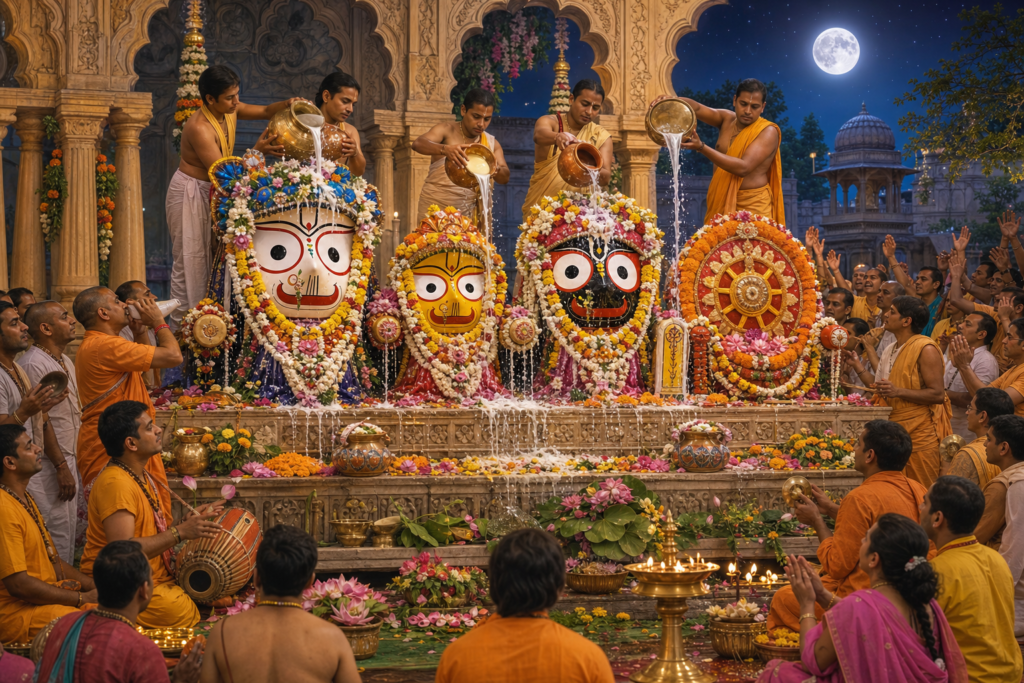
The epithet’s “abundance” also communicates with living goddess traditions. In Kāśī, the Anna-pūrṇā currentfood as fullnessreverberates with Bhurishaya’s assurance that being itself is unstinting. Rituals of abhisheka, archana with sahasranāma recitation, and naivedya (offerings) render this metaphysical abundance tangible as hospitality and dāna (giving).
Practically, the name Bhurishaya can orient contemplation in three steps. First, a semantic recollection (bhūri = abundance; śaya = resting ground) aligns intention. Second, breath-sensitive awareness (as in Vijñānabhairava) reveals a subtle stability beneath fluctuation. Third, ethical embodimentgenerosity, truthfulness, and compassionextends inner plenitude into communal life, weaving metaphysics with lived dharma.
Contemporary practitioners often report that invoking Bhurishaya recalibrates the “scarcity mindset.” When attention narrows under stress, the name becomes an anchor to a wider field of support. Theologically, this is not autosuggestion; it is recognition that consciousness, by nature, accommodates the many. Psychologically, the effect is reduced reactivity, deepened equanimity, and clearer moral discernment.
From a philological standpoint, traditional glosses uniformly preserve the core of abundance and support. Some modern interpreters will occasionally render the sense as “bhūri-āśraya” (refuge of the many) to foreground the protective dimension. While recensional variations across sahasranāma collections exist in general, the doctrinal drift remains constant: fullness that shelters multiplicity.
Cross-Dharmic resonances further illustrate the unifying arc of this epithet. In Newar Buddhism, Bhairava receives ritual honor as a guardian, and in Tibetan Vajrayāna, Vajra-Bhairava (Yamāntaka) functions as a fierce protector transforming fear into wisdom. The shared intuition is clear: a fearless ground reconfigures the energy of terror into clarity.
In parts of western India, Jain communities traditionally acknowledge Kṣetrapāla Bhairava as a guardian of temple precincts while carefully distinguishing this role from the central Jina focus. The gesture underscores a common ethic: sacred spaces are upheld by guardianship, restraint (ahiṃsā), and ordervalues fully compatible with the Bhurishaya accent on sustaining support.
Sikh teachings offer a complementary ethical horizon. The Ik Oṅkār vision, together with qualities such as nirbhau (fearlessness) and sarbat da bhala (welfare of all), resonates with the Bhurishaya insight that authentic fearlessness arises from rooting conduct in an all-supporting reality. While theological languages differ, the ethical alignment toward courage, service, and unity is unmistakable.
Doctrinally, Bhurishaya also aligns with the Śaiva idea of spandathe subtle, vibratory throb of consciousness. Abhinavagupta and the spanda tradition maintain that movement and stillness are not two; rather, motion is the dynamic expression of an unshaken core. Bhurishaya names that core: the rest that is never inert and the abundance that is never exhausted.
As a contemplative exercise, the name can be integrated with nyāsa (placement) by silently touching heart and crown while articulating the meaning internally“abiding as abundance.” Linking the epithet to breath pauses (the natural kumbhaka between inhalation and exhalation) operationalizes the Vijñānabhairava guidance: in the interval, resting is discovered as ever-present support.
Ethically, Bhurishaya invites a culture of sufficiency over accumulation. In a world prone to anxiety about resources, the name directs attention to practices that express plenitudeanna-dāna (sharing food), ecological stewardship, and civic responsibility. The soteriological promise translates into social coherence: when fear subsides, cooperation and compassion grow.
In liturgical calendars, Kālabhairava Aṣṭamī (observed in the dark fortnight following Kārttika Pūrṇimā in many regions) becomes a focal occasion for Bhairava worship. Reciting or hearing the sahasranāma on this day frames the festival not merely as appeasement of a fierce deity, but as contemplative immersion in Bhurishayathe inexhaustible ground from which courage and clarity flow.
Scholarly perspective underscores that names in the sahasranāma tradition are not arbitrary; they map a theology. With Bhurishaya, the map points simultaneously upward (to metaphysical completeness), outward (to compassionate guardianship), and inward (to experiential rest). This threefold vector enables an integrative spirituality shared across Hinduism, Buddhism, Jainism, and Sikhism without erasing distinct doctrines.
In sum, Bhurishaya Bhairava presents a precise, luminous thesis: reality is full, fear is transformable, and support is intrinsic to being. Within Śaiva practice, the name refines attention; within comparative Dharmic frames, it builds bridges of understanding; within daily life, it becomes a reminder that ethical courage draws from an inexhaustible source. The many, resting in the One, are never lessened; this is the promise Bhurishaya keeps.
Inspired by this post on Hindu Blog.