Hindu spiritual traditions present a vision of the Divine that is unconfined by masonry, geography, or icon; Vishnu, as the all-pervading ground of being, is encountered in temples and equally in the elements, cosmic rhythms, and the innermost consciousness. This understanding, central to Vaishnavism yet resonant across dharmic philosophies, reframes worship as an ecology of attention: a disciplined recognition of presence in water, wind, starlight, memory, and ethical action.
Scriptural foundations for this universal worship are unambiguous. The Īśā Upaniṣad opens with the claim īśāvāsyam idam sarvam“all this is pervaded by the Lord”while the Chāndogya Upaniṣad proclaims sarvaṁ khalvidaṁ brahma“all this, indeed, is Brahman.” The Nārāyaṇa Sūkta intensifies the insight, stating that the Supreme pervades everything, within and without. These declarations establish both ontology and practice: if the One permeates all, then all encounters can be sacral, provided they are guided by knowledge (jñāna), devotion (bhakti), and right action (dharma).
The Bhagavad Gītā renders this pervasiveness existential and practical. In 9.4, Kṛṣṇa states mayā tatam idaṁ sarvaṁ“by Me this entire universe is pervaded,” and in 7.8 He teaches raso ’ham apsu kaunteya“I am the taste in water.” The doctrine of the indwelling Controller (antaryāmin), set forth in the Bṛhadāraṇyaka Upaniṣad, further articulates this presence as intimate, immediate, and invariantVishnu as the unspectacular but constant witness-sustainer of all processes. The Gītā’s 15.15 locates this presence precisely: sarvasya cāhaṁ hṛdi sanniviṣṭo“I am seated in the heart of all.”
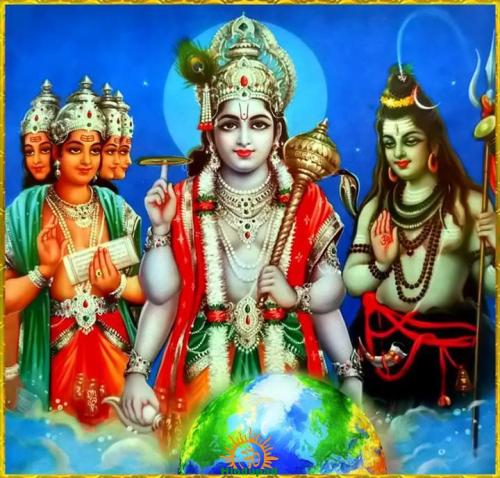
Vaishnava theology organizes this omnipresence through a refined fivefold articulation: para (the transcendent form in Vaikuṇṭha), vyūha (Vāsudeva, Saṅkarṣaṇa, Pradyumna, Aniruddha as cosmic functions), vibhava (avatāras across time), antaryāmi (the indwelling presence), and arcā (the consecrated image). Pancharatra tradition and Vaikhānasa Āgamas employ this schema not to limit Vishnu to forms, but to disclose modalities through which human beings can relate to the limitlessritually, contemplatively, ethically, and cosmically.
This cosmology naturally extends worship into the pañca-mahābhūtasthe five great elements. Earth (pṛthivī) as Bhūmi Devī reminds practitioners that food, soil, and shelter are sanctified gifts; water (ap) becomes prasad when the “taste in water” is remembered before drinking; fire (agni) in the homa-kunda and household lamp is recognized as the Divine witness; air (vāyu) is met through mindful breath; and ether (ākāśa) evokes the subtle vastness in which all vibrations resound. Such recognition does not romanticize nature; it institutes a disciplined reverence that shapes behavior toward environmental harmony and sustainability.
Cosmic bodies and cycles further rhythmize this insight. The Sun is venerated as Sūrya Nārāyaṇa, visible effulgence of the unseen; the moon, stars, and the steady pole of Dhruva anchor meditations on constancy amidst change. Rivers associated with Vishnu’s graceforemost the Gaṅgā, celebrated in Vaishnava hymns as sanctified by the Lord’s feetinvite ecological responsibility alongside ritual purity. Mountains and sacred groves are approached as embodiments of the Cosmic Person (Puruṣa), encouraging care rather than extraction.
Aniconic forms complement iconic presence. Śāligrāma-śilāfrom the Gaṇḍakī riverare revered in many Vaishnava homes as self-manifest forms of Vishnu, with natural markings associated with emblems like the Sudarśana. Dvārāvati-śilā and the worship of Tulasī (sacred basil) deepen this domestic sacrality. Ethical guidelines regarding acquisition and reverent handling underscore that reverence must never degrade ecosystems or communitiesdevotion is inseparable from responsibility.
Daily practice carries this theology into lived experience. The arcā in a home shrine, simple panchopachāra (fivefold offering), japa of the divine names (including the Viṣṇu Sahasranāma), kīrtana, and smaraṇa (remembrance) transform ordinary time. In this mode of universal worship, the first sip of water, the act of lighting a lamp, the mindful breath before a task, and the offering of one’s labor as seva all become concrete meditations on presence. The canonical nine forms of devotion (navavidha-bhakti) are not alternatives to temple worship; they are its radiating circumference.
Ethical action (dharma) and devotion (bhakti) converge in service. Feeding the hungry (annadāna), caring for animals and trees, and practicing honesty in livelihoods are repeatedly framed in the Purāṇas and the Gītā as offerings to the Lord who pervades all. The Īśāvāsya ethosseeing the world as pervaded by the Divinebecomes a charter for ecological stewardship and compassionate social order, strengthening community resilience while honoring sacred interdependence.
Philosophical schools nuance this vision without negating it. Advaita Vedānta emphasizes identity in essence (Brahman as the non-dual Real), Viśiṣṭādvaita affirms the real relatedness of souls and world as Vishnu’s body, and Dvaita maintains enduring difference-in-relation between the Lord and beings; yet each, in its own grammar, supports omnipresence, indwelling guidance, and the legitimacy of devotion. These differences enrich rather than divide the shared intuition that the Supreme can be known, loved, and served everywhere.
This inclusivity aligns naturally with the wider dharmic family. Buddhism’s appreciation of interdependence and the dharmadhātu, Jainism’s reverence for life (ahiṁsā) and the many-sidedness of truth (anekāntavāda), and Sikhism’s affirmation of Ik Onkar converge on a practice-oriented reverence for the One present in all beings. The result is a deep basis for unity in spiritual diversity that honors distinct vocabularies while sustaining mutual respect and collaboration.
Temples remain vital in this visionnot as exclusivist sites, but as concentrated fields of grace that educate the senses, stabilize attention, and anchor communities. Vaishnava āgamas present temples as pedagogies of transcendence: the sanctum draws the gaze inward, processions carry sanctity outward, and festivals synchronize human life with cosmic time. Universal worship begins at the sanctum yet does not end at the threshold; it unfolds into kitchens, classrooms, fields, and forests.
Festivals such as Vaikuṇṭha Ekādaśī, Kṛṣṇa Janmāṣṭamī, and Viṣu encode cosmic alignments into remembrance and restraint, guiding practitioners to align diet, speech, and sleep with sattvic rhythms. The discipline of Ekādaśī fasting, for instance, is not only ascetic training; it is a contemplative ecology that refines perception, steadies the mind, and redirects desire toward higher purpose.
Regional literatures illuminate how landscapes themselves become scripture. The Āḻvārs of Tamil country sing the Divya Prabandham as cartographies of grace, where rivers, fields, and towns are enlivened by the Lord’s presence. The Bhāgavata Purāṇa universalizes this insight through narratives that elevate hearing, chanting, remembering, serving, and surrender as accessible practices that anyone can adopt, anywhere.
In contemporary life, universal worship counteracts fragmentation. When breath is practiced as gift, speech as offering, and livelihood as service, stress diminishes and meaning coheres. Modern research on contemplative practices corroborates ancient claims: steady remembrance and devotional singing can improve emotional regulation, social bonding, and resilience. In this way, timeless disciplines meet present needs without diluting their metaphysical depth.
Pluralism follows organically from omnipresence. If Vishnu pervades all forms and paths of goodness, then multiple, sincerely pursued avenues to the Divine deserve esteem. This dharmic pluralism stands apart from exclusivist models by celebrating complementary truths rather than competing monopolies. Far from relativism, it is a principled commitment to seek wisdom wherever it shines, while remaining rooted in one’s chosen discipline of practice.
Universal worship is thus not an abstraction; it is a method. It teaches practitioners to see with scriptural eyes, feel with devotional sensitivity, and act with ethical courage. It places the Supreme within reach, not by reducing transcendence, but by unveiling itelement by element, breath by breath, moment by momentin nature, in society, and in the silent chamber of the heart.
In sum, Vaishnava scriptures, Pancharatra tradition, and living practice affirm that Vishnu’s presence saturates creation as its source, sustenance, and inner guide. Temples, images, elements, rivers, mantras, and memories become converging gateways rather than competing claims. Such a vision strengthens unity among Hinduism, Buddhism, Jainism, and Sikhism, deepens ecological responsibility, and equips seekers to transform daily life into a pilgrimage of insight and compassionbeyond the temple, yet never apart from it.
Inspired by this post on Hindu Blog.