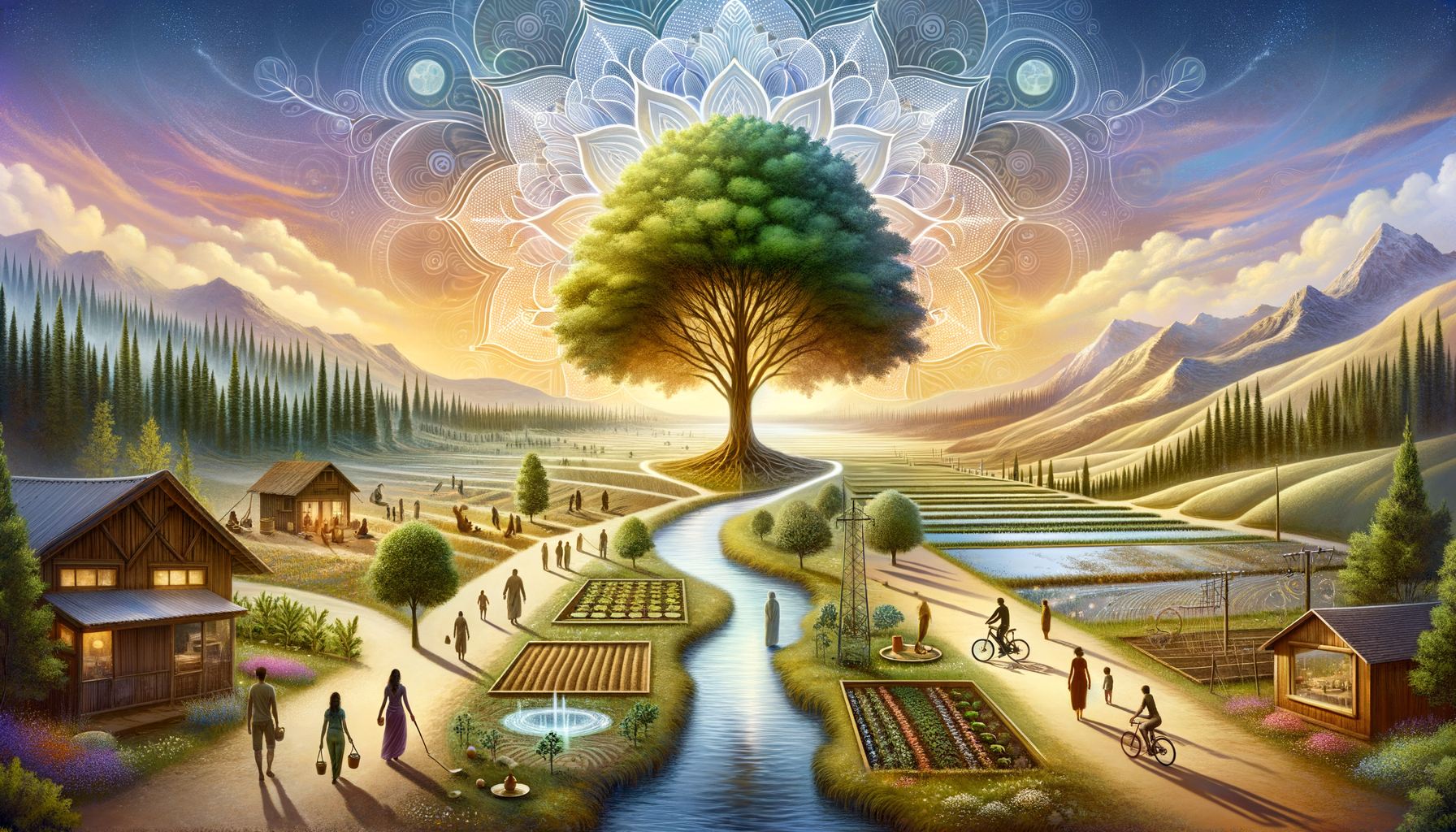
Hinduism, along with the wider dharmic traditions of Buddhism, Jainism, and Sikhism, regards nature as a sacred expression of the divine. This perspective rests on the insight that all beingshumans, animals, plants, and even mineralsare interconnected manifestations of a single universal reality, Brahman. From this vantage, environmental harmony is not merely an ethical preference but a spiritual imperative that defines what meaningful progress truly is.
Within Hindu philosophy, the unity of ātman and Brahman nurtures reverence for Prakriti (nature) as worthy of care, gratitude, and restraint. The Vedic hymns that salute rivers, mountains, forests, and celestial bodies cultivate a lived awareness of Interconnectedness and Mother Earth. Principles such as Dharma and Ahimsa shape Eco-conscious choices and Environmental stewardship, encouraging communities to align daily life with Vedic wisdom and sustainable living.
Across the dharmic family, shared ethical foundations reinforce this ecological vision. Buddhism’s emphasis on interdependence (pratītyasamutpāda) invites mindful living that reduces harm to all life. Jainism’s commitments to Ahimsa and Aparigraha foster non-violence and minimal consumption, natural allies of sustainable living. Sikhism’s ideals of seva and sarbat da bhala orient communities toward compassionate action and collective well-being. These converging insights demonstrate that spiritual diversity and unity can advance an inclusive, Eco-friendly society grounded in respect for all beings.
Under this dharmic lens, true progress is not measured by material wealth or technological prowess alone. It is better understood as the balanced pursuit of the four puruṣārthasartha and kāma guided by dharma, culminating in mokṣa. When prosperity and desire are tempered by ethical responsibility, the result is environmental harmony, social cohesion, and spiritual growth. Indicators such as community well-being, biodiversity, clean air and water, and cultural continuity become as vital as conventional economic metrics.
In everyday life, this vision translates into relatable, practical shifts. One might notice serenity deepen during a morning walk beneath a canopy of native trees, or a stronger sense of belonging while tending a community garden. Mindful festivals that favor natural dyes, simple décor, and minimal waste preserve both tradition and ecology. Simple actsoffering gratitude to rivers, planting saplings, or practicing mindful consumptioncreate tangible bonds between inner peace and outer care.
Practical frameworks flow from these values: reduce waste through repair and reuse; prefer local, seasonal foods; conserve water and energy; and support regenerative practices that heal land and community. Choosing gentler diets in the spirit of Ahimsa, adopting Eco-conscious transportation, and participating in community seva embed compassion in daily routines. Yogic disciplines such as breath awareness and meditation stabilize attention, enabling wiser choices that align personal well-being with Environmental stewardship.
Dharmic thought also offers an expansive ethos captured by Vasudhaiva Kutumbakam“the world is one family.” This principle reframes the human–nature relationship from extraction to kinship. By honoring the sacredness of life across traditions, communities cultivate Spiritual ecology that unites diverse practices without erasing their uniqueness, strengthening unity in diversity while advancing a Sustainable future.
Ultimately, progress that neglects the living world is incomplete. A dharmic approach integrates knowledge, compassion, and action to protect ecosystems and uplift society. By embracing Environmental harmony, Dharma, and Ahimsa as guiding lights, individuals and communities can pursue prosperity that is both ethically grounded and ecologically resilientwhere technological innovation serves life rather than depletes it.
Inspired by this post on Hindu Blog.