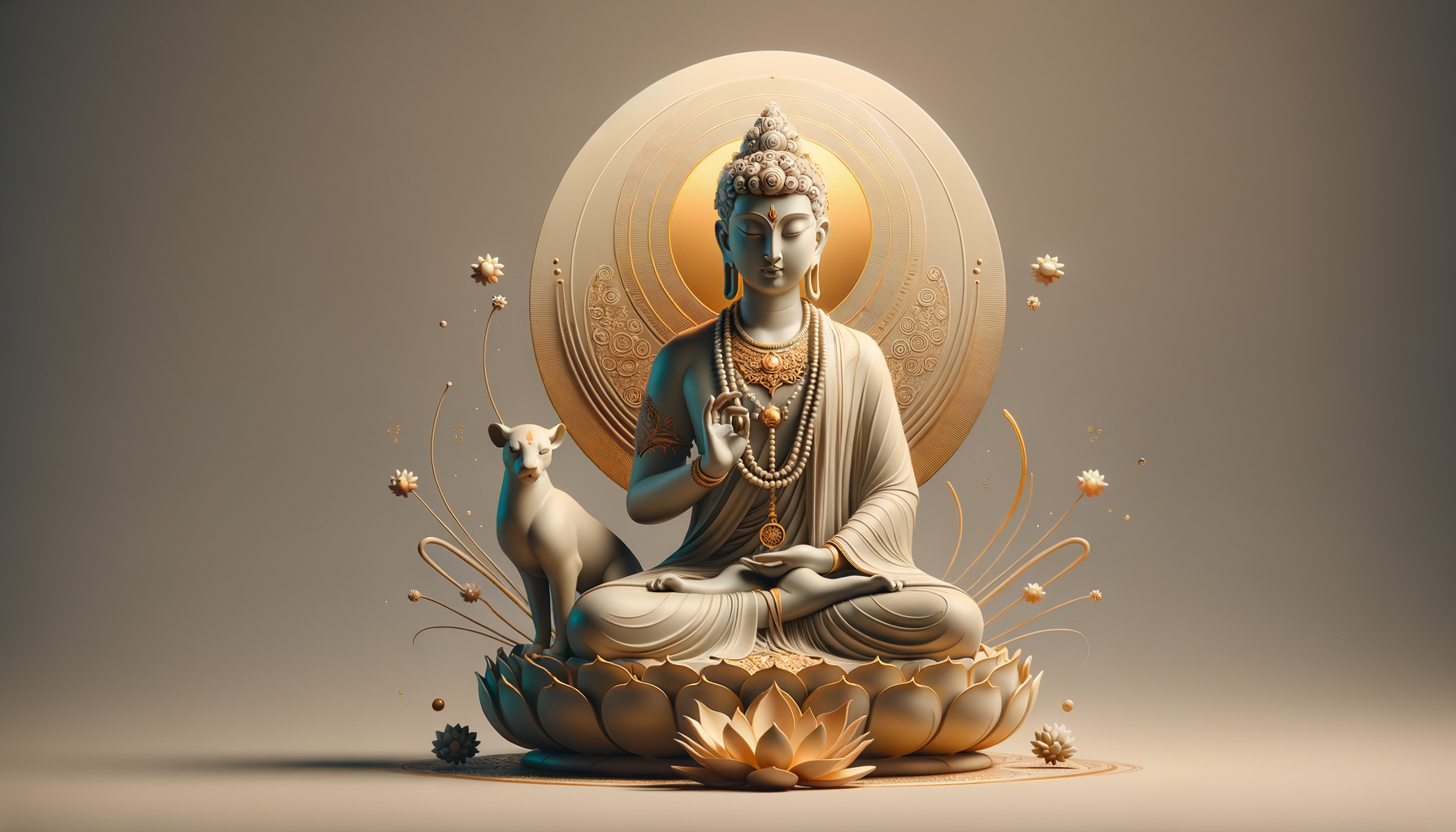
The image of Lord Ganesha, the powerful elephant-headed deity, seated upon a tiny mouse stands as one of the most striking motifs in Hindu symbolism. This divine paradoxgreatness resting on smallnessencapsulates a timeless lesson: wisdom and knowledge can guide, harness, and ultimately transcend the destructive mentality of ahankāra (ego).
Within Hindu beliefs, Ganesha represents discerning intelligence (buddhi), clarity, and the removal of obstacles. The mouse, as vahana, signifies the restless, darting impulses of desire and ego that easily slip through the cracks of attention. Rather than annihilating these impulses, the iconography shows them skillfully managed: wisdom rides the mind, not the other way around.
This symbolic relationship carries a precise philosophical insight. A vahana in Hindu teachings is not merely a vehicle but a statement of masterywhen knowledge leads, the egoic mind becomes a means of purposeful movement rather than a source of chaos. Ganesha’s serene poise atop the mouse communicates humility in power and guidance over compulsion.
Devotees often observe this symbolism during Ganesh Chaturthi or temple darshan, where children, adults, and elders alike are drawn to the gentle strength in the murti. Many report that in moments of professional success, online distraction, or interpersonal conflict, recalling Ganesha on the mouse reframes choices: a pause for discernment replaces the impulse to react. The image functions as a living mnemonic for self-mastery.
This insight resonates across Dharmic traditions, strengthening unity in spiritual diversity. In Buddhism, mindfulness and bhāvanā tame proliferating thoughts; in Jainism, aparigraha and samayik cultivate restraint and equanimity; in Sikhism, overcoming haumai (ego) through seva and simran aligns action with compassion. Each path converges on the same principle: cultivate wisdom so that the ego serves rather than rules.
A psychological reading amplifies the relevance. The mouse’s quick, multiplying movements mirror thought proliferation and habit loops. Practices common to Dharmic disciplinespranayama, japa, seva, mindful attentionquiet impulsivity and restore agency. In this frame, Ganesha’s symbolism anticipates modern understandings of attention training and emotional regulation.
Ethically, the motif argues for leadership with humility. Knowledge carries responsibility: it must not inflate pride but guide community welfare. Ganesha’s composure atop a small creature becomes an emblem for ethical powerachievement yoked to service, intelligence paired with compassion.
A simple reflective exercise emerges from the icon. First, notice the ‘mouse moment’the subtle rush of craving or irritation. Second, pause to invoke Ganesha’s qualitiesclarity, steadiness, benevolence. Third, choose the next action that reduces harm and builds harmony. Repeated daily, this practice converts symbolism into lived transformation.
In sum, the enduring image of Ganesha on a mouse offers a precise, compassionate technology of the self. It shows how wisdom can ride over ego, aligning mind and action with dharma. As a shared inheritance of Dharmic wisdom, it invites collective flourishinghonoring diversity while uniting around the conquering of ego through knowledge, humility, and service.
Inspired by this post on Hindu Blog.