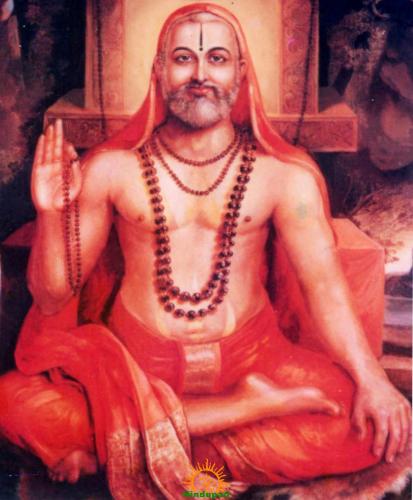
“Seeking happiness outside is like waiting for sunshine inside a deep cave” is a terse yet expansive teaching found across the dharmic wisdom stream. It frames a perennial dilemma of modern life: the assumption that external attainmentsstatus, consumption, and constant validationcan provide enduring contentment. Within Hinduism, Buddhism, Jainism, and Sikhism, the metaphor points to an inner source of illumination that outshines the fleeting glow of worldly gains.
Read through the lens of Indian philosophy, the cave symbolizes the conditioned mind (citta) encrusted with samskara and propelled by habit loops. In this state, sensory pursuits cast long shadows. As Nyaya and Vedanta note, perception shaped by latent tendencies often mistakes the peripheral for the essential. The sunlight represents intrinsic clarity and ananda that do not depend on outward circumstances, much as the Upanishadic intuition of the hṛdaya-guhathe cave of the heartlocates the ground of awareness within.
Contemporary research complements this insight. The hedonic treadmill documents how external rewards quickly fade into new baselines, while impulsive novelty seeking engages dopaminergic spikes that collapse just as swiftly. Sustainable well-being correlates more strongly with eudaimonic factors such as meaning, virtue, and connectednessdimensions closely aligned with dharma-driven living across the dharmic traditions.
Vedanta maintains that Atman is self-luminous and that real happiness (ananda) is not imported from objects but disclosed when vṛttis settle. The Bhagavad Gita describes the sthitaprajnaone whose joy is stable because it is anchored inside rather than chased outside. This inward anchoring is not withdrawal from life, but a shift in locus: actions continue, yet compulsion recedes as clarity, restraint, and compassion expand.
The Yoga Sutra maps a precise method. Yoga is citta-vṛtti-nirodha, a disciplined quieting of mental fluctuations. The five kleśas, especially avidya, obscure inner luminosity. Through yama and niyama, pratyahara, dharana, and dhyana, the practitioner refines attention and dissolves reactivity. As sattva rises, clarity and contentment naturally intensify, approximating the metaphorical sunlight emerging in the cave.
Buddhist teaching articulates a converging arc: dukkha arises from craving (tanhā) and misapprehension. Cultivating mindfulness and ethical conduct weakens the pull of conditioned reactivity. Traditions speak of pabhassara citta (luminous mind), a metaphor underscoring that when obscurations thin, awareness reveals an intrinsic lucidity. Insight into impermanence, non-self, and dependent origination destabilizes grasping, allowing an unburdened well-being to unfold.
Jain philosophy centers the jiva’s innate potential obscured by karmic accretions. Inner austerities (antar tapas), samayik (equanimity practice), dhyana, and aparigraha (non-possessiveness) polish the mirror of consciousness. Reduction of kashaya (anger, pride, deceit, greed) is both the sign and the means of progress. Anekantavada, the doctrine of many-sidedness, supports humility and intertradition respect, reinforcing that inner radiance grows where dogmatism recedes.
Sikh dharma orients practice toward Hukam and the transforming remembrance of the Divine Name (Naam Simran). Gurbani affirms the inner light“man tu jot saroop hai”and counsels a life of kirat karna (honest work), vand chhakna (sharing), and seva (service). The state of sahaj (natural ease) emerges as compulsive craving falls away, and the cave of the heart becomes unmistakably sunlit through disciplined remembrance and ethical living.
These complementary frameworks converge on a unifying proposition: inner illumination is universal, the methods to uncover it are plural, and mutual respect is essential. Within the dharmic familyHinduism, Buddhism, Jainism, and Sikhismdiversity of method is not a problem to be solved but a strength to be honored. This shared ethic sustains unity in spiritual diversity and equips seekers to choose a path that aligns with temperament (svabhava) while affirming the legitimacy of other paths.
Scientific perspectives offer further corroboration. Long-term meditation is associated with decreased activity in the default mode network, implicated in rumination and self-referential looping. Breathing exercises such as pranayama can modulate autonomic balance and improve vagal tone, supporting emotional regulation. Studies repeatedly link compassion training with prosocial behavior and subjective well-being, paralleling dharmic emphasis on karuna, ahimsa, and seva.
Ethical foundations form the first step of any durable path inward. Yama and niyama in Yoga, the Five Precepts in Buddhism, anuvratas in Jainism, and the Sikh Rehat’s emphasis on honesty, humility, and service are practical guardrails. These commitments stabilize attention, reduce inner friction, and convert virtue from abstraction into nervous-system reality.
Attention training deepens the turn from the outer to the inner. Practices include anapanasati (mindfulness of breath), mantra japa, simran, and focused pranayama (such as nadi shodhana). Even brief daily sessions10 to 20 minutescan initiate measurable shifts in reactivity, clarity, and energy. Over time, steadiness matters more than intensity; nairantarya abhyase (uninterrupted practice) drives lasting change.
Contemplative inquiry expands understanding. Svadhyaya (study of texts such as the Upanishads and Bhagavad Gita), atma-vichara (self-inquiry), reflections on impermanence and dependent origination, and Jain analyses of viewpoints guided by anekantavada refine discernment. Journaling can anchor insights, track patterns, and transform inspiration into integration.
Affective cultivation balances cognition with heart. Maitri or metta (loving-kindness), karuna (compassion), and upeksha (equanimity) stabilize warmth and reduce the cave’s chill. Sikh seva and the Jain ideal ahimsa paramo dharmah bring internal clarity into community action, ensuring that inner light radiates outward without veering into self-absorption.
Lifestyle design protects the gains of practice. Aparigraha combined with digital minimalism reduces overstimulation. A sattva-supporting rhythmadequate sleep, mindful nutrition, time in nature, and purposeful movementcreates conditions where the “sun” can be noticed rather than drowned out by noise.
Common obstacles are well cataloged. The kleśas (avidya, asmita, raga, dvesha, abhinivesha), the Five Hindrances (sensual desire, ill will, sloth-torpor, restlessness, doubt), and kashaya manifest as familiar spikes in the cave’s darkness. Antidotes include returning to the breath, recommitting to ethical clarity, practicing confession and pratikraman where applicable, and seeking guidance within trusted sangha or satsang.
It is prudent to avoid spiritual bypassingthe use of practices to escape unresolved psychological pain. Dharmic paths do not negate prudent therapeutic support; rather, they strengthen the container in which healing occurs. Responsible guidance, community accountability, and humility protect practice from distortion and sustain unity across traditions.
Progress should be assessed by traits, not peak states. Indic markers include decreased reactivity, a stable baseline of contentment, and a spontaneous impulse toward service. The Bhagavad Gita’s portrait of even-mindedness amid gain and loss, Buddhist emphasis on the Eightfold Path’s maturation, Jain reduction of passions, and Sikh emergence of sahaj all track similar inner shifts. Practical metricsbrief daily reflection, value-congruent goal tracking, and even heart-rate variability for those inclinedcan complement traditional criteria.
Inner illumination does not entail social indifference. Lokasangraha (the welfare of all), bodhisattva-inspired compassion, Jain vows-oriented civic ethics, and Sikh seva translate inner clarity into outer responsibility. The cave’s light naturally becomes a lamp for others, fostering harmony, pluralism, and resilience within families, communities, and the broader society.
Ultimately, the metaphor is a rigorous instruction rather than a poetic flourish. Running further into the tunnels of acquisition will not reveal the sun. Turning toward the hṛdaya-guha with disciplined ethics, steady attention, wise contemplation, cultivated compassion, and a simple life allows the light already present to be known. In this shared dharmic affirmation, unity and diversity converge: one sun, many paths, one luminosity seen through diverse, time-tested windows.
Inspired by this post on Hindu Blog.