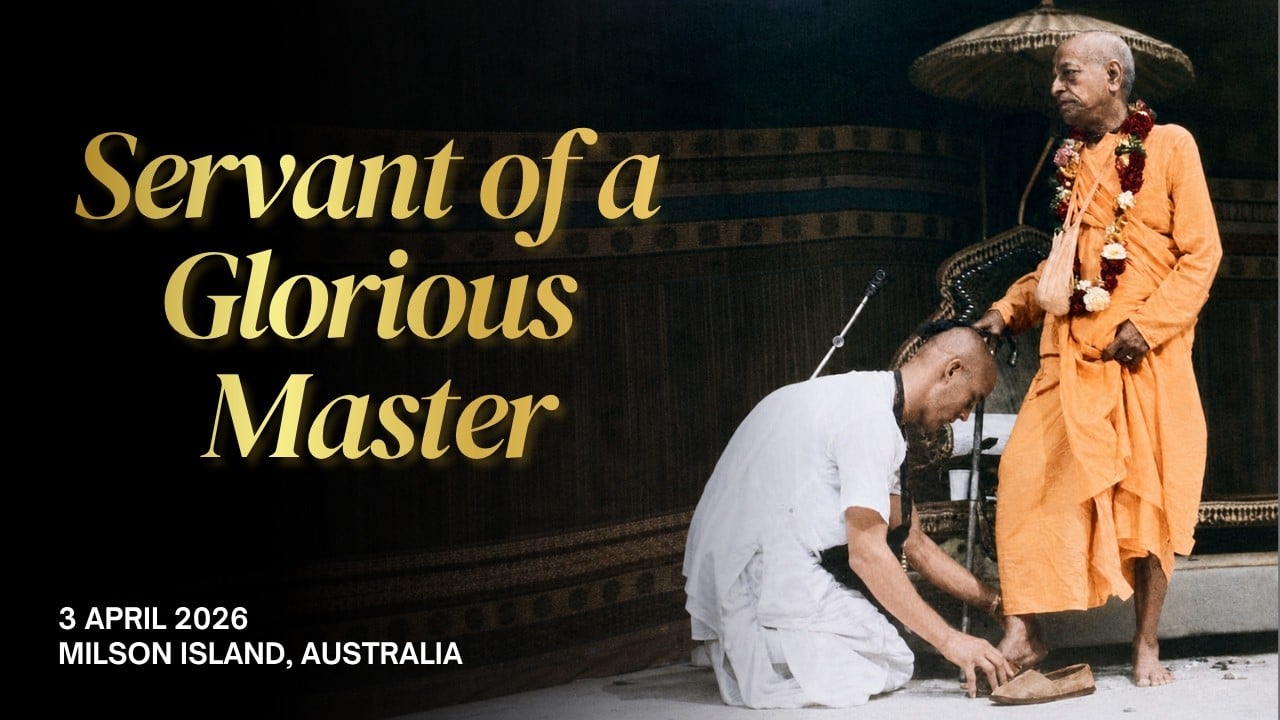
The phrase 'Servant of a Glorious Master' evokes the core ethos of the Bhakti Tradition and, more broadly, a unifying current that flows through Hindu Dharma, Buddhism, Jainism, and Sikhism. Far from implying blind submission, the phrase describes a deliberate alignment with Dharma and compassionate service that matures intellect, disciplines action, and purifies intention.
In Dharmic vocabulary, 'master' can signify multiple referents: the inner sovereignty of Truth, the chosen Ishta, the Guru who transmits liberating knowledge, or the inexhaustible ideal of care for all beings. To be a servant, then, is to place thought, speech, and action in the service of that higher referent, integrating wisdom, devotion, and selfless work into a coherent spiritual path.
Sanskrit and allied traditions offer a precise lexicon for this orientation: dasya-bhava (the devotional mood of service), seva (selfless service), bhakti (loving dedication), sharanagati or prapatti (wholehearted surrender to the Divine Will), and guru-tattva (the principle of the teacher). Sikh teachings emphasize seva and nam-simran harmonized with hukam. Buddhist lineages cultivate refuge in Buddha, Dharma, and Sangha, guided by kalyana-mitra, the noble friend. Jain practice grounds service in ahimsa, aparigraha, and the many-sided vision of anekantavada.
Within Vaishnava literature, Rupa Gosvami's analysis in Bhakti-rasamrita-sindhu describes dasya as a stable devotional sentiment characterized by reverence, willingness to be instructed, and delight in carrying out the beloved's purpose. Devotees interpret this not as passivity but as disciplined initiative: eagerness to act for the welfare of others while remaining internally anchored in remembrance.
Scriptural exemplars clarify the model. Hanuman personifies the luminous intensity of dasya-bhakti, combining unshakeable humility with decisive courage. The Bhagavad Gita presents a complementary frame through karma-yoga and the mandate of lokasangraha, the uplift and cohesion of society. When action is offered as service to the Divine and to the common good, it dissolves egocentric residues and becomes a vehicle for wisdom.
Sri Vaishnava theology develops prapatti as an accessible path in which the aspirant adopts resolutions such as anukulyasya sankalpah (embracing what is supportive of spiritual growth) and pratikulyasya varjanam (relinquishing what hinders it). The stance of a servant is thus a rigorous ethics of consent to Dharma rather than capitulation to arbitrary authority.
Sikh Dharma institutionalizes seva in living, communal forms. The langar models dignity, equality, and care; daily nam-simran refines attention; and the sant-sipahi ideal integrates contemplation with courageous service. Serving the Guru's word is inseparable from serving the world, encapsulated in the aspiration for sarbat da bhala, the welfare of all.
In Buddhism, devotion to the Three Jewels and the Bodhisattva vow reframe 'master' as the inexhaustible commitment to awaken and to alleviate suffering. In Vajrayana, devotion to the teacher and yidam practice accelerate transformation when combined with ethical restraint and meditative stability. Service here expresses as compassionate activity, upaya, skillfully adapted to context.
Jain Dharma locates the foundation of service in its civilizational axiom, parasparopagraho jivanam, that living beings are interdependent. Seva to ascetics, care for the vulnerable, and disciplined vows are shaped by ahimsa and anekantavada, cultivating humility and a willingness to see truth from many standpoints. These disciplines convert reverence into practical, gentle power.
Taken together, the Dharmic family maps a shared grammar of service. The chosen Ishta varies, the meditative methods differ, and the communal institutions are distinct; yet the underlying orientation is one of intelligent devotion, ethical clarity, and unity in spiritual diversity. This is service to the Glorious Master understood as Truth radiating through all paths.
Philosophically, the servant stance refines the three classic dimensions of practice: jnana (clear seeing), bhakti (loving dedication), and karma (skillful action). It trains manas to be steady, purifies ahankara of vanity, and harmonizes the indriyas with discernment. Qualities lauded in the Gita such as amanitvam (humility), arjavam (straightforwardness), and daya (compassion) begin to arise as habitual traits.
Contemporary science increasingly corroborates these benefits. Compassion meditation, mantra recitation, and service-oriented volunteering show measurable reductions in stress biomarkers and improved vagus nerve tone, correlating with emotional regulation and resilience. While such findings are provisional, they suggest that seva is not only ethically elevating but physiologically stabilizing.
Service clarifies leadership. The Gita's lokasangraha enjoins exemplars to act for the integration of society, not for private gain. Sikh history frames this as saint-soldier responsibility; Buddhist texts speak of the wheel-turning monarch who protects without domination; Jain polity emphasizes nonviolent administration. The servant of the Glorious Master becomes a steward whose authority is accountability to Dharma.
It is crucial to distinguish servility from service. Servility erodes agency; service strengthens it by aligning will with a transpersonal telos. The resulting freedom is interior: by disciplining desire and aversion, one becomes available to the highest call of conscience and to the needs of the time.
Metaphysical schools nuance the relation between servant and master. Advaita Vedanta emphasizes nonduality, wherein ultimate knowledge dissolves the servant-master dyad in the realization of Atman-Brahman identity. Vishishtadvaita balances unity with real distinction, and Gaudiya Vedanta articulates acintya-bheda-abheda, an inconceivable simultaneous oneness and difference. Across these views, devotional service remains a potent sadhana even for those pursuing contemplative knowledge.
A practical architecture of sadhana converts ideals into habit. A balanced day can include early morning remembrance through japa or nam-simran, scriptural study from the Bhagavad Gita, the Dhammapada, the Guru Granth Sahib, or the Agamas and Puranas, a period of silent meditation, and at least one intentional act of seva undertaken without expectation. Weekly satsang or sangha engagement consolidates these rhythms.
The Guru-Shishya Relationship provides structure and feedback. Guidance helps choose an Ishta and an appropriate method; periodic reflection and correction prevent drift; vows are adapted to circumstance. In all traditions, the genuine teacher points beyond personality to Dharma, thus ensuring that reverence is moored to principle rather than to charisma.
Five guardrails preserve purity of intent. First, anekantavada: cultivate the many-sided vision that honors other paths. Second, aparigraha: keep service unburdened by possession or reward-seeking. Third, satya and ahimsa: align speech and action with truth and non-harm. Fourth, shraddha with viveka: let faith and discernment mature together. Fifth, parishodhana: regular self-audit through pratikraman, ardas, or introspective prayer.
Typical pitfalls are well known. Seva can become performative, a vehicle for subtle pride. Excess activism without contemplative replenishment invites burnout. Sectarian rivalry can displace Dharma with identity. These tendencies are corrected by remembering that the Glorious Master is Truth itself, not the transient banners raised in its name.
Progress is assessed qualitatively rather than competitively. Indicators include greater ease in forgiveness, a spontaneous readiness to help, decreased impulsivity, steadier attention, and joy in the success of others. In the idiom of the gunas, there is a shift from rajas and tamas toward sattva, with a widening capacity to act decisively without agitation.
Consider four vignettes as converging lines of practice. A Vaishnava reads the Gita at dawn and offers a portion of the day to community teaching as seva. A Sikh sevadar cooks in the langar and engages in nam-simran before sunrise. A Buddhist upasaka practices metta and volunteers in hospice care with mindfulness. A Jain householder observes anuvratas, studies the Tattvartha Sutra, and supports relief work guided by ahimsa. The outward forms differ; the inner vow is shared.
Historically, such vows have generated civilizational institutions: gurukulas and mathas, viharas and sanghas, deras and gurdwaras, upashrayas and pathshalas. Each has provided education, health care, food security, and cultural continuity, demonstrating how the servant principle scales from individual ethics to social architecture.
In plural societies, the servant of the Glorious Master becomes an agent of interreligious friendship. By anchoring identity in Dharma rather than in rivalry, communities can embody unity in spiritual diversity, spiritual coexistence in India, and the cosmopolitan spirit expressed in Vasudhaiva Kutumbakam. Practical cooperation around seva dissolves suspicion and reveals common purpose.
The phrase that inspired this reflection thus names a demanding vocation. To serve a Glorious Master is to let Dharma, compassion, and wisdom command the best of one's capacities. It is to apprentice the heart to Truth, to accept discipline as freedom, and to find in the welfare of all a radiant measure of personal success.
From a methodological standpoint, three integrative practices reinforce each other. Mantra or shabda steadies attention and encodes meaning in sound; contemplation (nididhyasana, vichara) refines understanding; seva externalizes insight, testing and strengthening virtue under real-world conditions. Together they enact the complete yoga of knowledge, devotion, and action.
For advanced aspirants, periodic retreats deepen interiorization. A silent weekend dedicated to study of the Bhagavad Gita, disciplined pranayama, and a chosen meditation, followed by intentional service in the local community, yields a cycle of absorption and return that mirrors the pulse of traditional ashram life in contemporary settings.
Metrics can be ethical rather than merely experiential. One useful frame is the panca-yajna model of Hindu Dharma: honoring divine reality, sages, ancestors, living beings, and society. When all five are remembered in daily or weekly practice, service acquires breadth, and the servant identity remains balanced and humane.
Finally, theological humility sustains openness. No single formulation exhausts the grandeur implied by the word 'glorious'. Anekantavada invites careful listening; the Sikh insistence on grace, gur-prasad, tempers merit with gratitude; Buddhist emptiness cautions against clinging to concepts; Advaitic nonduality prevents reification. This humility is itself a luminous service to Truth.
Inspired by this post on Dandavats.