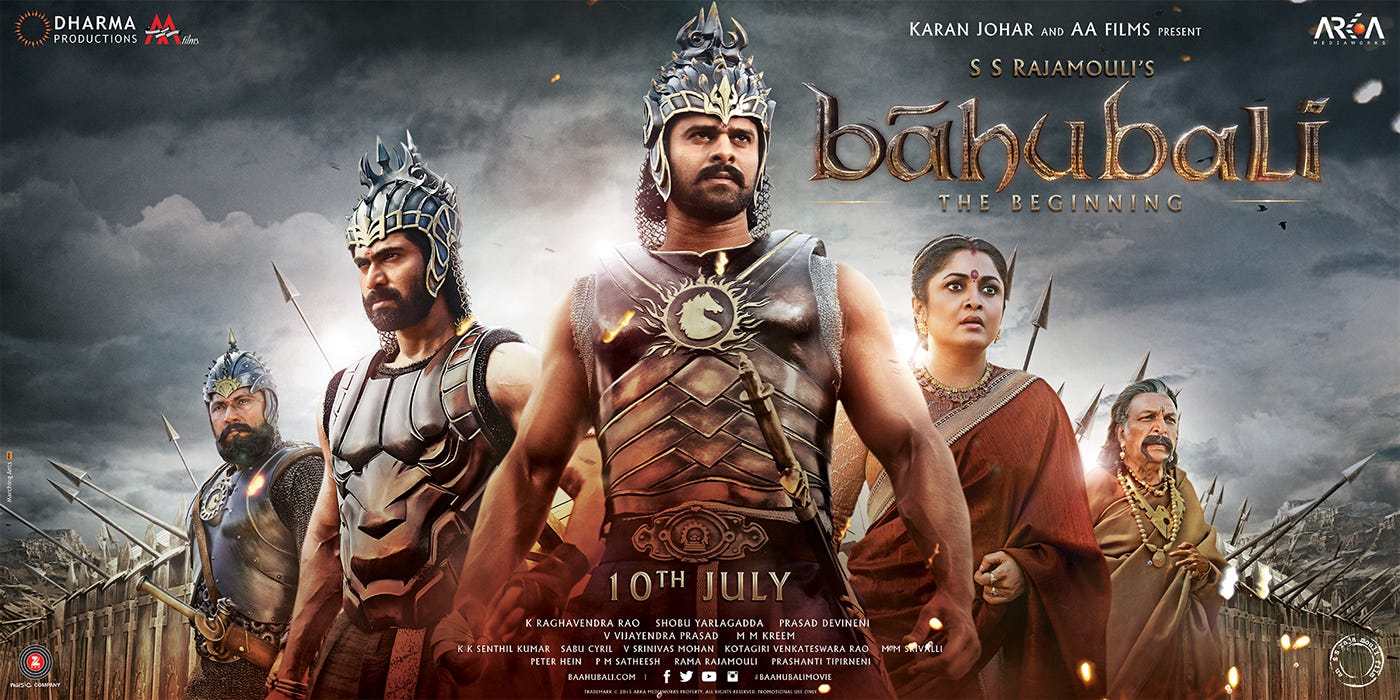
A decade on, the memory of the noise and hype around the Telugu two-part epic Baahubali has faded, but the debates it sparked still illuminate a larger issue: when ideological skirmishes overtake aesthetic judgment, cinema’s core experience gets obscured. A more grounded, unifying approachrooted in the Indic aesthetic traditionhelps restore focus to what the film actually accomplishes on screen.
Indian literary and aesthetic discussions have long emphasized Rasa as the proper lens for evaluating art. D.V. Gundappa and Masti Venkatesha Iyengar cautioned against subordinating literature and allied arts to transient political frames, and Gundappa’s “Moses to Marx: Two Worldviews” remains a vital reference point. In the modern era, S.L. Bhyrappa reiterated that creative works are best judged by Aesthetics, not by superimposed ideological criteria. That classical stance aligns with a civilizational ethos shared across dharmic traditionsHinduism, Buddhism, Jainism, and Sikhismwhere artistic value, not polemics, sustains cultural continuity.
Much of the early commentary on Baahubali tilted toward extremes: some read the film through the prism of misogyny and patriarchy, while others framed it through sweeping civilizational or constitutional analogiesfrom the Mahabharata to ideas like Dharma and Vidhidrawn too far from the film’s narrative economy. Both approaches risk missing the cinema itself. A Rasa-guided reading foregrounds the experience the film offers: the sensations, moods, and aesthetic fulfillment it seeks to evoke.
Viewed through Rasa theory, Baahubali primarily delivers Adbhuta (wonder, marvel) and Veera (heroic). The sense of Adbhuta emerges from the film’s vast canvasits scale, scope, and visual sweepwhich translate S.S. Rajamouli’s effort to reanimate epic and fantasy storytelling rooted in native Indian motifs. This ambition grows from a living Telugu cinema heritage that includes Maya Bazar, Sri Krishna Pandaveeyam, Narthanashala, and Lava Kusha.
The Veera dimension is signposted in trailers and marketing, yet it is the elevation of heroismnot merely its presencethat creates the Rasa payoff. Audiences anticipate spectacular climaxes, but the draw lies in the conviction and craft with which the action unfolds. That journey from expectation to fulfillment is where the heroic sentiment matures into aesthetic satisfaction.
Alongside these, Shringara (love, erotics) is realized in the sequences that depict the romantic pursuits of both Baahubali Senior and Junior. These passages are staged with lush pictorial elegance, consistent with the film’s grandeur. Interpreting such stylized “man-woos-woman” conventions as “rape” or as straightforward evidence of “patriarchy” imposes modern frameworks that are not organically warranted by the genre, period imagination, or narrative logic.
Nor does the film amount to a “resurrection of Hinduism” merely because it features rituals and symbolism. Such motifs have long been part of Telugu cinema’s texture, in social and fantasy dramas alike; Rajamouli’s own Yama Donga and Magadheera are precedent. More broadly, the film’s civilizational cuesdharma-centric kingship, ritualized sovereignty, and community cohesionresonate across dharmic traditions, where ideals of ethical duty, compassion, valor, and self-restraint are shared cultural ligaments.
Most notably, Baahubali celebrates Kshatra (the warrior spirit), an ideal that sustained dharma through eras of conflict and responsibility, and one recognized across many ancient civilizations. The film recaptures this idiom through emblematic detailsstandards and insignia, presiding deities of realms, and the distinctive marks of great warriorsvividly realized in moments such as the royal elephant ascent and the elaborate coronation sequences.
Even so, no work is without limitations. A subsequent analysis can examine structural weaknesses, pacing choices, and characterization, while remaining anchored to the aesthetic yardstick that reveals what the film set out to achieve and how fully it realized that intent.
Re-centering Rasa restores Baahubali to its rightful place as a cinematic experience of wonder and courage. It affirms an inclusive, dharmic sensibilityshared by Hindu, Buddhist, Jain, and Sikh audiencesthat values art for the moods it evokes, the virtues it celebrates, and the cultural memory it renews, without turning cinema into a proxy battlefield for ideology.
Inspired by this post on Dharma Dispatch.