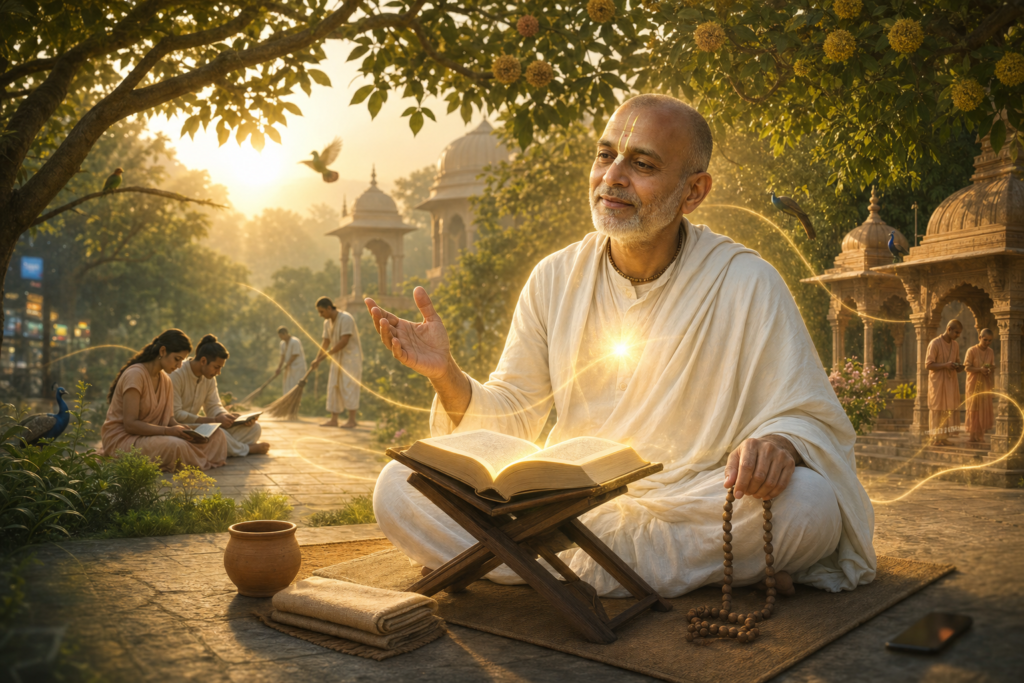
Across South Asia, histories of Hinduism, Buddhism, Jainism, and Sikhism intertwine in complex and dynamic ways. Regions that now form Afghanistan, parts of northern Pakistan, and Bangladesh have all witnessed vibrant Buddhist and Hindu communities at different times. Rather than reading this past as a contest, it becomes more accurateand ultimately more constructiveto recognize a shared civilizational tapestry of Dharma shaped by diverse traditions, ethical vocabularies, and spiritual disciplines.
Contemporary debates often describe a drift toward quietism or civic disengagement in sections of Hindu society. Some commentators label this tendency “pseudo-Hinduism” to suggest a partial reading of Dharma that emphasizes inner renunciation while neglecting social responsibility. Framed more productively, the issue is not about faulting any tradition but about restoring balance: integrating inner realization with ethical action in the world, in line with lokasangrahathe welfare of all.
Community spaces such as temples frequently prioritize worship, seva, and festivals, yet many do not document historical experiences of Hindus or highlight present-day challenges with balanced educational materials. This gap offers an opportunity. Curating exhibits, talks, or archives on civilizational heritage and episodes of resiliencepresented with care, accuracy, and empathycan strengthen identity without fueling animosity, and can deepen solidarity across the dharmic family.
Another common concern arises when spiritual leaders or committees prefer to avoid civic themes, arguing that nonattachment precludes public engagement. Classical Dharma, however, makes a nuanced distinction: nonattachment (vairagya) can guide clarity of conduct, while dharma-yukta action expresses responsibility. In this light, spiritual life and ethical participation are not opposites; they are complementary, provided both are grounded in compassion (karuna), ahimsa, and fairness.
Sri Aurobindo’s readings of the Mahabharata and Bhagavad Gita illuminate this balance. He underscored that Arjuna’s crisis is first resolved withinthrough insight into the Self, duty, and nonattachmentand then expressed outwardly through principled action for Dharma. A one-sided interpretation that reduces the Gita to an “inner battle” alone misses this integration. The text calls for inner transformation as the basis for courageous, ethical engagement in the world.
Large gatheringssuch as the Kumbh Mela and regional festivalsshow immense capacity for devotion, coordination, and service. The same energy can be channeled toward civic preparedness: heritage preservation, legal literacy, interfaith bridges within the dharmic fold, and practical seva for vulnerable communities. When devotion flows into compassionate action, society experiences both spiritual depth and tangible uplift.
Historically, the kshatra ethos did not signify aggression; it represented disciplined courage, steadiness under pressure, and protection of the vulnerable. In a modern context, kshatra translates into ethical leadership, institutional competence, community security through lawful means, and cultural stewardship. Cultivating these capacitiesphysical fitness, mental clarity, teamwork, and civic skillaligns with the Gita’s call to responsible action.
In Early Cultural Writings, Sri Aurobindo cautioned against one-sided quietism and envisioned a synthesis founded upon Vedanta, Sankhya, and Yogaan integration Vyasa formulated and Sri Krishna announced. Read generously today, this perspective affirms balance: interior sadhana joined with outer responsibility. Within the broader dharmic family, Buddhism’s insight into dukkha and compassion, Jainism’s rigorous ethics and ahimsa, and Hinduism’s expansive frameworks of Dharma can be seen as complementary strengths that, together, fortify society against both moral apathy and reactive extremism.
Practical steps can make this synthesis real. Temples and community centers can curate historically grounded, non-inflammatory exhibits; host dialogues with Buddhists, Jains, Sikhs, and diverse Hindu sampradayas; expand seva initiatives; support legal and educational literacy; and encourage youth programs that unite yoga, meditation, and civic leadership. Such initiatives build resilience, reduce misinformation, and model dharmic unity in action.
Ultimately, Dharma calls for both inner clarity and outer contribution. The Mahabharata, the Bhagavad Gita, and Sri Aurobindo’s analyses invite a steady, compassionate courageone that honors plural paths while refusing indifference to injustice. When devotion meets kshatra, and when karuna guides strength, dharmic unity becomes not merely an ideal but a living social force.
Inspired by this post on Hindu Human Rights Blog.