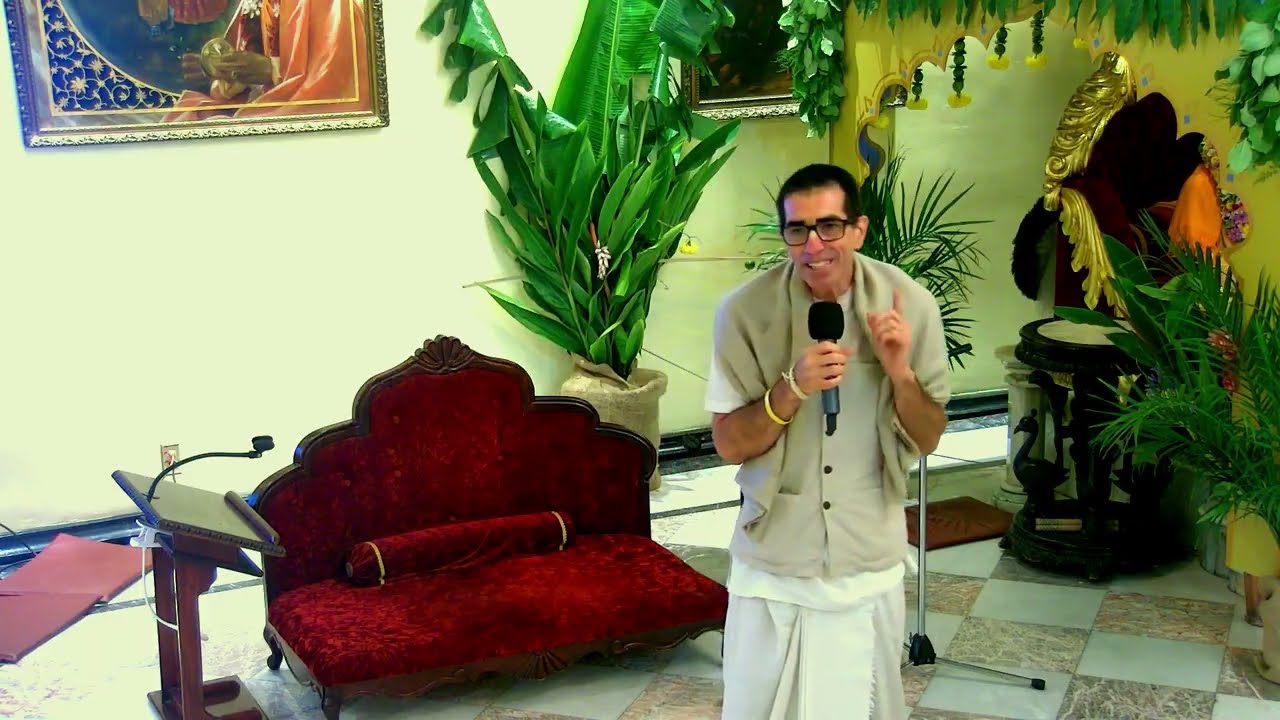
On May 23, 2026, the Srila Prabhupada Festival in Los Angeles gathers the community at the New Dwarka Temple to commemorate thirty-five years of gratitude to His Divine Grace A.C. Bhaktivedanta Swami Prabhupada. The occasion centers on the enduring principle of "Simple Living, High Thinking," bringing together families, students, and seekers in a shared celebration of devotion, study, and service within the vibrant setting of ISKCON Los Angeles.
Over more than three decades, the festival has evolved from a humble offering into a structured cultural and spiritual landmark for the Southern California diaspora. Attendees consistently describe a palpable sense of continuity: multigenerational participation, reverent homage to Srila Prabhupada’s legacy, and a living practice of bhakti that integrates everyday life with the highest spiritual ideals of Sanatana Dharma.
The thematic core, "Simple Living, High Thinking," reflects a sophisticated synthesis drawn from the Bhagavad Gita and the Gaudiya Vaishnava tradition. In practical terms, it espouses intentional simplicity in consumption and lifestyle, while prioritizing study, contemplation, and service that elevate consciousness. In philosophical terms, it aligns with cultivating sattva (clarity and harmony), practicing bhakti-yoga (loving devotional service), and orienting personal and social conduct toward transcendental knowledge as articulated in the Gita and Srimad-Bhagavatam.
The New Dwarka Temple, home to the beloved Deities Sri Sri Rukmini Dwarakadish, is an essential anchor for this observance. As a spiritual and cultural hub of the Hare Krishna Movement on the West Coast, ISKCON Los Angeles has long emphasized scriptural education, devotional practice, and community outreach, complementing the literary and educational efforts historically associated with the Bhaktivedanta Book Trust in the region.
Programmatically, the festival typically weaves together elements that define Vaishnava devotional culture: congregational kirtan, guided japa meditation, scriptural discourses, and seminars highlighting Srila Prabhupada’s teachings and his global service mission. Curated exhibitions of Prabhupada’s writings, archival photographs, and educational materials help situate his life within a wider historical and philosophical context, giving new visitors and long-time practitioners a common frame for reflection.
Scriptural study forms a technical backbone to the event. Focus areas often include the Bhagavad Gita’s pedagogy on self-mastery, duty, and devotion; the Srimad-Bhagavatam’s cosmology of compassion and dharmic leadership; and the Gaudiya Vaishnava lens on nama-sankirtana (the congregational chanting of the holy names) as a practical and accessible process for inner transformation in the current age. This scholastic orientation complements the experiential dimensions of worship, ensuring that practice and philosophy remain integrated.
Music and the arts occupy a central, pedagogical role. Traditional kirtan, accompanied by mridanga and kartals, fosters collective participation and contemplative focus. Devotional theater, dance, and storytellingoften tailored for intergenerational audiencestranslate complex philosophical themes into engaging, memorable forms. The arts thus serve as bridges between textual knowledge and lived spirituality, sustaining an inclusive pathway for community learning.
Prasadam distribution further embodies the festival’s ethical commitments. Vegetarian offerings prepared and served with care exemplify the principle of ahimsa and align with the festival’s sustainability ethos. Attendees routinely note that the shared prasadam experience softens social boundaries and nurtures a sense of kinship, transforming mealtime into a lived commentary on compassion, gratitude, and resource-conscious living.
Textual culture remains a hallmark of ISKCON Los Angeles. The prominence of Srila Prabhupada’s translations and commentariespresented through accessible talks, reading circles, and displaysilluminates the philosophical scaffolding that undergirds "Simple Living, High Thinking." For many, the encounter with these works provides a structured pathway to disciplined study and daily sadhana, balancing devotional fervor with rigorous engagement in Vedic philosophy.
From a community-development perspective, the festival highlights the dharmic triad of seva (selfless service), sadhana (personal spiritual discipline), and sangha (supportive association). Volunteers coordinate hospitality, music, education, and logistics, demonstrating a participatory governance model in which service roles organically align with individual aptitudes. This coherent ecology of service both strengthens institutional resilience and communicates civic values relevant to broader society.
Importantly, the festival emphasizes unity across dharmic traditions. The ethos of "Simple Living, High Thinking" resonates with Buddhist mindfulness and ethical restraint, Jain aparigraha (non-possessiveness) and ahimsa, and Sikh seva and remembrance of the Divine. Presentations and dialogues often underscore that Sanatana Dharma’s inclusivity honors many paths, encouraging mutual respect and collaborative service within a shared moral universe.
Youth and family engagement operate as critical vectors for continuity. Interactive storytelling from the epics, music and art workshops, and age-appropriate discussions on ethics, ecology, and digital mindfulness link timeless teachings to contemporary life. These learning environments provide practical tools for young participants to navigate modern complexities while remaining grounded in dharmic values.
In the broader frame of cultural heritage, the festival functions as a living archive. It preserves language, music, ritual, and philosophical discourse as intergenerational knowledge, contributing to the intangible cultural heritage of the South Asian diaspora in North America. The continuity of observance in Los Angeles confirms that heritage thrives most effectively when embodied through community practice, everyday discipline, and service-oriented leadership.
Event design typically integrates accessibility and care for attendee well-being. Wayfinding, seating flow, acoustic planning for kirtan, and scheduling that balances depth with inclusivity reflect attention to detail. These logistical considerations mirror the philosophical vision: when inner clarity guides outer organization, community spaces become naturally more welcoming, safe, and generative.
In urban contexts like Los Angeles, "Simple Living, High Thinking" offers a practical counterpoint to excess and distraction. The principle does not demand austerity for its own sake; rather, it calls for intelligent moderation, ethical consumption, and a deliberately enriched interior life. Devotional practice, textual study, and community service together form a coherent technology of the self, cultivating steadiness, empathy, and discernment amid metropolitan pace.
After thirty-five years, the Srila Prabhupada Festival in Los Angeles continues to affirm a clear proposition: that spiritual growth and social responsibility are mutually reinforcing. By grounding aspiration in daily practice, and practice in community, the festival presents a replicable model for cultural preservation, interfaith harmony, and ethical living. In honoring Srila Prabhupada’s legacy, participants renew a shared commitment to unity in spiritual diversity and to the compassionate ideals at the heart of Sanatana Dharma.
Inspired by this post on Dandavats.