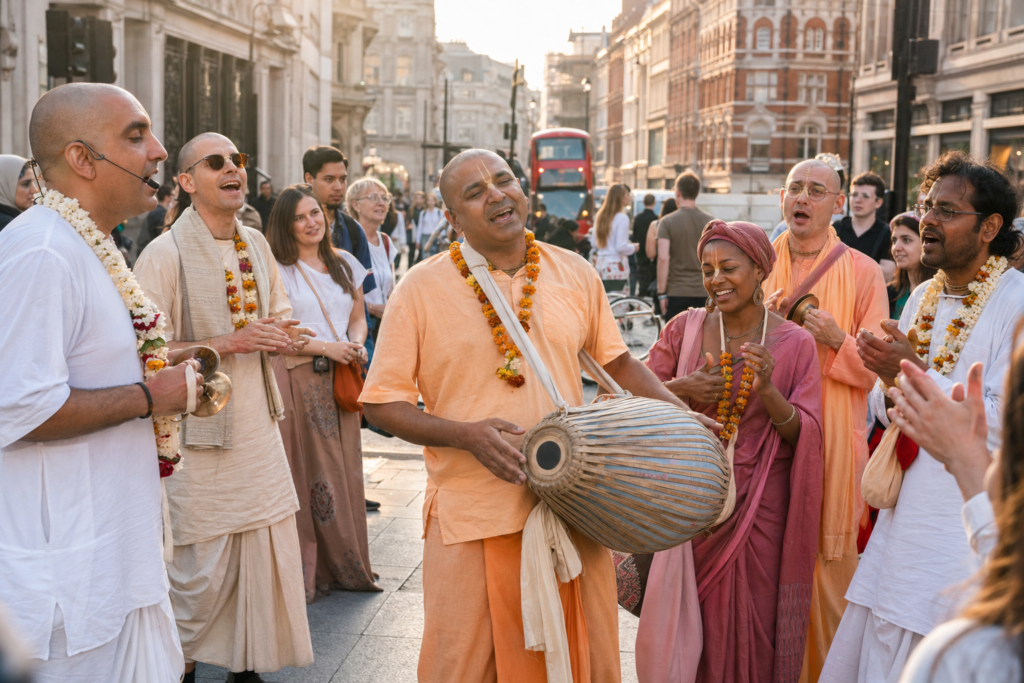
Within the dharmic traditions, a guru is not a fashion statement or a trend to display; a guru is the principle of guidance to which the seeker entrusts life for transformation. In this context, surrender signifies a mature readiness to accept, practice, and live by the guru’s counsel. It is not a nominal affiliation that ignores instructions; rather, it is the willing alignment of thought, word, and action with wisdom that uplifts and refines character.
Such surrender is never blind. In the dharmic view, shraddhā (trust) is grounded in viveka (discernment). Genuine discipleship follows thoughtful examination of teachings against the touchstones of dharma, compassion, and non-harm. When guidance coheres with ethical principles and fosters clarity, courage, and responsibility, acceptance becomes both rational and transformative.
The Bhagavad Gita offers a canonical illustration. Arjuna, paralyzed by moral conflict, turns to Sri Krishna, declaring himself a śiṣya and seeking direction. This act of surrender does not erase Arjuna’s agency; it refines it. By embracing instruction, he discovers steadiness (sthiti), insight (buddhi), and purposeful action (karma-yoga) aligned with dharma. The relationship exemplifies the guru–śiṣya tradition: guidance rooted in truth, acceptance shaped by discernment, and action purified by wisdom.
The teacher principle unites the streams of Hinduism, Buddhism, Jainism, and Sikhism. In Hindu practice, the guru upholds śāstra and sādhanā; in Buddhism, teachers and lamas transmit the Dhamma and the path to cessation of suffering; in Jainism, acharyas and upādhyāyas guide conduct in the light of ahimsa and aparigraha; in Sikhism, surrender centers on the Guru Granth Sahib and the living discipline it inspires. Across these paths, surrender is a commitment to truth, ethical living, and inner freedomnever a retreat into passivity or cultic dependence.
Recognizing a true guru involves clear markers: consistent alignment with dharma; freedom from exploitation and coercion; teachings that illuminate rather than obscure; compassion that dignifies every seeker; and guidance that strengthens inner independence, not dependency. Such guidance encourages sustained practicejapa, dhyāna, seva, and studywhile honoring diversity of temperament (Ishta) and the plurality of authentic approaches to the Divine.
Practically, surrender unfolds as disciplined living: showing up for sādhanā daily, receiving correction without defensiveness, cultivating humility over egoism, and bringing speech and conduct into harmony with ethical precepts. Many seekers describe a palpable shift from confusion to composure when they translate instruction into lived practicesmall acts of fidelity accumulating into enduring clarity and resilience.
Guardrails are essential. A true guru does not demand harm, bigotry, or the abandonment of conscience. If guidance conflicts with dharma or compassion, the seeker pauses, consults śāstra and sangha, and re-engages with viveka. Surrender, rightly understood, deepens responsibility and expands empathy; it does not excuse misconduct or silence critical reflection.
Fashion fades; authentic guidance endures. When surrender is informed by discernment and anchored in dharma, it becomes a catalyst for inner clarity, steadiness, and unity. In honoring the guru principle across Hinduism, Buddhism, Jainism, and Sikhism, seekers affirm a shared commitment: to live truthfully, to serve compassionately, and to walk a path where wisdom is practicednot merely professed.
Inspired by this post on Hindu Pad.