-
Kapi Dhvaja Unveiled: How Hanuman on Arjuna’s Banner Powered Dharma at Kurukshetra

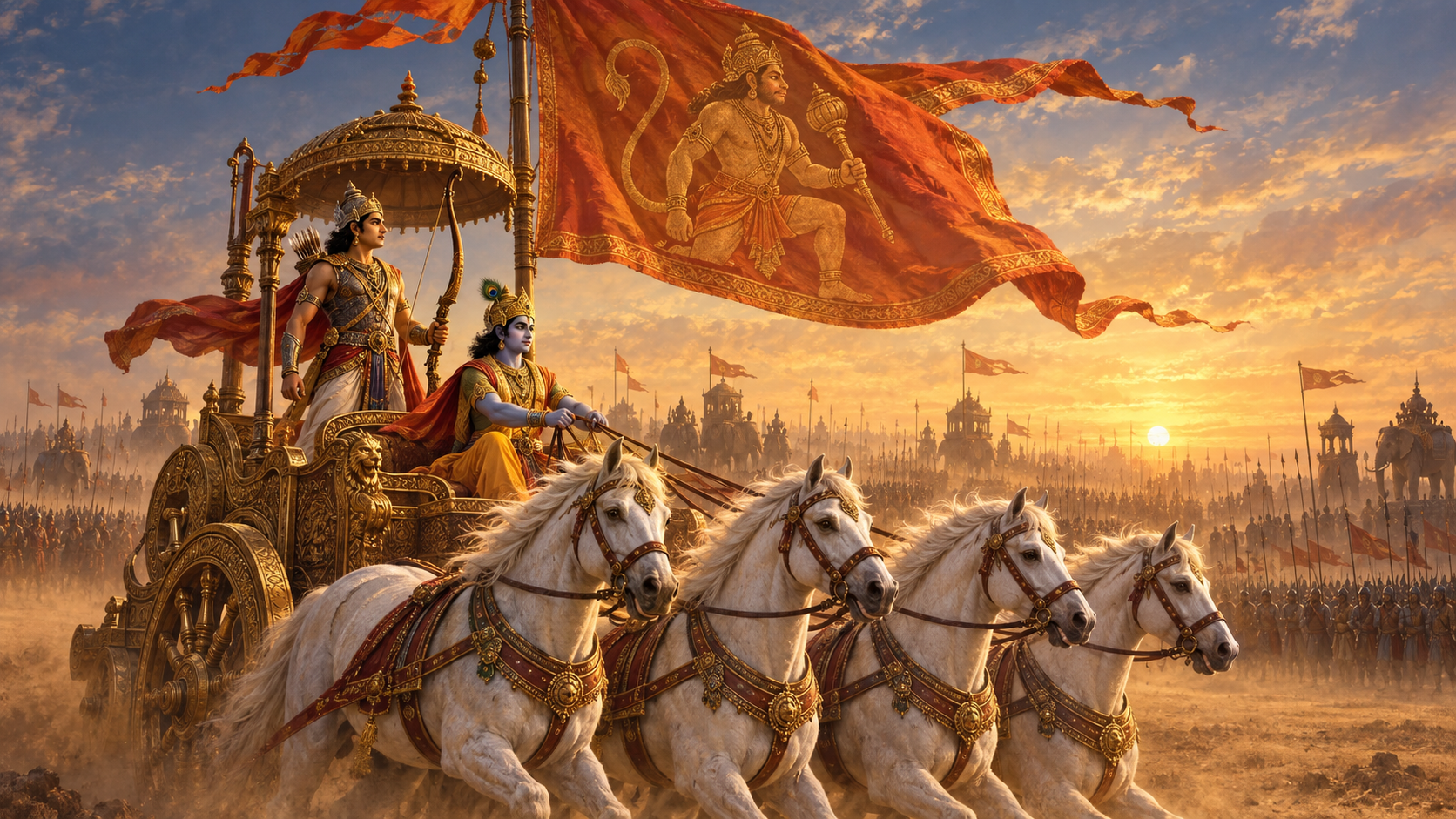
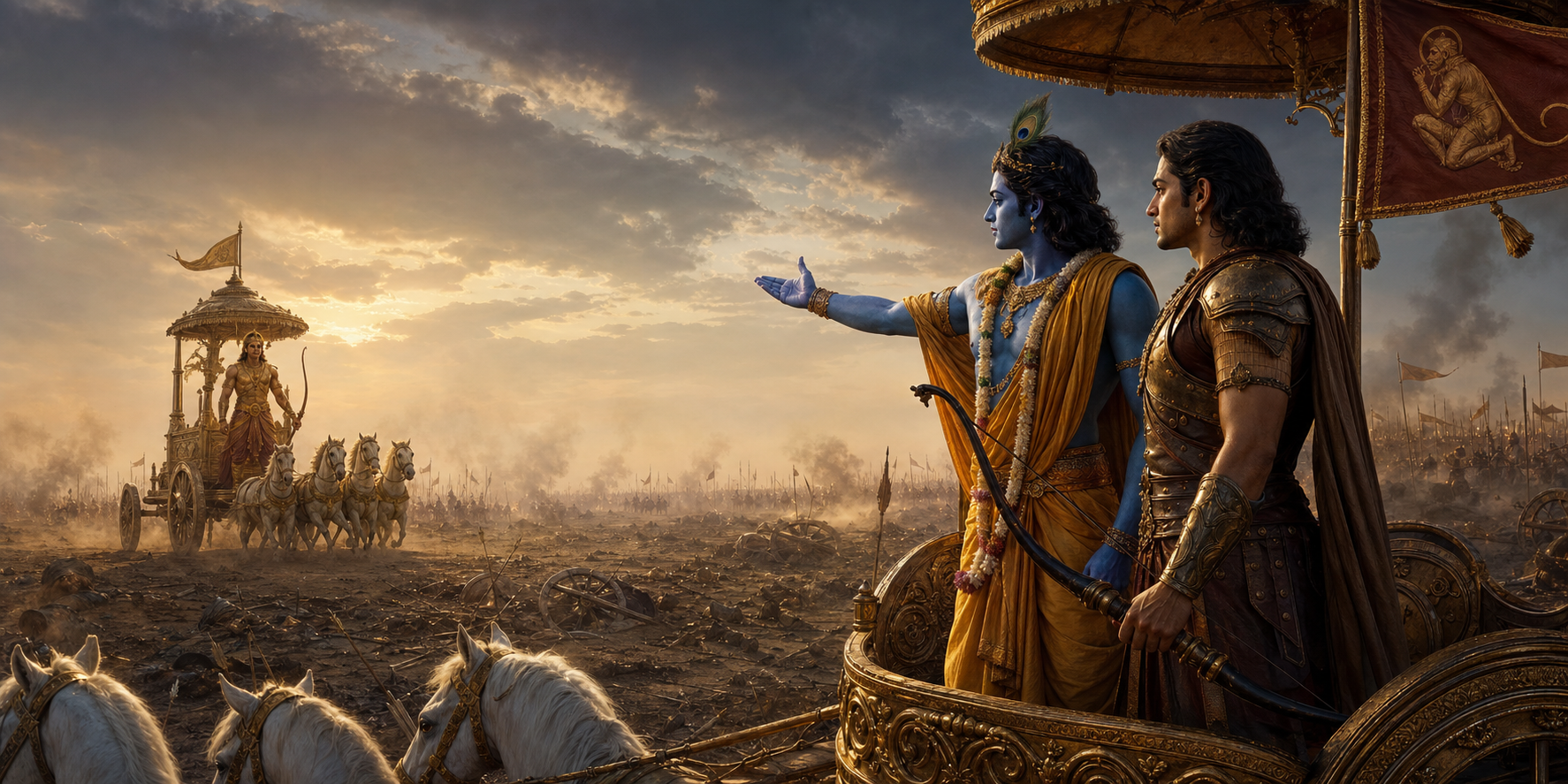
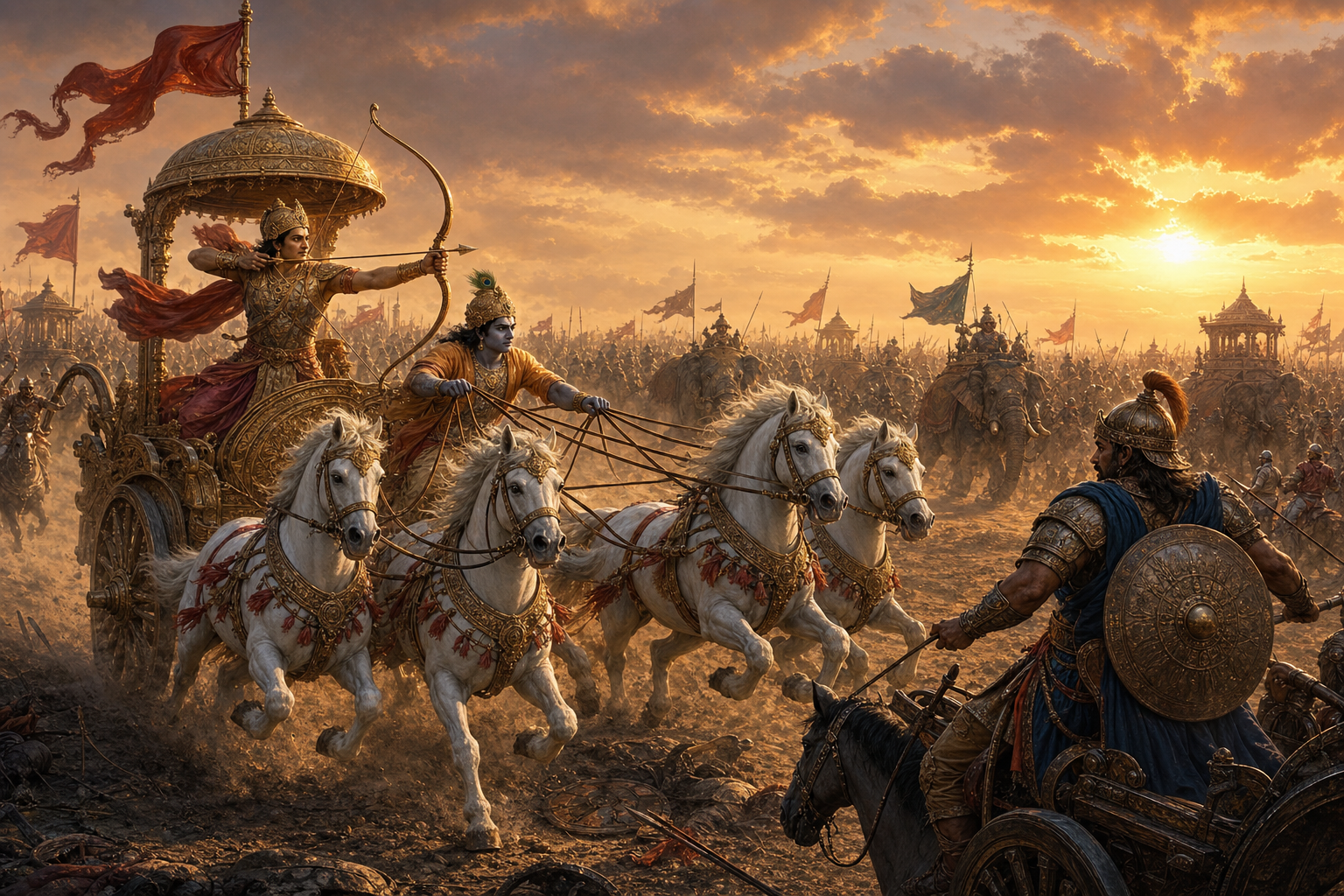
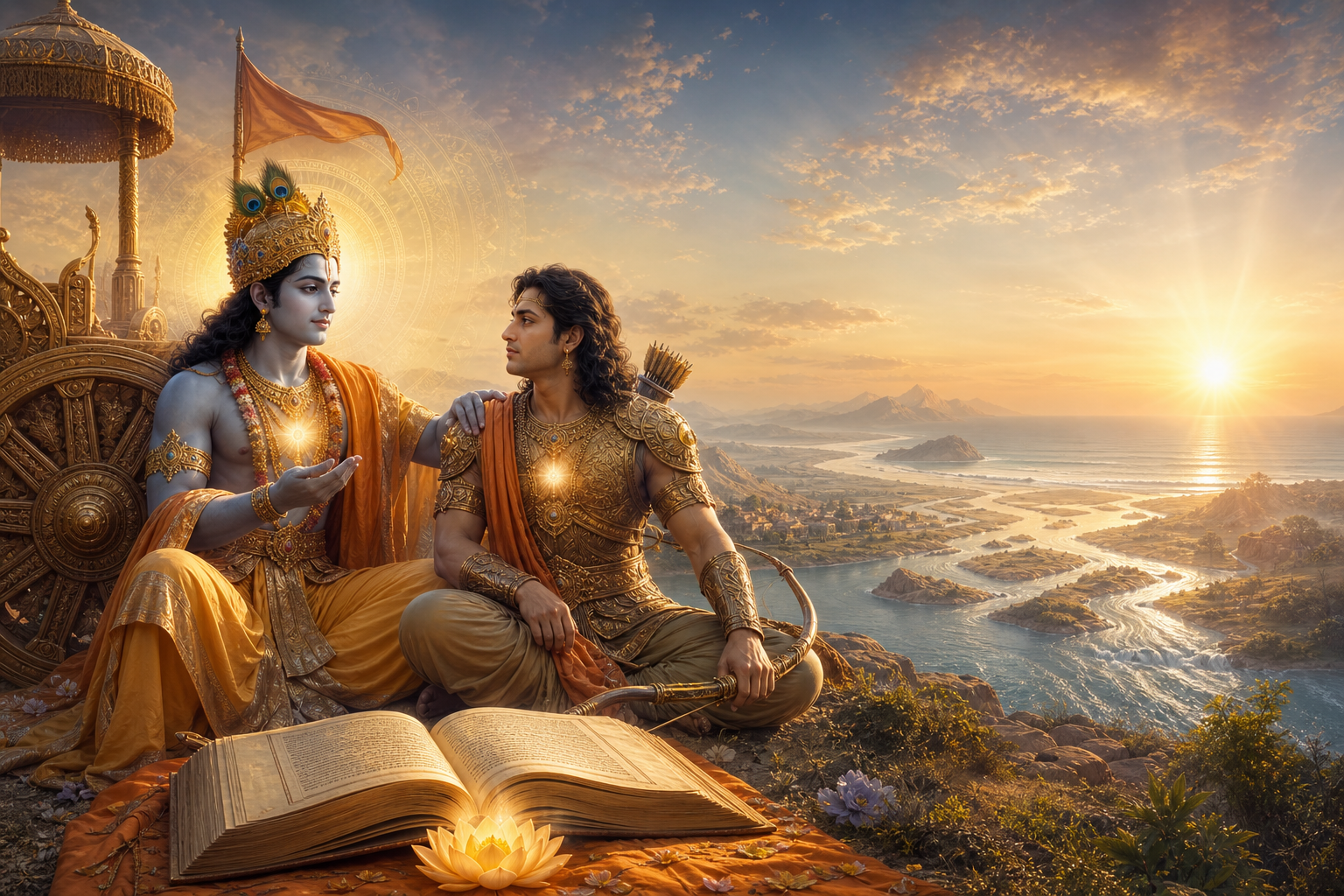
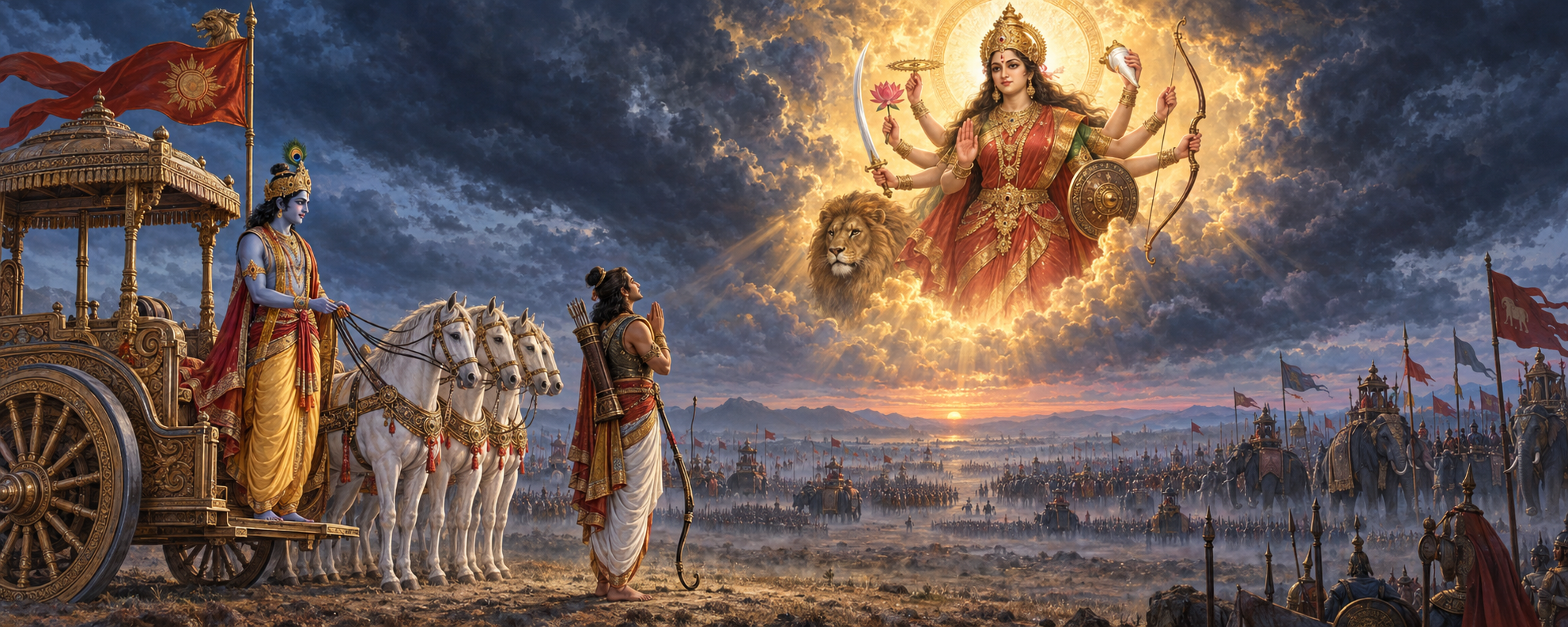
Arjuna’s Kapi Dhvaja—the “ape-banner” of Hanuman—anchors the Bhagavad Gita’s battlefield in a powerful blend of scripture, strategy, and spirituality. The term kapidhvajaḥ in Gita 1.20 is not decorative; it signals divine sanction, morale-building semiotics, and an ethic of service above strength. Traditional lore explains Hanuman’s presence as a boon following Arjuna’s humility before Krishna, binding…
-
BG 18.75 Unveiled: Vyāsa’s Grace, Kṛṣṇa’s Living Voice, and the Timeless Science of Yoga

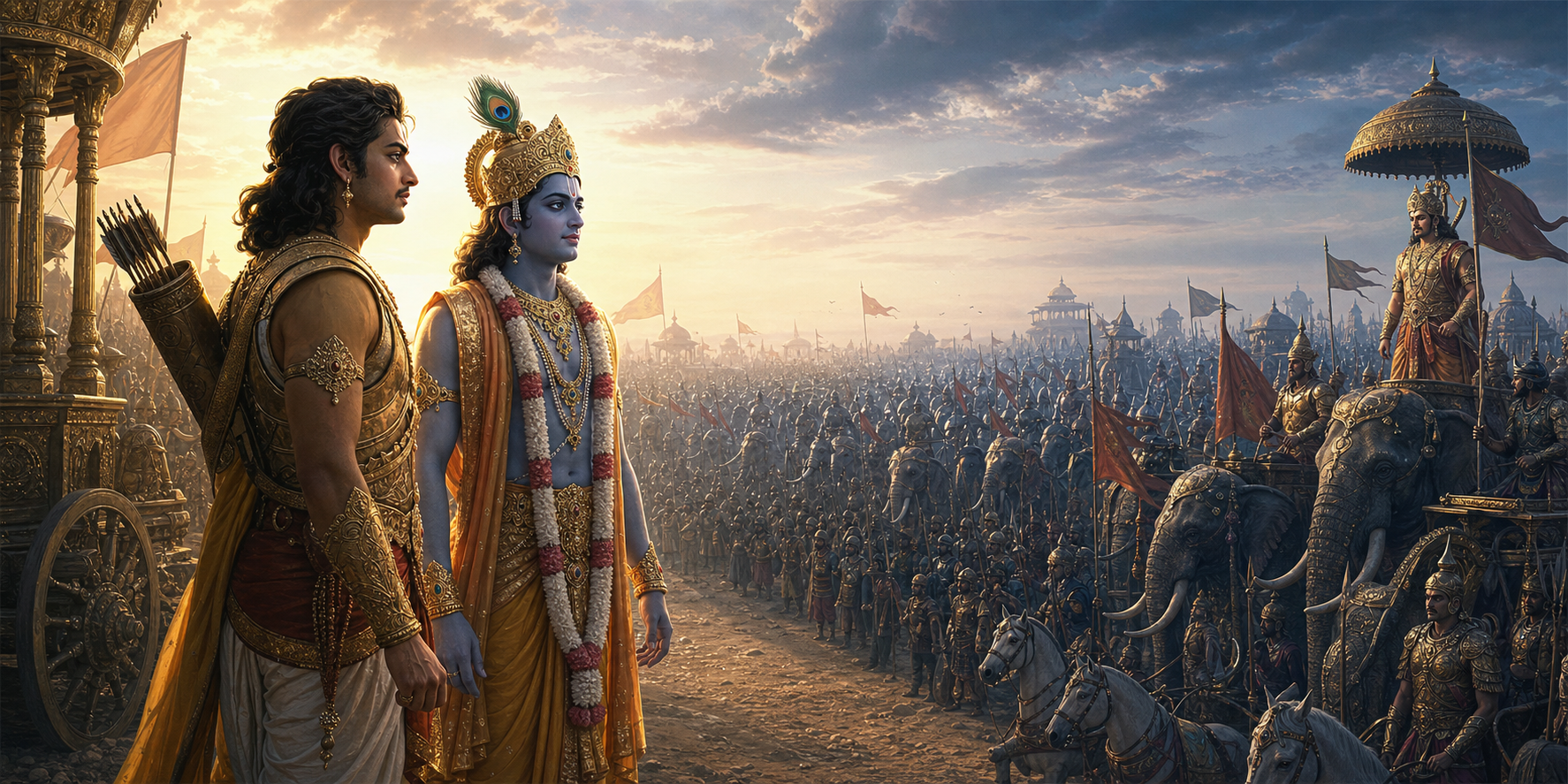
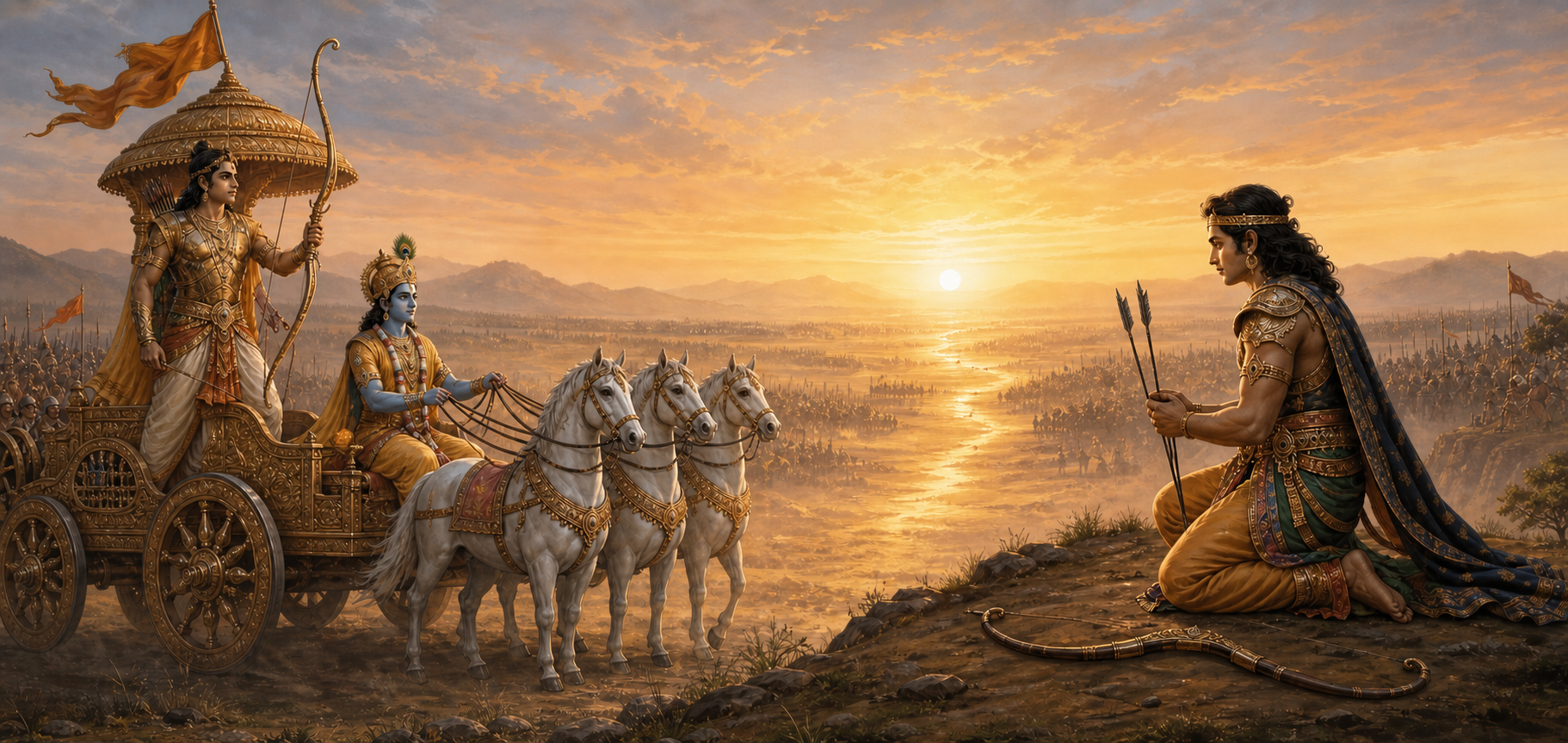
Bhagavad-gītā 18.75 crystallizes how liberating wisdom is known: by Vyāsa’s grace, Sañjaya directly hears Kṛṣṇa guiding Arjuna, modeling lineage-based transmission and receptive practice. The verse illuminates Vedic epistemology—śabda-pramāṇa, paramparā, and divya-dṛṣṭi—while clarifying that “most confidential” teaching is inward profundity, not exclusion. By presenting Kṛṣṇa as Yogeśvara, it frames yoga as an integrated science of action,…
-
Drupada of Panchala in the Kurukshetra War: Dharma, Betrayal, Destiny, and Fatal Valor

Drupada of Panchala stands at the crossroads of Dharma, strategy, and tragic inevitability in the Mahabharata’s Kurukshetra War. His youthful friendship with Drona, later ruptured by humiliation, set in motion a cycle of vows, rituals, and alliances that reshaped the subcontinent’s political map. The births of Dhrishtadyumna and Draupadi through yajña translated personal injury into…
-
Arjuna’s Dilemma and the Power of Svadharma: Choosing Authentic Duty Over Escapism

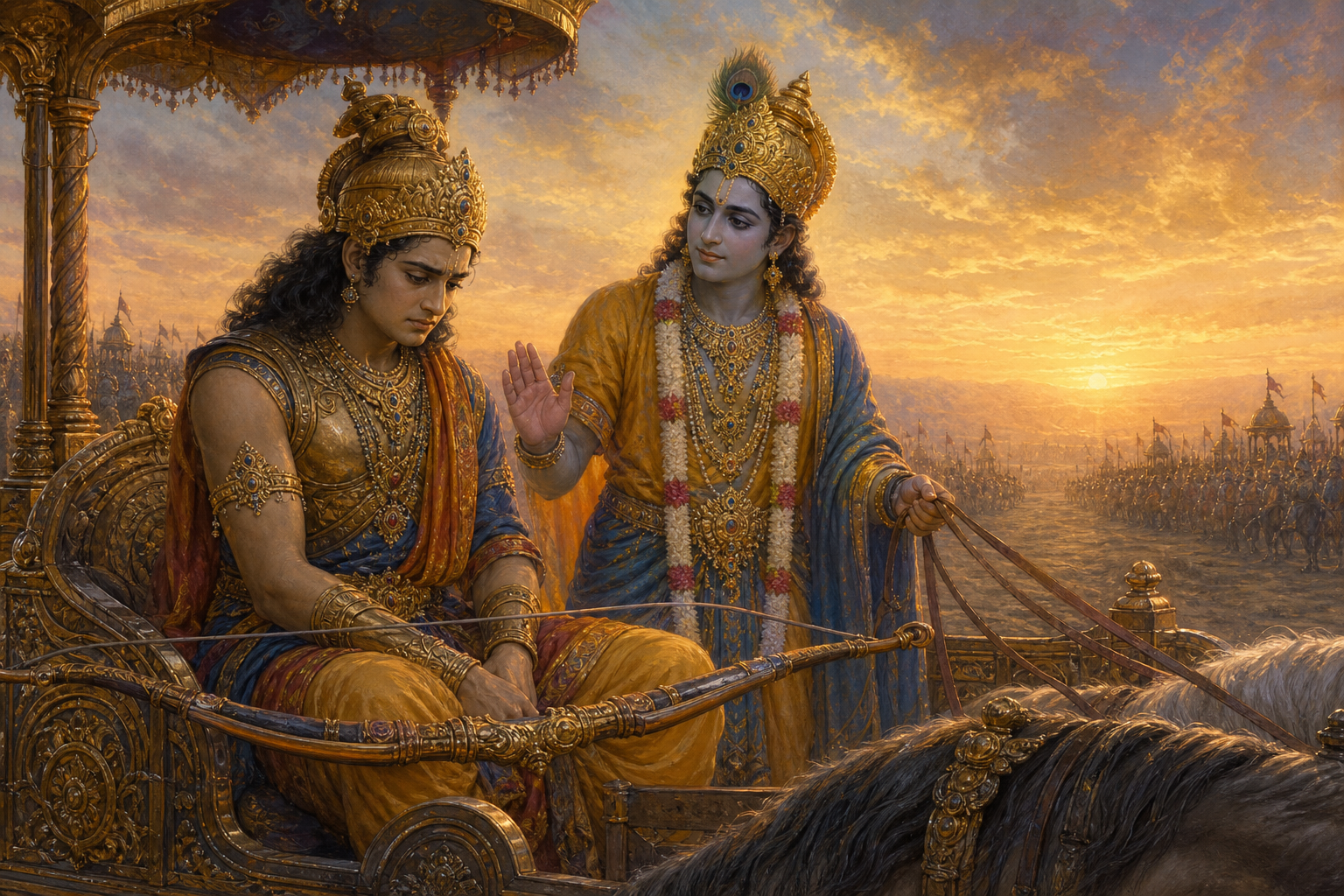
The Mahabharata’s portrayal of Arjuna reveals why authentic duty (svadharma) outperforms artificial renunciation over the long term. By aligning action with intrinsic disposition (svabhava) and practicing karma yoga, individuals gain inner steadiness, ethical clarity, and resilience. This insight, far from endorsing aggression, exemplifies Dharma-Yuddha—protective duty guided by compassion, proportionality, and the common good. Parallel teachings…
-
Karna’s Final Charity: Unbreakable Dāna, Dharma, and Lessons from Kurukshetra

This long-form analysis examines the widely remembered motif of Karna’s final charity on the battlefield of Kurukshetra and situates it within the Mahabharata’s ethical universe. It distinguishes between the critical Sanskrit text and later regional and oral retellings that amplify Karna’s identity as Dāna-vīra. Through the lens of the Bhagavad Gita’s typology of dāna, the…
-
Bhagavad Gita’s Arjuna vs Yoga Vasishta’s Rama: Two Renunciations, One Dharma-Centered Path

This long-form analysis contrasts Arjuna’s crisis in the Bhagavad Gita with Rama’s dispassion in the Yoga Vasishta to clarify why two similar withdrawals demand different remedies. It explains how moha (confusion) calls for karma-yoga—duty purified by relinquishment of fruits—while vairagya (dispassion) calls for vichara and jnana-yoga. Readers gain a practical diagnostic to discern whether they…
-
Draupadi’s Two Boons and a Refusal: Dharma’s Quiet Triumph over the Kuru Court in the Mahabharata

The Dyuta Sabha in the Mahabharata showcases Draupadi’s precise ethical reasoning and strategic restraint: she accepts two boons from Dhritarashtra to restore the Pandavas’ freedom and dignity, then refuses a third to avoid greed. This analysis clarifies the legal-dharmic core of her challenge to the Kuru court—capacity and consent—while situating the episode in Sabha Parva…
-
Kiratamurti Unveiled: Shiva the Divine Hunter—Iconography, Symbolism, and Temple Legacy

Kiratamurti—Shiva as the Divine Hunter—unites textual authority, temple iconography, and living ritual into a single, resonant theology of focus and grace. This long-form study traces the Mahabharata’s Kiratarjuna episode, explains key iconographic features (hunter’s bow, forest attire, Kirāti companion, boar as symbol), and maps the motif across major sites from Kanchipuram and Ellora to Hoysala…
-
Mahabharata’s Fierce Reckoning: Jayadratha, Kichaka, and Dharma’s Unforgiving Verdict

This analysis examines how the Mahabharata adjudicates unrestrained desire through the intertwined fates of Jayadratha and Kichaka. It shows how Dharma calibrates justice—humiliation when restraint advances stability, and decisive force when protection of the vulnerable demands it. Readers gain a clear view of Rajadharma, Dandaniti, Apaddharma, and the atatayin doctrine, applied to real narrative crises.…
-
How Abhimanyu’s Unjust Death Became Kurukshetra’s Moral Pivot and the Kauravas’ Downfall

The thirteenth day of the Mahabharata’s Kurukshetra War became a moral and strategic turning point when Abhimanyu, isolated inside the Chakravyuha, was killed in manifest violation of Dharma-Yuddha. The Kauravas’ many-on-one assault, disarming of a youth, and final mace blow against an unarmed warrior gained a tactical kill but forfeited legitimacy. Arjuna’s vow to slay…
-
Why Arjuna’s Grief Is Called Yoga: The Transformative Power of Viṣāda in the Bhagavad Gita

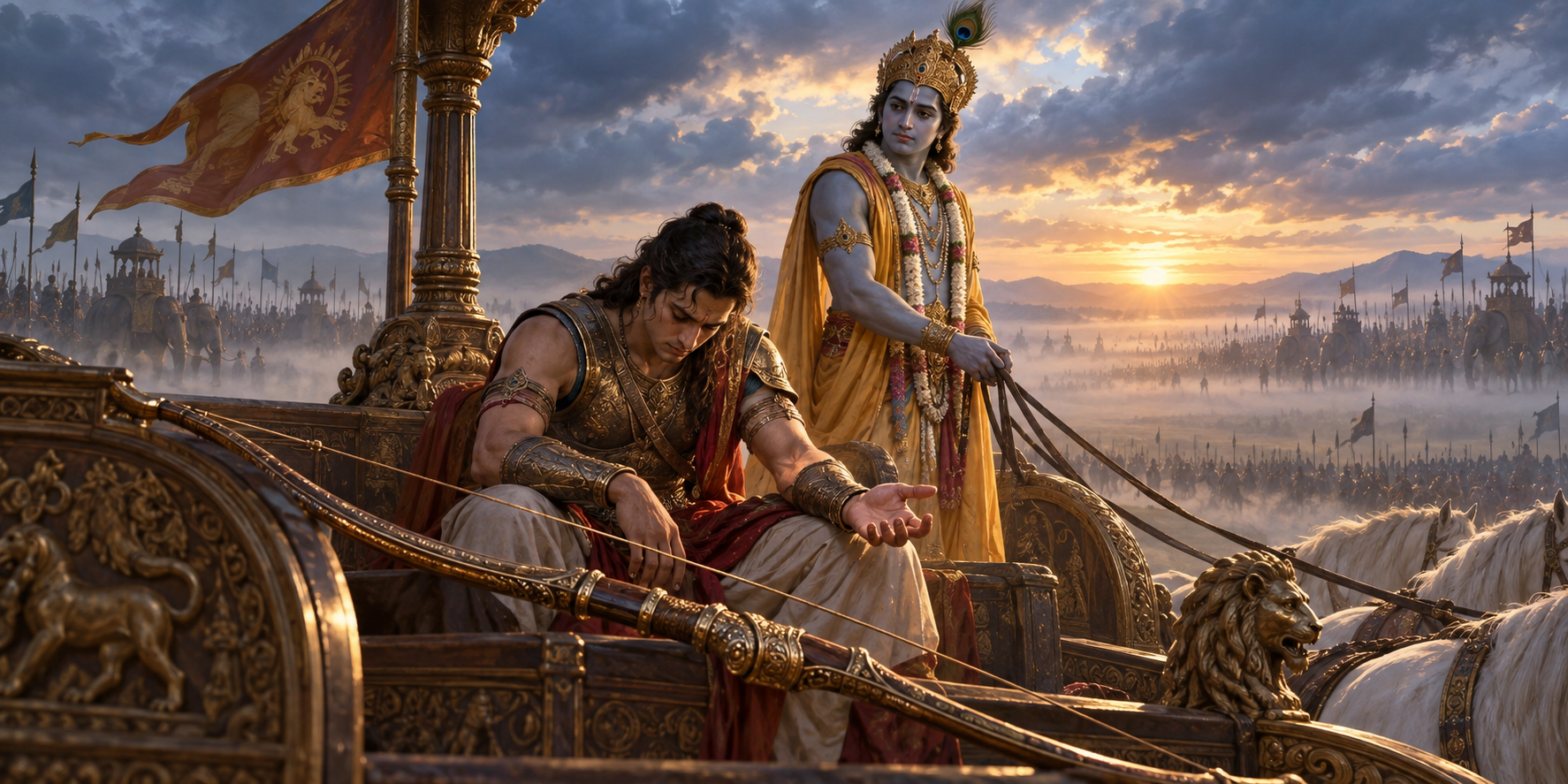
Why is Arjuna’s grief in the Bhagavad Gita called “yoga”? The first chapter, Arjuna Viṣāda Yoga, frames sorrow as a disciplined gateway to discernment and ethical clarity. By exposing attachment, catalyzing viveka–vairāgya, and inspiring surrender—“śiṣyas te ’ham”—grief becomes the very condition for transformative instruction. The Gita’s own colophon names it a yoga-śāstra, indicating that each…
-
Arjuna’s Grief as Yoga: The Transformative Power of Vishada in Bhagavad Gita Chapter 1

The Bhagavad Gita calls its opening chapter Arjuna-Vishada-Yoga to teach that honest suffering can initiate authentic spiritual discipline. Arjuna’s despondency exposes moha, leads to surrender (śiṣyas te ’haṁ), and prepares the ground for buddhi-yoga, samatva, and Karma Yoga. By defining yoga as equanimity and skill in action, the Gita frames grief as a catalyst that…
-
Karma and Karmaphala in the Ramayana and Mahabharata: Dharma, Consequence, and Liberation

This essay reads the Ramayana and Mahabharata as precise ethical maps of karma (action) and karmaphala (consequence), showing how intention, duty, and context shape outcomes. It explains sañchita, prārabdha, and āgāmi karma, and situates them within dharma and the puruṣārthas. Through case studies—Daśaratha’s unintended harm, Rāvaṇa’s hubris, the dice hall’s complicity, Karna’s complexity, and Bhīṣma’s…
-
Mahabharata Made Clear: A Comprehensive, Soul-Stirring Summary of Dharma, War, and Wisdom

This academically grounded summary presents the Mahabharata’s eighteen parvas with clarity, linking narrative, statecraft, and spirituality into a single, coherent guide. Readers gain a concise understanding of the Kuru lineage, the Kurukshetra War, and the Bhagavad Gita’s integrated path of action, knowledge, and devotion. The overview highlights Vidura-niti and Bhishma’s lectures on just governance, ethical…
-
Mahabharata’s Karna Reclaimed: Evidence-Based Truths on Dharma, Loyalty, and Fate

This article offers an evidence-based, text-anchored reappraisal of Karna from the Mahabharata, clarifying his birth, training, alliances, battlefield record, and moral complexity. It distinguishes core episodes from later accretions, helping readers separate popular myths from the Critical Edition’s throughlines. By analyzing the Duryodhana–Karna bond through ethical and psychological lenses, it shows how unmet needs for…
-
Revealing the Pandavas’ Durga Worship in the Mahabharata: Virata Parva’s Earliest Shakta Trace

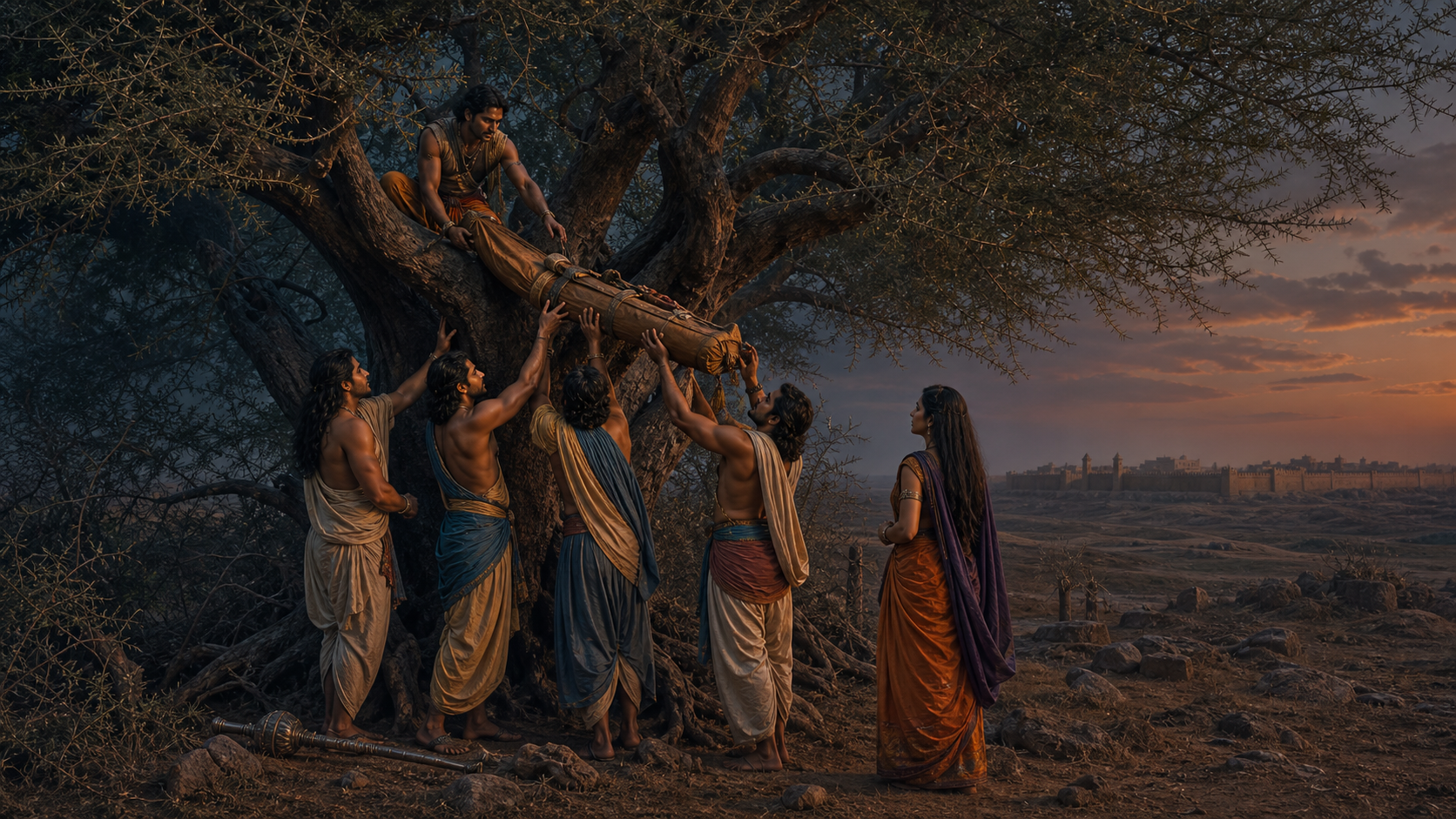
This study traces one of the earliest epic references to Goddess Durga in the Mahabharata’s Virata Parva, where the Pandavas invoke Shakti before their perilous year in disguise. It situates the hymn—naming Durga, Katyayani, Bhadrakali, and Mahishasuramardini—within the narrative hinge between exile and restoration. Attention is given to manuscript variation and critical edition debates while…
-
Ugra Narasimha of Maddur: Fierce Divinity, Temple History and Arjuna’s Living Legend

Maddur’s ancient Ugra Narasimha Murty in Karnataka presents Vishnu’s half-man, half-lion avatar at the very instant of protecting Prahlada and ending Hiranyakashipu’s tyranny. This in-depth study situates the shrine within regional temple history, explains the murti’s technical iconography through Puranic and Pancharatra lenses, and evaluates the local oral tradition linking Arjuna of the Mahabharata to…
-
Bhishma’s Five Golden Arrows: How Suspicion Altered Destiny in the Kurukshetra War

This analysis revisits the Mahabharata episode of Bhishma’s five golden arrows to illuminate how suspicion can derail strategy and reshape destiny. It explains why Duryodhana’s mistrust led him to hold the arrows, how Krishna’s foresight and Arjuna’s claim of a prior boon transformed the outcome, and why Bhishma framed the reversal through the balance of…
-
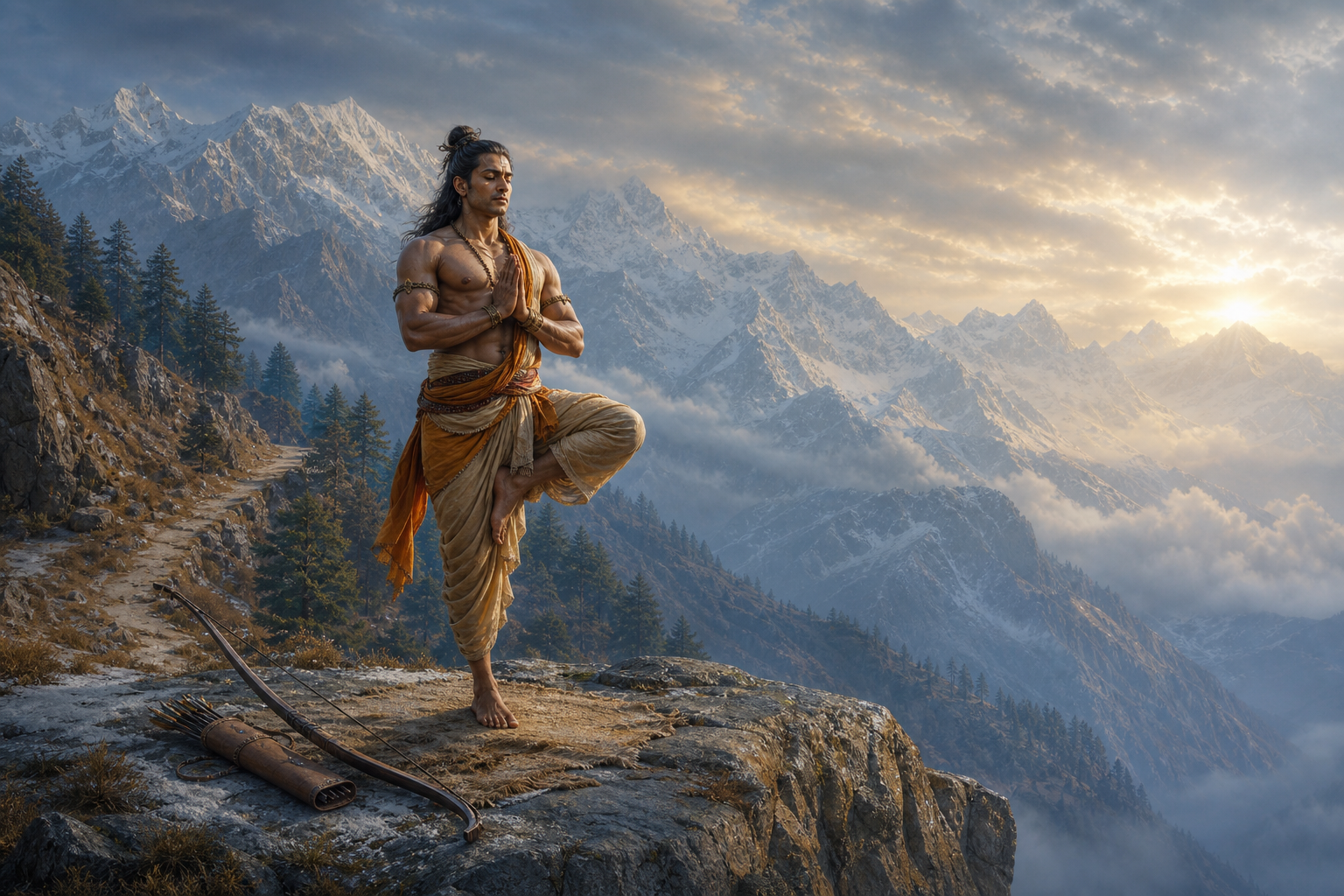
Arjuna and Kirata Shiva vs. Demon Mook: Powerful Spiritual Lessons on Inner Courage

This analysis situates the Kirata episode—where Arjuna and Shiva (as Kirata) slay the demon Mook—within the Mahabharata’s spiritual arc. It clarifies the narrative sequence, from Arjuna’s rigorous tapasya to Shiva’s revelation and the bestowal of the Pashupatastra. It interprets Mook as the symbolic “inner demon” of delusion and tamasic impulse that arises at the threshold…
-
Kiratamurti Unveiled: Shiva as Hunter Grants Arjuna the Pashupatastra in Mahabharata

Kiratamurti, the manifestation of Shiva as a hunter, illuminates a defining episode in the Mahabharata where Arjuna receives the Pashupatastra after a test of humility and valor. The narrative demonstrates how tapasya and devotion attract divine grace. It also underscores the ethical governance of power, as even a supreme weapon must be guided by dharma.…