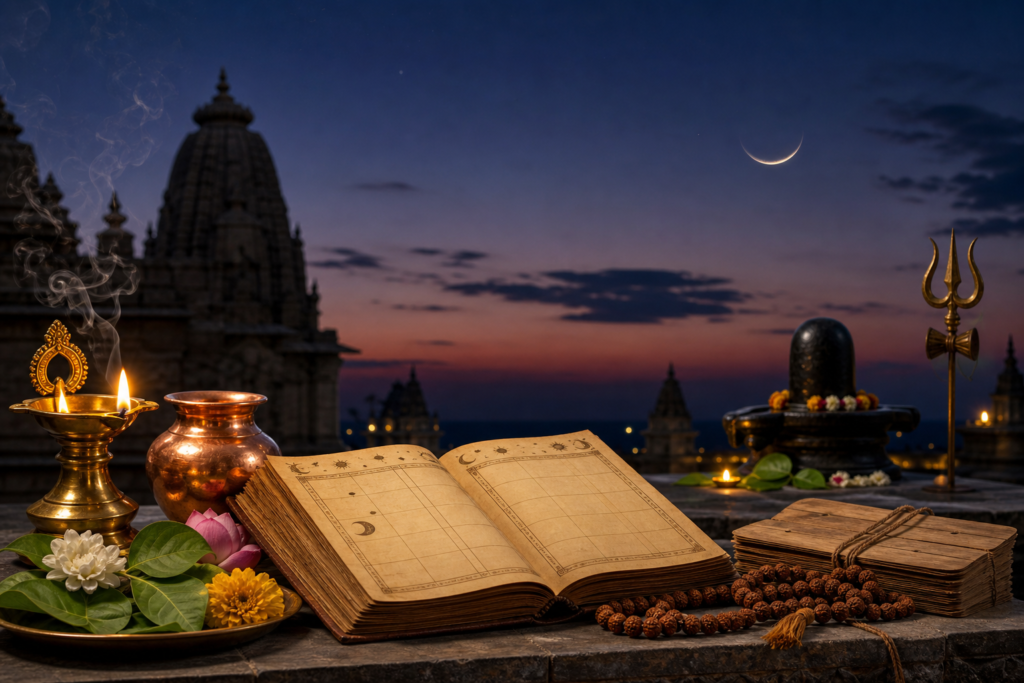
Across civilizations and eras, progressive ambition promises peak enjoyment yet routinely delivers dissatisfaction. Vedic philosophy characterizes this paradox as a law of material nature: increases in lifespan, comfort, and status fail to resolve a subtle but persistent unhappiness. The phenomenon is observable whether one examines modest circumstances or the exalted realms described in dharmic cosmology; the felt disquiet simply wears finer clothing.
From a dharmic lens, the driver is kama, craving that scales as gains accumulate. Contemporary psychology names a similar pattern hedonic adaptation: the nervous system normalizes new pleasures, setting off a renewed search for more intense stimuli. The result is unsatiated lust for experiences, objects, or recognition, not because human aspiration is wrong, but because the instrument used to pursue fulfillment, the senses–mind complex, is mismatched to the goal, enduring joy.
Classical Vedanta explains the mismatch succinctly. The living entity, jiva, is a minute particle of Sachidananda Vigraha, existence, consciousness, and joy condensed into personal reality. Joyfulness is therefore intrinsic and spiritual in quality, not a commodity to be extracted from matter. When inner ananda is sought through material adjustment alone, the search resembles attempting to quench thirst with saltwater: activity increases, but satisfaction recedes.
Gaudiya Vaisnava texts, the Upanishads, and the Bhagavad Gita converge on this diagnostic insight. Sense contact may kindle pleasure, yet Bhagavad Gita 2.62–63 maps the escalation from contemplation to attachment, from attachment to desire, and from desire to disturbance and loss of wisdom. Sattva refines perception, whereas rajas and tamas amplify restlessness and dullness; without inner clarity, ambition turns compulsive and progressively narrower, even when outwardly successful.
Parallel teachings across dharmic traditions corroborate the analysis and point toward unity in remedy. Buddhism frames the same mechanism as dukkha fueled by tanha, observable even in heavenly states; liberation requires insight and the cessation of craving. Jainism prescribes aparigraha, non-possessiveness, and disciplined conduct to quiet karmic influx and reveal innate purity. Sikhism identifies maya and haumai as distorting lenses, remedied through Naam Simran and seva. Each tradition agrees: the locus of lasting joy is not external rearrangement but inner realignment.
This convergence does not dismiss artha and kama; it orders them within dharma and orients life toward moksha. Within Hinduism's purushartha framework, ambition is welcomed when it serves dharma and is illuminated by the aim of liberation. Under this order, drive becomes aspiration: purposeful, measured, and capable of generating contentment independent of outcomes. Untethered, the same drive mutates into serial novelty-seeking that cannot, by design, complete itself.
Modern research adds precision to the ancient map. Variable-reward loops, scarcity cues, and status-comparison triggers elevate dopamine spikes and prediction errors, biasing attention toward incentives that quickly habituate. This is why promotions, purchases, or social validation often lose their savor soon after arrival. Without contemplative correction, the system overfits to short-term reward signals and under-samples the quieter baselines of well-being available through ethical living, attention training, and devotion.
The practical question therefore shifts from How much can be gained? to What constitutes a skillful path to enduring joy? Dharmic practice answers on three integrated axes: view, discipline, and grace. View clarifies identity as consciousness rather than as a mere bundle of wants; discipline stabilizes attention and character; grace, through devotion, humility, and relationship with the sacred, softens self-centeredness and unlocks joy that does not depend on circumstance.
Core methods are well attested. Abhyasa, steady practice, and vairagya, wise non-attachment, calm the oscillations of the mind. Ethical foundations, the yamas and niyamas or their analogues across traditions, decondition harm and greed. Breath regulation and meditation rebalance arousal and reveal the gap between impulse and response. Bhakti practices such as nama-japa and kirtan refine emotion into devotion. Seva and dana widen identity from acquisition to contribution. Satsang or sangha sustains momentum and corrects blind spots.
As these disciplines mature, ambition does not vanish; it is transfigured. Professional excellence continues, but the metric of success expands to include clarity, compassion, and equanimity. Consumption becomes intentional rather than compensatory. Time preference lengthens. Relational warmth, creativity, and ethical courage rise as reliable indicators of ananda, replacing the brittle high of conquest.
Four practical diagnostics help track progress beyond the hedonic treadmill: diminishing compulsion around sense-driven choices; faster recovery of balance after praise or blame; spontaneous gratitude independent of acquisition; and a stable willingness to forego a tempting gain when it conflicts with dharma. These are not abstractions but measurable shifts in lived experience.
Concrete protocols translate insight into daily life. Begin and end the day with a brief contemplative practice. Reserve technology-free intervals to interrupt reward loops. Maintain a simple aparigraha audit of possessions and subscriptions. Dedicate a fraction of income and time to seva. Practice mindful eating and speech. Cultivate one sacred text habit, for instance, a daily verse from the Bhagavad Gita, and one community anchor. The specifics may vary by tradition, but the architecture is universal.
Objections are natural. Is the counsel merely anti-ambition? Dharmic traditions answer no. The counsel is pro-alignment. When the jiva's intrinsic joy is recognized as spiritual in quality, material life becomes a field for service, learning, and beauty rather than a desperate extraction site. Artha and kama, under the governance of dharma and in the light of moksha, regain their rightful, limited, and luminous roles.
Read this, then, as an invitation to redesign aspiration. The law of material nature need not be suffered unconsciously. With view, discipline, and grace, progressive ambition can mature beyond unsatiated lust into a steady, spacious, and fearless pursuit of the good. That transformation, described in Vedanta, Buddhism, Jainism, and Sikhism alike, is the doorway from restless seeking to abiding joy.
Inspired by this post on Dandavats.