Across the dharmic traditions, internal attachment is intelligible as self-identification with egowhat Hindu sources call ahamkara and classical Yoga names asmita. This identification fuses the transient processes of body, senses, and mind with the imagined center of “I” and “mine,” generating clinging (upadana), craving, aversion, and fear. Hindu philosophy, particularly Vedanta and Yoga, treats this fusion as a consequence of avidya (ignorance), and it prescribes knowledge (jnana), disciplined action (Karma Yoga), devotion (Bhakti), and meditation (dhyana) as complementary means to disentangle awareness from its misidentifications and thereby realize enduring freedom (moksha).
At the heart of Hindu insights stands the Atman–Brahman teaching of the Upanishads. Atman, the innermost Self, is ultimately non-different from Brahman, the absolute reality. Mahavakyas such as “tat tvam asi” and “aham brahmāsmi” articulate this identity. The ego (ahamkara) is not the Self but a functional construction within the mind (antaḥkaraṇa) that appropriates experience. Internal attachment occurs when awareness confuses this constructed center with the limitless Self and then defends, adorns, and extends it through possessions, roles, and narratives.
Hindu psychology clarifies this confusion with the frameworks of the three bodies (sthula, sukshma, karana sharira) and the five sheaths (Pancha Kosha Viveka: annamaya, pranamaya, manomaya, vijnanamaya, anandamaya). Identification slides outward and inward along these layersbody, breath, mind, intellect, and causal bliss-tendenciesgenerating subtle attachment at each level. Spiritual discernment (viveka) recognizes these layers as instruments illumined by consciousness, not the Self itself.
Classical Yoga presents the same truth operationally: “yogaḥ citta-vritti-nirodhaḥ.” The kleshasavidya, asmita, raga, dvesha, abhiniveshamap how ignorance yields egoism, which in turn produces grasping, aversion, and fear of loss. Patanjali prescribes abhyasa (steady practice) and vairagya (non-attachment) to quiet mental fluctuations and reveal purusha, the witness-consciousness, as distinct from prakriti’s modifications. As egoic identifications loosen, the compulsion to defend the “I” falls away.
Vedantic analysis speaks of adhyasa, the superimposition by which the attributes of the non-self (anatma) are falsely ascribed to Atman and vice versa. Avidya sustains this error until it is dispelled through shravana (systematic study of the Upanishads), manana (critical reflection), and nididhyasana (deep contemplative assimilation). Internal attachment is the operational face of adhyasa: a constant investment of attention and affect in what is changing, mistakenly taken to be “me” or “mine.”
The Bhagavad Gita diagnoses the mechanism of ego-identification in the dynamics of doership and enjoyership. It teaches Karma Yogaacting without clinging to outcomes (2.47), offering works as yajñato erode the sense “I am the agent.” The verse “prakṛteḥ kriyamāṇāni guṇaiḥ karmāṇi sarvaśaḥ; ahaṅkāra-vimūḍhātmā kartāham iti manyate” (3.27) shows that action arises in the field of the gunas, while ego-delusion claims authorship. Recognizing this, one acts skillfully yet unattached, converting life itself into sadhana.
Gita’s portrait of the sthitaprajnathe one of steady wisdomdescribes freedom from internal attachment: equanimity amid gain and loss, honor and dishonor, pleasure and pain (2.55–2.71). This stability is not indifference but lucid participation devoid of possessiveness. In advanced stages, even subtle claims“I am the knower,” “I am the renouncer”are relinquished, and the mind abides as a transparent instrument.
Samkhya’s purusha–prakriti distinction undergirds this analysis. Purusha is the changeless witness; prakriti, with its gunas, produces all functions including ahamkara. The collapse of identity between them is maintained by habit (samskara) and misperception (viparyaya). Yoga’s eight limbs refine the system: yama–niyama reduce gross attachments; asana stabilizes; pranayama regulates energy; pratyahara interiorizes attention; dharana–dhyana concentrate and clarify; samadhi reveals purusha beyond modification.
Within Vedanta, schools nuance the relation between ego, self, and the absolute. Advaita Vedanta affirms non-dual identity and treats ahamkara as ultimately mithya (dependent reality). Vishishtadvaita regards the self as a real mode of Brahman; individuality matures through prapatti (surrender) into loving participation in the divine. Dvaita maintains difference between jiva and Ishvara; ego is purified into devotion and service. Despite metaphysical differences, all three converge pragmatically: internal attachment binds, and disciplined sadhana loosens it.
The Bhakti Tradition operationalizes non-attachment through loving orientation to one’s Ishta. Devotional practicesjapa, kirtan, puja, kirtanam, smaranamrepattern samskaras by saturating mind and emotion with divine remembrance. In prapatti, the residual ego yields to grace; “mine”-making softens into stewardship; identity reorients from possessiveness to participation. The result is an ego made transparent to compassion.
Karma Yoga offers a powerful household path. By dedicating action to the divine and accepting results as prasad, practitioners neutralize reactive pride and despair. Work transfigures into worship, and the subtle “I am the doer” gives way to lucid responsibility without clinging. This ethic strengthens dharma while protecting interior freedom.
Jnana Yoga proceeds through viveka and vichara. The inquiry “Who am I?” disentangles awareness from body, senses, mind, and intellect through neti neti until Atman shines self-luminous. Nididhyasana consolidates this recognition so that it endures amid activity. In maturity, attachment cannot take hold because the basis for appropriationthe mis-taken selfno longer persuades consciousness.
Raja Yoga complements this inquiry by refining attention itself. Pranayama modulates autonomic arousal; pratyahara withdraws the senses; dharana stabilizes focus; dhyana sustains it. As the mind quiets, egoic storylines lose kinetic force. Vairagya is then not forced; it is the natural outcome of clear seeing.
Samskara theory illuminates why attachment is stubborn. Repeated identifications carve grooves that bias perception and impulse. Pancha Kosha Viveka frames a practical audit: attachment shows up as compulsion at the body, breath, emotion, cognition, and causal-habit layers. Practices target each layerethical restraint (yama–niyama), breathwork, mantra and kirtan, contemplative study, and deep meditationto exhaust and transform these grooves.
In Buddhism, anatta (anatma) and the analysis of upadana parallel these insights. Clinging to aggregates (skandhas) yields dukkha; mindfulness and wisdom reveal their impermanence and non-self nature. The Eightfold Path reorients intention, attention, and action, dissolving the felt need to defend a solid self. The terminologies differ, yet the soteriological arcending the tyranny of self-cherishingshows profound consonance with Hindu accounts of avidya and ahamkara.
Jaina philosophy shares this trajectory through a different ontology. It upholds a real jiva obscured by karmic matter attached through passion and ignorance. Anekantavada, the doctrine of many-sidedness, cultivates epistemic humility that weakens ego absolutism. Aparigraha (non-possessiveness) and careful ethics reduce the adhesions that bind the soul, advancing it toward kevala jnana (omniscience) and release.
Sikh teachings identify haumai (ego-centeredness) as the root obstruction to realizing the divine pervading all. Living in alignment with hukam (cosmic order), practicing naam simran (remembrance), and engaging in seva (selfless service) dissolve self-centered grasping. The fruit resembles the Gita’s wisdom: fearless responsibility, compassion, and interior freedom amid worldly life.
Taken together, these dharmic streams affirm a shared thesis: internal attachment is the operational mask of ego-delusion; liberation unfolds as this mask becomes transparent. The paths differ in metaphysics and method yet converge in praxisdiscipline, discernment, devotion, meditation, ethical clarity, and serviceeach weakening the reflex to appropriate experience as “I” or “mine.”
Ethically, loosening internal attachment expresses as ahimsa, aparigraha, and generosity. Socially, it ripens as seva and mutual respect. Philosophically, it matures into pluralism: honoring Ishta and diverse upayas (means) without insisting on a single exclusive route. This plural ethos strengthens unity in spiritual diversity while preserving rigorous sadhana.
Contemporary psychology and neuroscience offer complementary language: the ego resembles a predictive self-model maintained by habit loops, reward prediction, and narrative coherence. Practices like pranayama, mantra, and mindfulness alter arousal, attention, and appraisal, creating the cognitive-emotional slack needed for de-identification. The ancient maps anticipated these findings, prioritizing trainable skills over mere belief.
A practical daily sadhana can braid the great paths. Morning: brief pranayama, mantra-japa, and contemplative reading (shravana) to set viveka. Midday: Karma Yogawork as yajña with mindful pauses to release grasping. Evening: kirtan or silent dhyana to metabolize the day’s samskaras, followed by nididhyasana. Across the day: cultivate aparigraha in choices, speech, and consumption.
Markers of progress are concrete: quicker recovery from reactivity; declining possessiveness; spontaneous kindness; steady attention; joy not contingent on outcomes. Attachment still arises, but it no longer commandeers conduct. Responsibility remains robust while the felt weight of “me and mine” quietly recedes.
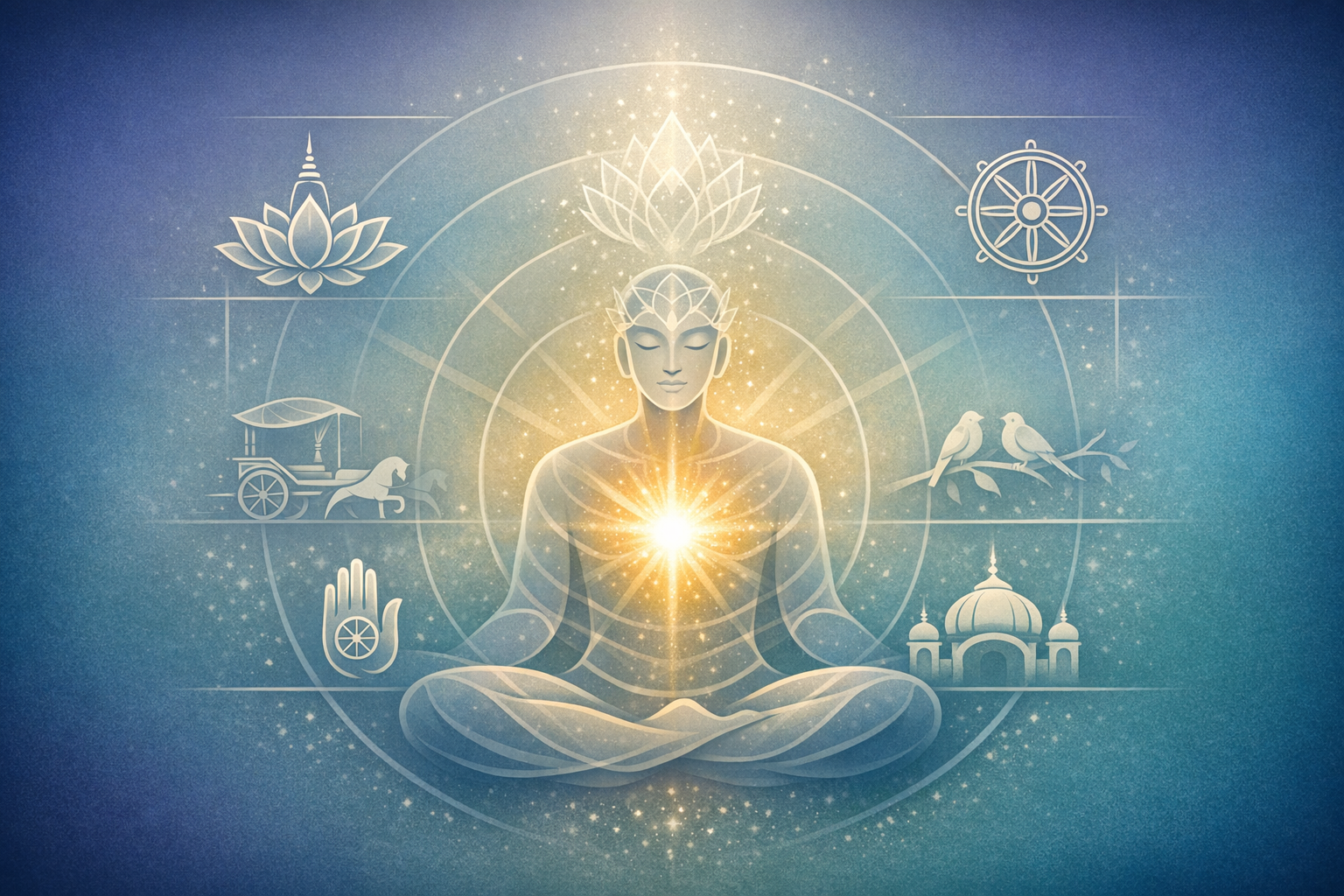
Scriptural imagery distills the path. The Katha Upanishad’s chariot allegory teaches disciplined governance of senses and mind; the Mundaka Upanishad’s “two birds” shows the shift from the tasting self to the witnessing Self; the Gita’s gunatita ideal presents freedom amidst the gunas. Each image re-educates imagination away from ego-centered appropriation toward lucid participation.
In sum, internal attachment is indeed self-identification with the ego; its dissolution is a multidimensional education of attention, affection, and action. Hinduism, in conversation with Buddhism, Jainism, and Sikhism, offers a coherent, plural, and practicable technology of freedom: from avidya to viveka, from ahamkara to Atman, from clinging to compassion, and from fragmentation to unity in spiritual diversity.
Inspired by this post on Hindu Blog.