-
Liberate the Self: Hindu, Buddhist, Jain, and Sikh Insights on Embracing True Nature

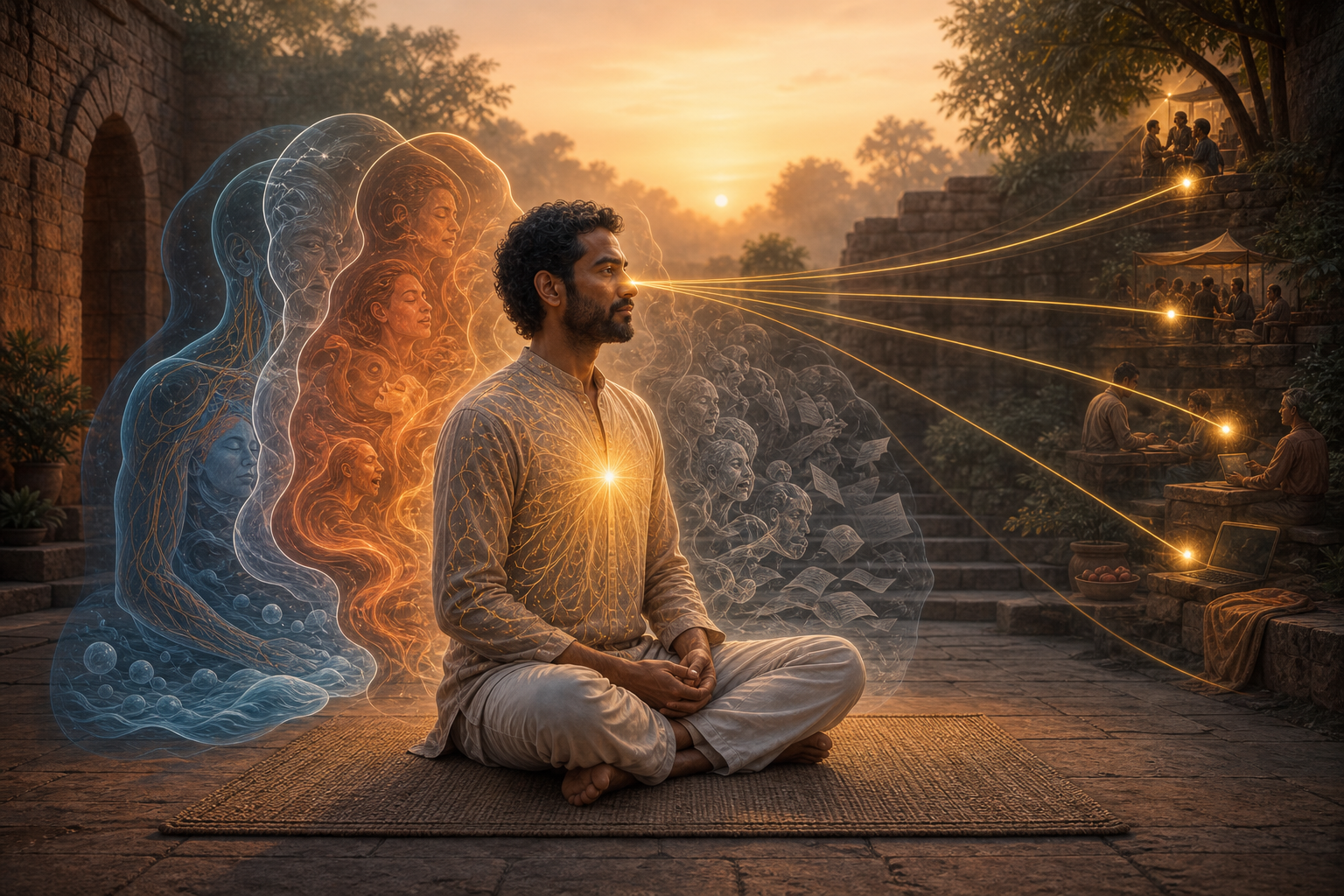
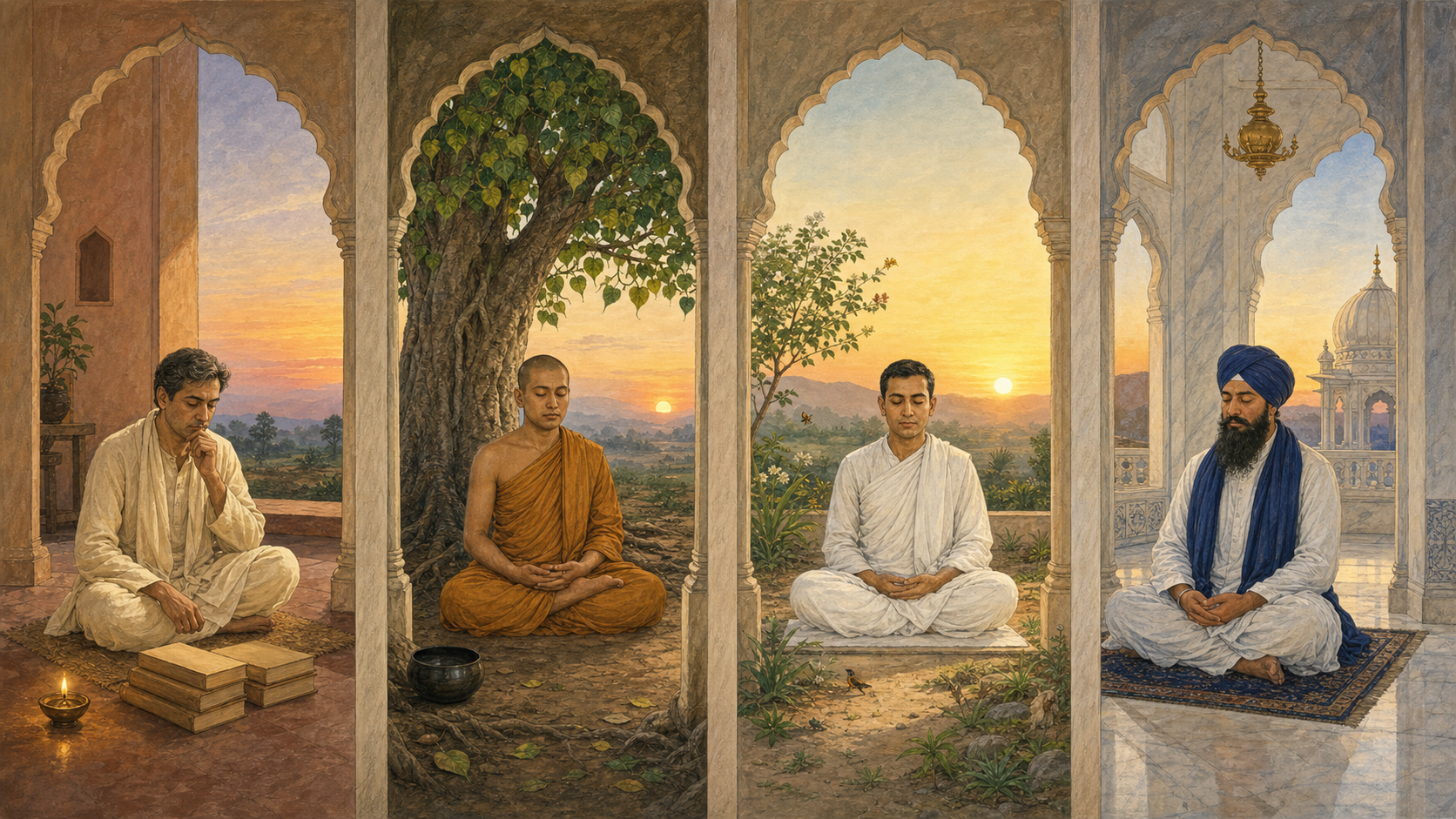
This long-form essay explores how Hinduism, Buddhism, Jainism, and Sikhism converge on a single, practical insight: suffering intensifies when one strives to become someone other than one’s true nature. Drawing on the Upanishads, Bhagavad Gita, Yoga Sutra, Sāṅkhya analysis, Buddhist teachings on craving and anatta, Jain doctrines of aparigraha and anekāntavāda, and Sikh wisdom on…
-
Introspection to Self-Realization: A Rigorous Dharmic Blueprint for Knowing the Divine

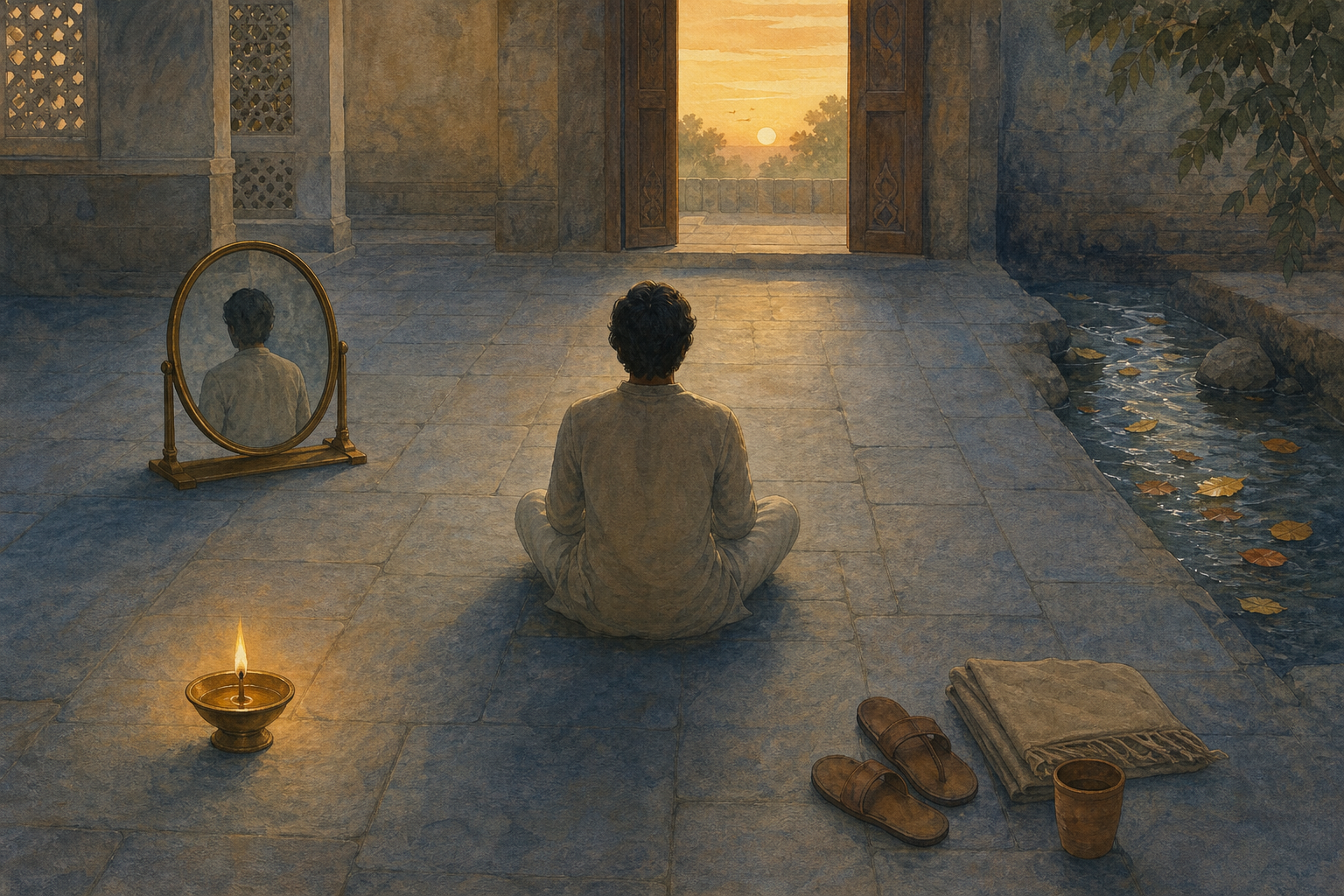
This long-form analysis explains why disciplined self-analysis is a direct, repeatable path to self-realization and knowing the Divine across Hinduism, Buddhism, Jainism, and Sikhism. It integrates the Upanishads, the Bhagavad Gita, Patanjali’s Yoga Sutra, the Satipaṭṭhāna Sutta, Jain Anekāntavāda with Samayik and Pratikraman, and Sikh Naam-centered living under hukam. A rigorous seven-phase practice cycle—intention, observation,…
-
Modern Education’s Illusion of Control: Dharmic Wisdom to Build Resilient, Purposeful Lives

Modern culture often trains people to believe life can be engineered into submission. Dharmic traditions—Hinduism, Buddhism, Jainism, and Sikhism—offer a corrective: disciplined agency paired with principled surrender. The Bhagavad Gita’s focus on action without attachment, the Yoga Sutra’s blend of practice and non-attachment, Buddhism’s insight into impermanence, Jainism’s many-sidedness, and Sikhism’s hukam together form a…
-
Beyond Ego (Ahamkara): Atman, Attachment, and Liberation across Hindu, Buddhist, Jain, Sikh Paths

This comprehensive analysis explains how Hinduism, aligned with Buddhism, Jainism, and Sikhism, understands internal attachment as self-identification with ego (ahamkara/asmita). It clarifies core doctrines—Atman–Brahman, avidya–adhyasa, and the Yoga kleshas—while mapping practical methods in Karma Yoga, Bhakti, Jnana, and Raja Yoga. Readers gain a technical yet accessible framework using Pancha Kosha Viveka, samskara theory, and Gita-based…
-
Disarming the Ego: A Cross-Dharmic, Science-Backed Guide to Self-Realization and Freedom

Ego is the single greatest barrier to self-realization because it fuses awareness with passing roles and narratives, a pattern Dharmic traditions diagnose with remarkable agreement. This essay integrates Vedanta, Buddhism, Jainism, and Sikhism with cognitive science to explain how Avidya and identity habits form—and how to unwind them. Readers gain a precise map of the…
-
The Unknowable Other: Hindu Wisdom to Cultivate Self-Knowledge and Deeper Relationships

Hindu philosophy teaches that another person can never be fully known, a truth that nurtures humility and wiser relationships. The Upanishads and Pancha Kosha Viveka explain why only outer layers are visible while the essence remains veiled. Jain Anekantavada, Buddhist anatta, and Sikh Ik Onkar reinforce pluralism and compassionate restraint. Practically, this insight encourages careful…
-
Why ‘Name and Form’ Create Suffering: A Powerful Dharmic Lens on Oneness and Freedom

Hindu philosophy traces suffering to separateness born of nāma (name) and rūpa (form), a misidentification that obscures underlying unity. Upanishadic and Advaita perspectives treat names and forms as provisional, while the Bhagavad Gita offers practices—jñāna, bhakti, and karma yoga—to reorient attention toward what endures. Everyday experiences show how labels intensify anxiety and craving; loosening identification…
-
Anatmabuddhi Explained: Unmasking the Not-Self Illusion and Awakening to Self-Realization

Anatmabuddhi names the intellect’s tendency to mistake the not-self for the Self, a root cause of anxiety, craving, and conflict. This article explains the concept in clear, accessible terms and connects it to allied insights in Buddhism’s anatta, Jainism’s anekantavada, and Sikh perspectives on ego. Readers gain practical tools—viveka, dhyana, ethical living, and a short…
-
Atman in Karmic Religions

atman, (Sanskrit: “self,” “breath”) one of the most basic concepts in Sanatan, the universal self, identical with the eternal core of the personality that after death either transmigrates to a new life or attains release (moksha) from the bonds of existence. As Karmic religions like Hinduism (and its various sects), Jainism, Buddhism & Sikhism arose…