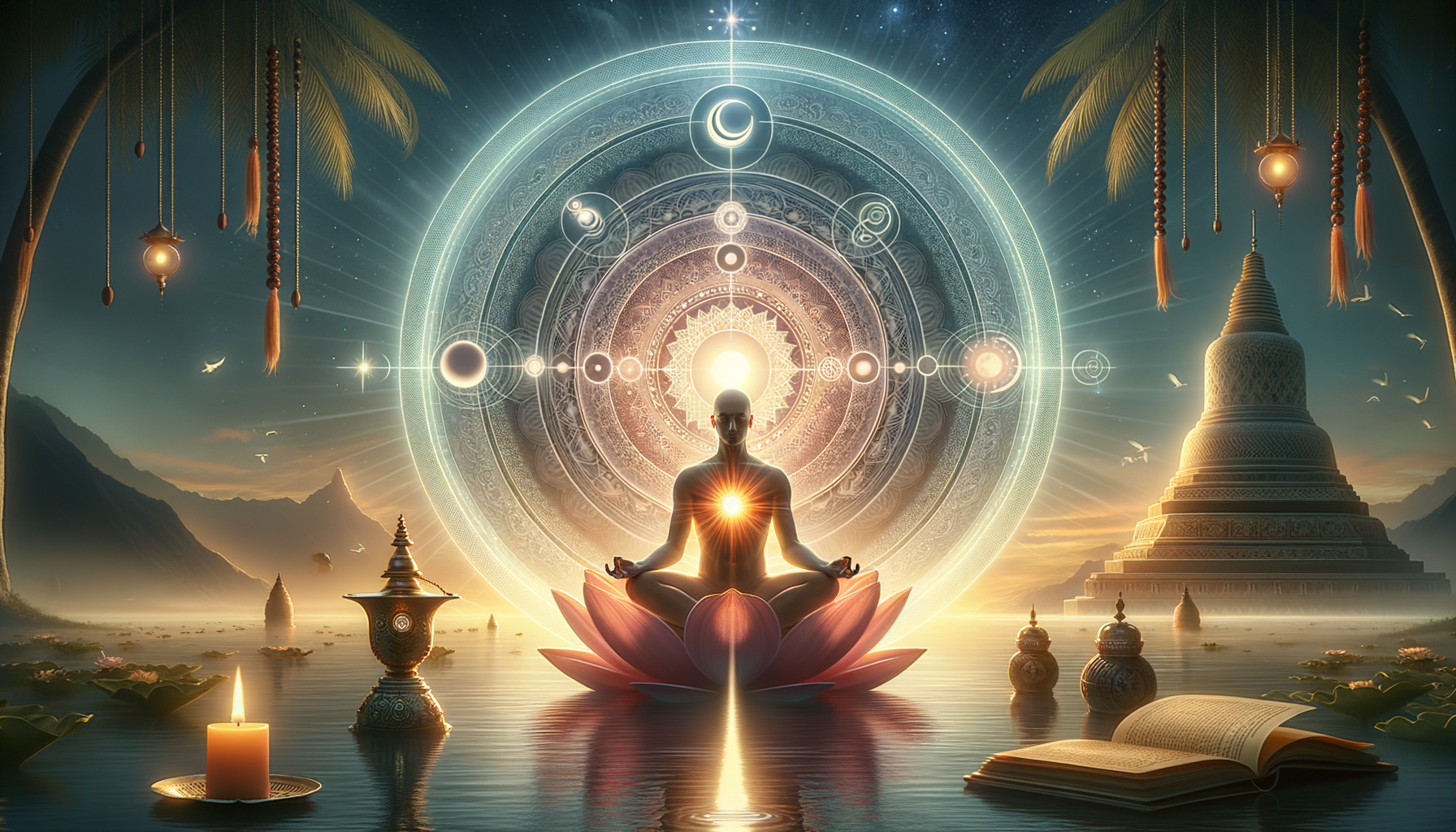
Hinduism presents a clear and compelling view on the survival of consciousness after death: consciousness (atman) is eternal, distinct from the body, and not reduced to brain activity. This position contrasts with materialist interpretations and aligns with the larger Dharmic understanding that life continues beyond physical dissolution. Within this framework, the question “Does human consciousness survive bodily death?” receives an affirmative, philosophically reasoned response rooted in Vedic philosophy, the Upanishads, and the Bhagavad Gita.
At the heart of this view is atman, the witnessing self that neither dies nor is born. The Upanishads describe atman as the immutable reality underlying changing bodily and mental states, while the Bhagavad Gita explains that the self is the knower of the field (kshetrajna), untouched by the body’s transformations. This metaphysical clarity underpins Hindu philosophy’s confidence that consciousness survives bodily death and participates in a broader moral and spiritual arc.
The doctrines of karma and reincarnation (samsara) describe how actions shape subsequent births. Karma is not a punitive mechanism but a moral pedagogy guiding the jiva toward self-knowledge and ethical refinement. In this view, prarabdha and sanchita karma govern the unfolding of life circumstances, and freedom (moksha) is attained when ignorance (avidya) is dispelled and the true nature of atman is realized. Thus, continuity of consciousness across lives is integral to both moral accountability and spiritual progress.
Practice grounds these teachings. Through dhyana, japa, and pranayama, practitioners cultivate direct awareness of consciousness as a stable presence beneath changing thoughts and sensations. In moments of grief, Hindu rites such as antyesti and shraddha offer structured meaning, honoring the deceased while affirming the journey of the atman. Many families report that these practices provide emotional resilience, ethical direction, and a sense of continuity that eases the passage through loss.
Dharmic traditions converge on this continuity while articulating it in distinct ways that enrich a shared spiritual heritage. Jainism speaks of jiva and a finely articulated karma theory guiding the soul’s ascent. Buddhism, while teaching anatma (anatta), affirms continuity via dependent origination and the stream of consciousness (vijñana-santana) across rebirths. Sikhism conveys that the atma moves under hukam, with rebirth concluding in union with the Divine (Waheguru). Together, these perspectives foster unity in diversity and sustain interfaith respect within the Dharmic family.
Philosophically, Hinduism situates consciousness as fundamental rather than derivative. The four statesjagrat (waking), svapna (dreaming), sushupti (deep sleep), and turiya (the transcendental)map experiential evidence that awareness persists beyond bodily and mental fluctuations. This cartography of experience, central to Vedanta, complements scriptural testimony (sruti) and reason (yukti), offering a coherent account of why the demise of the body does not entail the annihilation of awareness.
Ethical implications follow naturally. If consciousness endures, then dharma, ahimsa, and compassion acquire heightened urgency. Choices ripple beyond a single lifespan, inviting responsibility and humility. In daily life, this understanding often inspires service, restraint, and gratitudequalities that nurture individuals and communities alike and align with the shared values of Hinduism, Buddhism, Jainism, and Sikhism.
Common questions arise: Why do most people not recall past lives? Classical answers point to the veiling power of avidya and the pragmatic mercy of forgetting, which allows fresh moral effort. Occasional reports of past-life memories are evaluated within Dharmic epistemology that balances sruti, yukti, and anubhava (direct experience). Regardless of such cases, the core claim rests on a sustained philosophical tradition rather than sensational anecdotes.
In sum, Hinduism answers that human consciousness survives bodily death because atman is not the body, nor confined to the brain. Through karma and reincarnation, life offers continuous opportunities for learning until the quest culminates in moksha. Read in harmony with Jain, Buddhist, and Sikh insights, this view affirms a shared Dharmic commitment: consciousness endures, ethics matter, and spiritual liberation remains the ultimate aim.
Inspired by this post on Hindu Blog.