
This article was originally posted on the Chanakya Forum.
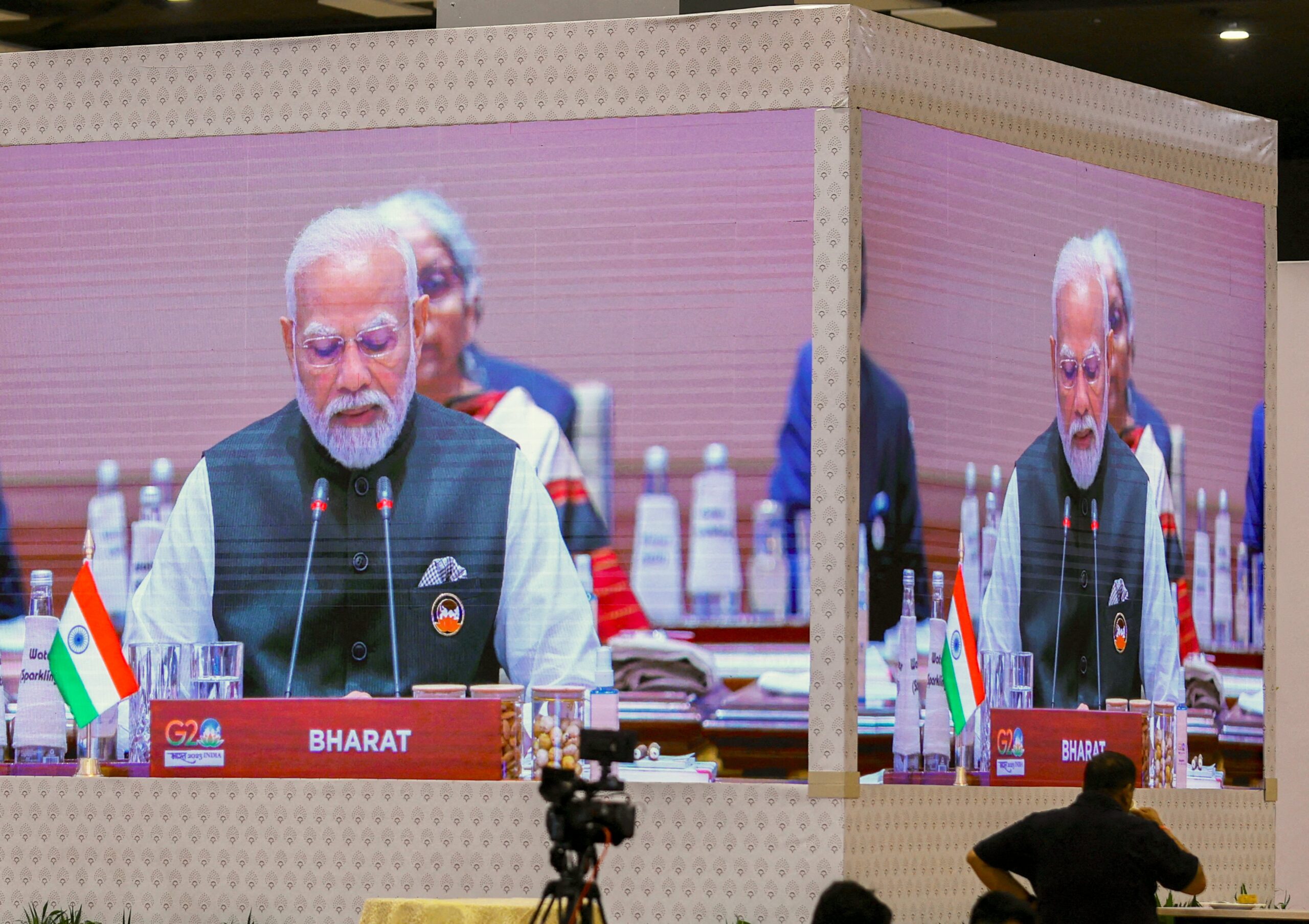
External Affairs Minister S Jaishankar on Friday referred to key developments in the country, including cashless payments, lunar landings and woman empowerment and emphasised that “this is an India that is more Bharat,” and said that in the last decade, India has nurtured authentic and grounded politics by deepening its Indian democracy.
Jaishankar made these remarks in his article for The Economist and said, “The deepening of Indian democracy has also nurtured authentic and grounded politics. While valuing culture and heritage, the embrace of technology and modernity are equally visible in the progress of the last decade. Today’s India is one of cashless payments, of 5G networks, of lunar landings and of digital delivery.”
“It is equally one of women’s political representation and “leaving no one behind”. This is a society that is now more confident, capable and responsive. This is an India that is more Bharat,” he added,
EAM Jaishankar also went on to mention India’s G20 presidency and Chandrayaan-3 mission success this year and marked them as signs of rapid post-COVID-19 recovery and robust growth.
He stated, “The Indian g20 presidency witnessed a refocusing on the challenges of growth and development. It was expressed as an action plan to achieve Sustainable Development Goals, a green development pact, reform of international financial institutions, promotion of digital public infrastructure and encouragement of women-led development. Convening a global south gathering was a prelude to ensuring the permanent G20 membership of the African Union.”
Reiterating India’s approach towards the neighbouring countries in tough times of crisis, EAM said that India’s concept of “extended neighbourhood” has deepened roots in ASEAN, the Gulf, Central Asia and the India Ocean.
He said, “In the past decade, India’s “neighbourhood first” approach has built new connectivity and deeper contacts. The rapid response to Sri Lanka’s economic crisis reaffirmed the larger goodwill from pandemic-era support. The concept of the “extended neighbourhood” put down deeper roots in ASEAN, the Gulf, Central Asia and the Indian Ocean. From the Pacific to the Caribbean, intensified engagement is enabling a larger Indian footprint.”
He said further, “In that process, India demonstrated during 2023 how to navigate the east-west polarisation around Ukraine and bridge the north-south developmental divide. The impact of skewed globalisation, Covid damage, conflict in Ukraine, big-power competition, climate events and now violence in the Middle East have certainly made the world far more volatile and unpredictable.”
“To rise in such challenging circumstances requires nimble and “multi-vector” Indian diplomacy. Working with partners on agreed issues was evident in the Quad mechanism, the Indo-Pacific Economic Framework, BRICS expansion and creative Middle East initiatives,” he added.
The minister went on to underline the impact of conflict in Ukraine and the Middle East and noted that the world has become far more ‘volatile’ and ‘unpredictable’. However, he said that to rise effectively in this challenging world, Indian diplomacy needs to be more “multi-vector”.
He said, “In that process, India demonstrated during 2023 how to navigate the east-west polarisation around Ukraine and bridge the north-south developmental divide. The impact of skewed globalisation, Covid damage, conflict in Ukraine, big-power competition, climate events and now violence in the Middle East have certainly made the world far more volatile and unpredictable.”
He added, “To rise in such challenging circumstances requires nimble and “multi-vector” Indian diplomacy. Working with partners on agreed issues was evident in the Quad mechanism, the Indo-Pacific Economic Framework, BRICS expansion and creative Middle East initiatives. We support a re-globalisation that is diversified, democratic, fair and market-based.”
Reiterating India’s stand to open communication channels only if the situation in borders between two countries will normalise, he said, “Some challenges require determination and staying the course. Delegitimising and countering terrorism is still a work in progress. This is a matter on which double standards cannot be countenanced. Relations with China, too, can become normal only when peace and tranquillity in the border areas is restored and the Line of Actual Control fully respected.”
Highlighting the unbalanced economic supply chains in the world, Jaishankar underscored that India supports a re-globalisation that is diversified, democratic, fair and market-based. He said, “The world is now addressing over-concentration that emerged in the international economy. Participating in resilient and reliable supply chains has consequently become a key Indian goal. Similarly, ensuring trust and transparency is vital in the digital domain. India is preparing for an era of artificial intelligence and the arrival of new tools of influence. We support a re-globalisation that is diversified, democratic, fair and market-based.”
He said, “A world increasingly focused on green growth and sustainable development is now recognising the value that India brings to the table. Recently, it has initiated the International Solar Alliance and the Coalition for Disaster Resilient Infrastructure, while proposing a global grid for renewables and greater reliance on millets for food security. India’s own performance in embracing renewables and strengthening energy efficiency has been remarkable. At the same time, drawing on its own traditions, Prime Minister Narendra Modi’s Mission life (Lifestyle for Environment) initiative seeks to enhance the well-being of the planet through changes in our daily lifestyle.”
While referring to the changes being made domestically in the country, including policies for ease of doing business and promoting ease of living, he said that “India’s increased visibility abroad is also because of what is changing at home.”
He said, “The pandemic saw not just a massive public-health response but deep reforms as well. Establishing digital infrastructure on scale has transformed delivery of socio-economic benefits and public services. So, too, has the quality of governance since 2014, making it easier to do business and promoting ease of living. This is now buttressed by a nationally integrated infrastructure initiative, improved skill development and encouragement of innovation and start-ups.” (ANI)
Please consider supporting Chanakya Forum and following their twitter account.