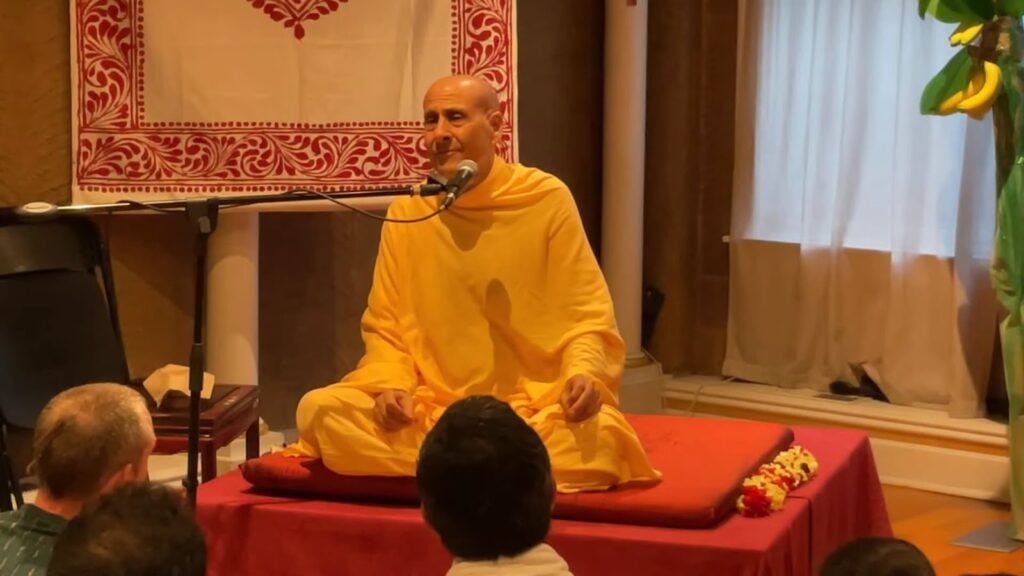
Pandit Dhirendra Krishna Shastri has issued an open challenge, inviting critics to attend his darbar at Bageshwar Dham and directly witness what he characterizes as ‘divine knowledge’. The announcement foregrounds a recurrent question in contemporary India: how should claims of extraordinary cognition or revelatory insight be understood, evaluated, and contextualized within Dharmic traditions while maintaining respect for faith and commitment to intellectual rigor?
This analysis situates the challenge in the wider landscape of Hindu Dharma and allied Dharmic philosophiesBuddhism, Jainism, and Sikhismwhere knowledge (jnana) is not merely informational but transformative. Rather than adjudicating on belief, it outlines how observers, devotees, and skeptics can engage a public claim at a darbar with clarity, civility, and a shared ethic of seeking truth without denigration. The underlying objective is unity in spiritual diversity: to demonstrate how plural paths within the Dharmic family can offer complementary frameworks for examining such phenomena with empathy and methodological care.
In the Hindu setting, a darbar is both a congregation and a dialogic spacepart sabha, part spiritual clinicwhere seekers bring questions of meaning, suffering, justice, and duty. Public guidance delivered in such forums inherits the gravitas of tradition and the dynamism of contemporary social life. The Bageshwar Dham darbar, therefore, becomes not merely an event but a site where faith, skepticism, and social media conflux. As a result, Dhirendra Krishna Shastri’s invitation to critics is sociologically significant: it is a rare, transparent gesture that offers observation in vivo rather than debate in absentia.
Understanding what ‘divine knowledge’ might mean benefits from the lens of Indian epistemology (pramana). Across classical schools, three primary pramanas recur: pratyaksha (direct perception), anumana (inference), and shabda (authoritative testimony). Traditions also discuss specialized cognitionsyogaja pratyaksha (insight born of disciplined contemplative practice), aparoksha jnana (non-mediate realization), and other nuanced modes that point to experiential wisdom. Within this spectrum, a public claim at a darbar often implicitly invites audiences to consider a blend of pratyaksha (what they see), anumana (how they reason about it), and shabda (how scripture, lineage, or community testimony frames it).
From a Hindu philosophical standpoint, shabda pramana extends beyond texts to include the living authority of gurus and acharyas, provided it aligns with dharma and reason. Bhakti literature underscores experiential devotion and transformative grace, while Vedanta emphasizes the difference between empirical knowledge and liberating knowledge. Within this vast canvas, claims of heightened insight are not unprecedented; they demand, however, a responsible ethoshumility, ethical intent, and openness to scrutiny that does not devolve into spectacle.
Buddhist thought, conversely, generally narrows pramana to pratyaksha and anumana, with an exacting emphasis on disciplined attention and intersubjective analysis. While it is cautious about metaphysical assertions, it recognizes refined states of cognition developed through meditation. Thus, a Buddhist-inspired approach to a darbar claim would ask: what is directly observed? what causal inferences hold? and what compassionate outcomes follow from such a practice?
Jain philosophy contributes Anekantavadathe principle that reality is multi-facetedand Syadvada, which advises conditional predication (‘in one respect, it is so’). Jain epistemology distinguishes several knowledge categories, including mati (sensory-cognitive), shruta (scriptural), avadhi and manahparyaya (subtle cognitions), and kevala jnana (omniscience). Applied prudently to a darbar setting, Anekantavada recommends interpretive humility: rather than absolutizing, one seeks many-sided understanding that honors plurality and avoids dogmatism.
Sikh thought orients knowledge around the Shabad Guru, lived ethics, and the cultivation of virtue (rehat) within sangat and seva. While not centered on miraculous displays, Sikh teachings affirm that the deepest knowledge is that which ennobles conduct, dissolves ego, and serves humanity. In this register, the fruit of any purported insight is assessed by the uplift it brings to households and communities.
Together, these Dharmic perspectives offer a coherent, unifying framework: uphold direct observation, reason carefully, respect authoritative testimony responsibly, and evaluate fruits in terms of ethical transformation. On that basis, a darbar challenge can be approached without antagonism: what unfolds can be watched with attention; interpretations can be offered provisionally; and the well-being of participants remains paramount. Unity in spiritual diversity is not rhetorical; it is a practical method for dialogue.
If critics accept the invitation, a transparent and respectful observational protocol helps. Basic steps include clearly defined scopes (what is being claimed and what is not), time-bound observations, and independent note-taking by multiple observers. Observers can segment what is witnessed into categories: publicly known information, plausibly inferable information, and information that seems neither known nor readily inferable. Such structuring does not prejudge outcomes; it simply allows careful analysis.
Ethics are non-negotiable. Consent, privacy, and non-harm guide any observation at a darbar. Participants sharing sensitive details should be protected from exposure, and no test should coerce vulnerable individuals into public disclosure. The intent must be inquiry, not entrapment; understanding, not humiliation.
Types of claims can also be differentiated. Claims about verifiable, external facts can be assessed in principle; claims about internal states, karmic dispositions, or future probabilities are inherently more complex, often residing beyond short-term empirical adjudication. Where verification is impractical, evaluators can still assess ethical impact: Are people comforted? Are harmful habits reduced? Are families reconciling? Measurable social benefit is a legitimate index of meaningful spiritual work.
The cognitive sciences caution against hasty certainty. Phenomena such as confirmation bias, expectancy effects, the Barnum–Forer effect, and selective attention can shape audience perception. Being alert to these does not preclude faith; it simply disciplines observation so that admiration does not become credulity, and skepticism does not devolve into cynicism. A balanced posture keeps inquiry both humane and intellectually honest.
Media dynamics complicate matters. Viral clips rarely capture full contexts; editing and framing effects can amplify either veneration or derision. The darbar, as a living practice, warrants slow journalism and careful scholarship rather than trial by trending hashtag. Thoughtful observers will prioritize primary, on-site experience over secondhand impressions.
In practice, a Dharmic, unity-driven approach could involve a diverse observer groupscholars of Hindu philosophy, Buddhist monastics versed in meditation and pramana, Jain acharyas trained in Anekantavada, and Sikh gianis rooted in Gurmat and seva. Such a panel would not sit in judgment of belief; rather, it would model how traditions can converse, compare epistemic tools, and converge on ethical standards. The process itself would embody interfaith dialogue within the Dharmic family, exemplifying respect amid difference.
What can responsibly be tested? Publicly accessible claims about past events or present factswhen raised voluntarily and without harming privacyare reasonable objects of analysis. What should not be tested? Any scenario that pressures vulnerable individuals, instrumentalizes sacred rites, or treats persons as means rather than ends. The dignity of devotees is the ground rule; no outcome justifies violating it.
Socio-culturally, the challenge arrives at a time when debates about religion and reason often polarize. A darbar that welcomes scrutiny, paired with observers who practice civility, can reframe the discourse. The most valuable result may be neither verification nor falsification but the restoration of a shared public culture where differences do not foreclose dialogue.
For communities, practical metrics matter: reductions in distress, substance dependency, or family conflict; increases in charitable action, reconciliation, and civic responsibility. These outcomes align with the spirit of Hindu Dharma and resonate with Buddhist compassion, Jain non-violence, and Sikh seva. In short, spiritual authenticity can be read in the ethical wake it leaves behind.
Limitations should be acknowledged openly. No single darbar encounter can settle philosophical debates that have evolved over millennia. Extraordinary claims often involve subjective experiences, symbolic language, and soteriological horizons that exceed laboratory paradigms. Recognizing these boundaries is itself a form of intellectual integrity.
Historically, South Asia has navigated public spirituality through katha traditions, satsang, and collective deliberation. Charisma has been tempered by scriptural touchstones, communal accountability, and ethical expectations. The present moment is not an exception but a continuation; the tools of Indian philosophy and the ethos of Dharmic pluralism remain highly relevant.
Viewed in this light, Dhirendra Krishna Shastri’s invitation to critics is best understood as a chance to practice the very principles often espoused in theory: pratyaksha paired with anumana, shabda weighed against lived results, and Anekantavada guiding interpretive charity. If engaged with fairness and care, such a challenge can strengthen public trust, refine communal discernment, and model unity in spiritual diversity across Hinduism, Buddhism, Jainism, and Sikhism.
Whether one stands as devotee, skeptic, or curious observer, the path forward is the same: look closely, reason well, speak kindly, and measure outcomes by the good they seed. In a society as plural as India’s, this is not merely a method; it is a promiseto keep the darbar a place of solace and the conversation a practice of truth pursued with compassion.
Inspired by this post on Hindu Jagruti Samiti.