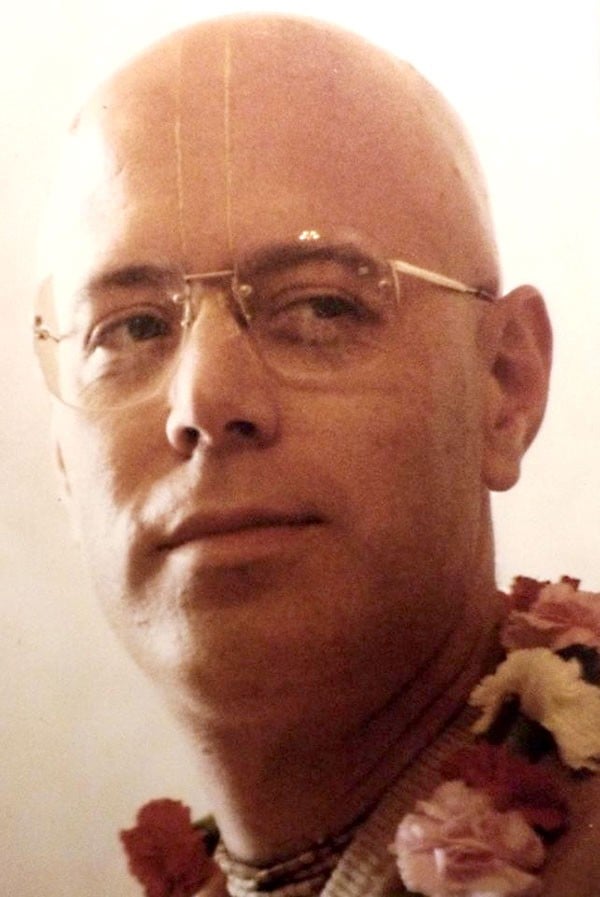
Agnidev Das, a senior disciple of Srila Prabhupada and commonly identified with the suffix ACBSP (A.C. Bhaktivedanta Swami Prabhupada), has been hospitalized following a severe brain stroke. Reports indicate he is currently unresponsive, with no movement in his arms or legs, and clinicians have stated that no additional curative medical interventions are available at this time. The present focus is comfort-oriented, emphasizing dignity, symptom relief, and supportive care. In the broader ISKCON (International Society For Krishna Consciousness) community and beyond, this update has prompted sober reflection on impermanence, compassionate presence, and the unifying values shared across dharmic traditions.
Within ISKCON and the wider Vaishnava milieu, Agnidev Das is recognized as a senior devotee whose life has been anchored in devotion to Srila Prabhupada’s mission. The designation ACBSP serves a historical and spiritual function: it signals formal initiation under A.C. Bhaktivedanta Swami Prabhupada and situates the disciple in a lineage central to Gaudiya Vaishnavism. For many, this affiliation connotes decades of sadhana, seva, and sanghapractices that have nourished individual faith and communal cohesion. News of serious illness for such a figure often evokes quiet gratitude for a lifetime of service and a collective wish for peace, comfort, and clarity in care.
From a clinical perspective, the phrase severe brain stroke is an umbrella term that typically includes ischemic stroke (most common, involving arterial blockage) and hemorrhagic stroke (less common, involving intracranial bleeding). Ischemic events are often treatedwhen clinically appropriate and within time windowswith intravenous thrombolysis (commonly within 4.5 hours of symptom onset) and/or mechanical thrombectomy (for select large-vessel occlusions, sometimes up to 24 hours under stringent criteria). Hemorrhagic strokes may necessitate careful blood pressure management, reversal of anticoagulation where feasible, and, in select cases, neurosurgical interventions to relieve pressure or address bleeding. When such interventions are not possible or no longer clinically indicatedowing to timing, anatomical factors, or overall medical statusstandards of care pivot to stabilizing comfort, preventing complications, and honoring patient values and goals.
Unresponsiveness combined with the absence of voluntary limb movement often reflects extensive neurological injury affecting motor pathways or consciousness. In such scenarios, healthcare teams emphasize comfort-focused care (a core domain of palliative medicine). This approach is not the cessation of care but a redirection of clinical priorities: alleviating discomfort, optimizing breathing and circulation support when indicated, managing secretions, protecting the skin, preventing distress, and communicating clearly with loved ones. Decisions around feeding, hydration, and sedation are generally individualized, guided by evidence, prognosis, and previously expressed wishes or advance directives. Such care also integrates psychosocial and spiritual support as needed, reflecting a whole-person and family-centered ethos within contemporary healthcare.
Comfort-oriented palliative care is grounded in clinical rigor and compassionate ethics. It prioritizes symptom control (e.g., relief from pain, agitation, or dyspnea), meticulous nursing care (e.g., repositioning, aspiration precautions), and clear, consistent communication about prognosis and options. Many families value interdisciplinary inputfrom neurology, critical care, palliative medicine, nursing, and chaplaincyso that medical decision-making is both informed and aligned with cherished values. In this way, the medical team’s focus on comfort is a positive, proactive form of care that upholds dignity, reduces suffering, and fosters trust, even when curative pathways have concluded.
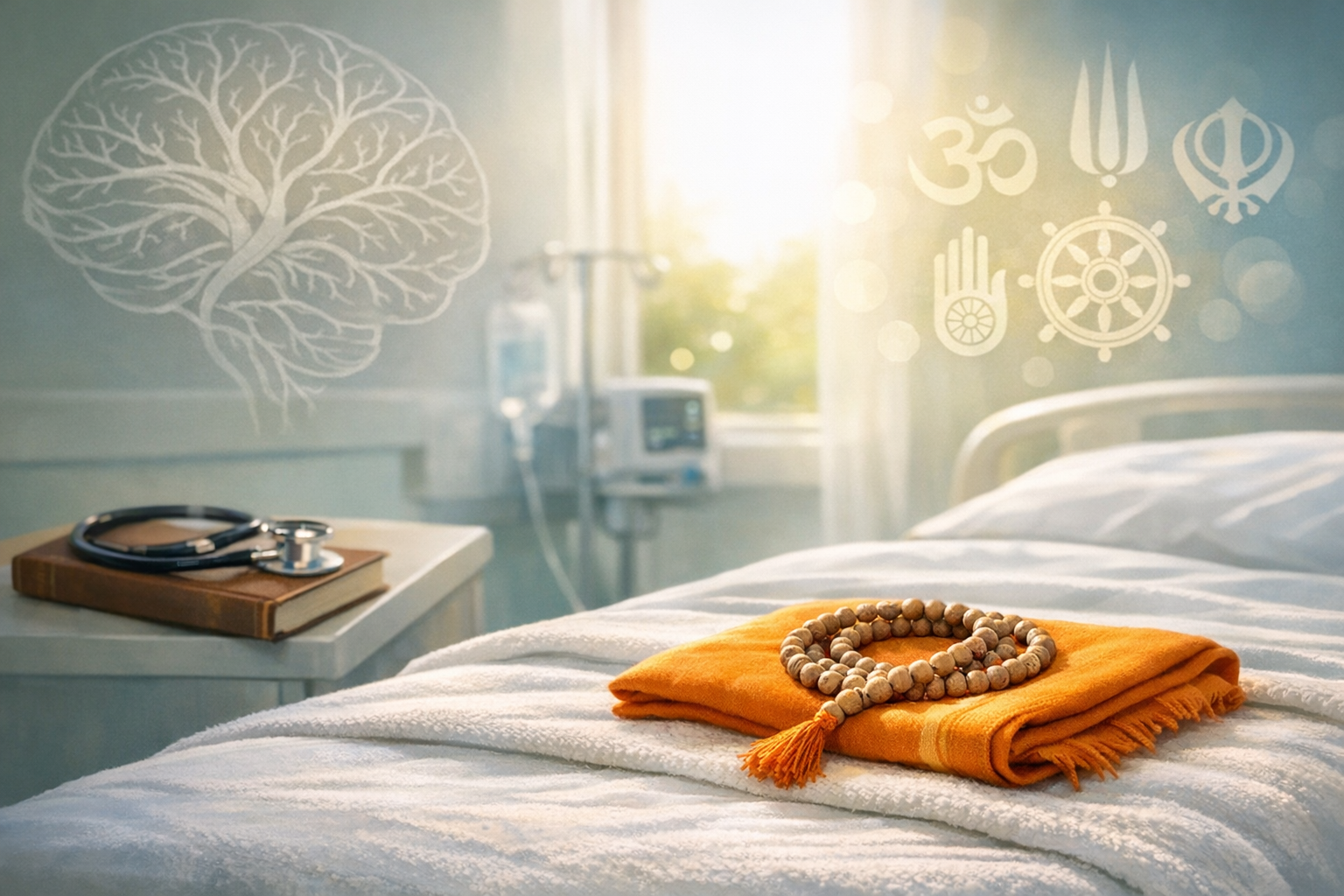
Across Hinduism, Buddhism, Jainism, and Sikhism, compassionate presence at the end of life reflects a shared dharmic grammarahimsa (non-harm), karuna (compassion), maitri/metta (loving-kindness), daya (empathy), and seva (selfless service). In Hindu spirituality and Gaudiya Vaishnavism in particular, devotional remembrancewhether through japa, kirtan, or reflective readingshas long served as a gentle anchor during illness. In Buddhism, practices of metta and mindful awareness may be offered silently or internally as expressions of care. Jain traditions often emphasize equanimity (samayika) and forgiveness (kṣamāpanā), cultivating calm and clarity. Sikh practice highlights simran and paathcentering the mind in shabad and remembrance of the Divine. These diverse expressions converge on the same ethical horizon: a quiet, non-intrusive compassion that honors the person’s dignity and the clinical realities of the moment.
For many communities, serious illness invites memories of bedside momentssoft recitations, attentive silence, or gentle music that soothed anxious hours. Such experiences illustrate that spiritual support, offered with sensitivity and respect for hospital protocols, can be meaningful to families and caregivers as much as to patients. They also demonstrate unity in spiritual diversity: whether one’s idiom is kirtan, simran, metta, or pratikraman, the intention remains consonantextending care without imposition, and presence without pressure. This inclusive, non-sectarian orientation aligns with the shared dharmic commitment to relieve suffering and uphold dignity.
Responsible community engagement also involves clarity and restraint. In the digital age, accuracy and privacy matter: sharing only verified updates, avoiding conjecture, and refraining from distributing sensitive images or details. Communal discourse is most helpful when it models balanceacknowledging hope, honoring facts, and supporting caregivers who are navigating complex clinical information and practical responsibilities. In this setting, unity across dharmic traditions is not abstract; it is evident in the everyday ethics of empathy, truthfulness, and care for one another.
At times like these, gratitude for a life of service naturally coexists with solemnity about the human condition. The contributions of senior discipleswho helped steward and transmit Srila Prabhupada’s teachings within ISKCONcontinue to ripple through communities and generations. Whatever the clinical trajectory, the moment invites reflection on what endures: acts of seva, words that uplifted others, and the shared spiritual work of cultivating compassion, equanimity, and wisdom.
This overview is intended to clarify the medical and spiritual context of a severe brain stroke and the rationale for comfort-focused care, while upholding an inclusive dharmic perspective. It highlights how modern healthcare and timeless valueskaruna, maitri, daya, and sevacan meet meaningfully in practice, guiding a response marked by dignity, steadiness, and unity.
Inspired by this post on Dandavats.