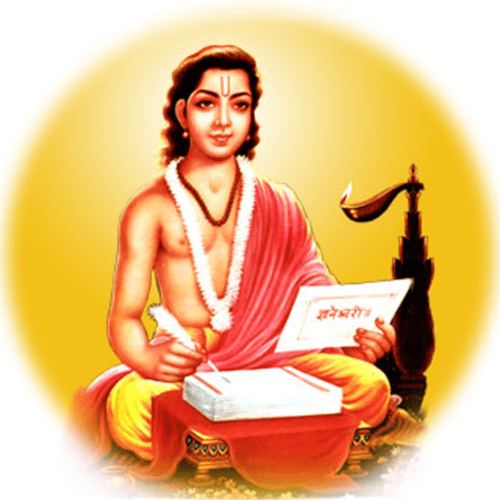
Basava Purana is a 13th-century Telugu devotional epic composed by Palkuriki Somanatha in the dvipada metre, celebrating Basavanna (Basaveshwara), whom Lingayat tradition reveres as an incarnation of Nandeeswara. Regarded as a sacred text within the Lingayat/Virashaiva community, it interweaves theology, ethics, and social reform into a single narrative tapestry. The poem functions simultaneously as hagiography, scripture, and cultural memory, articulating a lived vision of bhakti anchored in personal devotion to Shiva through the Ishtalinga.
Situated in the historical arc of the 12th–13th centuries, the work reflects the ferment around Kalyana (present-day Basavakalyan) under the Kalachuri ruler Bijjala II. It mirrors the dynamism of the southern bhakti movement, where saint-poets and sharanas articulated an accessible spirituality that challenged rigid social hierarchies and foregrounded ethical action. In this milieu, the Anubhava Mantapa emerges as a symbol of open dialogue and community deliberation, showing how spiritual inquiry and social responsibility could be mutually reinforcing.
Palkuriki Somanatha, a prolific Virashaiva author, is credited not only with Basava Purana but also with works such as Panditaradhya Charitra. His decision to compose in Teluguemploying the flexible, performance-friendly dvipada couplethelped disseminate Lingayat theology beyond courtly and scholastic circles. The poem’s language is direct yet resonant, crafted for recitation, remembrance, and instruction across households, mathas, and community settings.
Structurally, Basava Purana unfolds as a life-narrative that places Basavanna’s biography at the center while integrating episodes featuring contemporaneous sharanas. The dvipada metre allows swift movement between narrative and exegesis, prayer and principle, miracle and moral. This fluid form preserves oral cadence, supports communal recitation, and makes doctrinal exposition memorable.
The narrative arc typically spans Basavanna’s early devotion, his association with Kudalasangama, elevation to administrative responsibility at Kalyana, and the institutionalization of the Anubhava Mantapa as a forum for ethical and spiritual inquiry. Hagiographical traditions recount episodes that dramatize a radical ethic of equalitymost notably a controversial marriage that crossed social boundariesfollowed by political backlash often termed the Kalyana crisis. The poem concludes with Basavanna’s spiritual consummation, read as a culmination of his teachings rather than a mere biographical end.
Doctrinally, the text centers on three interlocking commitments: Ishtalinga devotion, Kayaka (work as worship), and Dasoha (sharing and service). The Ishtalinga makes divine presence portable and personal, affirming the Ishta principle that the chosen form of the divine is an intimate guide to realization. Kayaka dignifies all labor as sacred participation in Shiva’s order, while Dasoha redirects surplus toward the common good. Together, they delineate a praxis where devotion, livelihood, and social duty are inseparable.
Women mystics and leadersAkka Mahadevi among the most celebratedreceive sustained attention in the Basava Purana tradition, underscoring an inclusive vision of spiritual authority. The sharanas’ voices (including Allama Prabhu, Chennabasavanna, and Siddharama in allied traditions) amplify a plural sadhana that privileges direct experience (anubhava) over exclusivist ritualism. This spiritual democracy is expressed not in polemic but in lived practice: shared meals, open dialogue, and community decision-making.
Read comparatively, Basava Purana’s ethical architecture resonates across dharmic traditions. Kayaka parallels Sikhism’s kirat karo (honest work), Dasoha recalls Buddhism’s dana (generosity) and Jainism’s aparigraha (limiting possession), and its stress on inner purity echoes the wider Hindu emphasis on bhakti and jnana as complementary paths. In affirming Ishta and the diversity of legitimate approaches to the divine, the poem models unity-in-pluralitya core dharmic intuition that upholds harmony without erasing difference.
From a literary standpoint, Basava Purana marks a milestone in Telugu narrative spirituality. Its dvipada craftsmanshiplucid, rhythmic, and pedagogicalhelped vernacularize complex theology. Unlike classical Sanskrit Puranas with cosmological frames, this text is life-centered, ethically focused, and dialogical. It has long served as a performative scripture, shaping festival recitations, community pedagogy, and moral formation.
Transmission history indicates a robust manuscript culture, followed by modern editions and translations that widened its reach. In Kannada, a cognate tradition matured with Bhima Kavi’s Basava Purana (14th century), illuminating how the Basava corpus traveled across languages while preserving a shared ethical core. Oral performance genressuch as harikatha and regional storytelling formsfurther embedded the narrative into popular devotion.
Methodologically, historians treat Basava Purana as a hagiographical source that must be read alongside inscriptions, vachana literature, and later Virashaiva charitras. Its value lies less in precise chronology than in mapping ideas-in-motion: how communities articulated dignity of labor, equity, and devotion under changing political conditions. When triangulated with epigraphy and contemporaneous texts, it offers a textured understanding of medieval Deccan society.
For contemporary readers, the poem’s enduring significance is practical. Workplace ethics acquire sacred meaning through Kayaka; philanthropy and mutual aid gain theological depth through Dasoha; and Ishtalinga devotion reframes personal spirituality as a daily discipline rather than an occasional ritual. Many find that the poem’s call to share, serve, and work with integrity translates seamlessly into modern civic life.
The text’s emphasis on unity across differences speaks powerfully to present-day interfaith and intrafaith conversations. By honoring Ishta and welcoming many valid paths to realization, Basava Purana advances a dharmic ethos of coexistence that aligns with the inclusive visions found in Hinduism, Buddhism, Jainism, and Sikhism. It demonstrates that spiritual authenticity thrives not by enforcing sameness but by nurturing shared ethical commitments.
Approaching Basava Purana benefits from a layered reading strategy: first, a narrative pass to internalize its moral vision; second, a thematic pass to trace Kayaka, Dasoha, Ishtalinga, and gender inclusivity; and finally, a contextual pass that relates the poem to vachana literature, the Anubhava Mantapa, and regional political histories. Such an approach preserves devotional intensity while enabling critical insight.
In sum, Palkuriki Somanatha’s Basava Purana is both an epic of devotion and a charter of social ethics. It bequeaths a portable spirituality that dignifies labor, sacralizes service, and welcomes plurality under the canopy of Ishta. As literature, scripture, and living tradition, it continues to inspire communities seeking a compassionate, just, and spiritually grounded society.
Inspired by this post on Hindu Pad.