Across centuries, political conquests and colonial scholarship have mediated how India’s civilizational memory is recorded and remembered. A durable reclamation of this memory requires evidence, empathy, and methodan approach that is rigorously sourced yet humane, attentive to how communities transmit value-laden narratives, and careful to distinguish imperial ideologies from the lived diversity of faith and society. In this frame, a Dharmic sense of history is not merely a ledger of events; it is a layered tradition of remembrance in which Itihasa, Puranas, caritras, inscriptions, and local sthalapuranas together constitute an indigenous historiography.
Modern debates often return to a stark critique: that external regimes, by wielding political power and the pen of courtly chroniclers, recast the cultural story of Bharatavarsha. Such recasting did not simply impose an alternative chronology; it reframed moral valences, valorized specific victories, and eclipsed vernacular archives. The resulting record privileges select genresespecially Persian and Arabic chronicles in Medieval India and Anglophone academic histories in the British periodwhile marginalizing the many Dharmic pathways by which communities curated their own pasts.
Two propositions guide the present inquiry. First, the trope that Hindus lacked a “sense of history” is a colonial-era generalization that dissolves under even basic scrutiny of Sanskrit and regional textual cultures, epigraphy, and archival practices. Second, the relative paucity of surviving indigenous narratives for parts of Medieval India is best explained by the combined impact of war, displacement of patronage, the burning or abandonment of knowledge-centers, material fragility of manuscripts, and the selective survival of sources long favored by state courts and later colonial academies.
Against the first trope, the corpus is vast. India’s classical record includes a continuum from Itihasa and Puranas to royal eulogies (prashastis), genealogies (vamsavalis), copper-plate grants, temple inscriptions, matha and village registers, and caritra literature. A few emblematic witnesses across eras make the point: the Allahabad Pillar Prashasti of the Gupta period; the Aihole inscription of Pulakeshin II by Ravikirti (634 CE); Chola copper plates and the Uttiramerur inscriptions on local self-governance; Kadamba, Hoysala, Kakatiya, and Vijayanagara epigraphy; and detailed temple endowment records preserved in Sanskrit, Prakrit, Tamil, Kannada, Telugu, and other languages. Far from an absence, this is a differentiated ecosystem of historiography.
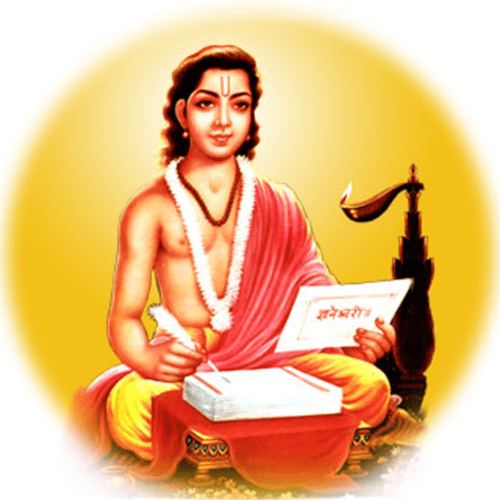
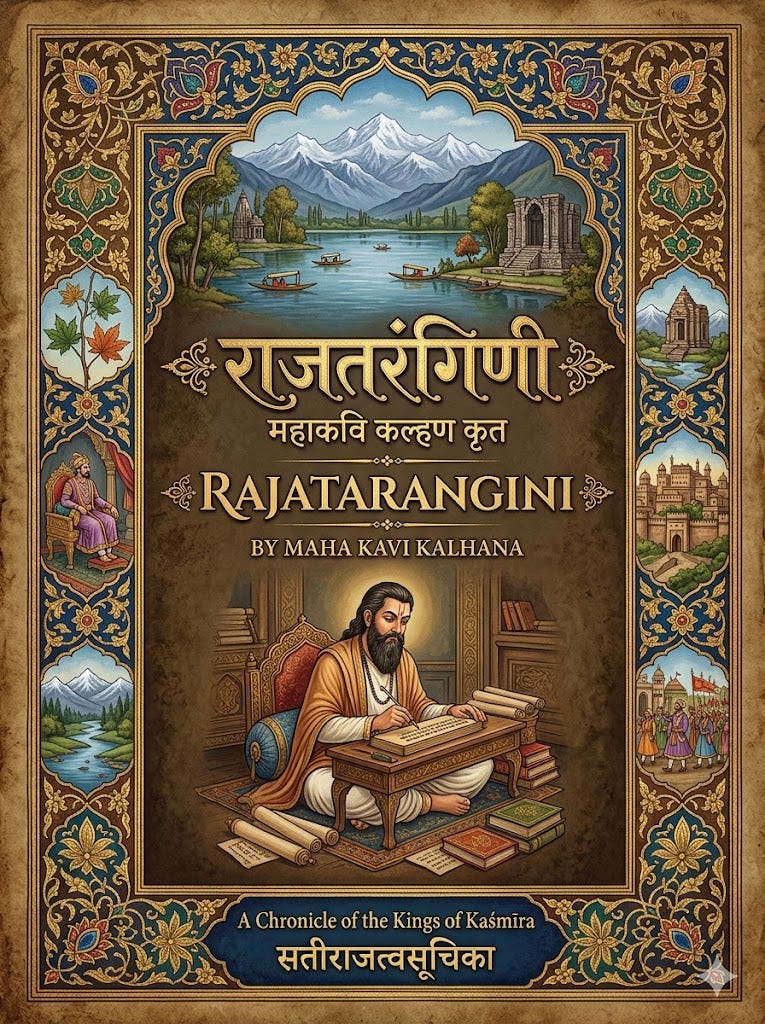
The biographical and courtly caritra traditions extend the same habit of historical remembrance. Bana’s Harshacharita, Bilhana’s Vikramankadevacharita, Kalhana’s Rajatarangini, Vakpati’s Gaudavaho, and Hemachandra’s works (among others) blend narrative artistry with political chronology, social detail, and moral evaluation. Kalhana’s 12th-century method has been celebrated for its “modern” sensibility, yet it did not arise in isolation; it participated in a long-standing parampara of compiling earlier lists, inscriptions, and texts, applying source criticism, and crafting an integrated political narrative for Kashmir.
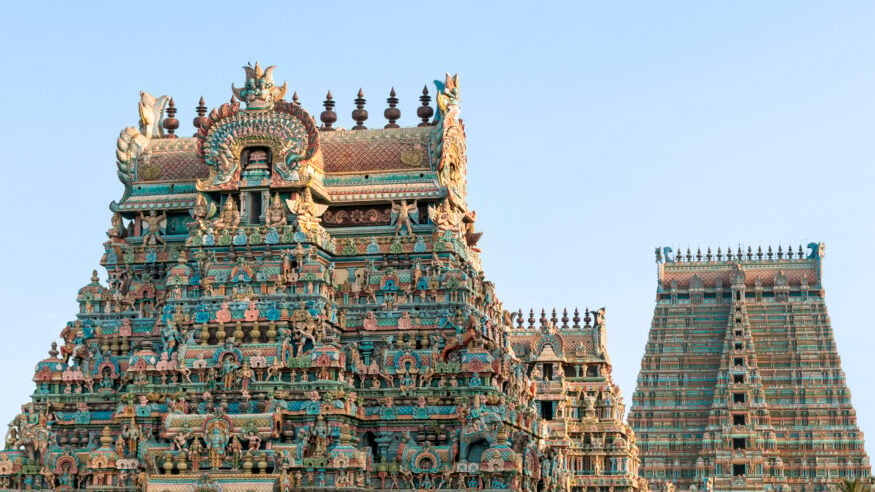
Equally significant are local sthalapuranas and tirtha-mahatmyas, which communities have long treated as repositories of place-memory. Visitors to ancient kshetras often encounter how these narratives encode lineages, endowments, craft guilds, temple renovations, floods or famines, and the moral fiber expected of householder and ruler alike. Dismissing these sources as “mere folklore” risks losing both affect and fact; close reading frequently reveals recoverable kernels that triangulate with inscriptions, archaeology, and economic history.
D.V. Gundappa articulated the necessary balance between truth and feeling: “History, if it should serve its purpose of stirring emotion, instigating inquiry and directing thought, must first of all be exciting. Is it impossible to be both truthful and warm-hearted, both factual and moving? Are imagination and conscience necessarily enemies to each other? In reconciling them is the art of the true historian.” A Dharmic historiography accepts that valuesdharma, artha, kama, mokshainform how communities remember and transmit the past, even as evidence and method remain non-negotiable.
Where, then, does the misperception of “ahistoricity” arise? In part, from privileging one narrative genrethe annalistic, linear, court chronicleover other equally legitimate forms of recording. In part, from the attrition of material archives. Palm-leaf manuscripts decay without custodial continuity; copper-plates can be lost to conflict or migration; mathas and viharas, once disrupted, take generations to rebuild their intellectual ecology. The cumulative effect is an archival bottle-neck: what survives most copiously are the records that state power sponsored most consistently.
For Medieval India, much of the largest contiguous corpus consists of Persian and Arabic court chronicles, inscriptions, farmans, and administrative manuals. These sources are invaluable, yet they must be read within their own normative frames. From Barani’s Tarikh-i-Firuz Shahi and Minhaj-i Siraj’s Tabaqat-i Nasiri to the Akbarnama and Ain-i-Akbari, their idioms valorize sovereign victory, ritualized kingship, and the ideological logics of revenue, law, and subject communities (including terms such as zimmi and levies like jizya in certain periods). A critical, comparative methodjuxtaposing these records with epigraphy, vernacular literature, and Dharmic institutional archivesenables a more balanced reconstruction of Medieval India.
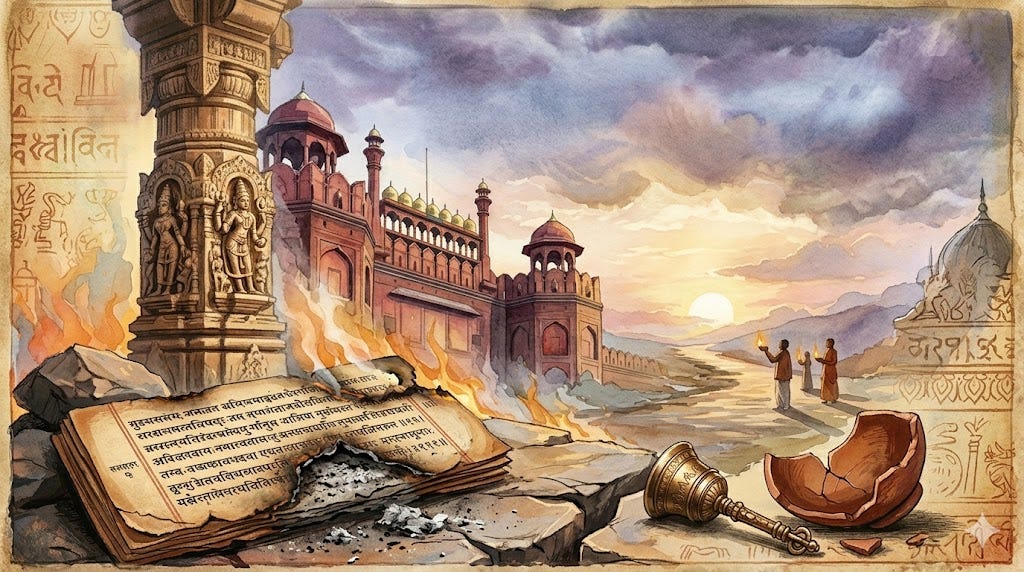
It is important to note why fewer indigenous narratives survive from some regions and centuries of the medieval era. Beyond warfare and political turnover, the displacement of patronage from temples and mathas to new power centers reconfigured knowledge ecologies. Major learning complexes in the eastern Gangetic plain, including Nalanda, Odantapuri, and Vikramashila, were devastated around the turn of the 13th century; elsewhere, temples and manuscript repositories suffered cycles of plunder or neglect, later compounded by colonial-era extraction and dispersion of manuscripts. None of this implies cultural discontinuity; rather, it signals archival vulnerability that modern scholarship can, in part, remediate through recovery, cataloguing, and digital preservation.
Jadunath Sarkar’s stark observationthat prolonged public harassment and depressed status under oppressive conditions reduces the horizon of intellectual productionspeaks to a general sociological principle rather than a judgment on any faith community. Wherever institutions of learning and patronage are destabilized, the capacity for sustained scholarship declines. This analytic lens, applied globally and comparatively, clarifies how political economy shapes the preservation or loss of historical records.
The strategic lessons of statecraft also matter. In several regions and epochs, rulers paid limited, systematic attention to the political theologies and administrative grammars of adversaries. A more sustained programstudying languages, legal concepts, court ceremonials, revenue systems, and military organization through primary sourcescould have sharpened responses. Episodes from the Vijayanagara Empire illustrate the complexity: the association of Vidyaranya with the polity’s founding, the ritual inclusivity attributed to Devaraya II, and the catastrophe at Talikota (1565), where coalition warfare and contingent defection were decisive. Such moments reward analysis that separates long-term structural factors from immediate battlefield contingencies.
British colonialism introduced a different mode of narrative power. It professionalized archives, surveys, and gazetteers while simultaneously enshrining Eurocentric frames that diminished Itihasa, Puranas, and local knowledge-systems. Sections of the colonized elite internalized these frames, producing a class of interlocutors for whom “history” meant only what aligned with metropolitan tastes. Decolonizing historiography therefore requires neither romanticism nor rejectionism; it calls for source-plurality, methodological humility, and critical engagement with both indigenous and foreign corpora.
Comparative examples underscore the stakes. In many regions that underwent rapid Islamization or Christianization, pre-conquest memory was variously reframed, layered, or attenuatedsometimes revived later under new political conditions. Modern nation-building projects often amplify this selectivity, as curriculum choices and commemorations prioritize particular lineages of heroes, texts, and sites. A sober reading treats such developments as matters of institutional design and ideological choice, urging contemporary scholars and citizens to expand, not narrow, the archive of remembrance.
Reclaiming a Dharmic sense of history thus proceeds along three mutually reinforcing tracks. First is evidentiary recovery: survey and digitize inscriptions; publish critical editions and translations of copper-plates; catalogue matha, temple, and agrahara archives; integrate archaeological, numismatic, and art-historical data; and build open databases that span Ancient India through Medieval India and the early modern period. Second is methodological renewal: practice source-criticism (internal and external), triangulate Persian–Arabic chronicles with vernacular literature and epigraphy, and apply computational tools (GIS, network analysis) to visualize trade, pilgrimage, and patronage systems. Third is narrative ethics: write histories that are accurate, capacious, and movinghistories that honor human dignity, avoid essentializing any community, and remain alert to how power shapes archives.
Unity among the Dharma traditionsHinduism, Buddhism, Jainism, and Sikhismboth undergirds and benefits from this approach. Historical India’s learning networks were ecologically interwoven: Jaina bhandaras preserved Sanskrit and Prakrit manuscripts; Buddhist monastic universities exchanged teachers and students across regions and seas; Hindu temples often patronized scholars and artisans from multiple sampradayas; Sikh Gurus sustained a robust memory tradition rooted in ethical action and community. Inscriptions and grants repeatedly attest to cross-sect patronage, reminding contemporary readers that civilizational resilience has long been a function of plural institutions cooperating in shared sacred geographies.
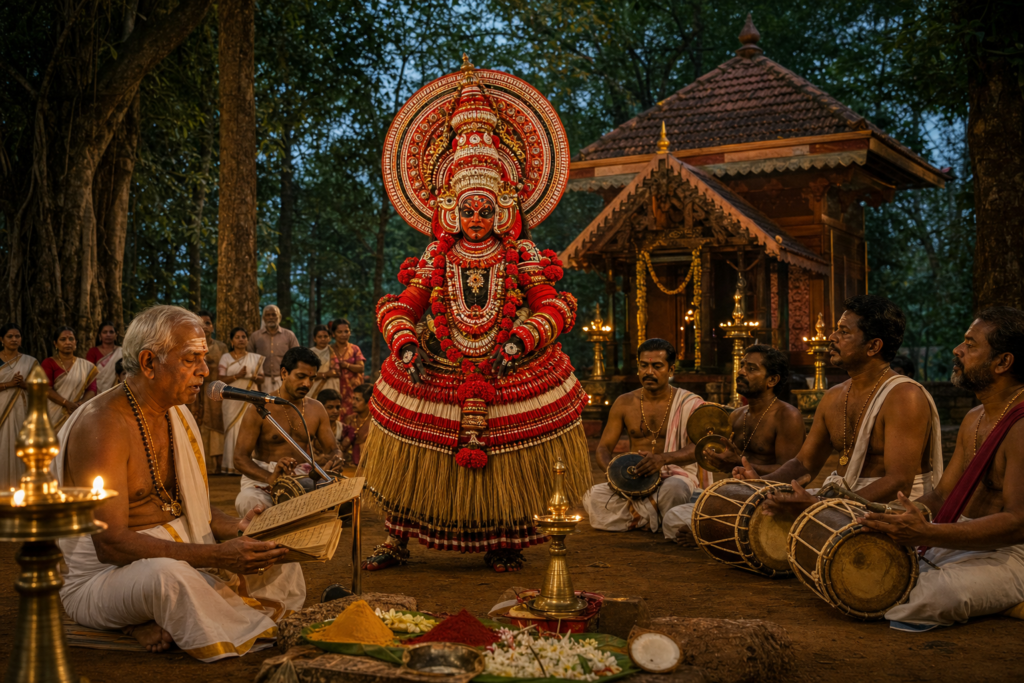
Local remembrance deserves equal care. Families and communities who have kept sthalapuranas aliverecited during festivals, inscribed on walls, preserved in palm-leaf bundlesoffer a form of participatory historiography. Many readers will recognize how an elder’s narration of a temple’s kumbhabhisheka, a village sabha’s endowment, or an artisan guild’s migration carries both dates and meaning. Professional historians and engaged citizens can work together to document these memories, cross-reference them with inscriptions and maps, and return the findings to the community in accessible formats.
A Dharmic historiography also asks for linguistic and civilizational literacy. Sanskrit, Prakrit, Persian, and key regional languages are not merely vehicles; they are archives unto themselves, encoding administrative formulae, ritual protocols, philosophical concepts, agrarian contracts, and maritime trade. Training in these languages, combined with epigraphic method and codicology, equips researchers to move beyond derivative summaries to primary-text analysisan essential step in re-centering Indian Historiography.
Equally, humility about limits is integral. Where sources are silent or ambiguous, responsible histories acknowledge uncertainty rather than fill gaps with polemic. Where courtly records celebrate victory, counter-archivesinscriptions from defeated polities, vernacular laments, temple repair recordsrestore depth. Where destruction of archives (whether through warfare, neglect, or material decay) has left lacunae, scholars can model plausible reconstructions while clearly marking inference from fact.
In practical terms, a program for renewal in Hindu History and broader Indian history might prioritize: comprehensive epigraphic fieldwork; conservation labs for palm-leaf manuscripts; collaborative critical editions of Puranas, tirtha-mahatmyas, and caritras; integrative studies of Indo-Islamic history that treat Persian chronicles and Dharmic records with equal rigor; and public-facing projectsmuseums, digital atlases, documentary seriesthat communicate complexity without sacrificing accuracy. Such a program strengthens both scholarship and public culture.
Finally, the ethical horizon is clear. A mature historiography avoids attributing the actions of imperial states to entire faith communities; it differentiates between ideology, institution, and individual. It reads every source in context, resists presentist judgment, and yet names injustice accurately. It honors the creative labor by which generationsscribes, teachers, poets, artisans, monks, nuns, acharyas, and gurussafeguarded knowledge through adversity. In doing so, it reclaims India’s Dharmic sense of history as both evidence-based and life-affirming.
When this balance is achieved, the stories of the Hoysala sculptor, the Chola shipwright, the Kashmiri annalist, the Jaina librarian, the Buddhist preceptor, and the Sikh chronicler stand side by sidedistinct, dialogical, and united in their contribution to a shared civilizational memory. That is the promise of an Indian Historiography grounded in Itihasa and open to the world: rigorous in method, capacious in spirit, and oriented toward lokasangrahathe welfare and cohesion of all.
Inspired by this post on Dharma Dispatch.