
As the midsummer solstice draws visitors to Stonehenge each year, new research from Wessex Archaeology reveals that the tradition of marking the sun’s turning points in the Stonehenge landscape began centuries earlier than previously documented. A remarkably early, purpose-built solar alignment discovered near Bulford, Wiltshire, now frames Stonehenge not as an isolated marvel, but as a culmination of long-lived ritual practice and sophisticated skywatching in Neolithic Britain.
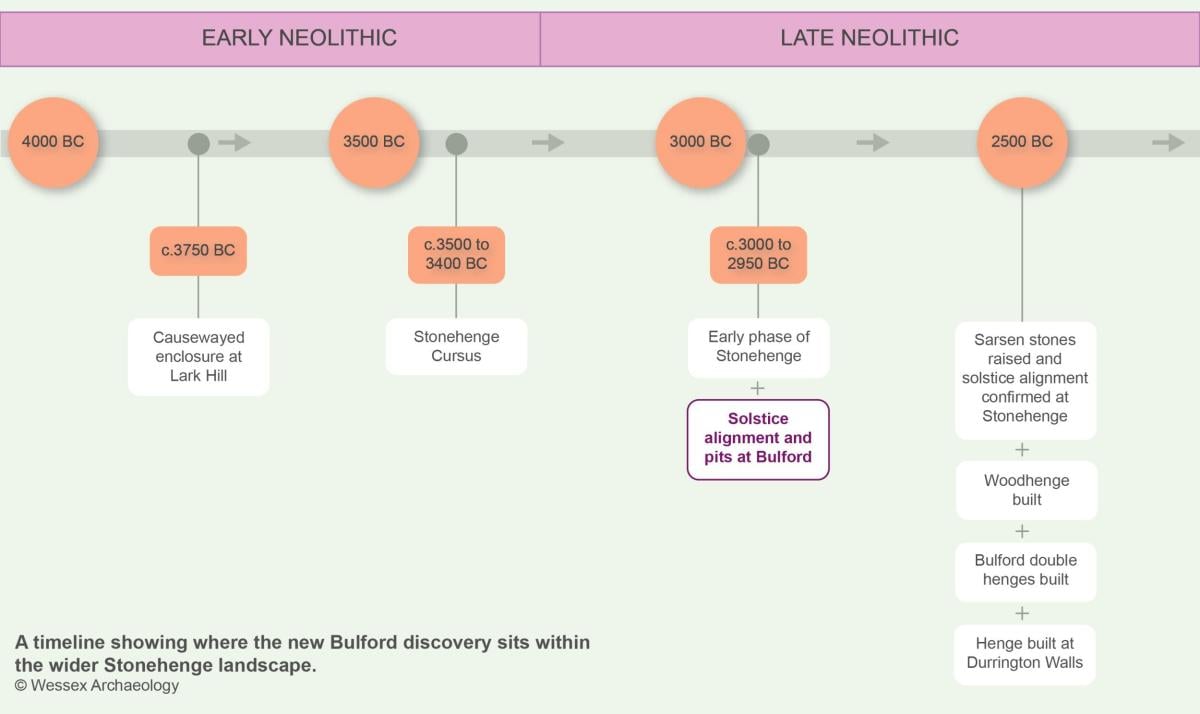
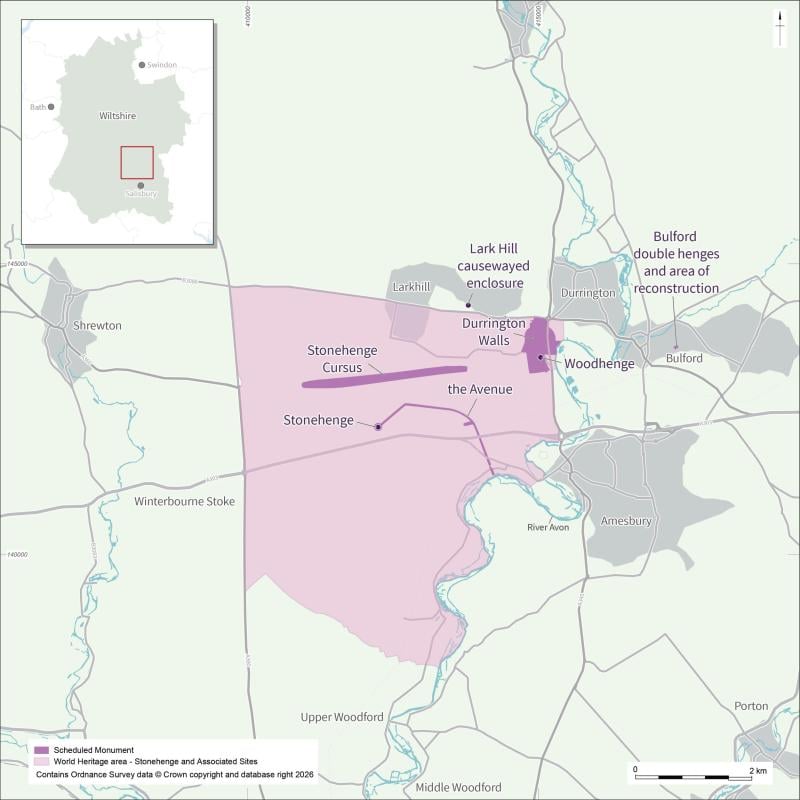
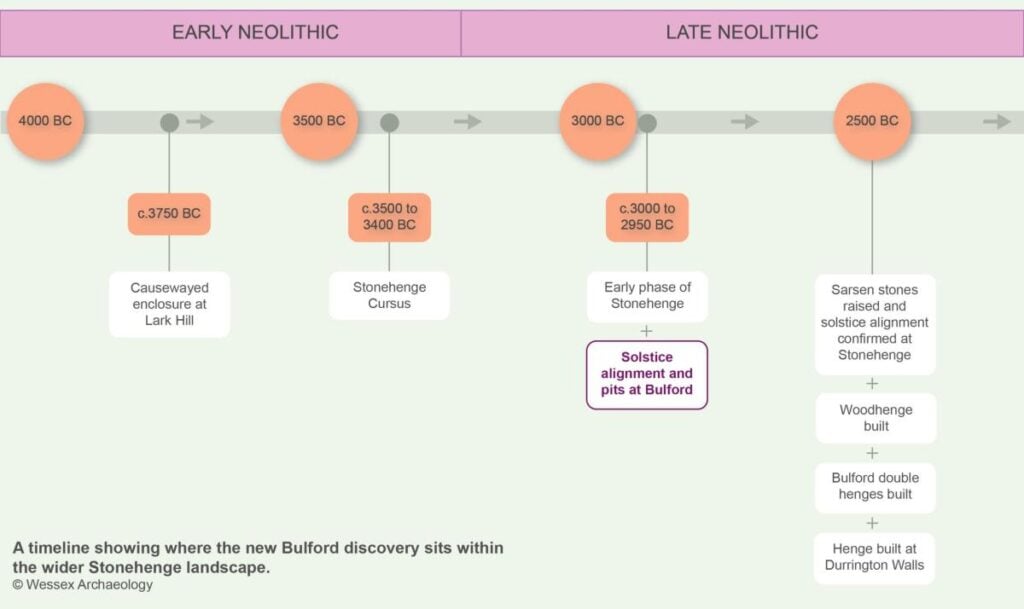
The Bulford discovery—radiocarbon dated to around 2950 BCE—constitutes the earliest known solstitial alignment yet identified within the broader Stonehenge landscape. Located approximately 5 km from Stonehenge and contemporary with the monument’s earliest earthwork phase, the site demonstrates that communities in this region were observing and celebrating the summer and winter solstices at least five centuries before Stonehenge’s famous sarsen stones were raised and precisely oriented to the solar year.
Excavated between 2015 and 2017 as part of the Ministry of Defence’s Army Basing Programme on land administered by the Defence Infrastructure Organisation, the Bulford complex was likely a focal point for large gatherings. Artefacts and faunal remains indicate episodes of intensive activity and feasting, suggesting that seasonal ceremonies drew people together to synchronize social life with the solar cycle—a hallmark of many ancient traditions.
At the heart of the find was a simple yet technically exacting structure: two timber posts set roughly 120 metres apart, positioned to define a sightline toward the rising sun at the summer solstice and the setting sun at the winter solstice. Although the posts themselves are long gone, their foundation pits survive as clear archaeological features, capturing the geometry of an alignment executed with striking precision.
To evaluate the monument’s astronomical intent, Wessex Archaeology commissioned skyscape analysis by Dr Fabio Silva. Using reconstructions of the Neolithic sky, horizon profiles, and local topography, his study confirmed that the timber axis would have targeted the solstitial sun to within approximately one degree. This level of accuracy, achieved with timber architecture and human observation alone, underscores the empirical rigor and observational continuity that characterized prehistoric skywatching in Britain.
Such a timber alignment—modest in construction but highly accurate—likely served as a ceremonial and observational “prototype” before the area’s communities formalized their solstitial knowledge in monumental stone. The team also notes that an analogous timber sightline may have existed at early Stonehenge, with later construction phases potentially erasing its traces. This model—starting with perishable installations and moving toward permanence—accords well with broader patterns in the Neolithic of southern Britain, where ephemeral structures often prefigure enduring monuments.
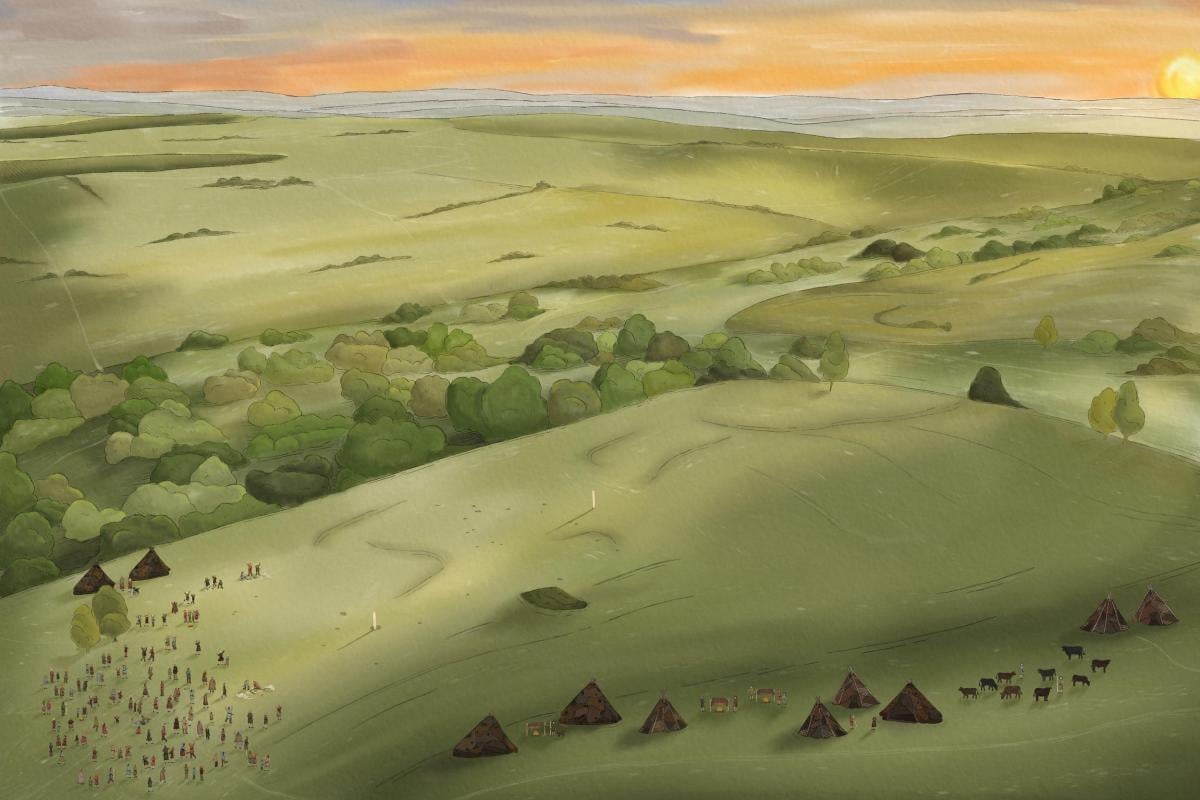
Dr Phil Harding, Archaeologist at Wessex Archaeology who led the excavations, reflected on the site’s significance: "In a few days’ time, Stonehenge will be filled with people celebrating midsummer solstice. But what few will realise is that 5,000 years ago on a nearby hillside overlooking modern day Bulford, people were doing the exact same thing – revering and celebrating the sunrise on midsummer’s day. The sun was incredibly important to these prehistoric communities, and they could plot and record its midsummer rising to a high degree of accuracy."
He continued: "This discovery is probably one of the greatest finds of my career and what makes it so important is just how early it is. Up till now, our knowledge of this ancient feat of astronomy was based on Stonehenge and other monuments of a similar period, but what we’ve discovered at Bulford is 500 years earlier than the famous stones we know so well. It makes me incredibly proud to be an archaeologist."
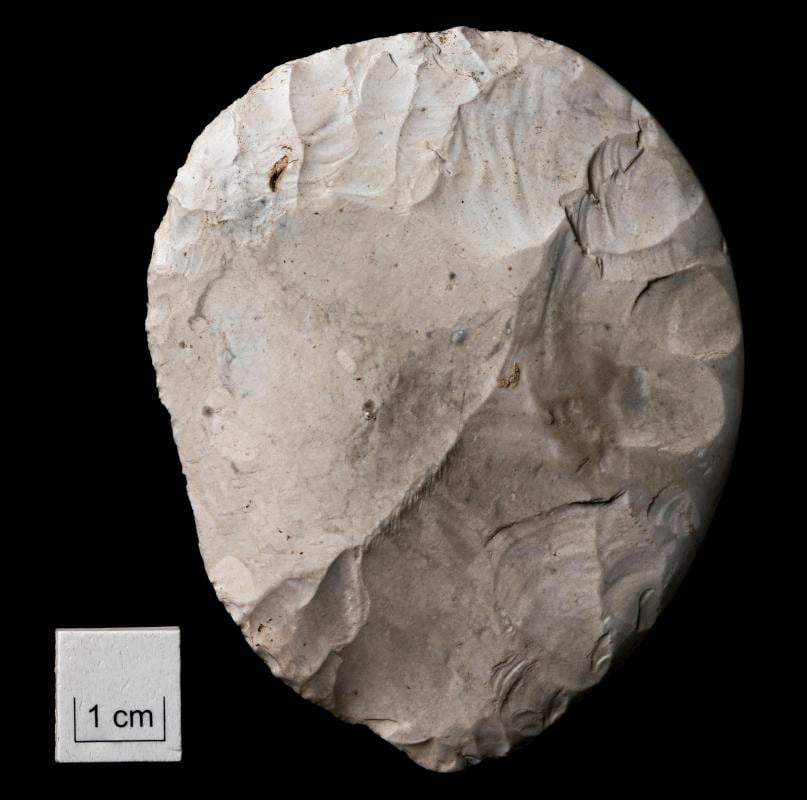
The Bulford excavations identified 48 pits belonging to a short-lived but intense phase of activity around 2950 BCE. Assemblages of pottery, animal bone, worked flint, and charcoal point to episodic gatherings, while one feature—interpreted as a potential “viewing station” along the alignment—contained an extremely rare disc-shaped flint knife, deliberately deposited. Its solar symbolism is compelling in context: a circular, radiant form set precisely where people may have paused to sight the sun’s position at the turning points of the year.
As Senior Research Manager Dr Matt Leivers observed, the discovery connects sky, landscape, and belief: "The discovery at Bulford is fundamental because it’s the earliest example of people building things here that aim directly at the solstice. When we talk about the solstice, we’re talking about religion. About how prehistoric peoples understood the cosmos, the world, and their place in it. What we see at Bulford, and later at Stonehenge, is a way of celebrating and marking the passage of time, but it’s also about making sure the world keeps working as it should. It’s likely their way of saying to their deities, please keep us in mind, keep us warm and safe. It’s a religious event. That’s why it’s so important."
Dr Fabio Silva emphasized the broader historical arc: "This discovery helps us understand Stonehenge not as a singular creation, but as part of a much longer conversation between people, the land, and the sky. The alignment shows that communities were already engaging with both the summer and winter solstices in the Stonehenge landscape, centuries before the sarsen stones were raised. Rather than marking the beginning of a story, Stonehenge now more clearly appears to have emerged from traditions and practices with much deeper roots in this landscape."
From a technical standpoint, the Bulford alignment showcases a robust archaeoastronomical design strategy that accounts for local horizon altitude, solar azimuth at extreme declinations, and the visibility window around sunrise and sunset on solstitial days. At a latitude near 51.2°N, the solstitial sun traverses low, shallow arcs across the horizon; even slight changes in horizon elevation or observer position can shift azimuth by fractions of a degree. Achieving a target window within about one degree over a 120-metre baseline reflects careful planning, repeated observation, and a deepening cultural memory of where the solstitial sun appears.
Chronologically, the Bulford site overlaps with Stonehenge Phase 1 (c. 3000 BCE), when the monument’s encircling ditch and bank and the Aubrey Holes were first constructed. The iconic sarsen circle and trilithons belong to later phases (c. 2500 BCE), when the solstitial axis—summer sunrise and winter sunset—was monumentalized in stone. The Bulford evidence now demonstrates that the solstitial concept was present and operant long before the stones, turning what once seemed a sudden innovation into a long-evolving tradition.
Comparable patterns appear elsewhere on Salisbury Plain. The Stonehenge Avenue is oriented toward the solstitial axis, and monuments at Durrington Walls have also been interpreted as referencing seasonal extremes. Together, these sites imply a landscape-scale choreography of movement and sightlines, where avenues, entrances, and viewing locations were calibrated to celestial events, guiding participant experience during seasonal ceremonies.
The faunal and artefactual data from Bulford strengthen this interpretation. High-density deposits of animal bone and pottery, coupled with specialized items like the disc-shaped flint knife, are consistent with short, punctuated episodes of mass attendance, feasting, and structured deposition. In this reading, the solar alignment functioned as both a calendrical device—locating the precise day within the annual cycle—and a ceremonial axis around which communal rites were staged.
Methodologically, the dating and interpretation rest on well-established archaeological and archaeoastronomical tools: radiocarbon dating of charcoals and organics calibrated to calendar years; stratigraphic analysis of post-pits and associated features; and horizon-based sky reconstructions that integrate obliquity drift since the Neolithic and local terrain effects on solar azimuth. Bayesian modeling is often used in such projects to refine radiocarbon chronologies, increasing confidence that architectural design and use clustered within a narrow time window.
For many contemporary visitors to Salisbury Plain, the hush before sunrise on the solstice embodies a powerful, visceral connection to land and sky. The Bulford alignment shows that this experience—of watching the light break exactly where tradition says it should—was deliberately engineered 5,000 years ago. In that sense, the site preserves not only a technical achievement but a perennial human practice: synchronizing community, season, and meaning with the movements of the heavens.
This discovery also resonates beyond Britain. Across dharmic traditions, the sun’s turning points structure ritual calendars and philosophical reflections on time and renewal. In Hindu practice, the transitions of Uttarayana and Dakshinayana, embodied in observances such as Makar Sankranti, honor the same celestial thresholds marked in the Stonehenge landscape. Similar seasonal attentiveness informs Buddhist, Jain, and Sikh communities in various ways, underscoring a shared civilizational intuition: that ethical life and social rhythm are enriched when aligned with the cosmos. Read in this light, the Bulford alignment offers a bridge of understanding between Europe’s prehistoric heritage and living dharmic traditions that continue to venerate the sun’s cycle.
From a heritage perspective, the Bulford post-pits are not publicly accessible, ensuring their protection within a sensitive military and archaeological landscape. English Heritage’s stewardship at Stonehenge complements this protective approach, helping maintain a landscape-scale archive where new research continually reframes old assumptions.
The Bulford findings will be featured in forthcoming publications, including an article for The Prehistoric Society’s newsletter and a comprehensive open-access volume on the Army Basing Programme discoveries via Wessex Archaeology’s Open Library. Such dissemination ensures that the technical details—stratigraphy, dating models, artefact analyses, and skyscape reconstructions—remain transparent and testable, advancing an evidence-led understanding of Britain’s deep past.
In sum, the Bulford alignment reframes Stonehenge not as an isolated stroke of genius but as the monumental flowering of a long-standing tradition of solar observation, ritual gathering, and landscape engineering. It reveals how carefully calibrated sightlines and seasonal ceremonies helped communities bind themselves to the rhythm of the year—and to one another. The discovery invites a unifying perspective: that communities across cultures and ages have turned to the same sky, drawing moral, spiritual, and social order from the sun’s dependable arc.
Inspired by this post on Hindu Human Rights Blog.










Leave a Reply
You must be logged in to post a comment.