
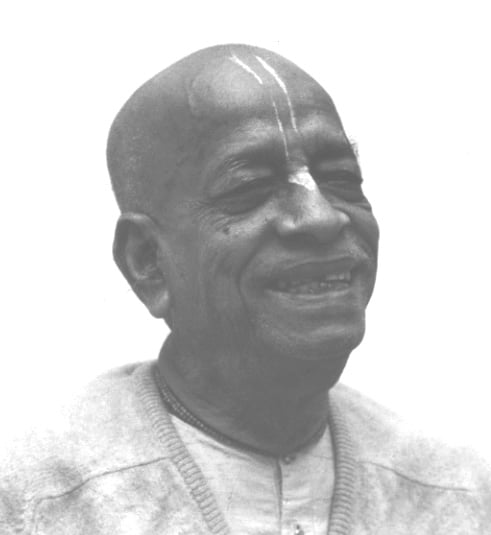
Across the dharmic world, great teachers have balanced two imperatives: preserve the exact message of tradition and demand living realization beyond rote memory. Srila Prabhupada articulated this tension with unusual clarity. He affirmed that repeating sastra is the lifeblood of parampara, yet he warned that parrotlike repetition—sound without understanding—is artificial and unscientific. Grasping how these positions cohere illuminates not only Gaudiya Vaishnavism, the Hare Krishna movement, and ISKCON, but a shared ethos across Hinduism, Buddhism, Jainism, and Sikhism: authentic transmission must culminate in transformation.
In Gaudiya Vaishnavism, sastra refers to authoritative scripture such as the Bhagavad Gita and the Bhagavata Purana. Parampara denotes the disciplic succession that preserves meaning through faithful hearing, teaching, and practice. Srila Prabhupada consistently presented a hermeneutic grounded in guru-sadhu-sastra, the threefold alignment of one’s guru’s guidance, the consensus of realized saints, and the plain sense of scripture. Repetition, within this framework, is a disciplined method for ensuring that one speaks as it is—without dilution, invention, or speculative novelty.
His affirmation of faithful repetition is succinctly captured in a line he stated in many forums: “We are simply repeating what Krsna has said in the Bhagavad-gita. That is our business.” In this usage, repetition is a virtue. It safeguards doctrinal integrity, anchors the teacher in accountability to lineage, and centers the community on Krishna’s own words rather than personal charisma. As a method, it resists intellectual fashion by privileging time-tested conclusions over subjective enthusiasms.
At the same time, Srila Prabhupada repeatedly cautioned against “parrotlike repetition”—verbiage that mimics sound without comprehension. A well-known Gaudiya anecdote depicts a trained parrot who recites holy names until a cat pounces; at that moment, the parrot’s recitation collapses into frightened squawks. The lesson is straightforward: when speech lacks realization, adversity exposes its hollowness. Mere quotation does not constitute realization; realization integrates knowledge, character, and unwavering practice.
Why call mechanical repetition “unscientific”? In Prabhupada’s vocabulary, “scientific” referred to a Vedic epistemology that is pramana-based—rooted in valid means of knowledge—and verifiable in practice. Sastra provides sabda-pramana (authoritative testimony), but authentic learning proceeds through methodical sadhana, experiential assimilation, and moral transformation. Artificial recitation fails this standard because it yields neither stable understanding nor replicable transformation; it cannot demonstrate the predicted outcomes of bhakti-yoga, such as purification of heart, steadiness in japa meditation, and compassionate conduct.
This alignment between faithful preservation and living realization is not unique to one lineage. Buddhist pedagogy distinguishes pariyatti (study), patipatti (practice), and pativedha (realization). Jain thought similarly differentiates sruta-jnana (scriptural knowledge) from pratyaksha (direct realization) and insists that ethics verify knowledge. Sikh teachings exalt shabad as Guru while repeatedly cautioning against mechanical rote; simran must be heartfelt to become transformative. These parallel grammars across dharmic traditions converge on a shared principle: transmitted words must ripen into lived wisdom.
A practical test often commended in Gaudiya circles is the guru-sadhu-sastra convergence. First, verify that a teaching aligns with the guru who faithfully represents the lineage. Second, confirm its resonance with the broader consensus of realized saints (sadhu). Third, read it in the plain sense of scripture (sastra), neither truncating nor overextending its meaning. When repetition produces this threefold convergence, it is the voice of parampara; when it does not, it risks becoming noise.
Faithful repetition therefore has recognizable contours. It preserves exact teachings while transparently acknowledging sources. It explains scriptural conclusions in language appropriate to time, place, and audience without bending the conclusion itself. It invites questions, welcomes reasoned scrutiny, and demonstrates results through practice. Most importantly, it links doctrine to sadhana, producing humility, steadiness, and service-mindedness.
By contrast, artificial repetition also has telltale signs. It quotes selectively to win arguments rather than to seek truth. It resists context, elevating a sentence fragment above the whole of sastra. It treats lineage as a citation to wield rather than a responsibility to embody. And it remains brittle under pressure; when challenged, it pivots from reason to rhetoric.
Srila Prabhupada’s guidance on japa and kirtan brings the point home. In the Hare Krishna tradition, chanting the holy name is both method and goal. He urged attention (sravanam) and prayerful intention, warning that inattentive, mechanical chanting cannot yield the promised purification. The distinction mirrors his broader teaching: repetition becomes potent when coupled with absorption, humility, and service; it becomes inert when reduced to habit.
Pedagogically, he modeled exposition anchored in scripture but oriented to real listeners. His commentaries on the Bhagavad Gita and the Bhagavata Purana repeat the essential siddhanta while engaging modern concerns—science, ethics, social life—through clear analogies. In this way, repetition becomes a bridge, not a barrier; it ferries timeless teachings across changing cultural rivers without losing their form or function. This is repetition as compassionate scholarship.
Calling mechanical repetition “artificial” also reflects an ethics of intention. In bhakti, external behavior must correspond to internal motive; language that exceeds intention is theatrical rather than devotional. The tradition names this misalignment as show-bottle religion—an appearance unsupported by practice. For Prabhupada, truthful speech is not only factually accurate; it is existentially accurate, spoken from within the discipline it proclaims.
Dharmic convergence becomes clear again when one considers the shared critique of empty formalism. Hindu smarana and svadhyaya, Buddhist sati and upaya, Jain anuvratas, and Sikh simran and seva all insist that inner transformation validates outer recitation. The forms differ; the grammar is one: study must ripen into practice, and practice into realization. Under this light, the balance Prabhupada struck serves a wider unity across Hinduism, Buddhism, Jainism, and Sikhism.
Methodologically, several safeguards help ensure that repetition remains realized rather than rote. Read whole passages, not isolated lines, and consult multiple translations to avoid lexical myopia. Map teachings to the broader theological architecture—terms like sambandha (ontology), abhidheya (means), and prayojana (goal) in Gaudiya discourse prevent local misreadings. Finally, verify insights in the company of practitioners who embody the teachings; communal wisdom tempers personal blind spots.
Common pitfalls are equally instructive. Quotational fundamentalism treats citation as a substitute for explanation. Motivated reasoning selects texts to confirm prior views rather than to refine them. And performance spirituality prioritizes visibility over veracity. Each pitfall converts sacred words into slogans and obscures the very clarity that sastra and parampara intend to provide.
Srila Prabhupada’s own ministry exhibits the fusion he taught. He repeated Krishna’s conclusions consistently—devotional service to Krishna is the essence—yet engaged with scientists, students, and seekers in language they understood. He insisted that spiritual life be verifiable: improved habits, ethical steadiness, and compassionate action are the observable “fruits” of correct understanding. In this way, repetition functioned as calibration, aligning practice to principle.
In the digital age, the need for this calibration has only intensified. Snippets circulate detached from context, incentivizing speed over study. Responsible repetition therefore includes citing sources, supplying context, and welcoming dialogue. It regards every quotation as an invitation to deeper reading and better practice, not as a mic-drop that ends conversation.
How then might one operationalize these insights day to day? Study sastra daily, however briefly, and summarize teachings in one’s own words to test comprehension. Integrate practice—japa, kirtan, seva—so that speech tracks sadhana. Seek correction from seniors, peers, and texts, and remain willing to revise phrasing without revising conclusions. This iterative loop—study, practice, reflection, refinement—is the “scientific” pathway Prabhupada endorsed.
Finally, the balance he struck advances unity among dharmic traditions. When each lineage transmits faithfully while inviting realization, shared values emerge: humility before scripture, courage in practice, and compassion in teaching. Such unity does not erase difference; it dignifies difference by ensuring that every tradition’s words are alive rather than merely archived. In that shared commitment, repetition becomes a chorus rather than an echo chamber.
In summary, Srila Prabhupada’s teaching on repetition is not a contradiction but a calibration. Repeat sastra precisely as delivered in parampara; refuse repetition that is merely performative. Align expression with realization through the guru-sadhu-sastra test, attentive japa, and verifiable transformation. Then the voice that speaks is not a parrot’s—it is a living link in an unbroken chain.
Inspired by this post on Dandavats.








Leave a Reply
You must be logged in to post a comment.