
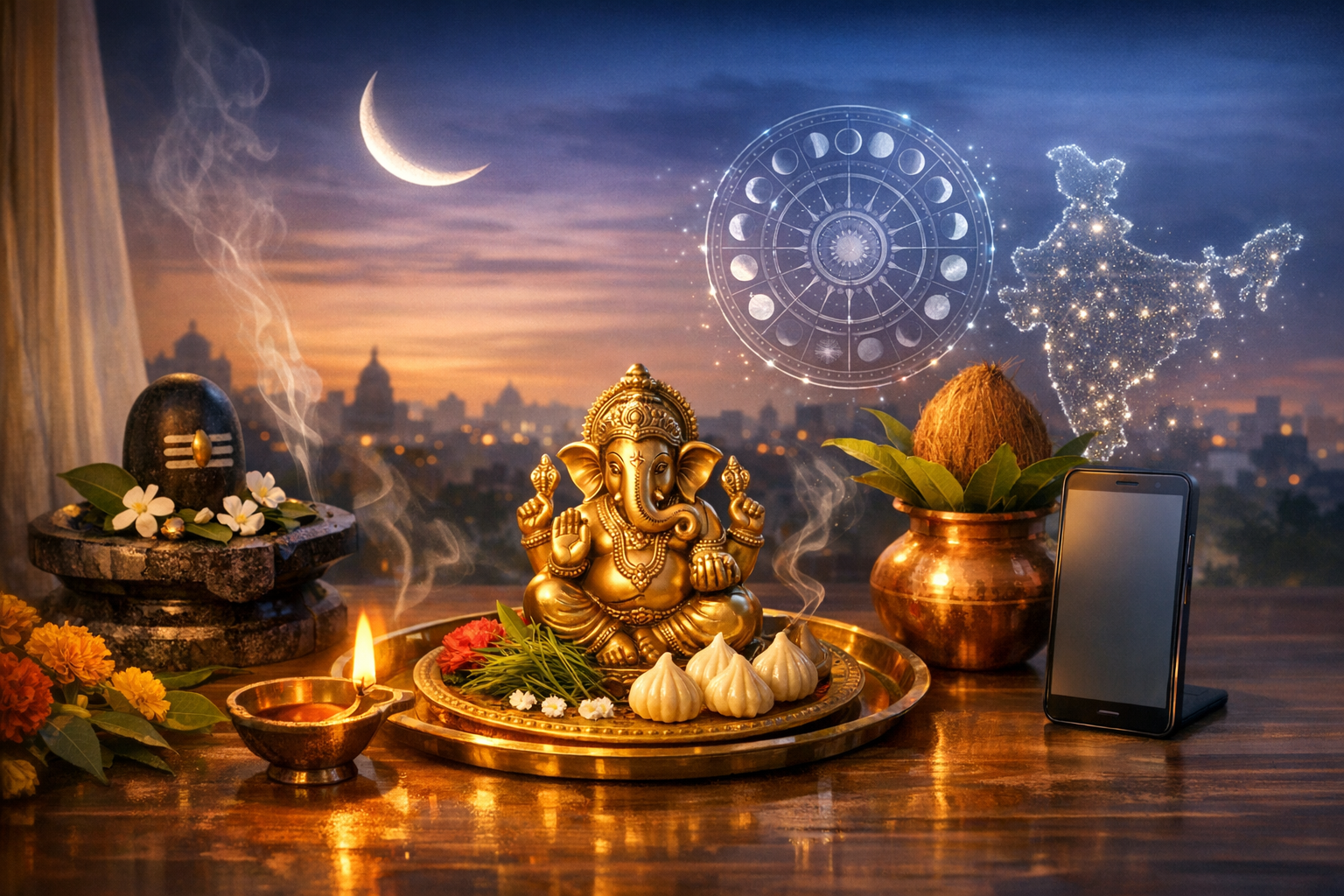
This India Standard Time (IST) guide consolidates Hindu Vrat, fasting, and festival observances in August 2026 from major Hindu calendars and Panchang traditions used across India. It emphasizes methodological clarity for tithi-based dating, city-specific moonrise for fast-breaking, and regionally consistent practice, while nurturing unity across the wider dharmic family.
All dates and ritual references are aligned to IST. Because Panchang calculations are sensitive to local coordinates, horizon conditions, and atmospheric refraction, exact timings—especially Chandrodaya for Sankashti—must be verified for each location. Devotees in India and the diaspora frequently corroborate almanac values with local temple notices to synchronize household worship.
Month mapping across traditions is central to reading August 2026 correctly. In the Purnimanta system prevalent in North India, major observances fall in Shravana and transition into Bhadrapada. In the Amanta system used widely in Western and Southern India, the span relates primarily to Shravana. Solar month correlations include Aadi transitioning to Aavani in the Tamil calendar, Karkidakam transitioning to Chingam in the Malayalam calendar, and Shravan into Bhadra for Gujarati and Marathi usage. Correspondences with Vikram Samvat and Shalivahana Shaka ensure consistency across regional Panchang traditions.
Key observances in August 2026 (IST) include August 1, 2026 – Jaya Parvati Vrat Jagran, and August 2, 2026 – Ganesh – Sankashti Chaturthi Vrat. For Sankashti, Chandrodaya or moonrise time varies by city and must be taken from a credible local Panchang or astronomical almanac.
Jaya Parvati Vrat Jagran, observed on August 1, is a devotional fast and night vigil venerating Shiva and Parvati, with a focus on marital harmony, household well-being, and inner steadiness. The observance is especially prominent in Gujarat and among communities that maintain the vrata’s classical sequence of sankalpa, Shiva–Parvati puja, vrata-niyamas, and a concluding udyapana according to family tradition. The Jagran involves night-long remembrance through bhajans, stotra recitation, and stories illustrating steadfastness in dharma.
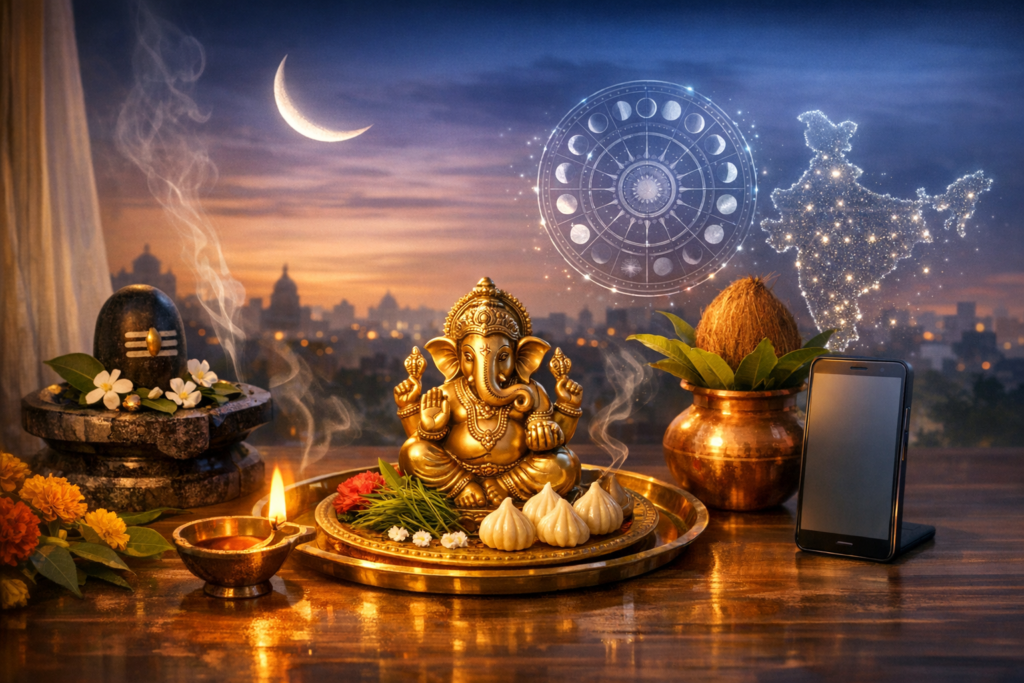
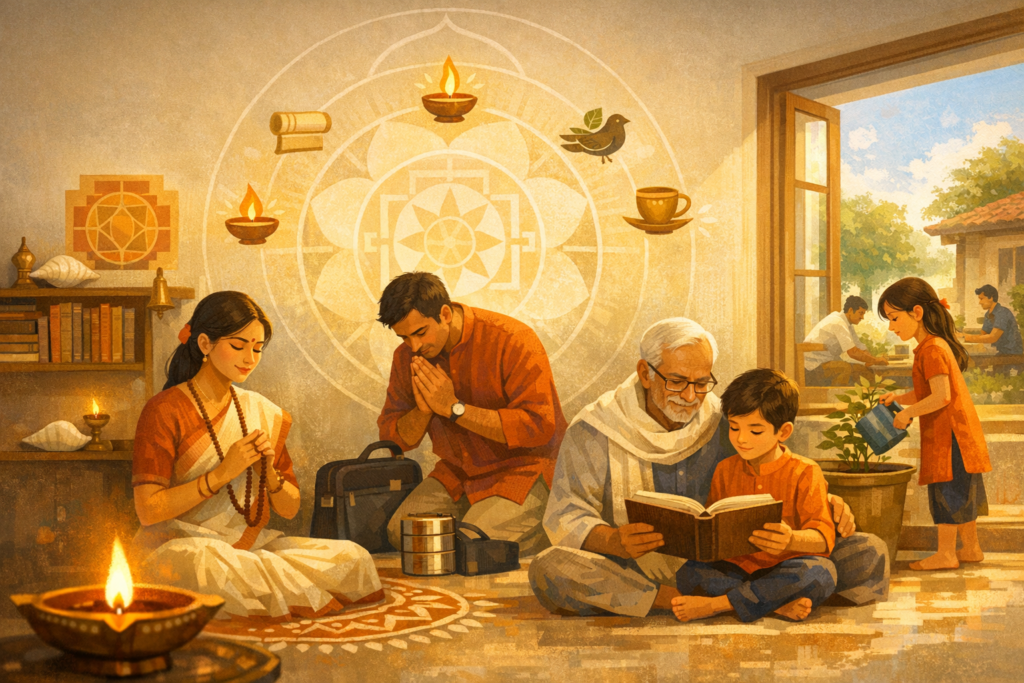
Ritual practice typically centers on a clean, sattvic routine: sacred space preparation, lighting of a diya, offering of flowers and naivedya, and recital of hymns to Shiva and Parvati. Households often keep the altar simple—placing a Shiva linga or a murtika form of Shiva–Parvati—accompanied by incense and water offerings. Many families describe the Jagran as a time of serene alertness and gratitude; elders and children participate together, reinforcing intergenerational continuity in tradition.
Those observing fasts are encouraged to adopt sensible dietary discipline in consultation with health needs. Classical prescriptions emphasize purity and moderation; in contemporary practice this translates into balanced sattvic choices and adequate hydration. The spirit of the vrata rests on intention, self-regulation, and devotion rather than austerity for its own sake.
Ganesh – Sankashti Chaturthi Vrat on August 2, 2026, is observed on Krishna Paksha Chaturthi following Purnima and is dedicated to Ganesha as the remover of obstacles. The vrata spans the day until Chandrodaya; devotees traditionally break the fast only after having darshan of the Moon and performing the prescribed worship to Ganesha. In many regions this is one of the most widely kept monthly fasts, with local temples organizing evening pujas and readings of the Sankashta Nashana tradition.
Chandrodaya time determination is inherently technical. Panchang compilers compute topocentric lunar position for a given date and place, apply standard corrections for parallax, refraction, and lunar semidiameter, and solve for the instant when the apparent lunar limb crosses the local horizon. Because these parameters depend on latitude, longitude, elevation, and local atmospheric conditions, published moonrise values legitimately differ between cities despite sharing IST. This is why a single “all-India” time for Sankashti moonrise is never advised; instead, location-specific Panchang data should be used.
The Sankashti puja sequence commonly includes sankalpa, Ganesha dhyana, offering of durva and flowers, recitation of stotras such as the Ganapati Atharvashirsha, and aarti. After sighting the Moon, devotees offer arghya to Chandra, complete the Ganesha aarti, and then break the fast with prasad, often including modak. Many families remark on the distinctive hush that precedes moonrise, as children and elders gather on terraces or courtyards watching the eastern horizon—an experience that binds technical Panchang timekeeping with an intimate, lived spirituality.
Regional nuances enrich practice without compromising core principles. If Chaturthi falls on a Tuesday, the observance is called Angaraki Chaturthi and is considered especially potent; in August 2026, the date falls on a Sunday in IST. Maharashtra, Gujarat, Karnataka, and Andhra–Telangana regions maintain strong congregational patterns for monthly Sankashti, while North Indian households often integrate readings and katha into the domestic altar routine.
A brief Panchang primer aids reliable planning. Tithi reflects the angular difference between the Sun and the Moon and governs most vrata dates. Nakshatra notes the lunar mansion and is often consulted for complementary rites or personal vows. Yoga and Karana supply additional auspicious context. Sunrise, sunset, moonrise, and moonset are localized astronomical events; among these, Chandrodaya is decisive for Sankashti fast-breaking and can shift by dozens of minutes between nearby cities.
Accuracy considerations for 2026 merit attention. The year features an Adhik month cycle earlier, which can subtly influence month boundaries in some regional listings; careful cross-checking of Purnimanta versus Amanta almanacs is prudent. For August 2026 specifically, the two highlighted observances remain within the mainstream alignment shown here, but users should still verify city-level timings in their preferred Panchang.
IST-based planning remains the baseline, yet practical observance is inherently local. Devotees outside India may either adjust to their local time zone using a trusted Panchang that supports global locations or keep an IST-sankalpa while still honoring local astronomical events for moonrise. Temples typically publicize their own schedules; synchronizing household observance with the local temple fosters community coherence and devotional focus.
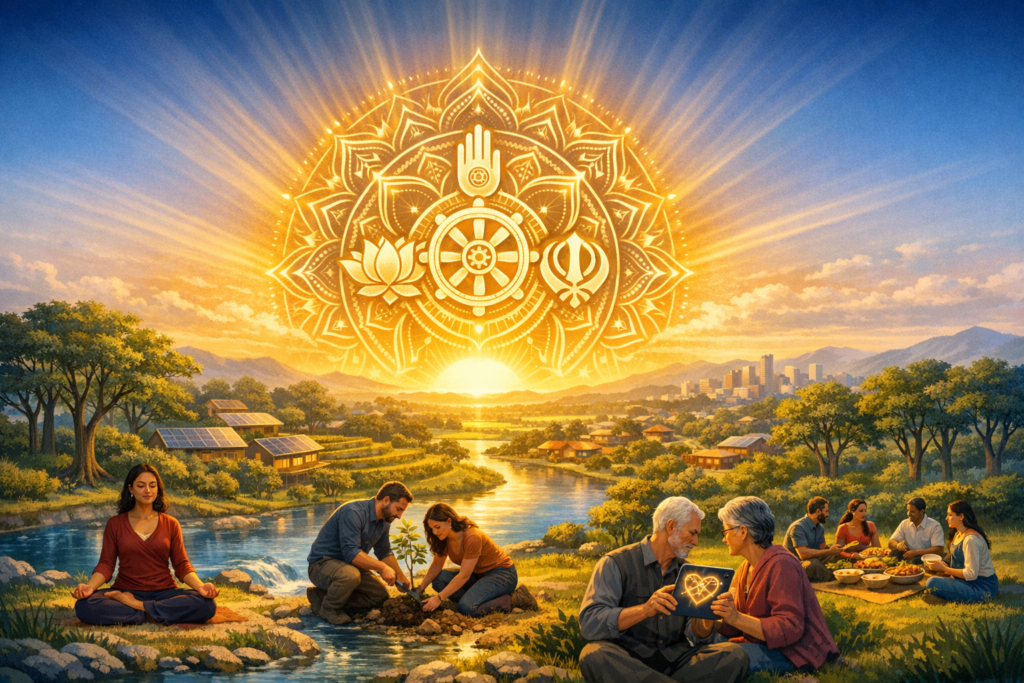
Across the dharmic spectrum, the inner logic of these vratas resonates widely. Hindu upavasa mirrors the spirit of Buddhist Uposatha in mindful restraint, Jain vrata emphasizes ahiṁsā and self-discipline, and Sikh practice centers seva and remembrance of the Divine. Shared values—self-regulation, compassion, truthfulness, and gratitude—provide a unifying bedrock, affirming that these observances strengthen a common ethical fabric while honoring the diversity of paths.
Putting August 2026 into practice can be simple yet profound. Households prepare by noting dates, arranging puja items, planning sattvic meals for fasting days, and communicating the intended routine so that family members—especially children and elders—participate with ease. These small logistical choices translate calendrical precision into calm, resonant worship.
In summary, August 2026 features Jaya Parvati Vrat Jagran on August 1 (IST) and Ganesh – Sankashti Chaturthi Vrat on August 2 (IST). Observance rests on correct tithi identification and strictly local Chandrodaya for Sankashti. By aligning devotion with sound Panchang methods and by recognizing the shared dharmic values that animate fasting and prayer, practitioners can approach these days with clarity, confidence, and a sense of collective uplift.
Inspired by this post on Hindu Blog.



Leave a Reply
You must be logged in to post a comment.