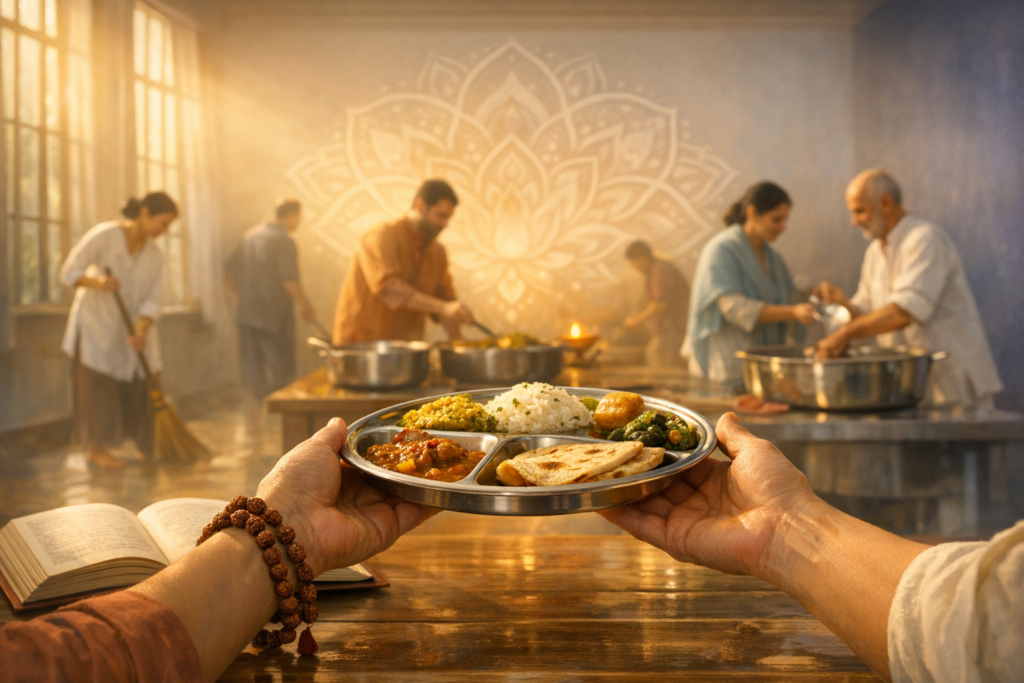
Among the cherished culinary memories of New Vrindaban, few prasadam traditions resonate as deeply as the late Amburish Dasa’s sweet rice and Pitambar Dasi’s ice cream. Prepared with fresh milk drawn straight from the cow barn and offered with devotion, these simple, handmade treats became emblems of nourishment, community, and bhakti for early Hare Krishna practitioners.
Their origins reflect a striking sincerity. Neither Amburish nor Pitambar arrived with experience in cooking or cow care, yet both cultivated these disciplines through service and dedication. In the austere conditions of the community’s formative years, their prasadam offered comfort and celebration—transforming fresh dairy into sweet rice and ice cream that devotees eagerly anticipated after long days of seva.
Amburish, a city youth from Denver, Colorado, first encountered New Vrindaban in 1971 during a post–high school road trip. The visit was decisive; he recognized a spiritual home, moved in, and was initiated by Srila Prabhupada the same year. His learning unfolded in the barn and kitchen, where the routines of milking and mindful preparation deepened into an enduring devotional practice.
Pitambar’s path was equally compelling. While living as a hippy in California’s Santa Cruz mountains, she met devotees chanting at a craft show. Drawn by their joy and simplicity, she heard about New Vrindaban, visited on Radhastami 1976, stayed overnight, and never left. Through hands-on service, she honed the skills that made her ice cream—crafted from Krishna’s cows—an eagerly remembered delight.
Those who lived through New Vrindaban’s early years often recall the palpable immediacy of the experience: warm milk in metal pails, quiet barn corridors, and the steady rhythm of work that culminated in prasadam shared among friends. In these recollections, the sweet rice and ice cream signify more than taste; they evoke resilience, gratitude, and the communal spirit that animated ISKCON (International Society For Krishna Consciousness) life.
The values embodied in this prasadam culture—ahimsa, humility, seva, and mindful consumption—speak to a wider dharmic ethos shared across Hinduism, Buddhism, Jainism, and Sikhism. Reverence for food as sacred, compassion toward animals, and the practice of offering before sharing are unifying threads that affirm interfaith harmony within dharmic traditions.
Today, the story of Amburish Dasa and Pitambar Dasi endures as living heritage at New Vrindaban. It illustrates how devotion can elevate ordinary ingredients into offerings that nourish both body and heart. For visitors and readers alike, the legacy encourages mindful cooking, community care, and a renewed appreciation for prasadam as a pathway to spiritual connection with Krishna.
Inspired by this post on Dandavats.