Sitalsasthi, the ceremonial wedding (kalyanam) of Lord Shiva and Goddess Pārvatī, stands among Odisha’s most cherished community festivals, with Sambalpur as its vibrant epicenter. In 2026, Sitalsasthi falls on June 20 (Jyeṣṭha Śukla Ṣaṣṭhī as per the Odia Panji), when temples, neighborhoods, and civic spaces across the Sambalpur region transform into a living stage for an expansive, carnival-like celebration. While the rites commemorate a divine union, the social heartbeat of the festival is unmistakably humanfamilies adopt ritual roles, communities co-create the procession routes, and visitors witness an immersive expression of cultural heritage that has been sustained for over four centuries.
From a calendrical perspective, Sitalsasthi is anchored to the lunar tithi of Śukla Ṣaṣṭhī in the month of Jyeṣṭha. Local Odia almanacs (Panji) guide the precise timings of the vows and processions, which can span late evening into the following day. For 2026, June 20 aligns with the main śubha muhurta in Sambalpur (IST), though it remains prudent to confirm temple-specific schedules closer to the date, since tithi spans may begin on the preceding night and culminate the following afternoon.
Historical records and robust oral tradition place the origin of Sitalsasthi in Sambalpur over four hundred years ago. What began as a temple-centric kalyanam matured into a city-wide, community-led observance in which local familiesby custom and consensusassume sacred roles associated with the wedding. These households are regarded as the “ritual parents” who undertake the responsibilities of engagement, invitation, and kanyādāna (giving the bride), while parallel arrangements represent the groom’s side for Lord Shiva. This civic participation has ensured institutional continuity through periods of political change, demographic growth, and evolving urban life.
Doctrinally, Sitalsasthi dramatizes the union of Śiva and Śakti, a central motif in Hindu philosophy that symbolizes the complementarity of consciousness and energy. The event resonates with the ideal of Ardhanārīśvaraoneness manifesting as harmonious dualitywhile also aligning with the agrarian rhythm of the subcontinent. Taking place at the cusp of the monsoon, the festival’s aesthetic of water-splashing and “cooling” (sitala) gestures expresses a collective prayer for relief from summer heat and the promise of life-giving rain.
The multi-day observance in Sambalpur typically unfolds through a structured sequence that mirrors classical Hindu wedding rites, adapted to local custom. A public selection or confirmation of adoptive parents for Goddess Pārvatī (often referred to as patra pendi or similar local terms) is followed by the betrothal (nirbandha), formal invitations to sister neighborhoods, and preparatory rituals such as maṅgala snāna and worship to ancestral and guardian deities. These acts integrate Vedic mantras with Odia devotional forms, weaving scriptural sanctity into a distinctly regional idiom.
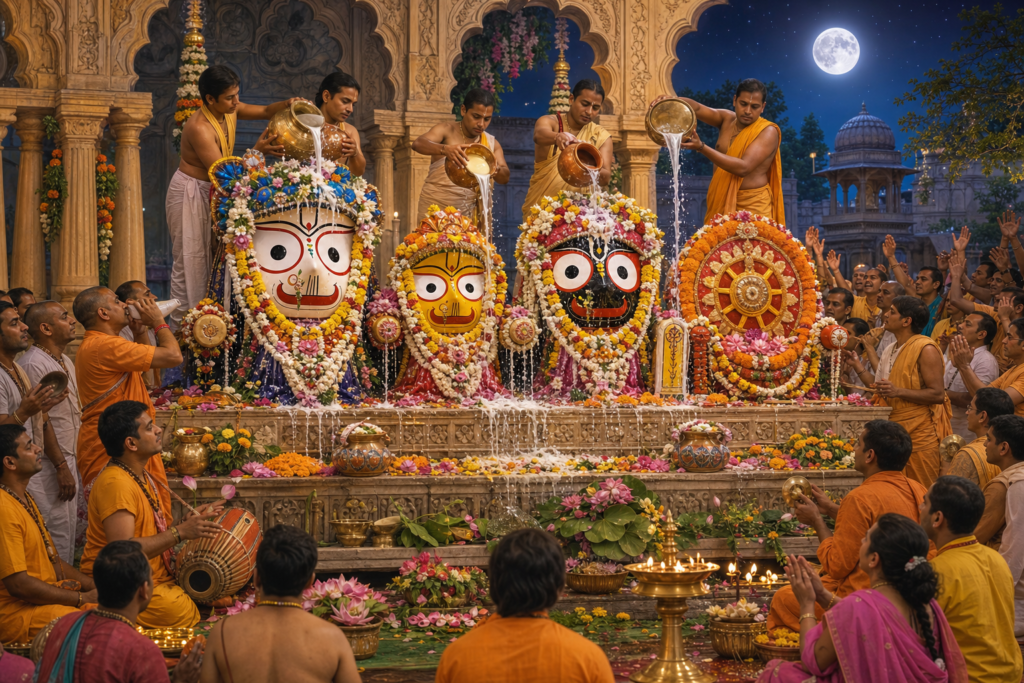
On the principal Sitalsasthi day, the city comes alive as the divine “baraat” (barajātra) sets out in a procession rich with symbolism. The mūrti of Lord Shiva, ornamented for the wedding, moves through thoroughfares resounding with conch, nishan drums, and Sambalpuri folk rhythms, to arrive at the mandapa where Goddess Pārvatī awaits. The marriage riteskanyādāna, pāṇigrahaṇa, laja homa, and saptapadīare conducted in accordance with śāstric prescriptions, while local priests and hereditary sevayats maintain the ritual grammar handed down across generations.
The following day’s return processionpopularly called the Sitalsasthi Yatraextends the celebration into the city’s lanes and markets as the divine couple, now wedded, tours the community to bestow blessings. In Sambalpur, this segment often assumes the grandeur of a cultural parade. Households create temporary gateways and floral arches; neighborhood groups present folk dance, dhol-nishan ensembles, and Sambalpuri forms such as Dalkhai; and spectators joyously sprinkle water to symbolize the cooling grace of the season and the anticipated advent of rain.
One of the most distinctive features of Sitalsasthi in Sambalpur is the institution of adoptive “parents.” Familiesirrespective of economic statusmay be chosen to represent the bride’s or groom’s side. The honor is communal rather than individualistic; decisions are steeped in collective consent, and expenses are frequently shared or supported by donations in kind. This mechanism of ritual kinship democratizes sacred responsibility, reinforces inter-neighborhood trust, and enshrines the principle that public worship (sarvajanik utsava) is sustained by the entire community.
Culturally, the festival is a showcase of Odisha’s living heritage. The Sambalpuri textile aestheticikat patterns, traditional weaves, and region-specific ornamentationadorns devotees and stages alike. Artisans, percussionists, and folk performers gain city-wide platforms, while food vendors and craftspeople participate in the micro-economy that blossoms around the yatra routes. These dynamics illustrate how a Hindu festival serves as a social institution: it transmits intangible knowledge, nourishes livelihoods, and links sacred time with the civic calendar.
Beyond Sambalpur, Sitalsasthi is observed in cities such as Bhubaneswar and Cuttack, where local temples of Shiva and Pārvatī choreograph kalyanam rites on the same tithi. Yet Sambalpur remains preeminent for the scale, community architecture, and density of parallel weddings across multiple neighborhoods (paras). Each locality plans distinctive routes and evening highlights, encouraging residents and visitors to explore the city’s cultural map through sequential darśans and performances.
Those planning a 2026 visit will find Sambalpur accessible by rail (Sambalpur City, Sambalpur Road, and Sambalpur Junction stations) and by air via Veer Surendra Sai Airport, Jharsuguda, with onward road links. June is warm and humid ahead of the monsoon; light cotton attire, hydration, and sun protection are advisable for extended viewing along procession routes. Since routes and timings are neighborhood-specific, travelers benefit from checking local temple announcements and municipal advisories for traffic diversions and vantage points. Early evening arrivals usually secure better visibility and safer movement before crowds thicken around the mandapas.
Responsible participation enhances both experience and heritage protection. Visitors are encouraged to respect barricades and sacred perimeters, minimize single-use plastics, avoid obstructing ritual movement while filming, and support local artisans through fair purchases. Many neighborhoods organize volunteer groups for crowd guidance and first aid; cooperating with them helps maintain a smooth flow for all, including elders and children.
Sitalsasthi also speaks to a wider dharmic ethos of unity in diversity. While the rites are firmly rooted in Hindu tradition, the festival’s emphasis on compassion, community service, and shared celebration echoes values cherished across Buddhism, Jainism, and Sikhism. In practice, people of varied backgrounds join the processions as spectators, helpers, or neighbors, underlining how sacred festivities can nurture social harmony, collective well-being, and a culture of mutual respect.
In sum, Sitalsasthi 2026 in Odishaparticularly in Sambalpur on June 20offers a rare confluence of śāstra-grounded ritual, community-led organization, and exuberant public art. It is a living testament to how Hindu festivals function as cultural infrastructure: preserving heritage, strengthening social bonds, and aligning spiritual aspiration with the rhythms of nature. For culture-seekers, scholars, and families alike, the “wedding of Shiva and Pārvatī” is not only an unforgettable spectacle but also a profound lesson in how tradition, when held in common trust, becomes an enduring source of unity and grace.
Inspired by this post on Hindu Pad.