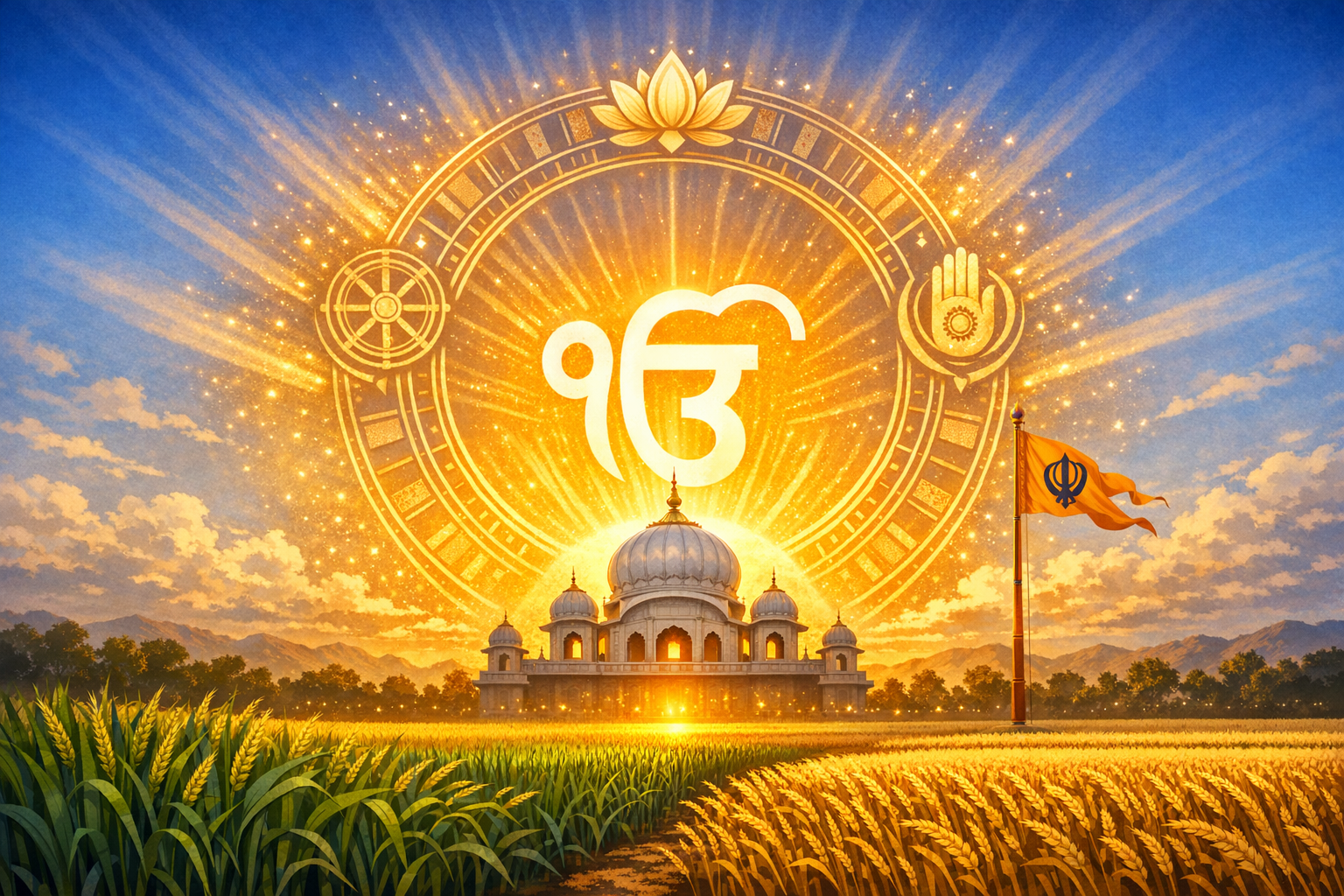
The Sikh New Year is more than a date on a calendar; it is a contemplative threshold where time, grace, and the soul’s aspiration converge. Across Sikh communities, the New Year is recognized in two principal ways: the start of Chet in the Nanakshahi calendar (around 14 March) and the spring festival of Vaisakhi (Baisakhi) in mid-April, when the Khalsa was inaugurated at Anandpur Sahib in 1699. Both frames hold devotional legitimacy and cultural resonance, reflecting a living tradition that integrates precise time reckoning with spiritual renewal.
The Nanakshahi calendar, introduced in recent decades to standardize gurpurab observances in a solar framework, begins the year with 1 Chet. Designed to align with the tropical solar year and minimize annual drift, it offers temporal clarity for global Sikh communities spread across time zones. Alongside this, the long-standing Bikrami traditionstill central to many Punjabi households and gurdwarasanchors the New Year experience in regional memory and agrarian rhythms. Together, these calendars illuminate how Sikh practice has historically balanced precision in timekeeping with fidelity to spiritual intent (bhavana).
Vaisakhi (Baisakhi), celebrated around 13–14 April, serves as a widely cherished Sikh New Year observance and marks the formation of the Khalsa in 1699 under Guru Gobind Singh at Anandpur Sahib. This historic momentembodied in the Panj Piare, the saint-soldier ideal, and the shared discipline of the kakarstransformed the ethical texture of Sikh society. It linked inner devotion (simran) with courageous action (miri-piri), ensuring that spiritual realization would never remain detached from social responsibility.
Time in Sikh thought is both sacred and purposeful. Gurmat teaches that the Timeless (Akal) holds creation in hukaman all-encompassing order that sustains the play of birth, duty, and liberation. The Mool Mantar’s closing phrase, Gur Prasad, foregrounds grace as the decisive light by which the human journey finds its orientation within time. This synthesisorder (hukam) in time, and grace (nadar, kirpa) beyond timegrounds the Sikh New Year in a disciplined yet hopeful ethic.
Grace in Sikh theology does not negate effort; it completes it. Human strivingNaam Japna, Kirat Karna, Vand Chhaknaclears the path, while nadar enables a leap the ego (haumai) cannot accomplish alone. This dynamic echoes broader Dharmic intuitions across Hinduism, Buddhism, and Jainism: disciplined practice prepares the field, and a transforming insight or blessing consummates the journey. The Sikh emphasis on Gur Prasad articulates this harmony without fatalism, affirming that inner work and divine compassion operate together.
The journey of the soul in Sikhism aims at jivan muktiliberation while living. Haumai gives way to the remembrance of Naam; the mind, steadied by simran and kirtan, attunes to shabad. Through sangat (the company of seekers) and seva (selfless service), personal devotion merges with collective uplift, translating metaphysical aspiration into community well-being. In this integration, the Sikh path converges with Dharmic cousins: the light of liberation is never private possession; it radiates through conduct, generosity, and courage.
Daily discipline structures this ascent. Nitnemrecitations such as Japji Sahib, Jaap Sahib, and Rehras Sahibbrings cyclical coherence to a seeker’s day, while amrit vela meditation stabilizes attention before worldly duties unfold. Ardas keeps intention transparent before the Guru, and receiving a hukamnama offers a moment-specific alignment of thought and deed with hukam. In congregation, kirtan refines emotion into devotion, while langar trains the body and mind in equality, humility, and shared dignity.
Vaisakhi’s historical inflection intensifies this ethical arc. The saint-soldier (sant-sipahi) ideal, later framed by the doctrine of miri-piri, binds contemplative insight to righteous protection of the vulnerable. The Khalsa was not designed for sectarian rivalry; it was instituted to safeguard freedom of conscience and dignified life for all. In this spirit, the Sikh New Year is a renewed invitation to embody courage without anger, discipline without harshness, and clarity without exclusionvirtues that reinforce unity across Dharmic traditions.
New Year observances in gurdwaras often include akhand paath, kirtan, katha, and seva connected to the Nishan Sahib. Families and communities may participate in Nagar Kirtan, organize amrit sanchar, or offer expanded langar to local neighbors of every background, honoring the aspiration of sarbat da bhala. In agrarian settings, Vaisakhi also aligns with harvest gratitude, fusing devotional thanksgiving with the realities of earth, labor, and sustenance.
This seasonal hinge invites a technical appreciation of time as well. The Nanakshahi calendar’s design seeks stability by rooting dates in the tropical solar year, making annual observances more predictable for a global diaspora. At the same time, local sunrise and latitude differences affect community rhythms, reminding practitioners that temporal precision and pastoral sensitivity must travel together. Where communities integrate Bikrami customs, practical bridgesannounced schedules, inclusive explanations, and shared intentpreserve unity without erasing diversity.
From a comparative Dharmic perspective, Sikh reflections on time and grace resonate with cognate philosophies. In Hindu darshanas, moksha crowns the arc of dharma; in Buddhism, nirvana silences the fires of craving; in Jainism, kevala jnana unveils pure knowledge. Sikh teaching frames the same summit as union with Naam and freedom from haumai, attained through the Guru’s grace. These paths differ in metaphysical vocabulary yet converge in praxis: ethical restraint, mental cultivation, community care, and reverence for truth.
Practical resolutions at the Sikh New Year often begin with realignments of attention and conduct. Many find value in recommitting to amrit vela, undertaking focused simran, and deepening engagement with sangat and seva. Families may structure intentional giving around langar, education, or health, while youth-led initiatives connect kirtan and study circles to environmental stewardship or social equity. Such steps affirm that inner illumination and public service are not sequential but simultaneoustwo wings of a single flight.
Ethically, the start of the year is an opportunity to reflect on speech, livelihood, and digital habits through the lens of hukam. Setting healthier rhythms for learning Gurbani, anchoring weekly seva, and cultivating mindful communication transform aspiration into habit. As attention refines, the subtle grace of nadar becomes more perceptible: synchronicities increase, agitation softens, and the felt sense of being carried by something wiser than the isolated self grows clearer.
For intercultural and interfaith neighbors, the Sikh New Year opens a hospitable doorway. Participating in langar, listening to kirtan, or visiting a gurdwara fosters relational trust while illuminating how Sikh ethics of equality, courage, and service complement parallel values in Hinduism, Buddhism, and Jainism. Each tradition, in its own idiom, seeks to reduce suffering, honor truth, and elevate character; shared celebrations make these convergences visible and tangible.
Ultimately, the Sikh New Year integrates three interdependent insights. Time supplies the scaffold for disciplined growth; grace reveals dimensions of reality that effort alone cannot unlock; and the soul’s journey culminates in living freedom, where devotion and duty are one. Entering the year with this understanding affirms a future shaped not by mere chronology, but by awakened participation in hukamanchored in compassion, fortified by courage, and offered for sarbat da bhala.
Inspired by this post on SikhNet – News.