
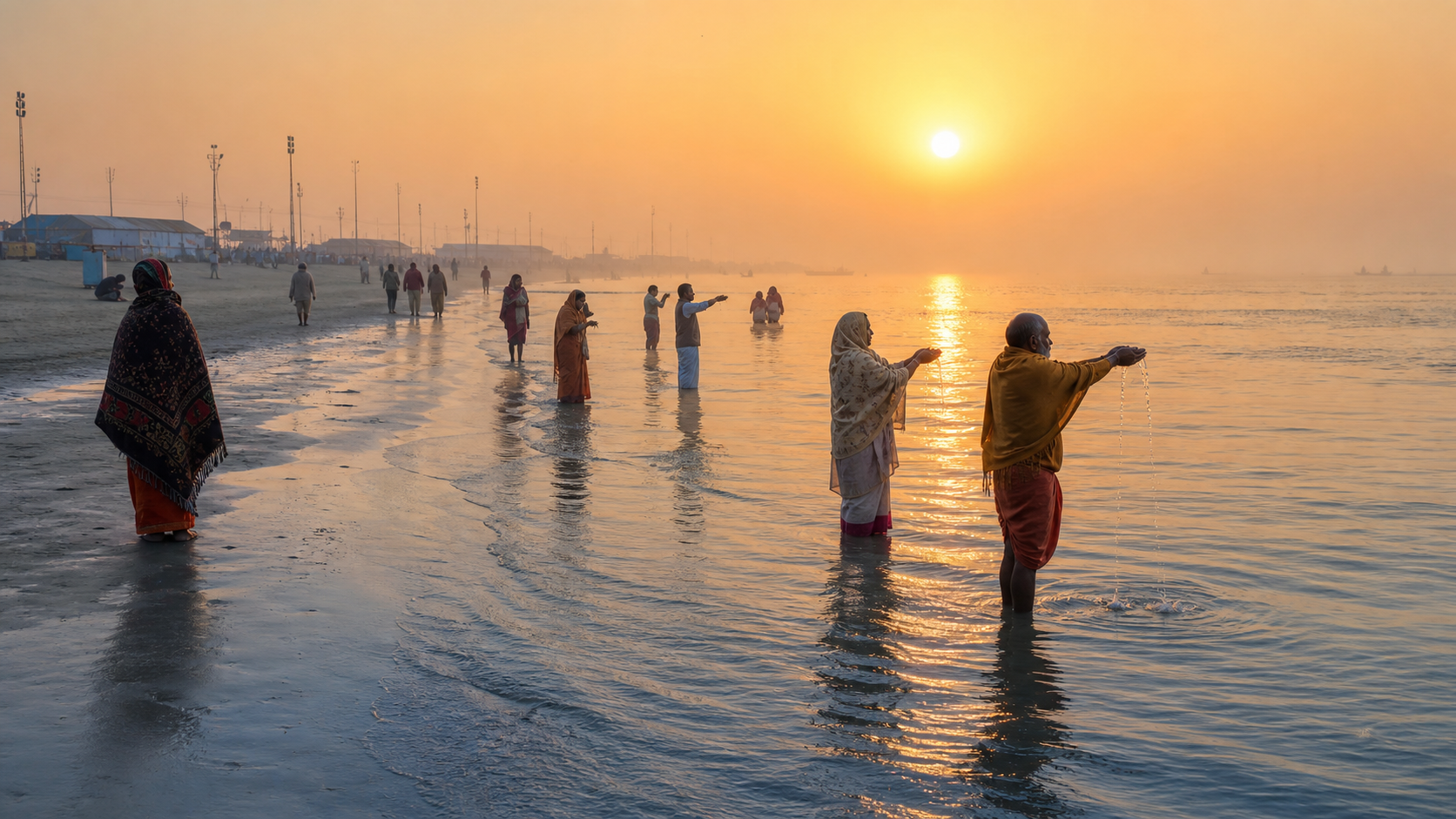
If you are deciding whether to observe Makara Sankranti at home or undertake the Gangasagar pilgrimage, the date is the easy part. The real planning lies in aligning three different things: the sacred time in your local Panchang, the journey across to Sagar Island, and the tide and safety directions governing the snan.
Keep those three clocks separate. You will be able to preserve the purpose of the festival without turning devotion into haste, confusion, or avoidable risk.
Key takeaways for the 2026 observance
- Makara Sankranti falls on 14 January 2026, marking the Sun’s transit into Makara Rashi and the beginning of Uttarayana Punyakalam.
- Gangasagar Mela runs from 13 to 15 January 2026 on Sagar Island. The principal Ganga Snan is on 14 January.
- Use your local Panchang to determine the appropriate Punya Kala for snan, Surya arghya, mantra recitation, and daan. The calendar date does not supply a universal clock time.
- If you travel, verify current ferry arrangements, tide information, designated bathing zones, and administrative directions close to departure.
- If the island journey is unsuitable for you, a sincere observance at home or at an accessible local water body remains meaningful: bathe, offer arghya to Surya, pray, give daan, and renew an ethical resolve.
The three-day mela period gives you a useful planning frame, but it does not mean every hour carries the same ritual significance or the same conditions for travel and bathing.
| Date | What it means | What you should plan |
|---|---|---|
| 13 January 2026 | Gangasagar Mela period begins | If travelling, use the day to complete the multi-stage journey, settle in, and review local instructions rather than assuming the main snan must be a rushed same-day trip. |
| 14 January 2026 | Makara Sankranti and principal Ganga Snan | Follow the local sacred timing as well as tide controls and designated bathing arrangements. Many pilgrims proceed to Kapil Muni Temple after the snan. |
| 15 January 2026 | Gangasagar Mela period continues | Leave room for an orderly return journey through local transport, the ferry crossing, and the mainland connection. |
Decide whether Gangasagar is your dharma this year
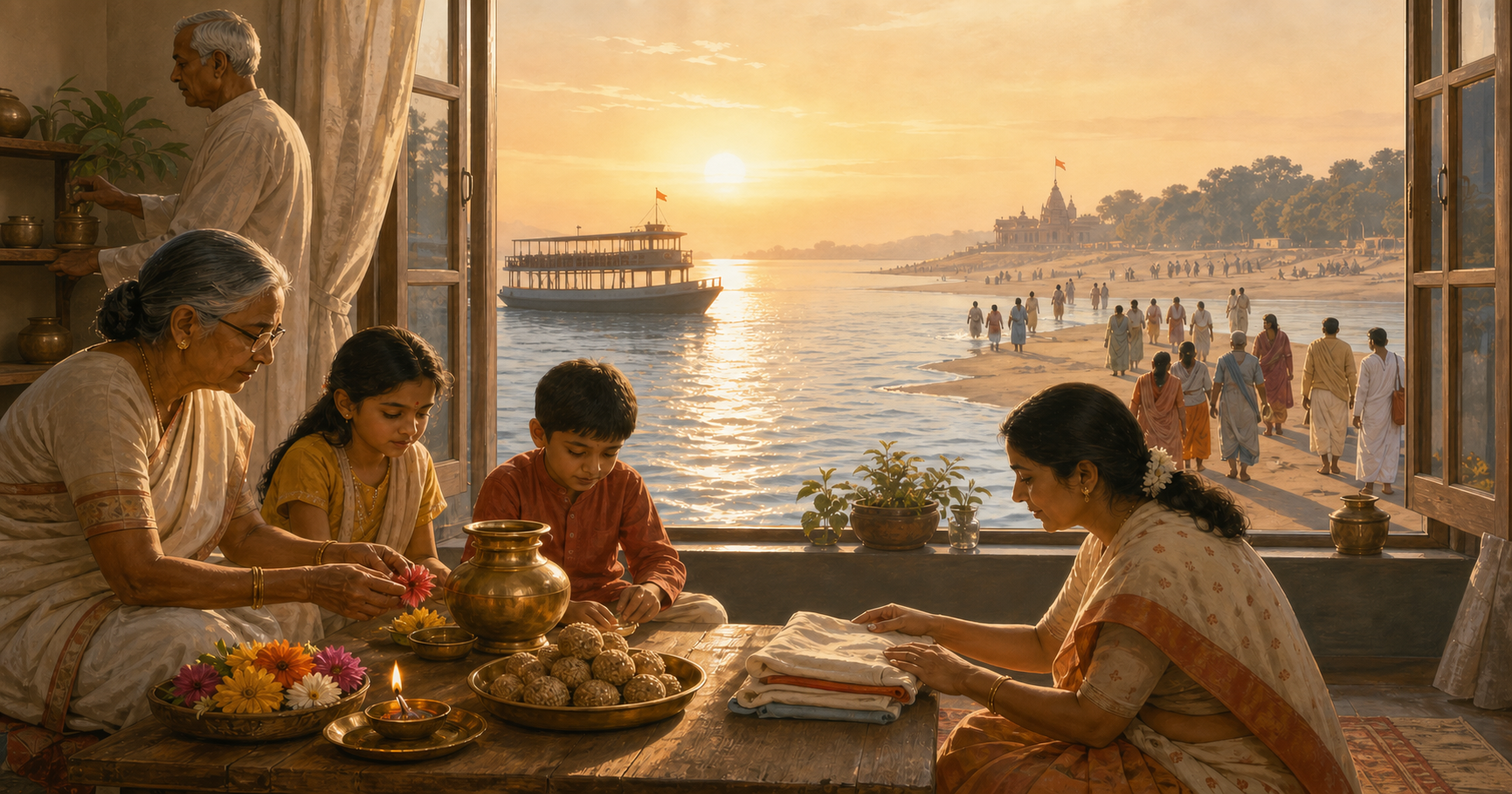
Gangasagar is a powerful tirtha because the pilgrimage brings the devotee to the sangam where the Ganga meets the Bay of Bengal. Yet the physical journey is not the measure of everyone’s sincerity. It involves surface travel to a mainland jetty, a ferry crossing, and another local transfer on Sagar Island. Your decision should account for the whole chain, not merely the desire to be present at the water on 14 January.
Undertake the journey when you can manage that sequence safely, allow enough time for administrative controls, and accept that the tide or officials may determine when and where you enter the water. Stay local when the ferry, crowd, transfer, or controlled water access would place you or someone in your care under unreasonable strain. Choosing a safe observance is not a spiritual demotion.
A local Makara Sankranti can retain the festival’s essential structure. Ritual bathing may take place in a river, lake, or at home, followed by Surya arghya, prayer, and daan. If you cannot go to Gangasagar, do not spend the day imitating a journey you did not make. Give full attention to the observance available to you.
Your own regional tradition also deserves that attention. Lohri is kept on the eve in Punjab; Uttarayan is associated with Gujarat’s kite celebrations; Tamil families observe the sequence of Bhogi, Thai Pongal, Mattu Pongal, and Kaanum Pongal; Andhra Pradesh and Telangana commonly move from Bhogi through Sankranti to Kanuma or Mukkanuma; Assam celebrates Magh or Bhogali Bihu; and Kerala’s Makaravilakku tradition belongs to the same sacred season. These forms are not competing claims to authenticity. They express shared gratitude, renewal, discipline, and community through distinct regional languages.
Build the day around snan, Surya arghya, and daan
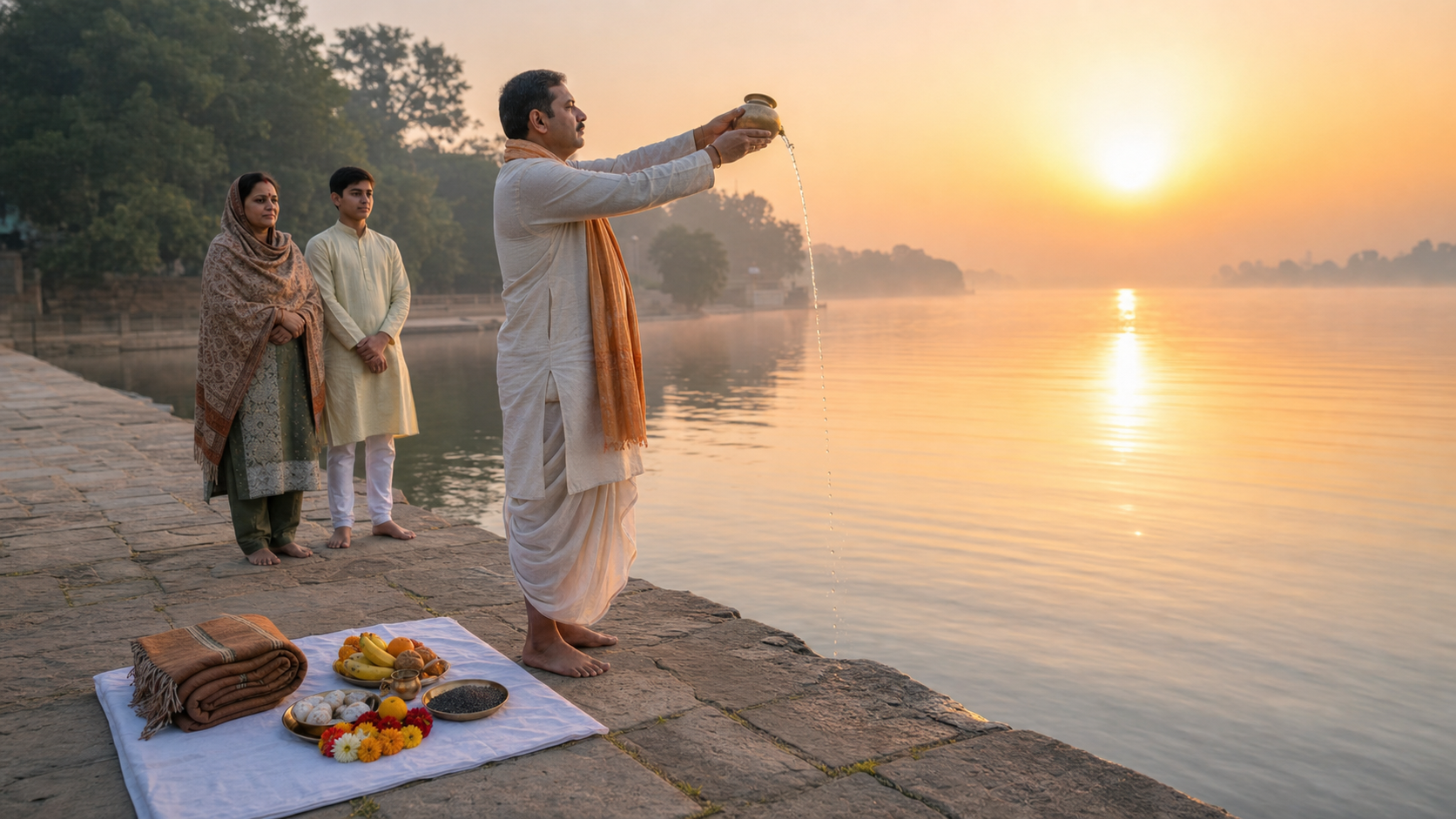
Makara Sankranti is a solar observance. For 2026, you can confidently reserve 14 January, but you should still check a Panchang followed by your family, temple, or region for the Sankramana moment and Punya Kala. This distinction prevents a common planning error: treating a fixed festival date as though one clock time must apply everywhere.
- Confirm the sacred window. Note the local time for Sankramana snan and daan before arranging travel, meals, or community activities around it. If family customs differ, agree in advance which Panchang or temple guidance you will follow.
- Prepare for snan without display. Bathe at an appropriate river, lake, or at home. At a public water body, ritual intention never overrides access restrictions, water conditions, or instructions from those managing the site.
- Offer arghya to Surya. Keep clean water ready and make the offering prayerfully. Recite the Surya mantra, stotra, or family prayer you actually know rather than turning the rite into a hurried search for unfamiliar words.
- Make daan concrete. Sesame and jaggery are traditional Sankranti offerings. Annadana and other useful gifts can extend the rite from private merit to the welfare of another person.
- Practise the meaning of tilgul. Exchanging sweets carries a discipline of sweet and restrained speech. If there is a relationship in which pride or harshness has accumulated, let your conduct embody the symbol.
- Choose one Uttarayana resolve. Write down one action involving discipline, service, gratitude, or care for nature. A vow you can sustain has greater value than an elaborate promise abandoned after the festival.
The order matters because it moves from purification to worship, generosity, and conduct. If the day ends with a bath and sweets but leaves speech, consumption, and responsibility untouched, the outward festival has not yet become an inward Sankranti.
Plan Gangasagar around the crossing and the water
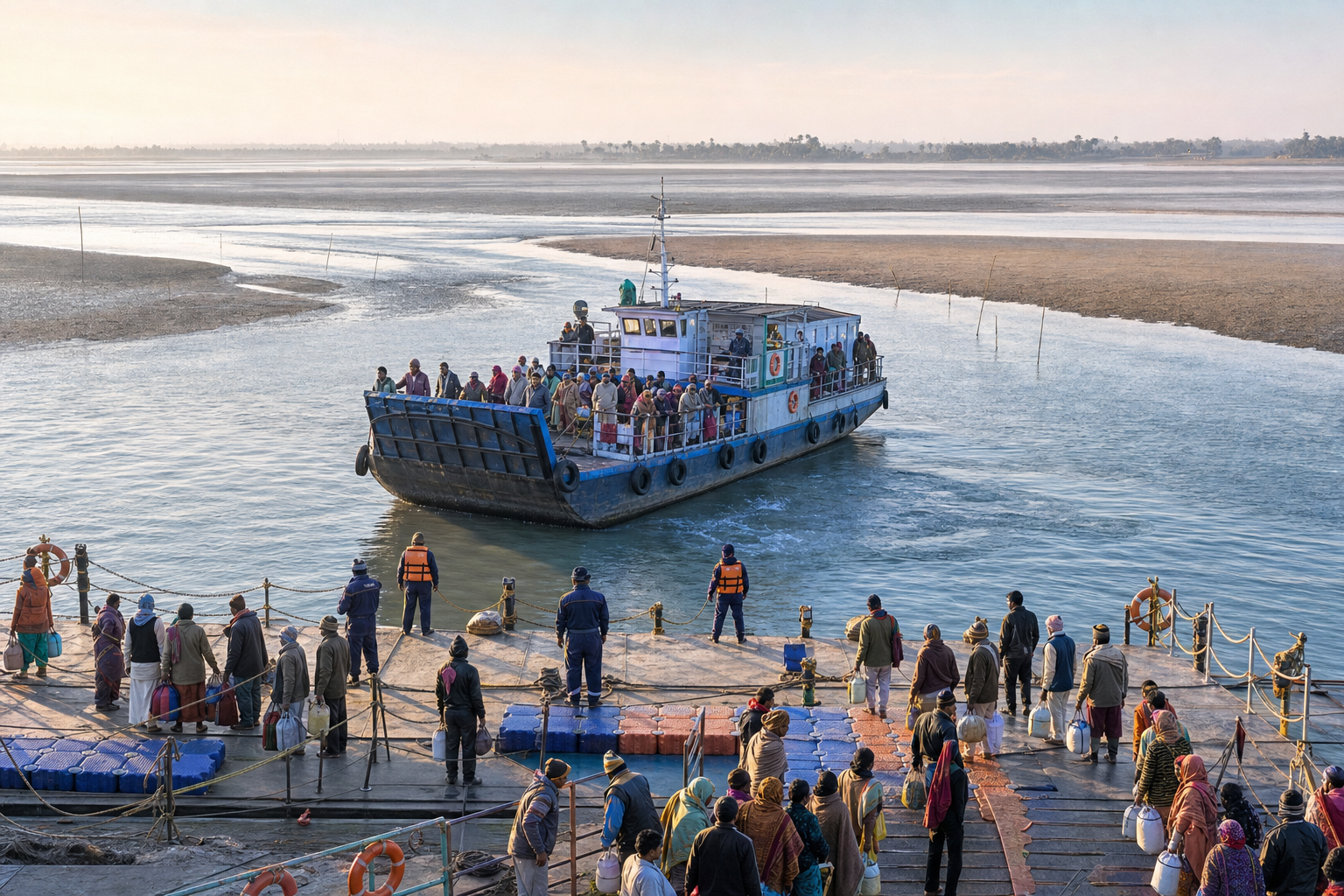
Gangasagar is not reached by one uninterrupted road journey. Pilgrims generally travel by surface route to the mainland jetty, cross by ferry, and then use organised local transport on Sagar Island. Each transfer can be affected by crowd controls and local directions, so a plan based only on the time you hope to bathe is incomplete.
Precise ferry slots and tide timings should be treated as variables, not guessed in advance. Check current official advisories before setting out and check again when you reach the transport or bathing area. A forwarded message or an earlier year’s schedule is not a safe substitute for directions operating at the site.
Before you begin the journey
- Confirm the current ferry arrangements, tide schedule, access controls, and designated bathing zones through official local information.
- Plan every leg: travel to the mainland jetty, waiting and crossing time, transport on Sagar Island, movement to the bathing area, and the return sequence.
- Carry only what you can keep secure. Protect necessary clothing, essential prescribed medicines, contact information, and ritual items from water.
- If you travel with family, select a meeting point and make sure each person knows who is responsible for children, elders, or anyone requiring assistance.
- Minimise single-use plastic before reaching the island. Removing unnecessary packaging at home is easier than managing it responsibly in a large gathering.
At the bathing area
- Enter only through a designated bathing zone and at a permitted time. The crowd’s movement is not evidence that another area is safe.
- Obey tide warnings and security directions immediately. If entry is stopped, complete your prayers without entering the water rather than treating danger as a test of faith.
- Keep the snan focused. Do not remain in a controlled water area longer than necessary or obstruct the movement of other pilgrims.
- Use the medical, security, and sanitation facilities identified by organisers when needed. Locate support points on arrival rather than waiting until an emergency.
- Leave offerings, packaging, clothing, and food waste only where the site’s rules permit. A purificatory rite should not make the confluence dirtier.
After the snan, many devotees worship at Kapil Muni Temple. Treat that visit as the continuation of the pilgrimage, not a race to finish a checklist. Crowd management may shape your movement, and patience with other pilgrims is itself part of the discipline the mela demands.
Carry the sangam into the way you return
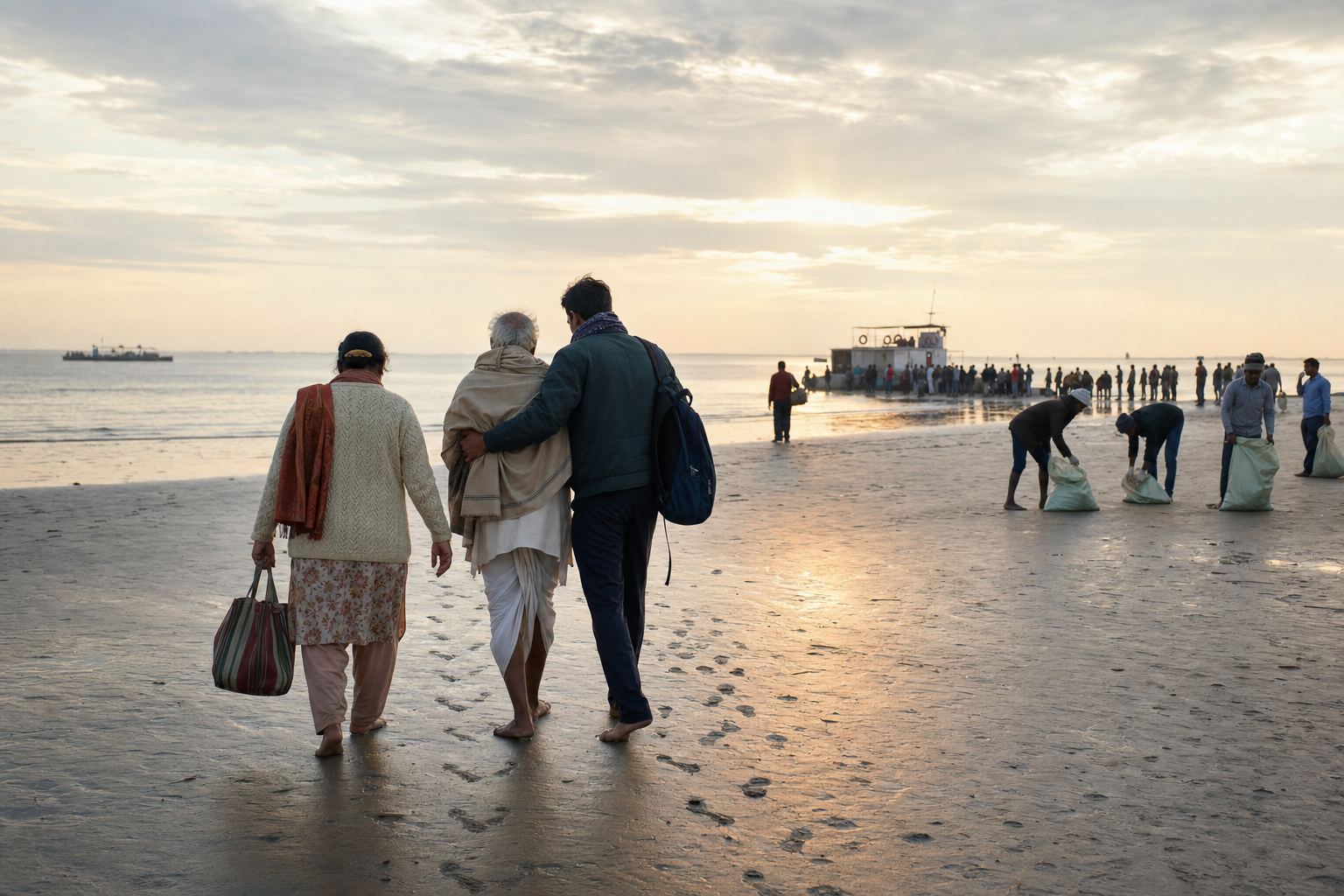
The confluence gives Gangasagar its geography; seva gives the gathering its moral character. Kirtan, recitation, and annadana allow a vast pilgrimage to function as a community rather than a collection of private wishes. If you participate in service, work through arrangements that can distribute food or assistance responsibly and handle the resulting waste.
Environmental restraint belongs inside the ritual, not beside it. Avoid single-use plastic, respect the coastal ecosystem, use designated waste points, and do not leave devotional packaging at the water’s edge. Ahimsa toward a sacred landscape is more convincing than reverence expressed while damaging it.
Gangasagar Mela is a Hindu pilgrimage, but its disciplines of compassion, self-restraint, service, and gratitude are recognisable across the wider dharmic family of Hinduism, Buddhism, Jainism, and Sikhism. That shared ethical ground should deepen respect for distinct traditions, not erase their differences.
When you make your 2026 plan, put four items in writing: the Panchang time you will follow, the form of daan you will give, whether you will travel or observe locally, and the ethical resolve you will carry into Uttarayana. If you choose Gangasagar, add the ferry, tide, bathing-zone, and return checks before you leave. That is how a festival date becomes a dharmic practice you can actually keep.
References
- DharmaRenaissance Blog — Makara Sankranti 2026 Date, Rituals, and Regional Names: A Joyous Start to Uttarayana
- DharmaRenaissance Blog — Gangasagar Mela 2026: Dates, Sacred Ganga Snan on Makar Sankranti, Complete Guide
