Maha Shivaratri is the luminous night dedicated to Lord Shiva, observed with jagarana (night-long vigil), upavasa (fasting), and Shivalinga puja. Shivalinga abhisheka performed during the night is traditionally considered especially meritorious. In 2026, the festival is observed across India on the night of 15 February, with both South Indian and North Indian calendrical systems concurring on this date.
For puja muhurat, the anchoring principle is the presence of Krishna Paksha Chaturdashi during the night, known in the panchang as Ratri Vyapini Chaturdashi. Within this night-specific framework, the most sanctified window is Nishita Kala, the midnight-centered interval revered for Shiva worship. On MahaShivaratri 2026 (15 February 2026), the Mahalingodbhava kala is honoured during Nishita Kala, especially in South Indian Shaiva temples where the Lingodbhava episode is ritually re-enacted to signify the infinite Jyotirlinga.
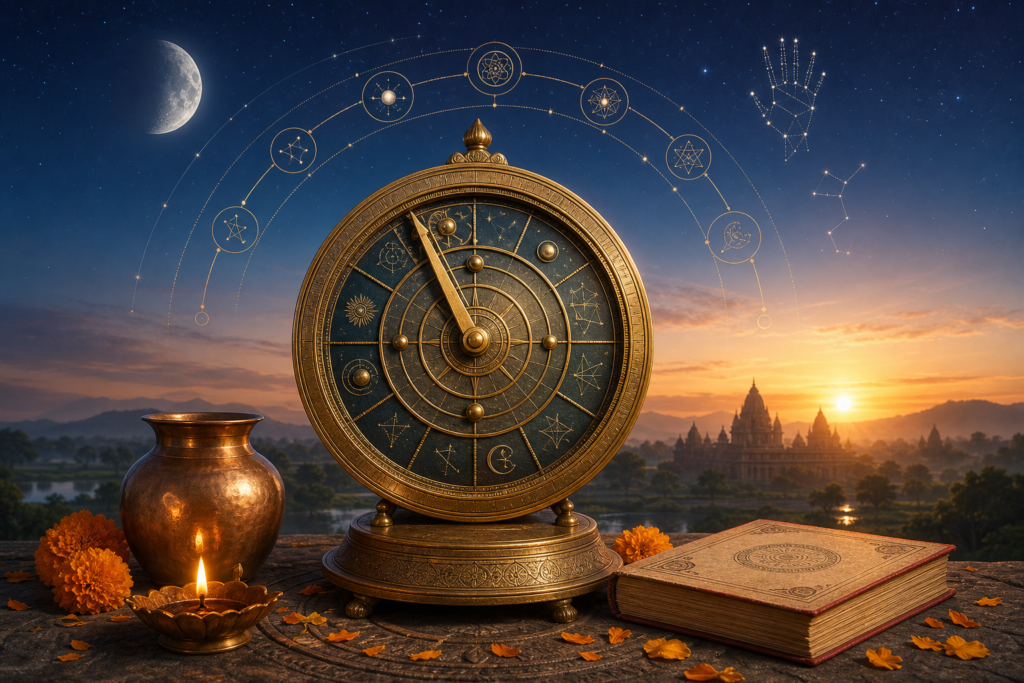
Technically, the Nishita Kala and all Ratri Puja windows are derived from local sunrise and sunset, making the calculation inherently location-specific. Determine the time of sunset on 15 February 2026 and the time of sunrise on 16 February 2026 for the chosen place. The interval between these events defines the length of the night. Madhyaratri (true midnight) is the temporal midpoint of this night, not necessarily 00:00 on the civil clock. Nishita Kala is taken around Madhyaratri and is customarily treated as a single muhurtaapproximately forty-eight minutesstraddling that midpoint. Because these values vary with latitude, longitude, and the equation of time, relying on a reliable panchang or astronomical almanac for the exact local minutes is recommended.
In parallel with Nishita Kala, traditional practice divides the night into four equal prahara to structure the worship. Devotees customarily perform one full cycle of puja, abhisheka, and japa in each prahara, with special intensity at the passage around Nishita Kala. This fourfold rhythm aligns with the meditative crescendo of the vigil and ensures that sacred sound, light, and intention pervade the entire Ratri of Shiva.
The vrata of Maha Shivaratri emphasizes satvika restraint and mental steadiness over mere austerity. Many householders observe nirjala or phalahara upavasa, while others maintain a light sattvic diet that sustains night-long dhyana and kirtana. The fast is traditionally broken (parana) the next morning after sunrise and after the Chaturdashi tithi has ended locally; where Chaturdashi persists well into the forenoon, parana is deferred in accordance with the panchang so that the fast is not concluded within the Chaturdashi span.
A concise puja-vidhi for home observance begins with acamana and sankalpa after dusk, followed by dhyana on Shiva as Dakshinamurti, Maheshvara, or as the aniconic Shivalinga. Abhisheka is offered with ganga-jala or clean water and, where customary, with pañcāmṛta prepared from ksheera (milk), dadhi (curd), ghrita (ghee), madhu (honey), and sharkara (sugar), concluding with a copious water rinse. Vibhuti (bhasma) and chandana are applied, a deepa is lit, and bilva-patra is offered with the stems facing away from the linga. The tri-foliate bilva symbolizes the tri-guṇa and Shiva’s triśūla, and its offering on Shivaratri carries special śāstric endorsement. Where regional traditions approve, flowers like dhattura and akanda leaves are also offered with care and purity.
Japa anchors the inner limb of the ritual. The pañcākṣarī mantraOm Namah Shivayamay be recited in rounds of 108, 216, or 1008 depending on capacity, with the mind placed in the hṛdaya or ājñā-sthāna. Many also chant the Mahāmṛtyuñjaya mantra and excerpts of Sri Rudram from the Taittirīya Saṁhitā, maintaining an even breath and a steady gaze. The aim is manasa-śuddhi and ekāgratā rather than speed, an approach that aligns with contemplative disciplines valued across dharmic traditions.
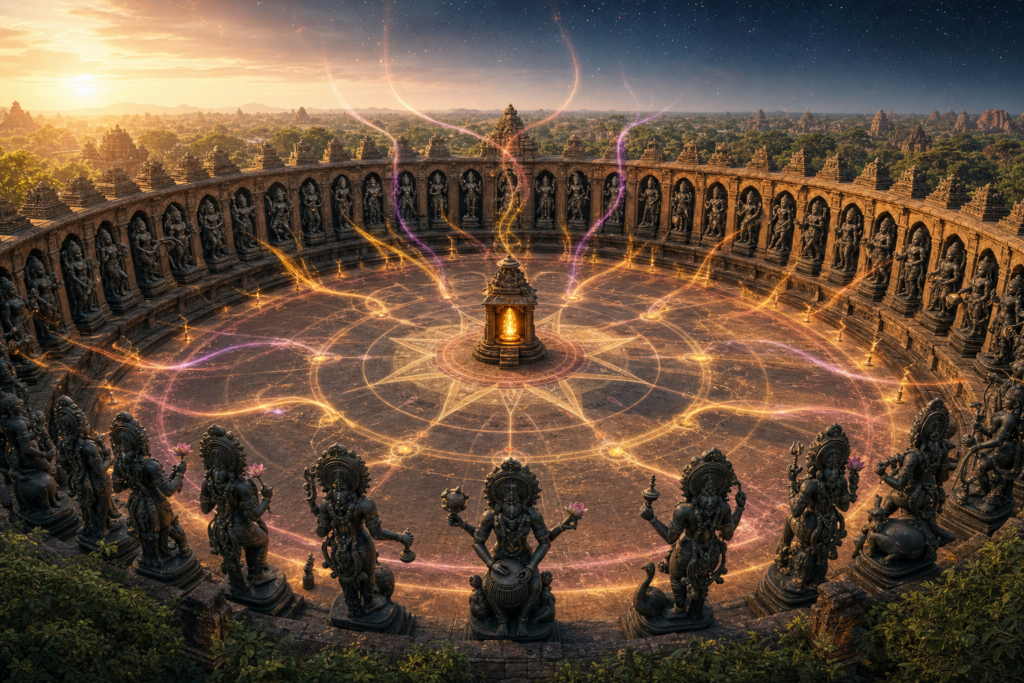
The ritual heart of the night is the Nishita Kala, associated in puranic narration with the boundless column of light realized as the Jyotirlinga. The Mahalingodbhava kala, marked near this window, is commemorated with the lighting of additional lamps and a deepening of silence between mantras, symbolizing the transition from conceptual worship to direct inward awareness. In many South Indian kṣetras this is also the moment of Lingodbhava dārsana.
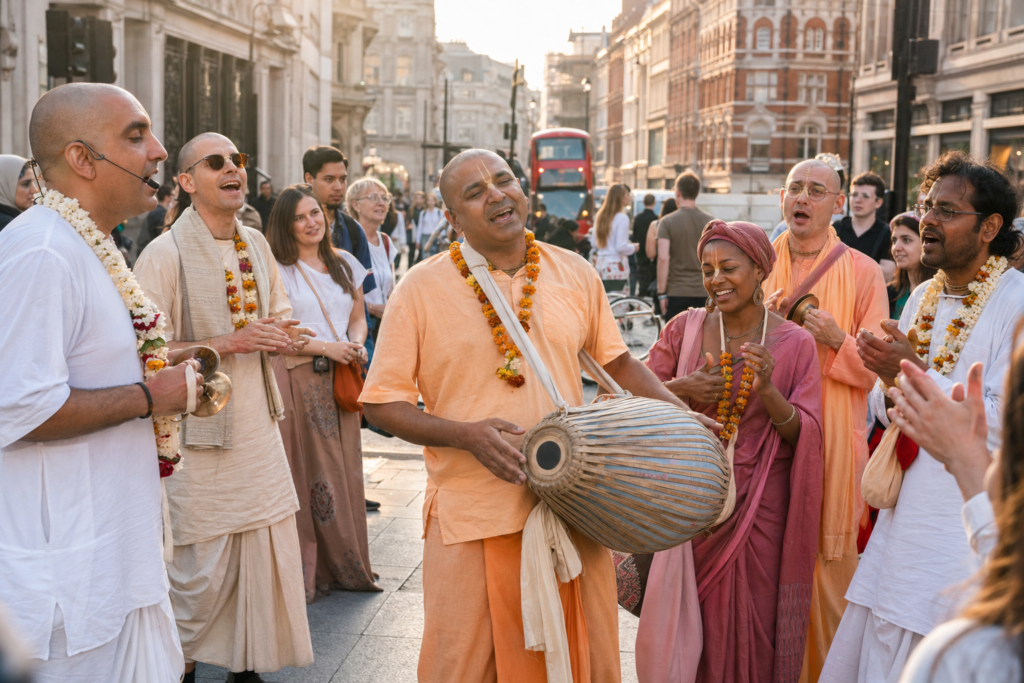
Devotees often describe a tangible shift in the atmosphere around Nishita Kalathe quiet cadence of mantra, the resonance of temple bells, and the fragrance of bilva and camphor converge to evoke a sanctum-like stillness. Even in home settings, a single lamp, measured breathing, and unhurried recitation recreate that contemplative intensity, making the vigil both intimate and profound.
Calendar nuance explains why the festival carries different month-names across regions while converging on the same civil date in 2026. North Indian purnimanta reckoning places Maha Shivaratri in the dark fortnight of Phalguna, while South Indian amanta systems refer to the same lunar phase as Magha Krishna Chaturdashi. For 2026 both systems identify the night of 15 February as the correct observance across India.
Outside India, the night corresponding to 15 February in India may fall on 14 or 15 February depending on longitude and time zone. The governing rule remains unchanged: select the local night on which Krishna Paksha Chaturdashi prevails and prioritize the Nishita Kala that falls within it. A trusted local panchang or temple committee schedule ensures proper synchronization.
Health considerations permit thoughtful adaptations without compromising devotional depth. Those on medication or with specific dietary needs may choose a partial fast, extend japa during the four prahara, and maintain jagarana through contemplative reading, kirtana, or silent breath awareness. Such mindful flexibility reflects the inclusive spirit of Sanatana Dharma and resonates with allied dharmic streamsBuddhist mindfulness, Jain vrata discipline, and Sikh nām-simranstrengthening a shared commitment to ahimsa, self-restraint, and inner clarity.
Ethical and sustainable worship enhances sanctity. Offerings can be modest in quantity yet rich in intention; water and pañcāmṛta should be used judiciously, and biodegradable wicks and natural incense are preferable. Where communities avoid dairy, traditional abhisheka may be performed with water, tender coconut water, or herbal infusions attested in regional practice, upholding śuchi and satya as primary vows.
Two frequent errors are worth avoiding. The first is equating civil midnight with Madhyaratri; the correct midpoint is calculated from local sunset to next sunrise. The second is relying on generic all-India muhurta without accounting for city-specific sunrise and sunset; even a difference of one degree of longitude can shift Nishita Kala by several minutes. Aligning with a precise local panchang resolves both issues.
The essential takeaways for Maha Shivaratri Puja Muhurat 2026 are straightforward: the observance falls on the night of 15 February across India; choose the local night when Krishna Paksha Chaturdashi prevails; give primacy to Nishita Kala for the principal abhisheka and japa; and, where tradition invites, mark the Mahalingodbhava kala with heightened devotion. Structured over four prahara with thoughtful fasting and inclusive practices, the vigil becomes both a shared cultural celebration and a rigorous contemplative sadhana.
Inspired by this post on Hindu Pad.