Hanuman Jayanti, observed in many regions as Hanumath Vijayotsavam, commemorates the birth of Śrī Hanuman, the exemplar of bhakti, śaurya, and sevā in the dharmic world. In 2026, the pan-Indian observance anchored to Chaitra Purnima falls across April 1–2 (IST), as the Purnima Tithi spans both civil dates in several parts of India. Owing to this overlap, some communities observe on April 1 evening and others on April 2 morning, consistent with local Panchang rules and temple traditions.
Calendrically, Hanuman Jayanti is fixed by the Purnima Tithi of the Chaitra month. In practice, the date selection follows established dharmashastric rules used by regional Panchangs: many Smarta almanacs prefer the Udaya Vyāpini principle (the day on which Purnima prevails at local sunrise), while certain Vaishnava or regional traditions may prefer the day when Purnima predominates during the day’s major portion or through moonrise. The variation in month reckoning (Purnimanta in much of North India and Amanta in several western and southern states) affects month names but not the underlying Tithi; therefore, Hanuman Jayanti 2026 is widely observed on Chaitra Purnima over April 1–2, 2026, with regional discretion advised.
Regional practice remains diverse yet harmonious. Maharashtra, and large parts of Andhra Pradesh, Telangana, and Karnataka customarily mark Hanuman Jayanti on Chaitra Purnima. North Indian states and Nepal also favor Chaitra Purnima. Tamil Nadu traditionally venerates Hanumath Jayanthi on the Moola Nakshatra in the Margazhi month (December–January), distinct from the Chaitra Purnima cycle. These variations arise from legitimate calendric lineages rather than doctrinal differences, underscoring the plural and integrative ethos of dharma.
In Andhra Pradesh and Telangana, a prominent allied observance is Hanumath Vijayotsavam. Devotees often undertake a 41-day Hanuman Deeksha beginning on Chaitra Purnima and culminating on Vaishakha Krishna Dashami, celebrated as Hanumath Vijayotsavam with special Puja, Abhishekam, and Annadānam. For 2026, the Deeksha that begins on April 1–2 is expected to conclude in mid-May (approximately May 11–13 IST), though exact local dates should be confirmed with the regional Panchang and temple announcements.
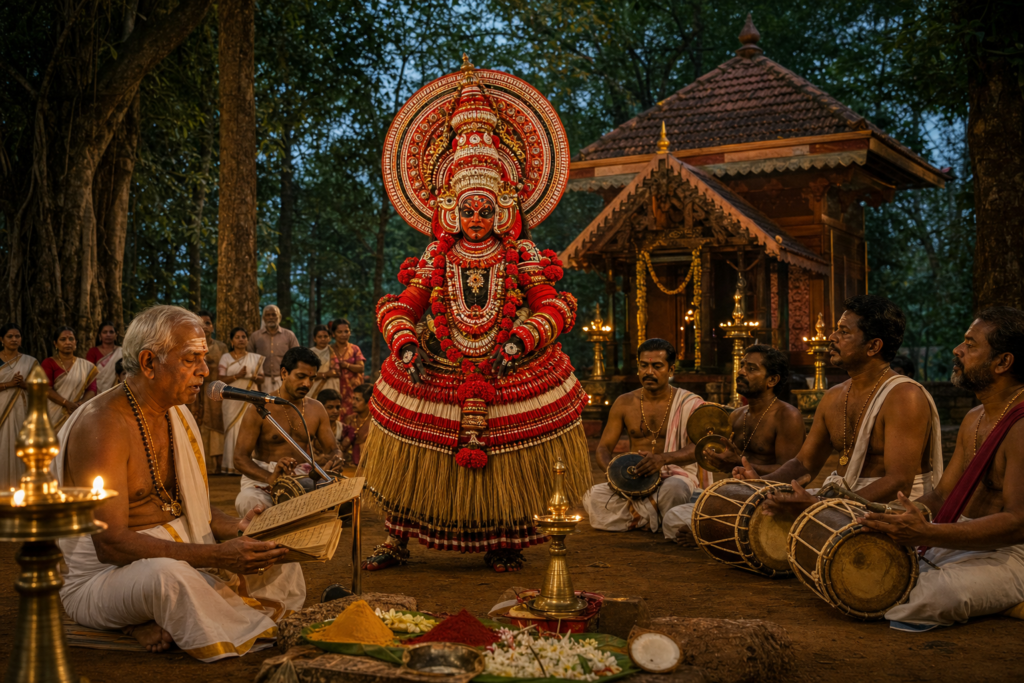
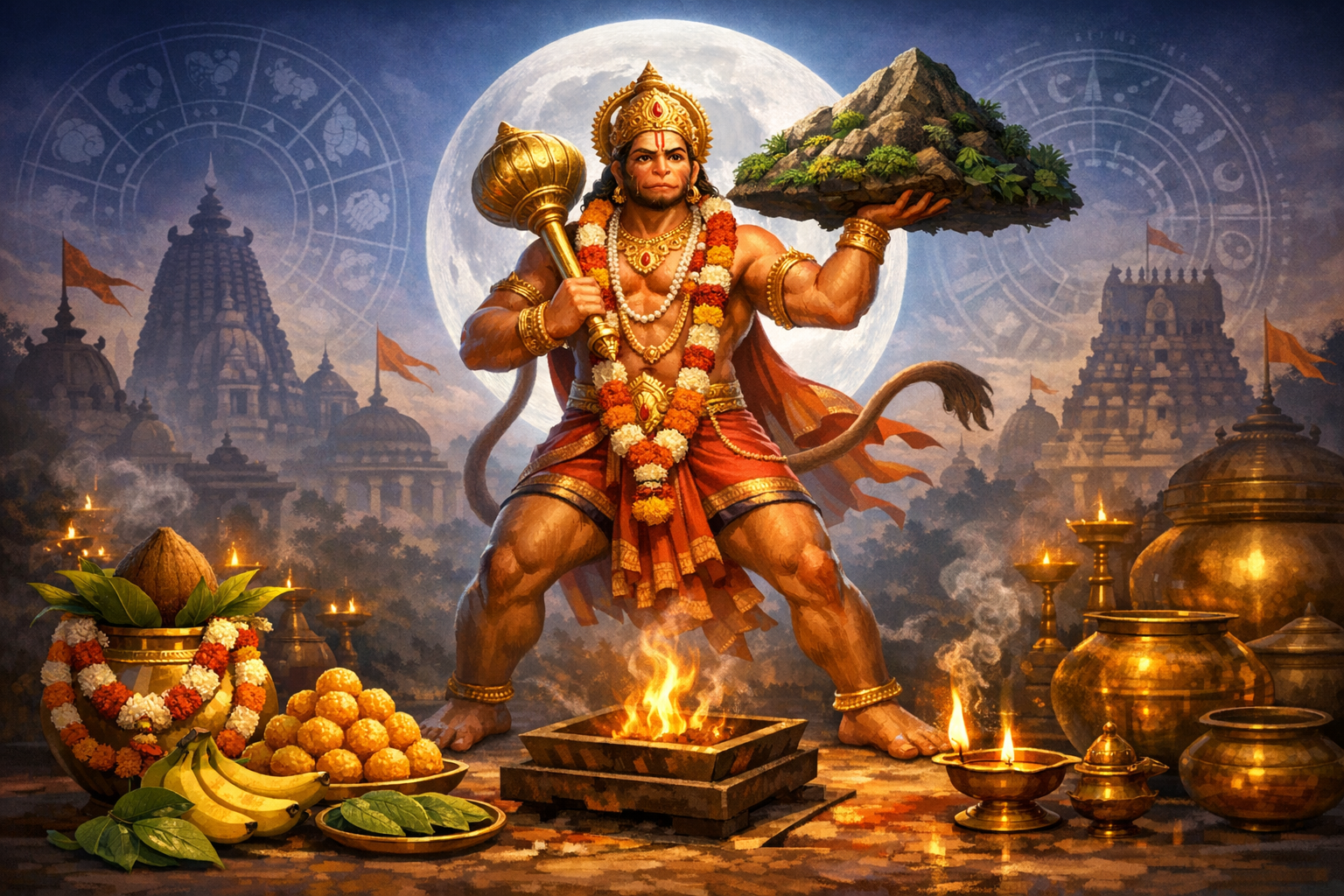
Core temple and home rituals emphasize devotion and discipline. Typical observances on Hanuman Jayanti include Hanuman Puja, Hanuman Homam, Havanam, Hanuman Sindhura Puja, Vedic mantra-japa, and parāyana of sacred texts. Offerings often include vada mālā (especially in South India), boondi laddoo, bananas, betel leaves, and til oil lamps. Many temples perform Taila Abhiṣeka or Pañcāmṛta Abhiṣeka, and adorn the murti with sindhura, reflecting the timeless legend of Hanuman’s selfless devotion.
A concise Puja Vidhi typically proceeds as follows: sankalpa (statement of intent), āchamana and purification, dhyāna and āvāhana (meditative invocation), upacharas (sequential offerings such as āsana, pādya, arghya, ācamanīya), Abhiṣeka (often with water, Pañcāmṛta, sesame oil), alankāra (sindhura and garlands), naivedya (sāttvika offerings), dīpa and dhūpa, kshamā-prārthanā (prayer for forgiveness), ārati, pradakṣiṇa, and visarjana. Householders may keep the procedure simple and devotional, while temples follow full Shodasha Upachara with agamic precision.
Scriptural recitations deepen the devotional experience. Popular practices include multiple parāyana of the Hanuman Chalisa (commonly 11 times), reading of Sundara Kanda from the Ramayana, and recitation of Hanuman Ashtottara Shatanāmāvali, Bajarang Baan, or Anjaneya Dandakam depending on lineage. Kirtan, prabhat pheris, and akhanda parāyana are common community expressions, reinforcing the sankalpa of collective well-being.
For those performing Homam or Havanam, standard Havan Kund procedures apply in line with Havan Ke Niyam. Offerings of samidha, havyadravya, and ghee are made alongside mantras to Śrī Hanuman and Śrī Rāma. This ritual is best performed under guidance, observing fire safety and local regulations. Where a full Homam is not feasible, lighting a til oil lamp, conducting a brief ghee dīpa ārati, or undertaking enhanced japa can serve as meaningful alternatives.
Vrata and dāna accompany worship in many households. Some observe a fast from sunrise to moonrise or through the Puja Muhurat, partaking of sāttvika food after ārati. Acts of compassionAnnadānam, vastra-dāna, and seva rendered to the communityare encouraged as offerings to Hanuman’s spirit of service.
Theologically, Hanuman is celebrated as Vāyu-putra and the living synthesis of śakti (strength), bhakti (devotion), and yukti (skillful means). His iconographystanding veera posture, carrying the mountain of herbs, or as Panchamukhi Hanumansymbolizes resolute courage, healing, and vigilant protection. In yogic understanding, devotion to Hanuman is intimately linked with regulation of prāṇa and cultivation of unwavering attention, aligning daily sādhanā with higher ethical purpose.
Many communities also turn to Hanuman for relief from difficulties associated in popular astrology with Shani. From a devotional standpoint, regular recitation of Hanuman Chalisa, lighting a til oil lamp, or offering boondi and sindhura on Tuesdays and Saturdays are cherished practices. These are devotional upāsanā-traditions; practitioners seeking formal astrological counsel should consult qualified jyotiṣa experts alongside their spiritual routine.
Hanuman Jayanti exemplifies the shared dharmic values that resonate across Hinduism, Buddhism, Jainism, and Sikhismseva, karuṇā, tapas, and courage in the protection of dharma. Community meals, kirtan, and collective reading of inspiring narratives foster cohesion, reflecting the dharmic conviction that many valid paths contribute to a unified, compassionate society. The festival thus serves as a bridge, highlighting common ethical commitments that transcend sectarian boundaries.
Planning for 2026 should consider the Tithi’s two-day span. Where temples or local Panchangs designate April 1 (evening) as the primary observance, devotees may schedule pūjā and parāyana accordingly; where April 2 (morning) is prioritized, sunrise-to-midday observances may be preferred. For Hanumath Vijayotsavam linked to the 41-day Deeksha, the culminating Dashami will likely fall in mid-May 2026; devotees are advised to confirm precise dates locally.
Across India, temples renowned for Hanuman worshipsuch as the Sankat Mochan tradition in Varanasi, Namakkal Anjaneyar in Tamil Nadu, and Kondagattu Hanuman Temple in Telanganatypically organize extended parāyana, music recitals, annadānam, and special Abhiṣekams around the festival window. Diaspora communities adapt the schedule to local time zones, maintaining doctrinal fidelity while ensuring community participation.
Sustainable and safe observance is increasingly emphasized. Eco-friendly dīyas, natural sindhura, and responsibly sourced samagri reduce environmental impact, while fire-safety precautions for lamps and Havanam are paramount. Moderation and mindful consumption preserve the festival’s sāttvika ethos.
To verify the local date and Muhurat in 2026, devotees should consult a trusted regional Panchang that specifies Chaitra Purnima Tithi for their location, confirm whether the tradition follows Udaya Vyāpini or another rule, and align with the nearest temple’s announced schedule. This ensures both scriptural correctness and community harmony.
In summary, Hanuman Jayanti 2026 on Chaitra Purnimaspanning April 1–2 (IST)invites disciplined worship, heartfelt service, and shared celebration. Whether observed as Hanuman Jayanti or Hanumath Vijayotsavam, the festival’s essence remains a living tribute to Hanuman’s unwavering devotion and courageous compassion, inspiring unity across India and the global dharmic community.
Inspired by this post on Hindu Pad.