Ganesha Damana Puja, also known as Damanak Chaturthi, is observed on Chaitra Shukla Chaturthi and holds a distinctive place in springtime Hindu festivities. In the Amavasyant calendar tradition, the observance in 2026 falls on 22 March, aligning with the first waxing-fourth lunar day after Ugadi in much of peninsular India. It is especially prominent in Andhra Pradesh and observed regionally in parts of Karnataka and Maharashtra, where Sri Ganesha is venerated with the fragrant herb Dhavanam (Davana), creating a synthesis of devotion, seasonality, and community well-being.
The liturgical timing follows the Vinayaka Chaturthi convention of performing the core puja during the Madhyahna period on the day when Chaturthi prevails at local midday. When the lunar tithi overlaps two civil dates, traditional panchang rules give precedence to the day on which Chaturthi is active during Madhyahna. Devotees commonly consult a regional panchang for locality-specific guidance while retaining the central aim of aligning worship with the auspicious midday window.
Dhavanam (Davana) used in Ganesha Damana Puja is botanically identified as Artemisia pallens (family Asteraceae). Known for its sweet, herbaceous aroma, it contains essential oils rich in sesquiterpene ketonesmost notably davanonemaking it valued in Ayurveda, perfumery, and household cleansing. In the ritual lexicon, the terms Damana/Damanak and Dhavanam/Davana are used contextually; the plant is widely cultivated and traded across South India, where its garlands and sprigs are customary temple offerings during the Chaitra season.
The symbolism of offering Dhavanam to Sri Ganesha unites sensory purity with philosophical intent. The herb’s cleansing fragrance is associated with clearing subtle impediments, resonating with Ganesha’s role as Vighneshwara, the remover of obstacles. Many households observe the 21-unit principle that is also associated with Ganesha worshiprepresenting the five elements, ten senses (indriyas), five vital airs (pranas), and the mindby offering 21 sprigs or garland segments of Dhavanam, though regional paddhatis (ritual handbooks) may adapt this count.
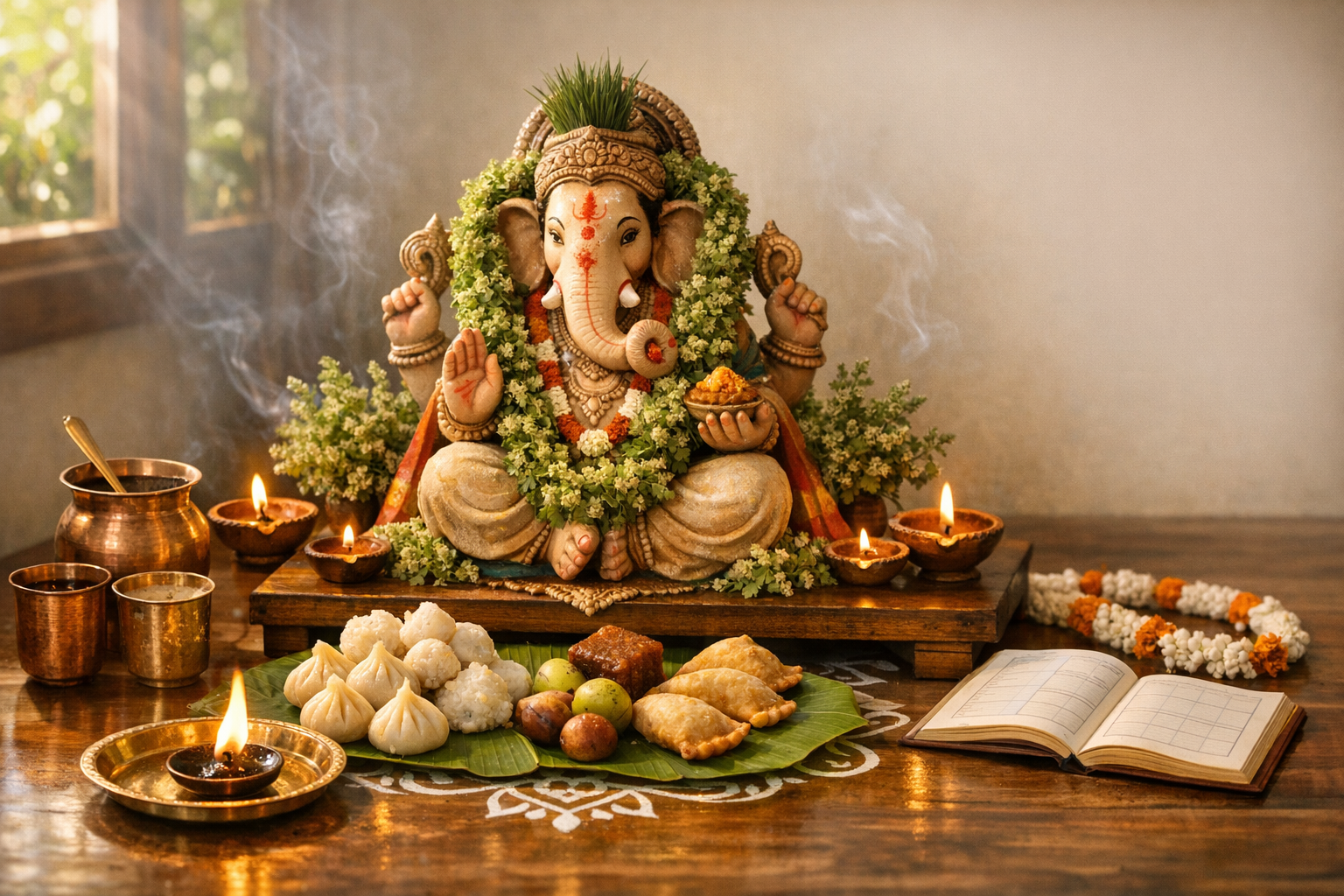
The core Damana Puja vidhi typically includes preparatory purification of the mandala and altar, sankalpa (statement of intention) with place-time identity, and avahana (invocation) of Sri Ganesha using “Om Gam Ganapataye Namah.” Abhisheka is performed with water or panchamrita, followed by alankara with Dhavanam garlands, durva (where customary), and kumkuma-chandanam. Archana proceeds with Ganesha Ashtottara Shatanamavali or selected verses from Ganesha stotras. Naivedyammodaka, undrallu (in Andhra households), kadubu/karanji (Karnataka-Maharashtra), fruits, and jaggery-based offeringsis presented, followed by karpura arati and prarthana for buddhi (clarity), siddhi (accomplishment), and sarvamangala (universal auspiciousness).
In domestic practice, the sensory arc of the puja is unmistakable: the gentle sheen of panchamrita, the distinctive fragrance of Dhavanam, and the warm aroma of steamed modaka or undrallu create a vivid devotional atmosphere. Families often prepare simple seasonal beverages such as panakam and buttermilk, complementing the spring climate. Children learn to string Dhavanam garlands from elders, reinforcing intergenerational bonds alongside ritual literacy.
Across Andhra Pradesh, Damanak Chaturthi is commonly marked in Ganesh temples with special alankaras featuring Dhavanam, while households decorate the doorway and altar with fresh, pesticide-free sprigs. In coastal Karnataka and parts of Maharashtra, the puja blends with local culinary idioms and neighborhood satsangs; diaspora communities adapt the observance by sourcing Artemisia pallens or comparable aromatic greens where available, maintaining fidelity to the intention and seasonal ethos of the rite.
From a seasonal-health perspective, Dhavanam’s essential oil profile and aromatic intensity have practical benefits valued in traditional knowledge systems. The herb’s cleansing, insect-deterring fragrance aligns with the onset of warmer months, when households emphasize ventilation, aromatic fumigation, and cleanliness. The ritual, therefore, is not only symbolic of removing inner obstacles but is also ecologically and hygienically attuned to spring transitions.
Damanak Chaturthi underscores values shared across dharmic traditionsahimsa, dana, seva, and maitri. While the liturgy here venerates Sri Ganesha within the Hindu framework, the broader ethical arc resonates with Jain, Buddhist, and Sikh sensibilities that emphasize inner clarity, disciplined practice, and service to community. Many families conclude prayers with the inclusive benediction “sarve bhavantu sukhinah,” affirming interfaith goodwill and a shared commitment to social harmony.
Sustainable observance is increasingly prioritized. Ethically sourced Dhavanam (avoiding overharvesting), cotton thread garlands in place of plastic, and natural lamps and incense reflect responsible stewardship. Leftover leaves are composted, and edible naivedyam is distributed as prasad to neighbors and those in need, extending the puja’s auspiciousness into tangible community care.
For 2026 planning, Chaitra Shukla Chaturthi in the Amavasyant system falls on 22 March. As regional panchangs can differ, households verify the tithi and the Madhyahna window locally. This Chaturthi is also counted among the Masik Vinayaka Chaturthi observances, making it an especially potent early-year vrata for those who begin new ventures after Ugadi and seek Ganesha’s guidance for steady progress.
Damanak Chaturthi is distinct from Sankashti Chaturthi. The former occurs in the bright fortnight (Shukla Paksha) with puja anchored in the midday Madhyahna period, while Sankashti is observed in the dark fortnight (Krishna Paksha) with emphasis on moonrise darshan and nirjala or partial fasting. Understanding this distinction clarifies the timing and mood of the Damana Puja, which celebrates renewal and forward momentum in the Vasant (spring) cycle.
As a living tradition, Ganesha Damana Puja weaves together botanical knowledge, lunar calendrics, and community pedagogy. The offering of Dhavanam becomes a disciplined practice of attention: a reminder to tend the mind, streamline intentions, and open space for wisdom to act. Aligned with the unity-oriented spirit of the dharmic family, the observance invites all to participate in a season of clarity, compassion, and collective well-being.
Inspired by this post on Hindu Pad.