Maharashtra’s Social Justice Ministry has withdrawn a government advertisement that used a demeaning caricature of a Hindu sadhu to warn against fraudulence, following public concern and a call by Hindu Janajagruti Samiti (HJS) for strict action against those responsible. The prompt withdrawal addresses the immediate harm; however, the incident raises broader questions about ethical state communication, constitutional responsibilities, and culturally sensitive governance across India.
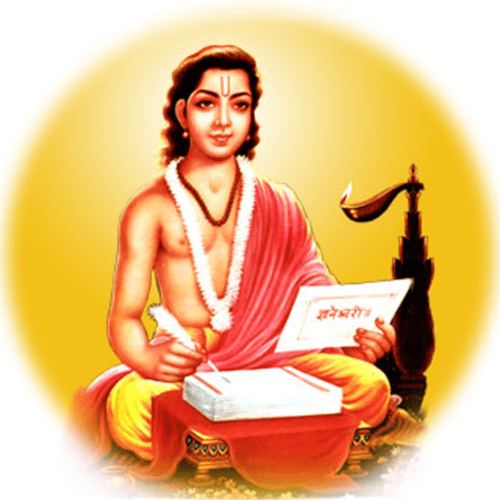
The depiction of saintly figures holds profound significance for communities shaped by the dharmic traditions of Hinduism, Buddhism, Jainism, and Sikhism. For many citizens who have grown up encountering sadhus, munis, bhikshus, and sants as guides toward self-discipline and compassion, the use of a caricatured ascetic as a visual shorthand for deceit is jarring. Beyond the immediate offense, such imagery risks normalizing stereotypes, undermining public trust, and weakening the shared ethic of reverence that sustains social harmony among dharmic communities.
Government communicationwhether in Maharashtra or elsewheremust be held to the highest standards of neutrality, non-stigmatization, and respect for all faiths. While each state has its own Directorate of Information and Public Relations (DIPR), there are cross-cutting best practices informed by the Bureau of Outreach and Communication (BOC) at the Union level and by widely accepted industry frameworks such as the Advertising Standards Council of India (ASCI) Code. In public-interest messaging, the creative imperative to simplify must never cross into stereotyping, particularly of religious or community identities.
From a constitutional perspective, Article 25 safeguards freedom of conscience and the right to freely profess, practice, and propagate religion, while Article 51A(f) enjoins every citizenand by extension public institutionsto value and preserve the rich heritage of India’s composite culture. Although each incident must be assessed on its facts, content that ridicules sacred personae may risk engaging penal provisions intended to protect communal harmony (for example, Section 295A of the Indian Penal Code on deliberate and malicious acts intended to outrage religious feelings). Sound governance therefore emphasizes anticipatory diligence: prevent harm rather than adjudicate it after the fact.
Ethically, the state’s duty goes beyond mere compliance. Public communication should model dignity, inclusion, and clarity, especially when addressing fraud prevention or social welfare. The choice of symbols and characters must align with this duty. In practical terms, that means privileging behavior-focused, religion-neutral visuals and wording over identity-linked imagery that could be misconstrued as imputing untrustworthiness to a faith, vocation, or community.
A structured, end-to-end review pipeline can greatly reduce such risks. At a minimum, government advertisements should run through: (1) concept screening for stereotype triggers; (2) legal-ethical vetting for compliance with constitutional values and relevant statutes; (3) cultural sensitivity checks by a diverse internal panel; and (4) small-scale A/B testing to validate comprehension without collateral offense. Documented sign-offs at each stage create accountability and a learning loop that improves future campaigns.
Design choices deserve particular scrutiny. Visual metaphors intended to convey “fraud” or “deception” should avoid any resemblance to religious attire, symbols, or revered figures from Hinduism, Buddhism, Jainism, or Sikhism. Abstract icons, neutral personas (e.g., generic silhouettes), or clearly secular settings keep the focus on the harmful behavior rather than on an identity marker. Language should also be behavior-specificnaming practices (for instance, “advance-fee scams” or “forgery”) rather than implying cultural or religious associations.
It is also vital to view this episode through a unity lens. Ascetic traditions are interwoven across India’s dharmic tapestry: Hindu sadhus and sants, Buddhist bhikshus, Jain munis, and Sikh saintly exemplars all signify renunciation, ethics, and service. Denigrating any of these figureshowever inadvertentlyinjures shared cultural capital and weakens the ethos of mutual respect that sustains peaceful coexistence. An inclusive response, therefore, is not merely about avoiding offense to one community; it is about reaffirming dignity across all.
Three lessons emerge with clarity. First, representation matters: government messages must avoid portraying any religious figure or symbol as a proxy for malpractice. Second, process matters: multi-stage sensitivity review is not an optional extra but a core element of risk management. Third, redress matters: when harm occurs, timely withdrawal, transparent explanation, and concrete process reforms restore trust more effectively than silence or defensiveness.
Institutionalizing these lessons can be straightforward. Departments can maintain checklists flagging high-risk elements (religious clothing, sacred symbols, community identifiers) and require escalation to a cultural review panel when such elements appear. Periodic training in religious literacy for creative teams and approving officials will reduce unintentional missteps. Where feasible, advisory inputs from interfaith expertsincluding voices from Hindu, Buddhist, Jain, and Sikh communitiescan be solicited early in the creative cycle, not only after controversies arise.
Grievance handling should be time-bound and transparent. A dedicated public channel for feedback on state advertisingpaired with commitments to review within defined timelineshelps address concerns before they amplify. When an advertisement is withdrawn, brief public notes outlining the rationale and the corrective measures undertaken (such as revising guidelines or conducting staff training) demonstrate accountability and build long-term credibility.
The role of civil society organizations, including Hindu Janajagruti Samiti (HJS), is central in surfacing community sensitivities quickly. Constructive engagement between such organizations and the government can convert moments of friction into opportunities for institutional learning. When stakeholders across dharmic traditions are invited into solution-making, the outcome is more robust than a unilateral fix, and the signal to society is one of genuine inclusion.
In crafting future campaigns on fraud prevention or social justice, the Maharashtra governmentand other state agencies by extensioncan adopt clear heuristics: target conduct, not communities; use secular, universal icons; test messages with diverse audiences; document approvals; and track post-release sentiment to catch unintended effects early. These measures align with good governance, reduce legal exposure, andmost importantlyaffirm that state speech respects the sanctity citizens attach to spiritual life.
The withdrawal of the advertisement is a welcome corrective step. Ensuring that it becomes a lasting inflection point requires embedding sensitivity, review, and accountability into everyday practice. Respectful public communication strengthens trust in institutions, supports social cohesion across Hinduism, Buddhism, Jainism, and Sikhism, and upholds the constitutional promise of dignity for all. When government messaging reflects this ethos, it does more than informit unites.
Inspired by this post on Hindu Jagruti Samiti.