
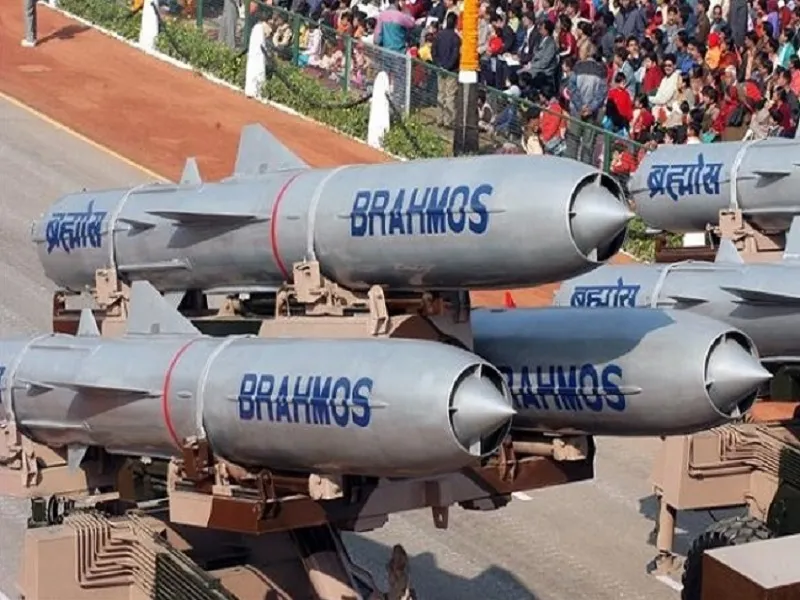
The possible sale of BrahMos supersonic cruise missiles from Bharat to the United Arab Emirates is not merely a defence transaction. It is a revealing test of how Russia, Bharat, and the UAE are adapting to a multipolar world shaped by sanctions, regional rivalries, defence diversification, and new forms of strategic autonomy.
Reports in late June indicated that Bharat and the UAE were engaged in fast-moving talks over the possible sale of BrahMos missiles, a flagship Indo-Russian defence system developed through BrahMos Aerospace. Because the missile is a jointly produced platform involving Indian and Russian entities, any export requires Moscow’s consent. That requirement places Russia at the centre of a decision that may appear technical on paper, but is deeply geopolitical in practice.
The BrahMos system matters because it represents one of Bharat’s most visible achievements in advanced defence production. It is a supersonic cruise missile designed for speed, precision, and multi-platform deployment, including land, sea, and air variants. Its value is not only military. For Bharat, BrahMos has become a symbol of defence industrial credibility, strategic partnership with Russia, and the gradual transformation of the country from a major arms importer into an increasingly serious defence exporter.
Russia’s likely approval of such a sale can be understood through five connected interests: preserving military-technical cooperation with Bharat, expanding influence through shared partners, earning revenue amid Western sanctions, managing regional balances without formal military alliances, and adapting flexibly to multipolarity. These factors do not operate separately. Together, they explain why Moscow may view a BrahMos sale to Abu Dhabi as useful rather than problematic.
The first point is the durability of Russia-Bharat defence cooperation. Even as Bharat diversifies its military purchases and deepens ties with the United States, France, Israel, and other partners, Russia remains a central actor in India’s defence ecosystem. BrahMos is one of the strongest examples of this relationship because it is not a simple buyer-seller arrangement. It is a co-development model involving technology sharing, industrial participation, and long-term strategic trust.
For Moscow, allowing Bharat to export BrahMos to friendly third countries reinforces the relevance of this partnership. It shows that Russia’s defence relationship with Bharat is not frozen in an older Cold War pattern but can generate modern export opportunities. This is especially important at a time when Russia faces Western sanctions and is under pressure to preserve access to markets, financial channels, and diplomatic partners beyond the Euro-Atlantic bloc.
The precedent already exists. The Philippines became the first foreign customer for BrahMos, receiving the system as part of Manila’s effort to strengthen its coastal defence posture. That sale was notable because the Philippines is a treaty ally of the United States and has serious maritime tensions with China, which is Russia’s leading strategic partner. Moscow’s approval therefore demonstrated a careful form of balancing: Russia did not abandon China, but it also did not prevent Bharat from strengthening a Southeast Asian partner with whom Russia wanted better ties.
Vietnam provides a second example of the same logic. Hanoi is a traditional Russian defence partner, has a long history of military cooperation with Moscow, and also maintains a close strategic relationship with Bharat. A BrahMos export to Vietnam fits naturally into Russia’s wider regional posture because it strengthens a partner without requiring Moscow to take a direct adversarial position against Beijing. Reports about Indonesian interest point in a similar direction, especially as Jakarta seeks a broader defence portfolio under President Prabowo Subianto.
The UAE case is more sensitive because it sits in the volatile security architecture of West Asia. Abu Dhabi is closely aligned with the United States in many areas, has normalised relations with Israel, and has a tense relationship with Iran. These realities make any advanced missile sale politically charged. Yet from Russia’s perspective, the UAE is not simply a Western-aligned Gulf monarchy. It is also an important economic, diplomatic, and financial partner in a sanctions-constrained environment.
Russia-UAE relations have deepened significantly in recent years. The UAE has become an important hub for Russian capital, trade, tourism, and expatriate activity. It has also maintained pragmatic engagement with Moscow despite Western pressure. President Mohammad Bin Zayed and President Vladimir Putin have cultivated a working relationship that reflects the UAE’s broader foreign policy style: close to Washington, but not fully subordinated to Washington’s strategic preferences.
This is where the emotional texture of the issue becomes clear for many observers in Bharat and the wider Global South. Defence policy is often discussed in cold strategic language, yet countries make these choices in a world where insecurity is felt in real cities, ports, airports, energy corridors, and families. Gulf states have watched drones, missiles, and proxy conflicts reshape the region. For the UAE, an interest in BrahMos is therefore not only about prestige; it is about deterrence, survivability, and the desire to avoid overdependence on any single arms supplier.
For Bharat, the potential deal carries a different emotional and strategic resonance. A successful BrahMos sale to the UAE would mark another step in India’s defence export journey. It would signal that Indian systems are being taken seriously not only by smaller states seeking affordable capability, but also by one of the Middle East’s most significant arms importers. That matters for national confidence, industrial policy, and the long-term goal of building a self-reliant defence manufacturing base.
Russia’s approval would also help Moscow strengthen ties with a shared partner. Bharat enjoys strong relations with the Philippines, Vietnam, Indonesia, and the UAE. Russia has its own reasons to engage all four. By enabling BrahMos exports, Moscow allows Bharat to serve as a strategic bridge rather than a rival supplier. This model helps Russia remain embedded in defence networks even when the platform is sold under Bharat’s export diplomacy.
The Iran factor is central to the debate. Russia and Iran maintain close military-security ties, especially in the context of Western sanctions and the conflict in Ukraine. However, closeness should not be mistaken for a formal military alliance. Russia’s relationship with Iran resembles its relationship with China in one important respect: both are major partners, but neither relationship prevents Moscow from working with countries that seek to balance them.
This is why the comparison with the Philippines is useful. Russia approved BrahMos exports to a country that helps balance China in the Indo-Pacific. By the same logic, Russia may approve BrahMos exports to the UAE even though the UAE is a rival of Iran. The purpose is not necessarily to create hostility toward Tehran. It is to preserve Russia’s freedom of manoeuvre among multiple partners whose interests often conflict.
Such behaviour reflects realpolitik rather than ideological alignment. Moscow’s foreign policy is not built around permanent emotional loyalties to every partner’s regional agenda. It is built around interests, leverage, revenue, access, and strategic flexibility. This can disappoint observers who prefer a simpler world of fixed blocs, but contemporary geopolitics rarely works that way. Multipolarity does not eliminate competition among partners; it often multiplies it.
The UAE’s ties with Israel and the United States will therefore not automatically prevent Russia from approving the deal. Moscow already works with states that have strong relations with Washington when doing so serves Russian interests. The same is true of Bharat, which maintains close defence and technology cooperation with the United States while preserving a historically strong relationship with Russia. This multi-vector diplomacy is increasingly normal across the Global South.
There is also a BRICS dimension. The UAE’s admission into BRICS expanded the grouping’s West Asian footprint, while Bharat and Russia remain founding pillars of the wider BRICS project. The UAE’s strong relations with Bharat, Russia, and several African partners could create new alignments across energy, logistics, finance, and defence. In that context, BrahMos is not just a missile system; it is part of a larger conversation about how non-Western and Western-aligned states can cooperate outside rigid bloc politics.
Economic sanctions make the calculation even sharper for Russia. Defence exports, joint ventures, and military-technical services provide income, influence, and institutional continuity. Even when Bharat is the exporting party, Russia benefits from the prestige and commercial relevance of a jointly developed system. Approval of exports helps keep the BrahMos ecosystem globally relevant and supports the argument that Indo-Russian defence cooperation still produces world-class outcomes.
For Bharat, the deal would also fit the larger policy objective of expanding defence exports. New Delhi has spent years trying to move beyond licensed production and imported platforms toward indigenous design, co-development, and exportable systems. BrahMos occupies a special place in this transition because it combines Indian strategic ambition with Russian technological legacy. Its export success strengthens Bharat’s claim that it can serve as a reliable defence partner for countries seeking credible alternatives to Western, Chinese, or purely Russian supply chains.
The sale would still raise legitimate questions. How would Iran interpret it? Would the UAE use BrahMos as a deterrent or as part of a more assertive regional posture? How would the United States view a major Gulf partner acquiring a high-end Indo-Russian missile system? Would Russia impose conditions or quietly rely on Bharat’s end-use assurances? These are not minor concerns. They are precisely the questions that make the issue strategically important.
Yet the most likely answer remains pragmatic. Russia may calculate that the benefits outweigh the risks. It can maintain close relations with Iran while still approving a sale to the UAE, just as it can maintain a strategic partnership with China while accepting BrahMos exports to Southeast Asian states wary of Beijing. This is not contradiction as much as it is the operating logic of a multipolar order where states build overlapping relationships instead of exclusive camps.
The debate also shows why public commentary on international relations must be careful. Strategic partnerships are not the same as ideological commitments, and diplomatic warmth is not the same as a defence treaty. Russia can cooperate with Iran, China, Bharat, the UAE, and Vietnam at the same time, even when some of those states distrust each other. Bharat follows a similar method through its own multi-aligned diplomacy. The discipline lies in describing these patterns accurately rather than forcing them into simplified narratives.
Seen from this perspective, Russia’s possible approval of a BrahMos sale to the UAE would be a rational extension of its existing policy. It would strengthen military-technical ties with Bharat, deepen engagement with Abu Dhabi, preserve Russian relevance in a major defence platform, generate commercial value under sanctions pressure, and gently balance Iran without breaking ties with Tehran. It would also reinforce Bharat’s rise as a serious defence exporter with trusted access across Southeast Asia and West Asia.
The larger lesson is that BrahMos has become more than a weapon system. It is now a diplomatic instrument, an industrial success story, and a marker of how Bharat and Russia are adjusting to a world where power is dispersed across regions. If the UAE deal proceeds with Moscow’s approval, it will demonstrate that multipolarity is not an abstract slogan. It is a practical, sometimes uncomfortable, system of choices in which states cooperate, compete, and balance at the same time.
Inspired by this post on Hindu Post.






Leave a Reply
You must be logged in to post a comment.