
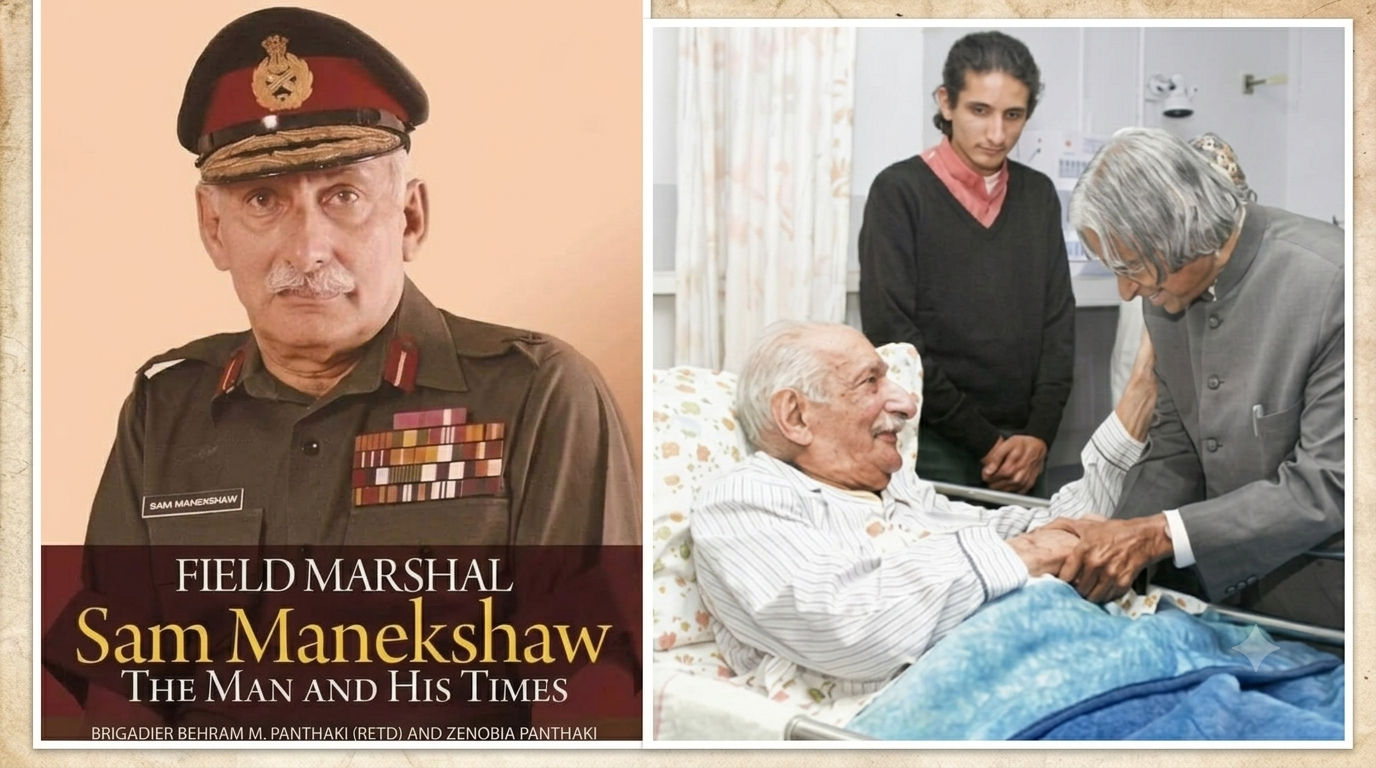
Field Marshal Sam Hormusji Framji Jamshedji Manekshaw occupies a rare place in modern South Asian history: he was not merely a successful commander, but a military leader whose judgment helped shape the destiny of a new nation. Remembered on 27 June, the anniversary of his death in 2008, Manekshaw’s legacy remains inseparable from the 1971 Liberation War, the emergence of Bangladesh, and the moral responsibilities that come with the use of military power.
The story of Sam Manekshaw, affectionately known as Sam Bahadur, cannot be understood only through medals, ranks, or battlefield outcomes. His importance lies in the disciplined way he joined strategic clarity with institutional loyalty. In an age when military decisions can be distorted by haste, emotion, or political pressure, his conduct during the 1971 crisis continues to offer a powerful lesson in preparation, restraint, and decisive action at the right moment.
Born on 3 April 1914 in Amritsar into a Parsi family, Manekshaw came from a community whose contribution to Bharat’s modern public life has been far greater than its numbers. The Parsi tradition, rooted in Zoroastrian heritage and shaped by centuries of life in India, produced figures of remarkable civic importance, including Jamsetji Tata in industry and Feroze Gandhi in parliamentary politics. Manekshaw’s own life reflected that broader pattern of service, discipline, and national commitment.
His military journey began in 1932 when he joined the first intake of the Indian Military Academy at Dehradun. Commissioned into the 12th Frontier Force Regiment, he entered a profession that would carry him through the Second World War, the turbulence of Partition, and several conflicts that tested the newly independent Indian state. Over more than four decades, he acquired not only operational experience but also the calm professional authority that later made his advice difficult to ignore.
By the time he became Chief of the Army Staff in 1969, India was facing a difficult regional environment. East Pakistan was moving toward open revolt after years of political marginalisation, cultural suppression, and state violence. The crisis escalated in 1971 into one of the gravest humanitarian disasters in South Asia, with millions of refugees crossing into India and the Mukti Bahini carrying forward the struggle for Bangladeshi freedom. The situation demanded both moral seriousness and hard strategic calculation.
Manekshaw’s role in this period is often remembered through a single defining choice: his refusal to rush into war before the armed forces were prepared. Political pressure for early military action was intense, especially as the refugee crisis deepened and public emotion rose across India. Yet Manekshaw understood that righteous anger alone could not win a campaign. Monsoon conditions, logistics, force positioning, equipment readiness, and coordination among the Army, Navy, Air Force, and Bangladesh forces all mattered.
This insistence on preparation was not caution for its own sake. It was professional responsibility. A premature offensive could have produced a prolonged conflict, higher casualties, and greater suffering for civilians. By waiting until the armed forces were properly positioned and the military plan was coherent, Manekshaw helped convert political will into a campaign that was swift, focused, and strategically effective.
When war formally broke out in December 1971, the Indian armed forces and the forces of Bangladesh moved with remarkable speed in the eastern theatre. The campaign did not depend on the slow capture of every fortified position. Instead, it aimed to isolate Pakistani formations, secure key communication routes, and move rapidly toward Dhaka, the political and strategic centre of East Pakistan. This reflected a mature understanding of military strategy: the objective was not spectacle, but decision.
The surrender on 16 December 1971 at Dhaka became one of the most consequential moments in South Asian history. Lieutenant General A. A. K. Niazi surrendered to Lieutenant General Jagjit Singh Aurora, representing the Indian and Bangladesh forces in the eastern theatre. Nearly 93,000 Pakistani personnel were taken as prisoners of war, making it one of the largest surrenders since the Second World War. For Bangladesh, it marked the triumphant conclusion of a painful liberation struggle and the birth of an independent nation.
Manekshaw’s leadership also mattered because of what he chose not to claim. Though he was Chief of the Army Staff and the central military figure in the campaign, he did not turn victory into personal theatre. The formal surrender was accepted in Dhaka by Lieutenant General Aurora, the commander in the eastern theatre. This decision reflected an institutional ethic: success belonged to the forces, to the commanders on the ground, and above all to the historic cause of Bangladesh’s freedom.
The 1971 Liberation War also stands as a reminder that military history is never only about armies. It is about people uprooted from homes, families broken by violence, communities forced into uncertainty, and nations compelled to answer moral questions under pressure. The suffering of the people of East Pakistan, especially Bengali civilians and minorities targeted during the conflict, gave the war a humanitarian dimension that cannot be separated from its strategic outcome.
In this wider frame, Manekshaw’s contribution was not simply that he helped win a war. He helped ensure that military intervention was conducted with defined objectives, coordination, and an awareness of post-war consequences. This is why his leadership remains a case study in military history, Indian national security, and regional geopolitics. The campaign demonstrated how preparation, clarity of aim, and civil-military candour can shorten conflict rather than extend it.
His personality added another dimension to his public memory. Sam Bahadur was known for wit, composure, and an ability to speak plainly without losing dignity. Such qualities can appear secondary in military analysis, but they are not trivial. In moments of national crisis, tone matters. A commander who communicates clearly can steady institutions, reassure subordinates, and resist impulsive decisions. Manekshaw’s confidence was not theatrical bravado; it was rooted in competence.
After the war, he was awarded the Padma Vibhushan and, in January 1973, became India’s first Field Marshal. The rank symbolised national recognition of extraordinary service, yet it also carried a deeper meaning. It acknowledged that the 1971 victory was not an accident of circumstance, but the result of disciplined command, inter-service cooperation, and political-military alignment at a decisive historical moment.
Beyond the battlefield, Manekshaw’s reputation for integrity shaped his enduring appeal. One widely recounted episode concerns President Dr A.P.J. Abdul Kalam’s visit to Military Hospital, Wellington, where the retired Field Marshal was receiving treatment. According to accounts, Manekshaw apologised that illness prevented him from standing to salute the Supreme Commander of the Armed Forces. During the conversation, the issue of long-unsettled benefits due to him as Field Marshal reportedly came up.
The story continues that President Kalam later ensured the matter was resolved and that Manekshaw received what was owed to him. It is also often said that the Field Marshal donated the amount to the Indian Army’s welfare fund rather than retaining it for himself. Some details of the episode have been discussed and debated over the years, and responsible historical writing must acknowledge that not every element can be independently established with equal certainty.
Yet the persistence of the story reveals something important about public memory. It endures because it captures two ideals that Indians instinctively recognise: a President who honours the dignity of military service, and a soldier who places the institution above personal reward. Whether treated as a fully verified episode or as a remembered moral anecdote, it reflects the values most associated with Manekshaw’s life: duty, humility, and loyalty to the armed forces.
For Bangladesh, his memory carries a distinct emotional weight. The liberation of Bangladesh was achieved through the courage of the Bangladeshi people, the sacrifice of the Mukti Bahini, and the support of India at a critical hour. Manekshaw’s leadership formed an essential part of that combined struggle. More than half a century later, his name remains linked to a moment when strategic action helped open the way for national self-determination.
For Bharat, Manekshaw represents the best tradition of soldierly service: courageous but not reckless, patriotic but not boastful, disciplined but not mechanical. His career illustrates that true national strength is not merely the possession of arms. It is the ability to use force only when necessary, with preparation, moral purpose, and respect for the lives affected by war.
His legacy also speaks to a broader civilisational value shared across dharmic traditions: the union of courage with restraint. Hindu, Buddhist, Jain, and Sikh traditions, in different ways, all recognise that strength without discipline can become destructive, while compassion without courage can become powerless. Manekshaw’s public life, especially in 1971, offers a modern example of kshatra guided by responsibility rather than aggression.
This is why Sam Manekshaw remains more than a figure of military nostalgia. His life invites serious reflection on leadership, institutional ethics, and the cost of freedom. He understood that victory is not only measured by territory gained or enemies defeated, but by whether a nation acts with clarity, honour, and purpose when history places a grave responsibility in its hands.
On the anniversary of his passing, Field Marshal Sam Manekshaw is remembered as a brilliant commander, a disciplined patriot, and a servant of Bharat whose decisions helped transform the fate of Bangladesh. His courage continues to inspire, but his restraint may be the more enduring lesson. In a world still marked by conflict and hurried judgment, Sam Bahadur’s example remains a call to prepare well, speak truthfully, act decisively, and serve something larger than the self.
Inspired by this post on Hindu Post.




Leave a Reply
You must be logged in to post a comment.