-
Jaishankar’s Sharp Warning on European Arms Exposes India’s Security Dilemma

Dr. S. Jaishankar’s Finland remarks exposed a major contradiction in Western criticism of India’s Russia ties. He argued that European weapons have been used against India, while Indian weapons have not threatened Europe. The issue goes beyond rhetoric because Pakistan has long been a central factor in India’s national security calculations. SIPRI-style arms-transfer data helps…
-
Why Bharat’s PL-15 Shock Demands More Than a Powerful Long-Range Missile

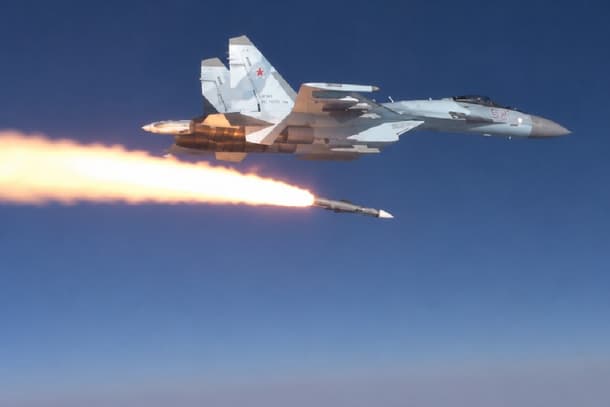
Bharat’s reported interest in the Russian R-37M missile is best understood as an interim response to Pakistan’s J-10C and PL-15 combination, not as a complete solution. The PL-15 challenge is rooted in networked air warfare, where sensors, datalinks, AEW&C aircraft, electronic warfare, and pilot training matter as much as missile range. The R-37M can threaten…
-
BrahMos to UAE: Russia’s High-Stakes Calculus Behind Bharat’s Defence Rise

The possible BrahMos sale to the UAE highlights the changing logic of defence diplomacy in a multipolar world. Russia may approve the deal because it strengthens military-technical cooperation with Bharat while keeping Moscow relevant in a major joint weapons platform. The UAE’s interest reflects its desire for deterrence, defence diversification, and greater strategic autonomy amid…
-
Ravana’s Celestial Chariots Decoded: Sacred Power and Terrible Splendor in Lanka’s Final War

The final battle of Lanka in the Yuddha Kanda turns on two war chariotsRavana’s radiant ratha and Indra’s chariot driven by Matalithat fuse ritual, technology, and ethics. This analysis decodes ratha architecture, disablement tactics, and the elemental taxonomy of astras such as Agneyastra, Varunastra, and Brahmastra. It clarifies how Dharma-Yuddha constrains violence, showing why Rama’s…
-
From Axe to Bow: Parashurama and Rama’s Weapons across India’s Civilizational Evolution

Parashurama’s axe and Rama’s bow are more than weapons; they are precise metaphors for India’s civilizational evolution from corrective severity to codified restraint. Read together, they chart the passage from foundational pruning to lawful kingship, illuminating Kshatra Dharma and maryada in the Ramayana. The parashu symbolizes necessary removal of entrenched harm, while the Kodanda embodies…
-
The Parashu in Hindu Iconography: A Definitive Guide to Form, Theology, and Dharmic Unity

The parashu (paraśu), or sacred battle axe, condenses Hindu theology of force, restraint, and renewal into a single powerful ayudha. This long-form guide explains how to recognize the parashu in Hindu Sculptures, details its associations with Shiva, Ganesha, Durga, and Parashurama, and situates it within the ethics of Kshatra and dharma-yuddha. It connects scriptural narratives…
-
Forged in Faith: Weaponry in the Dasam Granth SahibHistory, Shastra-Vidya, and Symbolic Power

Weaponry in the Dasam Granth Sahib is presented as a disciplined convergence of steel and spirit, where shastra-vidya is sanctified by ethics and devotion. Set in the historical crucible of the Khalsa’s formation, these hymns catalog armsfrom khanda and kirpan to chakkar, banduq, and topwhile binding their use to Dharma-Yuddha principles. The text’s poetic multilingualism…
-
Mudgara Ayudha Unveiled: The Divine Hammer’s Power of Sacred Protection and Renewal

Mudgara Ayudha, the divine hammer or mallet in Hindu iconography, condenses a profound union of sacred destruction and protective guardianship. This long-form study explains how its blunt geometry, short reach, and workmanlike profile distinguish it from the gada, musala, vajra, and ankusa. Readers learn where and why the hammer appears in Hindu sculpturesespecially with Vishvakarma,…
-
Durga’s Bow and Arrow: Unveiling the Power of Universal Will and Spiritual Discipline

Goddess Durga’s bow and arrow symbolize the union of universal will and disciplined focus. The bow represents restrained power aligned to dharma, while the arrow embodies one-pointed concentration and purposeful action. Read through yoga, they mirror pratyāhāra, dhāraṇā, and dhyāna culminating in right action. During Navaratri and Durga Puja, this iconography becomes a practical guide…
-
Nistrimsa, the Sacred Curved Blade: Icon of Shakti, Justice, and Protection in Hindu Art

The nistrimsa (nistrimsha) is a sacred curved sword in Hindu iconography, distinct from the straight khadga and the heavier scimitar. Its measured arc symbolizes compassionate justice, aligning with Shakti’s protective and restorative power. Seen in temple sculpture and bronzes across regions, the nistrimsa represents ethical strengthpower exercised to defend the vulnerable and uphold dharma. During…
-
From Trishul to Pinaka: Unveiling Shiva’s Supreme Weapon and Its Sacred Evolution
This essay explores the sacred relationship between Shiva’s Trishul and Pinaka as complementary symbols of transformation and protection. It shows how the Trishul dissolves ignorance and disorder, while Pinaka channels disciplined force to safeguard dharma. Drawing on Puranic and epic references, including the famed episode of the Śiva Dhanush in the Rāmāyaṇa, it highlights how…
-
South Korea’s Nuclear Program: End to Korea’s Weapons of Mass Destruction?

On 25 June 1950, North Korea invaded South Korea resulting the beginning of The Korean War. The United Nations Security Council (UNSC) established the UNC under the United States to counter and restore peace in the Korean peninsula. During the war more than 16 nations provided support to either side and 5 sent medical help…