
-
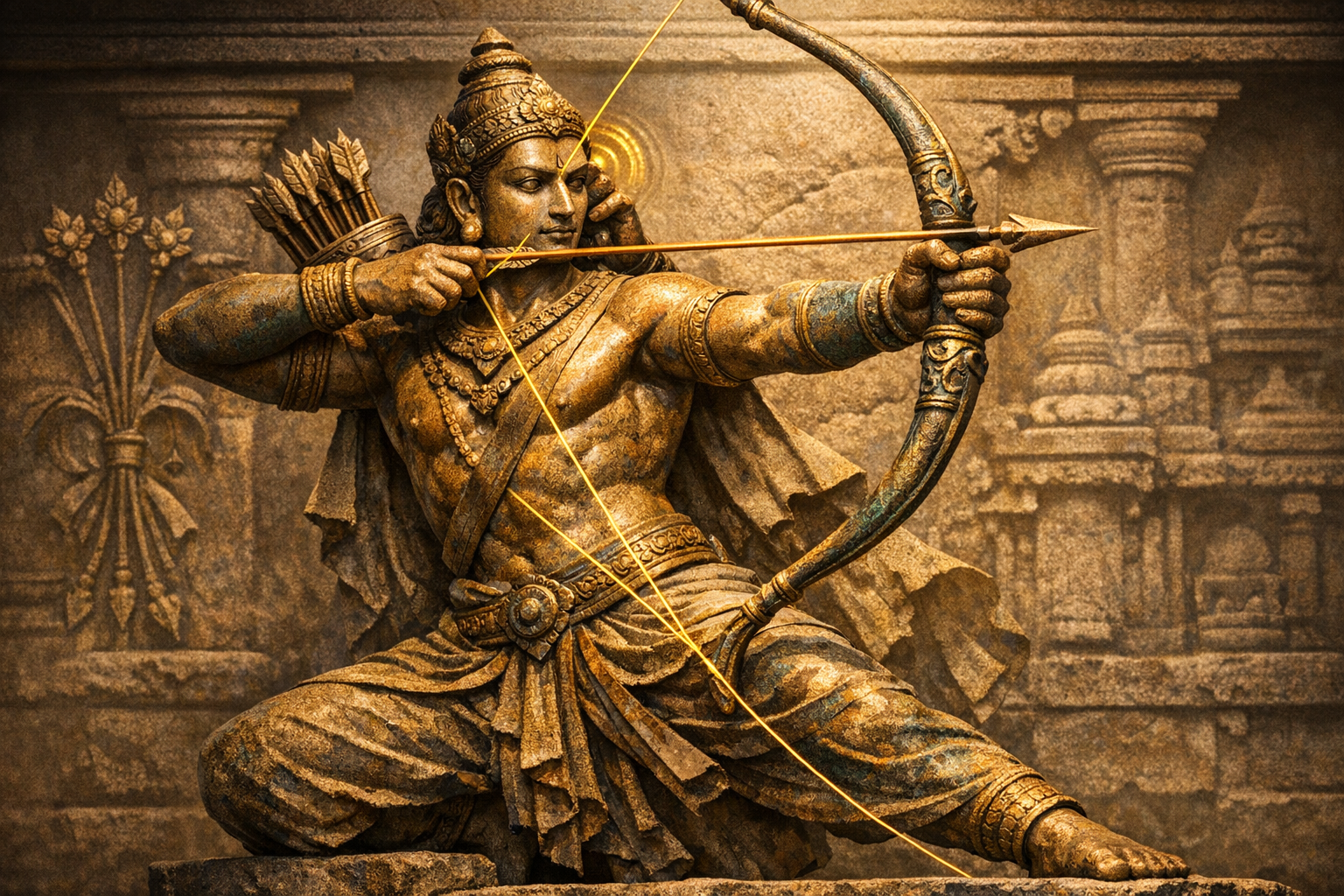
Decoding Akarna Mudra in Hindu Sculptures: Archer’s Focus, Sacred Readiness, and Power
Read more: Decoding Akarna Mudra in Hindu Sculptures: Archer’s Focus, Sacred Readiness, and PowerAkarṇa Mudrā—literally “toward the ear”—captures the archer’s draw in Hindu iconography as a precise fusion of readiness, ethical restraint, and focused intent. Sculptors encode this moment through a consistent grammar of stance, hand configuration, and gaze, translating Dhanurveda mechanics and Nāṭya Śāstra principles into stone and bronze. Deity-specific bows like Pināka, Śārṅga, and Kodaṇḍa anchor…
-

Decoding the Silent Guru: Powerful Differences Between Vyakhyana and Jnana Dakshinamurti
Read more: Decoding the Silent Guru: Powerful Differences Between Vyakhyana and Jnana DakshinamurtiDakshinamurti in Śaiva tradition manifests as the primordial teacher, with two pedagogically distinct but complementary forms: Vyakhyana Dakshinamurti (exposition) and Jnana Dakshinamurti (direct realization). This article clarifies their iconographic markers—chinmudra versus vyakhyana/vitarka mudra, the prominence of pustaka and akshamala—and interprets their philosophical import through Vedanta’s arc from śravaṇa and manana to nididhyasana. Drawing on the…
-

Why Detachment Unlocks Maximum Happiness: A Dharmic, Evidence-Based Guide from Gita to Yoga
Read more: Why Detachment Unlocks Maximum Happiness: A Dharmic, Evidence-Based Guide from Gita to YogaDetachment in Hinduism is a trainable skill that unlocks maximum happiness by freeing the mind from compulsion. Grounded in the Isha Upanishad and Bhagavad Gita, it reframes enjoyment as arising from renunciation and the release of outcome-clinging. Yoga Sutra’s abhyasa-vairagya method makes this pragmatic, while allied teachings in Buddhism, Jainism, and Sikhism affirm the shared…
-

Nilathingal Thundam Perumal at Ekambaranathar, Kanchipuram: Moonlit Healing at a 108 Divya Desam
Read more: Nilathingal Thundam Perumal at Ekambaranathar, Kanchipuram: Moonlit Healing at a 108 Divya DesamKanchipuram’s Nilathingal Thundam Perumal is a rare 108 Divya Desam enshrined within the great Shaiva Ekambaranathar Temple, embodying a living harmony between Vaishnava and Shaiva traditions. Local legend—captured in the name “moon-fragment sanctuary”—celebrates Shiva cooling and healing Vishnu with the moon’s radiance, making the site a poetic locus of grace and reconciliation. Architecturally, the compact…
-

Dhumavati Jayanti 2026: Auspicious Date, Puja Vidhi, Mantras, and Deep Tantric Significance
Read more: Dhumavati Jayanti 2026: Auspicious Date, Puja Vidhi, Mantras, and Deep Tantric SignificanceDhumavati Jayanti 2026 falls on 22 June (Jyeshta Shukla Ashtami), honoring one of the Dus Mahavidyas whose symbolism illuminates resilience, clarity, and the wisdom of non-attachment. Observers can keep a sattvik fast, light a mustard oil lamp, offer sesame and simple naivedya, and recite mantras such as Dhoom Dhoom Dhumavati Swaha with reverence. The festival’s…
-

June 6, 2026 Panchang: From Sashti to Saptami—Essential Shubh Muhurat, Nakshatra & Rashi
Read more: June 6, 2026 Panchang: From Sashti to Saptami—Essential Shubh Muhurat, Nakshatra & RashiSaturday, June 6, 2026 aligns with Krishna Paksha Sashti until 10:06 PM (IST), followed by Krishna Paksha Saptami. This Panchang-based guide explains how Tithi, Nakshatra, Rashi, Yoga, and Karana jointly inform Shubh Muhurat selection. It clarifies why timings vary by location and sunrise, and how to adjust for time zones. Practical tips highlight Sashti observances…
-

Pandharpur Ekadashi 2026: Exact Date, Sacred Wari Guide, Fasting Rules & Profound Significance
Read more: Pandharpur Ekadashi 2026: Exact Date, Sacred Wari Guide, Fasting Rules & Profound SignificancePandharpur Ekadashi 2026 will be observed on 25 July 2026, coinciding with Ashadi Ekadashi (Shayani Ekadashi) at the Shri Vitthal-Rukmini Mandir in Pandharpur. This guide explains why Ashadi and Kartik (Prabodhini) Ekadashi are the two most significant Ekadashis in Pandharpur’s sacred calendar. Readers will find practical fasting rules, Smarta–Vaishnava calendar nuances, and essential guidance on…
-

Batuk Bhairav Jayanti 2026: Date, Tithi, Puja Vidhi, Mantras, and Protective Blessings
Read more: Batuk Bhairav Jayanti 2026: Date, Tithi, Puja Vidhi, Mantras, and Protective BlessingsBatuk Bhairav Jayanti 2026 falls on 24 June 2026 and honors the first manifestation of Baba Batuk Nath—the child-form of Shiva’s protective wisdom. The observance typically aligns with an Ashtami tithi of the Krishna Paksha, so local panchang confirmation is advised. This guide presents a complete puja vidhi: sankalpa, abhishekam, mantra-japa, aarti, and naivedya, together…
-
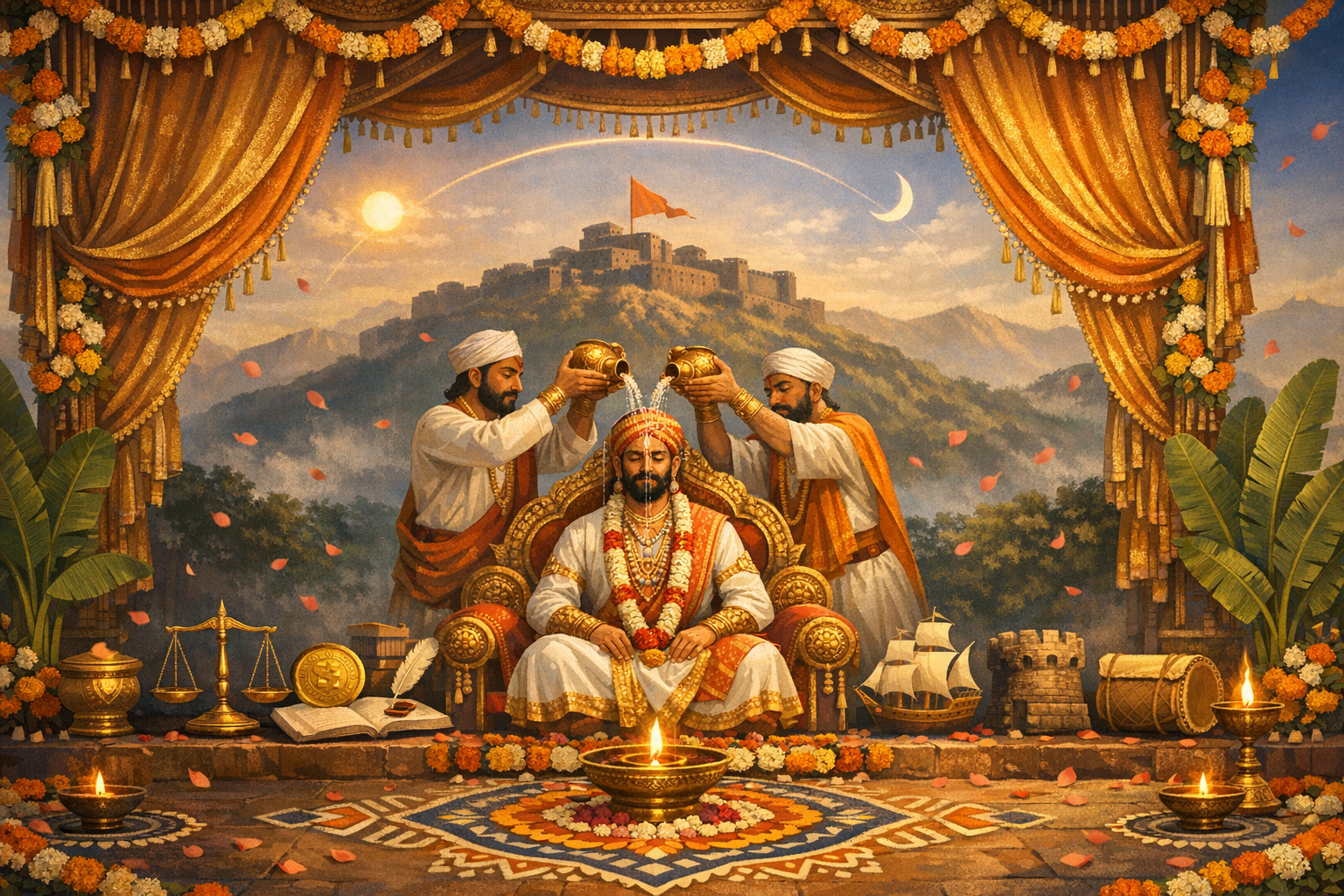
Shivrajyabhishek 2026: Coronation of Chhatrapati Shivaji and the Dawn of Shivraj Shaka 353
Read more: Shivrajyabhishek 2026: Coronation of Chhatrapati Shivaji and the Dawn of Shivraj Shaka 353Shivrajyabhishek 2026 commemorates the coronation of Chhatrapati Shivaji Maharaj on the lunar tithi of Shukla Paksha Trayodashi in Jyeshta Month. In 2026, the tithi falls on June 27 and begins Shivraj Shaka 353, while some public programs are scheduled for May 31 to broaden participation. The observance highlights how tithi-based dates differ from fixed Gregorian…
-

Gayatri Jayanti 2026 Ultimate Guide: Date, Tithi, Puja Vidhi, and the Transformative Power of Gayatri Mata
Read more: Gayatri Jayanti 2026 Ultimate Guide: Date, Tithi, Puja Vidhi, and the Transformative Power of Gayatri MataGayatri Jayanti 2026 falls on 25 June and is traditionally observed on Jyeshtha Shukla Paksha Navami, honoring Gayatri Mata as Veda Mata and the personified light of knowledge. The festival centers on the Gayatri Mantra—Om bhūr bhuvaḥ svaḥ tat savitur vareṇyaṁ bhargo devasya dhīmahi dhiyo yo naḥ pracodayāt—revealed through Rishi Viśvāmitra and directed to Savitṛ…
-

Mahesh Navami 2026: Sacred Date, Auspicious Puja Vidhi, and Maheshwari Heritage Unveiled
Read more: Mahesh Navami 2026: Sacred Date, Auspicious Puja Vidhi, and Maheshwari Heritage UnveiledMahesh Navami 2026 falls on June 23, aligning with Jyestha Shukla Navami, and honors Lord Shiva as Mahesh. The festival blends precise tithi-based observance with accessible household and temple rituals, including Abhishekam, Bilva Patra offerings, and mantra-japa. It carries special cultural significance for the Maheshwari community, functioning as a reaffirmation of ethical commerce, philanthropy, and…
-

Mahiravana and Ahiravana Unmasked: Untangling Folk Ramayanas, Patala Sorcery, and Panchamukhi Hanuman
Read more: Mahiravana and Ahiravana Unmasked: Untangling Folk Ramayanas, Patala Sorcery, and Panchamukhi HanumanAre Mahiravana and Ahiravana one demon or two? This long-form, academically grounded exploration surveys medieval vernacular Ramayanas, regional theatre (from Ramlila to Yakshagana), and Southeast Asian tellings to clarify how the Patala episode evolved beyond the Valmiki Ramayana. It explains why most traditions treat the names as interchangeable while some stage lineages present them as…
-
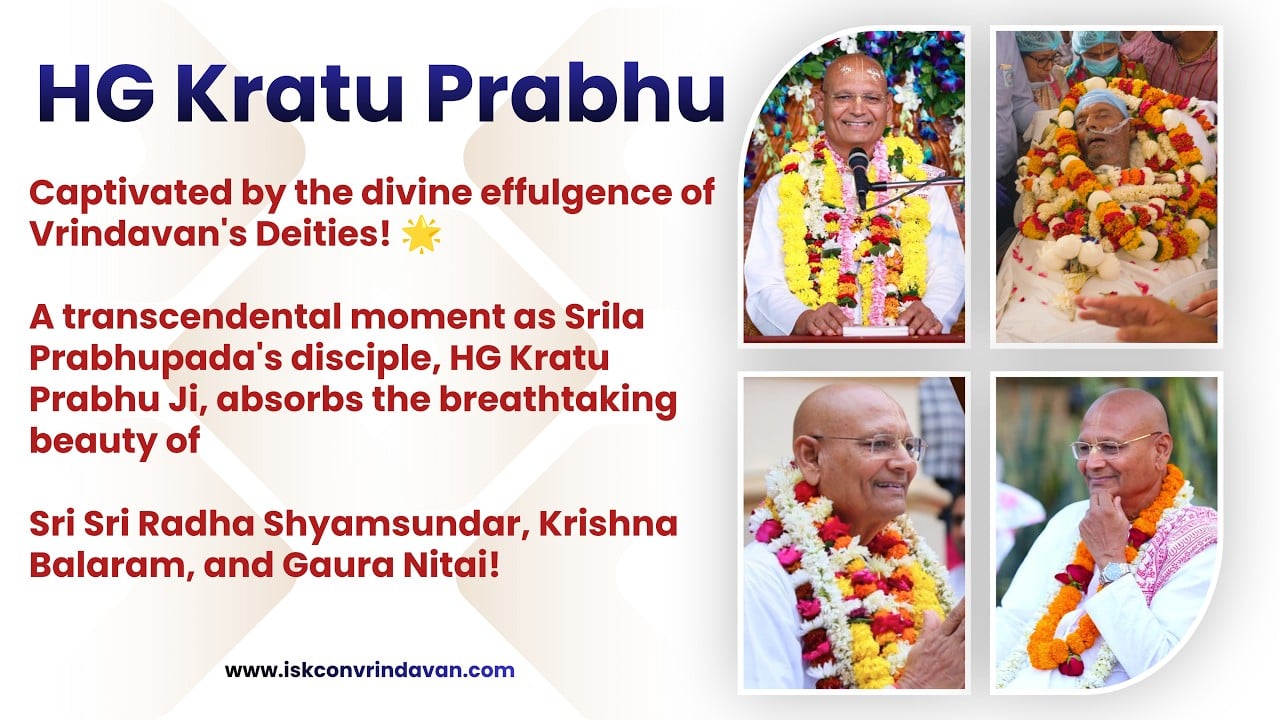
Honoring HG Kratu Prabhu Ji: A Life Immersed in Vrindavan Dham’s Divine Beauty and Bhakti
Read more: Honoring HG Kratu Prabhu Ji: A Life Immersed in Vrindavan Dham’s Divine Beauty and BhaktiThis long-form tribute situates HG Kratu Prabhu Ji’s life within the sacred ecology of Vrindavan Dham and Srila Prabhupada’s mission, presenting an academically grounded yet deeply devotional portrait. It explains dhama-tattva, the pedagogical role of beauty (rasa), and why kirtan, parikrama, and seva are central to Gaudiya Vaishnava practice. It highlights how consistent sadhana and…
-

Canda Bhairava Iconography Decoded: A Definitive Guide to the Fiercest Form of Shiva
Read more: Canda Bhairava Iconography Decoded: A Definitive Guide to the Fiercest Form of ShivaThis in-depth guide decodes the iconography of Canda Bhairava, the fierce third leader within the Sixty-Four Bhairavas, as understood in Shaiva Tantra and Agamic Hinduism. Readers learn how to recognize core features—such as trident, drum, skull-bowl, serpent ornaments, and cremation-ground motifs—and how these elements teach fearlessness and ethical clarity. The article explains why Canda’s fierce…
-

Reva Khanda in Skanda and Vayu Puranas: Narmada’s Timeless Power, Sacred Myths, and Pilgrimage
Read more: Reva Khanda in Skanda and Vayu Puranas: Narmada’s Timeless Power, Sacred Myths, and PilgrimageThe Reva Khanda, preserved in the Skanda Purana and Narmada-focused sections aligned with the Vayu Purana, is a comprehensive tirtha-mahatmya of the River Narmada (Reva). It integrates mythic origins, sacred geography, and rigorous codes of pilgrimage, mapping an ethical and devotional journey from Amarkantak to the sea. Readers gain a clear view of how the…
-

June 2026 at Tiruchanur: Soulful Guide to Sri Padmavathi Ammavari Festivals & Planning
Read more: June 2026 at Tiruchanur: Soulful Guide to Sri Padmavathi Ammavari Festivals & PlanningJune 2026 at Sri Padmavathi Ammavari Temple, Tiruchanur, unfolds under a precise TTD calendar aligned to Jyeshtha and Ashadha. This guide explains how Panchang-driven scheduling works, the core Lakshmi-centric sevas commonly seen in June, and how to plan Darshan and Seva bookings smoothly. Devotees can anticipate kumkumarchana, sahasranamarchana, and designated snapana tirumanjanam, with tithi observances…
-
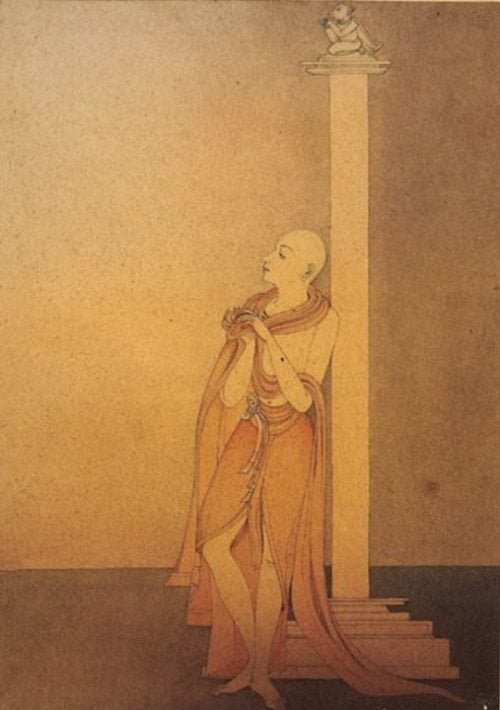
Align Body, Mind, and Heart in Chanting (Japa): A Proven Framework for Deep Focus and Grace
Read more: Align Body, Mind, and Heart in Chanting (Japa): A Proven Framework for Deep Focus and GraceThis research-informed guide distills mantra chanting (japa) into a practical three-part alignment of body, mind, and heart shared across Hinduism, Buddhism, Jainism, and Sikhism. It details posture, pronunciation, and environment to support precise articulation and a steady cadence. An onset-focused attentional method—returning to the first “Hare”—rapidly recovers attention after distraction and sustains presence across each…
-

‘Gokul’ Dairy’s Halal Certification Explained: Facts, Fears, and a Roadmap to Harmony
Read more: ‘Gokul’ Dairy’s Halal Certification Explained: Facts, Fears, and a Roadmap to HarmonyA measured look at “Gokul” dairy’s Halal certification separates fact from speculation and explains what Halal entails in dairy: ingredient vetting, cross-contact controls, and documentation layered over FSSAI and green‑dot mandates. It clarifies why cooperatives seek such certification for export or tender-led business and notes that staples like milk, ghee, and curd generally remain unchanged…
-
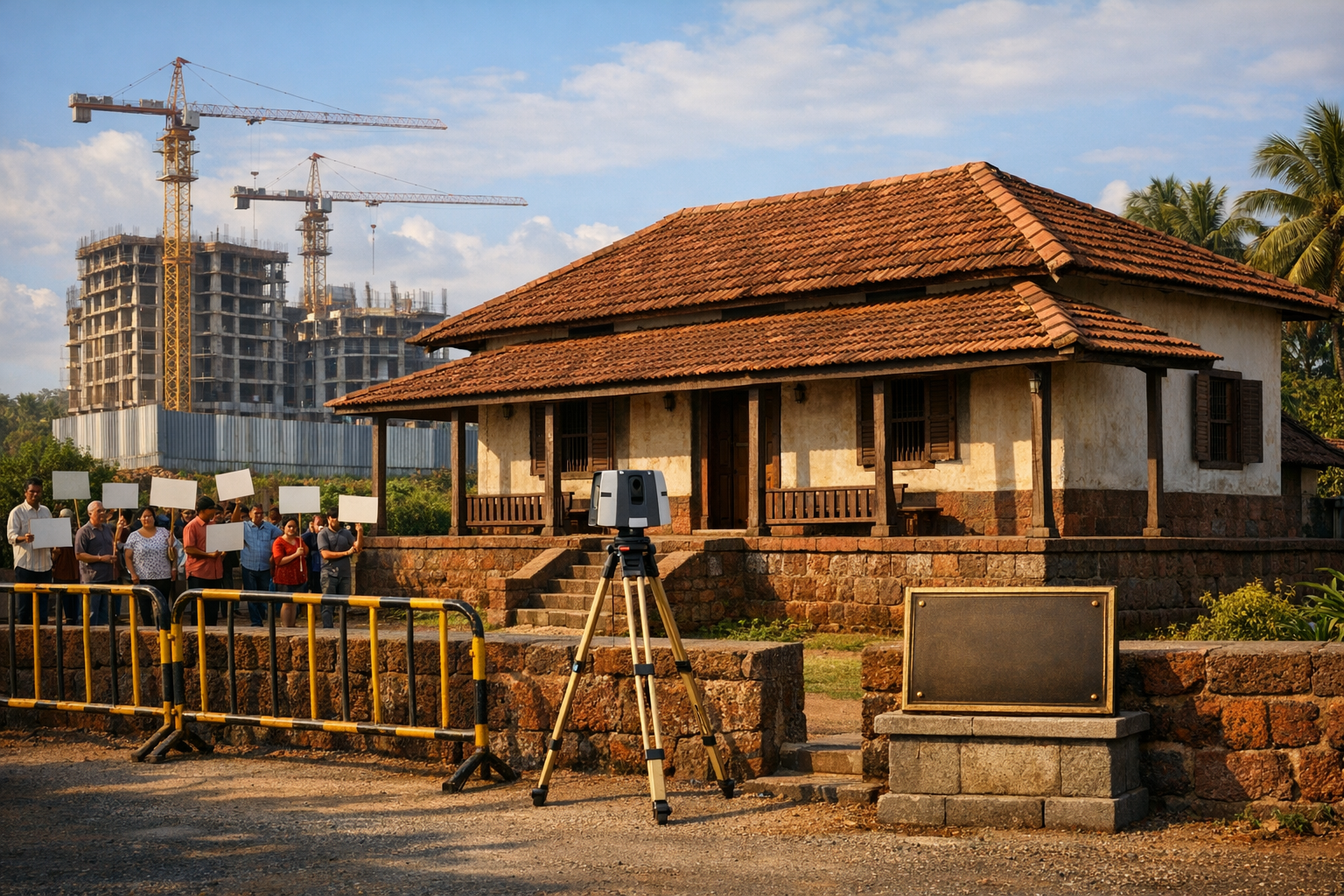
‘Savarkar Sadan’ under threat: HJS seeks urgent Maharashtra action and National Monument status
Read more: ‘Savarkar Sadan’ under threat: HJS seeks urgent Maharashtra action and National Monument statusHindu Janajagruti Samiti (HJS) and allied groups in Ratnagiri have sought urgent Government of Maharashtra intervention to secure ‘Savarkar Sadan’ from a reported builder-led demolition threat. The demand anchors itself in constitutional duties (Articles 49 and 51A[f]) and established heritage law, including the AMASR Act (1958, amended 2010) and state-level protections. A sequenced plan—immediate stop-work…
-

Shri Padmanabhaswamy alert: alleged missing gold, security lapses, and a rigorous audit blueprint
Read more: Shri Padmanabhaswamy alert: alleged missing gold, security lapses, and a rigorous audit blueprintIntelligence inputs have reportedly flagged possible discrepancies in valuables, security gaps, and record‑keeping irregularities at Kerala’s Shri Padmanabhaswamy Temple, prompting calls for a calm, evidence‑led response. This analysis explains how to separate allegations from adjudicated fact and outlines a practical, temple‑compatible audit roadmap. It details inventory identity protocols, chain‑of‑custody discipline during rituals, tamper‑evident digital record‑keeping,…
-
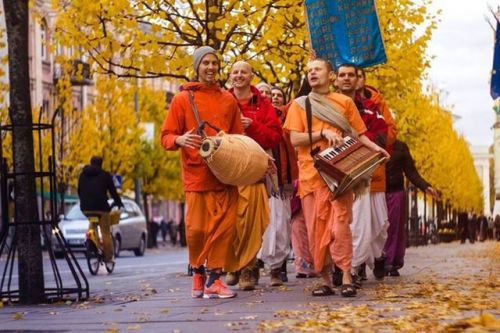
Prasadam as Light: Srila Prabhupada’s Vision from Vrindavan Dialogues to Mayapur Grace
Read more: Prasadam as Light: Srila Prabhupada’s Vision from Vrindavan Dialogues to Mayapur GraceThis long-form reflection presents Srila Prabhupada’s concise thesis—”Prasadam is the most important thing to bring people out of darkness”—and situates it within Gaudiya Vaishnava theology, ISKCON history, and a broader dharmic ethic of compassionate food-sharing. Drawing on Sravanananda’s detailed memories from Vrindavan and Mayapur, it analyzes respectful philosophical dialogue, the transformative impact of Govardhan Puja…
-

Forgiveness vs Trust: A Dharmic, Evidence-Based Guide to Boundaries, Healing, and Growth
Read more: Forgiveness vs Trust: A Dharmic, Evidence-Based Guide to Boundaries, Healing, and GrowthForgiveness becomes practical once separated from trust: the former is an inner virtue that releases resentment, while the latter is a behavior-based, conditional decision about future access. Drawing on convergences across Hinduism, Buddhism, Jainism, and Sikhism, this guide shows how compassion and accountability can reinforce one another. It introduces a two-track model—inner release and outer…
-

USCIRF, Diaspora Campaigns and Hindutva: How Overseas Targeting Imperils Dharmic Unity
Read more: USCIRF, Diaspora Campaigns and Hindutva: How Overseas Targeting Imperils Dharmic UnityUttarakhand BJP leader Mahendra Bhatt’s description of perceived overseas targeting of Hindutva voices via USCIRF highlights a wider challenge: how global advocacy, media narratives, and diaspora life intersect. This analysis explains USCIRF’s mandate, clarifies the distinction between Hinduism and Hindutva, and shows how labels can migrate from policy briefs to classrooms and workplaces. It grounds…
-

Bhadra in Hindu Astronomy: Unveiling the Two Bhadrapadas and Their Timeless Celestial Significance
Read more: Bhadra in Hindu Astronomy: Unveiling the Two Bhadrapadas and Their Timeless Celestial SignificanceBhadra in Hindu astronomy refers to a paired lunar mansion—Purva Bhadrapada and Uttara Bhadrapada—rooted in the 27-nakshatra system that has guided observation and calendrics since Vedic times. The two Bhadrapadas occupy consecutive spans from late Aquarius into mid-Pisces, blending empirical sky-mapping with rich symbolic and ethical meanings. Classical Jyotiṣa associates them with Jupiter (Aja Ekapada)…
Categories
- Agriculture (20)
- Akhand Bharat (30)
- Aryan Migration -vs- Out of India (8)
- Ayurveda (20)
- Celebrations (882)
- Community (150)
- Community Events (228)
- Cross Posted (105)
- Cultural Advocacy (33)
- Cultural Commentary (61)
- Cultural Heritage (555)
- Cultural Insights (142)
- Cultural Issues (29)
- Cultural Traditions (757)
- Culture (33)
- Economics (22)
- Education (151)
- Geo-Politics (60)
- History (377)
- Indian Authors (6)
- International Trade (8)
- Labor Market (8)
- Literature (97)
- News (618)
- Opinion Pieces (143)
- Personal Reflections (161)
- Personalities (186)
- Philosophy (1,036)
- Politics (208)
- Scripts (3)
- Scriptures (973)
- Spiritual Insight (3,204)
- Spirituality (750)
- Temples (729)
- Tribute (65)
- Uncategorized (6)
- Yoga (103)
Archive