
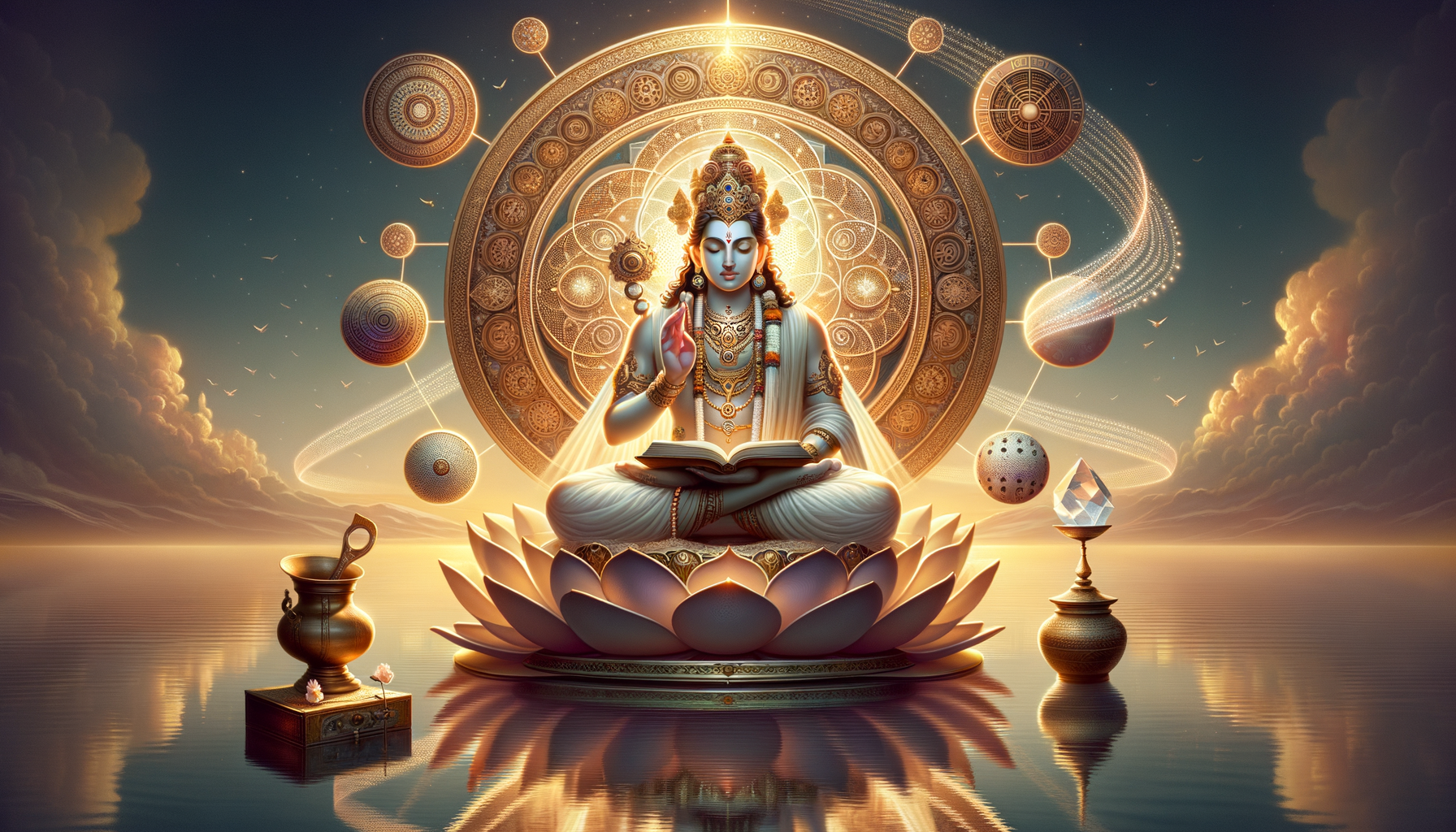
In Hindu iconography, Lord Brahma is conventionally depicted with the Vedas, a japa mala (akṣamālā), and a kamandalu, signifying creation, knowledge, and ascetic restraint. Against this familiar background, the rare form known as Shankhu Chakradhari BrahmaBrahma bearing the Sudarshana Chakra and Shankhuinvites careful reflection. Rather than a contradiction, this form communicates a layered theological insight preserved in Hindu scriptures and temple traditions.
Puranic narratives often portray Brahma as the bestower of boons, including to asuras, a role that underscores the impartial mechanics of tapas, merit, and cosmic law. When such boons unsettle dharmic balance, preservation (Vishnu-tattva) re-enters the frame. In this light, iconography showing Brahma with the Sudarshana Chakra and Shankhu can be read as a visual theology of collaboration: creation aligned with preservation to uphold dharma. The imagery signals that the functions of creation (sṛṣṭi) and preservation (sthiti) remain interdependent within Sanatana Dharma.
Each emblem intensifies this meaning. The Sudarshana Chakra conveys order, time, and the discerning vision (darśana) that cuts through adharma. The Shankhu embodies the auspicious primordial sound, breath (prāṇa), and the call to awakeningechoing the proclamation of dharma that precedes and sustains creation. Placed in Brahma’s hands, the chakra and conch suggest that knowledge and creation are safeguarded by cosmic law and enlivened by sacred sound.
These symbols also resonate across dharmic traditions, strengthening a shared civilizational vocabulary. The Dharma-Chakra in Buddhism, the Jain dharmachakra, and the chakkar central to the Sikh Khanda all honor the endless, law-sustaining wheel. Similarly, the sanctity of soundimplicit in the Shankhupervades Indic spirituality, from Vedic recitation to meditative practice. Such convergences affirm unity in diversity, inviting mutual respect among Hinduism, Buddhism, Jainism, and Sikhism.
Many devotees describe a quiet awe on encountering paintings or sculptures where attributes appear interwoven across deities. In temple darshan and home study of Puranas, this form of Brahma often becomes a contemplative aid, prompting reflection on how creation, preservation, and ethical discernment operate together. For students of Hindu iconography, it offers a memorable case study in how symbols serve as pedagogyteaching through form what scriptures teach through narrative.
Ultimately, Shankhu Chakradhari Brahma illustrates an integrative vision within Sanatana Dharma. Rather than framing divinities in isolation, it emphasizes complementarity: knowledge with protection, creation with order, and sound with truth. Read this way, the image becomes an emblem of harmonyan invitation to see beyond separate paths toward the shared principles that guide all dharmic traditions.
Inspired by this post on Hindu Pad.










