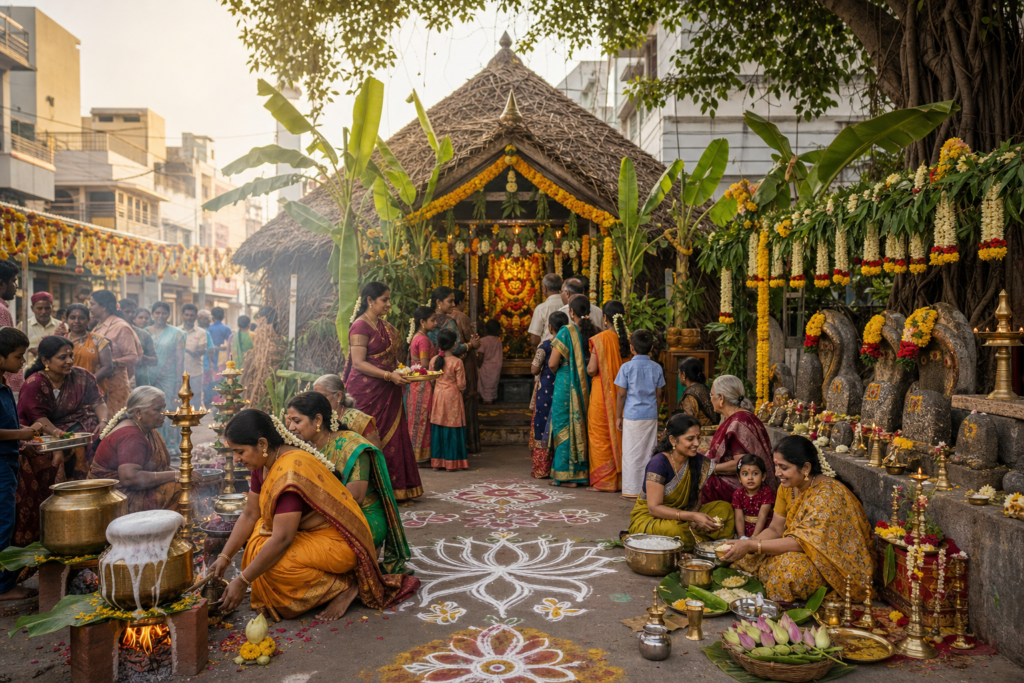
Puruhutika Devi Temple stands in Pithapuram, in the East Godavari district of Andhra Pradesh, on the outskirts of Kakinada. Locally revered as Pithapuram Puruhutika, Puruhuta, Puruhutamba, Puruhutika, or Puruhuthika, the shrine anchors the spiritual landscape of this coastal region and remains an enduring landmark for devotees and cultural historians alike.
Widely regarded as one of the 18 Shakti Peethas, the Pithapuram Shakti Peetham occupies a distinguished place in the sacred geography of South India. For pilgrims and researchers, the site illustrates how devotion to Shakti shapes regional ritual life, temple networks, and Hindu pilgrimage traditions across Andhra Pradesh and beyond.
Community memory and temple practice articulate a living heritage: daily worship, festival observances, and the steady flow of visitors sustain a continuum that links family vows, cultural identity, and shared narratives of the divine feminine. The multiplicity of local names reflects intimate, place-based affection for the goddess and the temple’s embeddedness in everyday life.
Visitors frequently describe a contemplative ambiencequiet courtyards, the cadence of mantras, and the rhythm of traditional offeringsthrough which the presence of Devi is experienced as protective, compassionate, and dignifying. These experiences contribute to the temple’s reputation as a center of solace, renewal, and culturally rooted spirituality.
Geographically, proximity to Kakinada enhances accessibility for travelers exploring East Godavari and the wider coastal belt of Andhra Pradesh. The setting enables seamless inclusion of Pithapuram Shakti Peetham within broader circuits of South Indian temple tourism and comparative study of Shakti temples, enriching both devotional itineraries and academic inquiry.
In the broader dharmic conversation, Puruhutika Devi’s shrine invites a spirit of unity and mutual respect. Values of wisdom, compassion, self-discipline, and servicecherished across Hinduism, Buddhism, Jainism, and Sikhismresonate with the temple’s ethos, encouraging pilgrims to honor diverse spiritual paths while recognizing shared ethical ground.
Devotees often plan visits during Navaratri and other auspicious days dedicated to Devi, when collective worship underscores the temple’s communal role. Whether the intent is scholarly study, family pilgrimage, or quiet reflection, Pithapuram’s Shakti Peetham offers a balanced blend of spiritual depth, cultural continuity, and accessible travel in South India.
Inspired by this post on Hindu Pad.